Showing posts with label goodness of God. Show all posts

03 October 2012

Not Just factual Information

by Frank Turk


We've been reading Jonah to better understand what it means to say that God is Love in the same way that God is Holy or God is Just.  When Berkhof finds himself needing to define the communicable attributes of God, he finds himself saying this:
The presence of God, as described by the Old and New Testament writers is clearly a personal presence.  … God is represented throughout as a personal God, with whom men can and may converse, whom they can trust, who sustains them through trial, and fills their hearts with the joy of deliverance and victory.  And, finally, the highest revelation of God to which the Bible testifies is a personal revelation.  Jesus Christ reveals the Father in such a way the He could say the Philip, “He who has seen me has seen the Father.” (Jn 14:9) (64)
In Berkhof’s view, this question of “communicable attributes” means that in some way, God is not so far above everything that he cannot be found.  But it also means that God is not just found in theory, or found by analogy or in philosophy or doctrine.  In Berkhof’s view, God can be found because he is in fact personal – and the ultimate expression of the personal-ness of God is in Jesus Christ.


The Apostle John utterly agrees with Berkhof.  He just has a more personal way to say it. When the Apostle John wants to talk about this,  he says, “God is love.”  He actually says a lot more than that in 1 John 4:
7 Beloved, let us love one another, for love is from God, and whoever loves has been born of God and knows God. 8  Anyone who does not love does not know God, because God is love. 9 In this the love of God was made manifest among us, that God sent his only Son into the world, so that we might live through him. 10 In this is love, not that we have loved God but that he loved us and sent his Son to be the propitiation for our sins.11 Beloved, if God so loved us, we also ought to love one another. 
God is Love, and we know what love is because of God loves through a person – through his own Person.  This is what we mean when we say, “[the love of God] may be defined as that perfection of God by which he is eternally moved to self-communication.”  We mean:  God wants to tell us about himself, and while the telling is important, and gracious, good in a moral sense, it turns out that it is also something more.  It is the way God is made personal to us and for us – initially by words and stories, but finally, and perfectly in Jesus Christ.

For John, the only way to know God, and to know love, is to know what Christ has done.  That is: God loved us, and sent Christ to be the propitiation of our sin.  That’s a perfectly fine theological word there, “propitiation.”  But what John means is that God sent Jesus to deal with our sins because he loves us, and in order to make God content with us – to overcome wrath for the sake of God’s contentment with us.

What is at stake in the question of God’s love, then, is not merely factual information.  What is at stake is whether or not we actually know God, whether or not we actually can relate to God, and whether or not we have any hope in God.

Jonah, unfortunately, doesn’t get it.
5 Jonah went out of the city and sat to the east of the city and made a booth for himself there. He sat under it in the shade, till he should see what would become of the city. 6 Now the LORD God appointed a plant and made it come up over Jonah, that it might be a shade over his head, to save him from his discomfort. So Jonah was exceedingly glad because of the plant. 7 But when dawn came up the next day, God appointed a worm that attacked the plant, so that it withered. 8 When the sun rose, God appointed a scorching east wind, and the sun beat down on the head of Jonah so that he was faint. 
And then [Jonah] asked that he might die and said, “It is better for me to die than to live.” 9 But God said to Jonah, “Do you do well to be angry for the plant?” And he said, “Yes, I do well to be angry, angry enough to die.” 10 And the LORD said, “You pity the plant, for which you did not labor, nor did you make it grow, which came into being in a night and perished in a night. 11 And should not I pity Nineveh, that great city, in which there are more than 120,000 persons who do not know their right hand from their left, and also much cattle?”
 In God’s view of this, what’s at stake here is that Jonah not just know the words.  Jonah can say the words, “you are a gracious God and merciful, slow to anger and abounding in steadfast love, and relenting from disaster.”  Jonah can understand them well enough to run away from what they mean.  What is at stake here is that God self-communicates to Jonah so that Jonah will know who God is.  What is unfortunate for Jonah is that when he meets this God in the salvation of his enemies, he is angry at God.  He would rather die than know this God.

See: God makes it clear that there is a huge gulf between Jonah’s ideas about justice and love and God’s own ideas about justice and love.  The example he uses is the analogy between the plant and the city.  God tells Jonah that even though he (Jonah) had nothing invested in the plant, and wasted nothing on it, he enjoyed it, and had pity for it.  But the contrast is stark: God makes it clear how much greater it is that was at stake in the city, and how much more God had invested in it – both in time and in resources.  Yet the city, which plainly had its evil deeds come before the Lord for judgment.  And God says himself these people have no idea how desperate their own plight is.  For God to say they were a people who did not know their left hand from their right is for Him to say that they are utterly ignorant, and may have no moral compass at all.

Yet even here, in the seat of an empire which has opposed God’s people for generations, God offers forgiveness for repentance.

Now, as we set ourselves up for the home stretch, there’s a subtext to this story which, it seems to me, gets missed.  It’s the same subtext which John presents in his letter when he says explicitly that God is Love.  It’s clear that Jonah thinks that God has or possesses love, right?  That’s actually the starting point of his complaint when Nineveh is spared: God is full of Love.  And then Jonah is brash enough to admit that it’s not just God having love or somehow feeling love which is aggravating to the prophet: the fact that God will actually love somebody – in fact, almost anybody – pushed the prophet to the brink of death.  But as God chastises the prophet because this man who was saved from the giant fish now has more pity for a plant than a city full of people, God makes a point which is a necessary corollary of the fact that God is Love:  God requires love in return.

When Jonah is first irate over the repentance of the city, God says, “Do you do well to be angry?”  The implication is, “are you right to be angry over my love for the city?”  But then when Jonah is beside himself over the death of the plant, God says again, “Do you do well to be angry” but makes the point, “for the plant?”  See: Jonah has two sorts of anger here, but both are motived by his own self-centeredness, his own self-love.  He is angered by the welfare of the city because these are his enemies who are spared; he is angered over the death the of vine because his own pleasure is at stake.  When God draws this comparison for him, God is plainly saying, “Jonah: who do you love?”

In the Old Testament, we know for certain this is the ultimate question – it is captured in the greatest commandment, after all.  “You shall love … who?”
“You shall love the LORD your God with all your heart and with all your soul and with all your might.”  (Deu 6:5) 
Jesus says this is the greatest commandment.  But why is this true?  Is it because God demands it out of whimsy or ego?  Certainly not: BEFORE God makes the demand that he be beloved, he makes it utterly clear:
Deu 4: 35 To you it was shown, that you might know that the LORD is God; there is no other besides him. 36  Out of heaven he let you hear his voice, that he might discipline you. And on earth he let you see his great fire, and you heard his words out of the midst of the fire. 37 And because he loved your fathers and chose their offspring after them and brought you out of Egypt with his own presence, by his great power, 38  driving out before you nations greater and mightier than you, to bring you in, to give you their land for an inheritance, as it is this day, 39 know therefore today, and lay it to your heart, that the LORD is God in heaven above and on the earth beneath; there is no other. 
God requires Love because he has, before any demand he has made, Loved first.  This is why Jonah’s reaction to God is such an affront: he knows all the words.  He can recite the orthodox formulas.  But he cannot muster up a reflection of this attribute of God either for his fellow sinners, or for the loving God who stands above them all.

This is God’s point to Jonah, and 1000 years later this is John’s point to his fellow believers.  When John says, “God is Love,” he is saying something in the context of his opening to this letter which must be remembered:
That which was from the beginning, which we have heard, which we have seen with our eyes, which we looked upon and have touched with our hands, concerning the word of life— that which we have seen and heard we proclaim also to you, so that you too may have fellowship with us; and indeed our fellowship is with the Father and with his Son Jesus Christ.
John is trying to tell us about how and why God has come to us so that we may not only understand John, but to be with God.  The goal is not merely to have God’s favor:  the goal is to have God, to hear Him, to see him with our eyes, to touch him with our very hands.  It means to have everything in common with Him – the kind of fellowship you can share only with the closest of family.

Think about what a different book the book of Jonah would have been if, rather than the Chapter 4 we receive it instead said, “and when Jonah looked upon the city, and upon his own salvation from death in the belly of the fish, he worshipped God and gave praise to him for his lovingkindness.  And God was with him.”  It could have been a story utterly foreshadowing the New Testament, utterly proof of the kind of faith Abraham had, in which God is both trusted and loved and believed for the best.  Jonah could have been a friend of God.  Instead it is a book which spells out for us in detail the difference between the kind of love Men as capable of contrasted with the kind of Love God brings into the world.

There is nothing unorthodox about Jonah’s confession – but when he finds God actually being full of Love, Loving with patience, Loving to the point of forgiveness, he is enraged.  He thinks he has himself been wronged even though he is also himself a benefactor of such things.  When John sees the love of God, his reaction is different.  What John knows about God is superior to what Jonah knows about God – even though they have the same words for it.

Jonah has seen what God has done – and would die for both shame and anger.  John has seen it, and he is overcome by it for joy.  Jonah wants to repudiate God’s work to sake the lost, and John sees it as his only hope – the only way to even know what love is.

I think both men would know all the words to the children’s song about this rudimentary doctrine. “Jesus Loves Me.  This I know, for the Bible Tells me so.  Little ones to Him belong – they are weak, but He is strong.  Yes!  Jesus loves me!  The Bible tells me so!”  The question, it seems, is which one believes it.


26 September 2012

I Feel Sorry for God

by Frank Turk


So look: in Jonah I see a guy who is like me. He wants to be a minister to God the way he wants to minister to people and not necessarily the way God wants him to minister to people, and not necessarily to the people God wants him to minister to. And he's serious about it. He's a prophet to Israel, darn it! He's not going to Nineveh -- Nineveh?! where the King of Assyria lives?!? -- and tell them that God is planning to judge them! God ought to judge them! They're sinners! Let them die in their sin! Look at all the beer cans in their trash, and can't you smell that cigarette smoke?

And look at how Jonah preaches to the Ninevites when he actually goes: "Yet forty days, and Nineveh shall be overthrown!" Jonah does not say, "Judgment is coming so repent", but only, "Judgment is coming". God's judgment. Because He didn't want the Ninevites to get any bright ideas. God told him to tell them they are under judgment, and that's it: that's all he’s going to do. "Yet forty days, and Nineveh shall be overthrown!" That way he can be faithful, and he doesn’t have to worry because God going to deliver judgment. He said so.

But God does something else here which Jonah says he knew all along was God’s intention: God spares the Ninevites.

In that is Jonah's complaint to God: "Let me die, because I know you show steadfast love." Listen: Jonah's complaint was not, "God, you promised to smite the evildoer, and you squelched -- you broke your promise! Now that I know God is a promise breaker to Israel, I just want to die!" It was, "I knew it—when I was back home, I knew this was going to happen! That's why I ran off to Tarshish! I knew you were full of love, and grace, and mercy, and patience, and ready to forgive!"
4 And the LORD said, “Do you do well to be angry?”
The Hebrew there is, “It is right that this burns you?”  And that’s a fair question: how is it, exactly, that Jonah is grieved because God loves sinners?

You know, this problem comes up in other places in the Bible.  In Malachi, God chastises Israel because Israel has given up all hope that God will judge the wicked – because he shows patience with the wicked.  They think God is a slacker because the wicked are not judged immediately.  Mal 2:17 says,
“You have wearied the LORD with your words. But you say, “How have we wearied him?” By saying, “Everyone who does evil is good in the sight of the LORD, and he delights in them.” Or by asking, “Where is the God of justice?”
And then it comes up again in Luke 18, phrased a different way:
The Pharisee, standing by himself, prayed thus: ‘God, I thank you that I am not like other men, extortioners, unjust, adulterers, or even like this tax collector.
It’s sort of darkly-funny that a people who are themselves so unable, unwilling to keep the Law can be also so intent on making sure God is judging other people.  And that is God’s point in questioning Jonah: I had not idea that Me loving Sinners was so deeply horrible to YOU.
Jonah, unfortunately, doesn’t get it.
5 Jonah went out of the city and sat to the east of the city and made a booth for himself there. He sat under it in the shade, till he should see what would become of the city. 6 Now the LORD God appointed a plant and made it come up over Jonah, that it might be a shade over his head, to save him from his discomfort. So Jonah was exceedingly glad because of the plant. 7 But when dawn came up the next day, God appointed a worm that attacked the plant, so that it withered. 8 When the sun rose, God appointed a scorching east wind, and the sun beat down on the head of Jonah so that he was faint. 
And then [Jonah] asked that he might die and said, “It is better for me to die than to live.” 9 But God said to Jonah, “Do you do well to be angry for the plant?” And he said, “Yes, I do well to be angry, angry enough to die.” 10 And the LORD said, “You pity the plant, for which you did not labor, nor did you make it grow, which came into being in a night and perished in a night. 11 And should not I pity Nineveh, that great city, in which there are more than 120,000 persons who do not know their right hand from their left, and also much cattle?”
Jonah was mad at God for sparing Nineveh, and God said to him, "Jonah: Doest thou well to be angry?" That is, "Jonah: is that the right thing to do? Is that what this is all about?"

Jonah, apparently, knew that when God is calling forth judgment, He is also extending an offer of clemency -- that is, the willingness to forgive for the repentant. In Jonah's words, He's a gracious God and merciful, slow to anger and abounding in steadfast love, and relenting from disaster. And that has Jonah in a bunch -- in fact, he'd rather die than think about it any more.

And God, sparing the Ninevites after He has also spared the disobedient Jonah from the belly of the big fish,  says to the prophet, "Is that being angry good for you?" Really, I'd feel sorry for God if He wasn't the Universal Creator and Sustainer, the Sovereign of all things -- because He's always got to explain himself to people like Jonah. And Us.


19 September 2012

Not My Way

by Frank Turk

For those of you who would rather hear the whole Sunday School lesson as one 47 minute lecture, you can find it at my home church's web site.  FWIW, I commend all the sermons there for your edification.

What I first realized about me as a Christian was that I am still afraid of God. Think about that: here I am, a guy who has received only blessing and mercy from the Almighty Creator of all things, and I am still afraid of Him. Now, in some respects, many people would rightly say, "Hey Frank: the fear of the LORD is the beginning of wisdom, so good on you." But that's not what I mean at all.

Sure: I have a healthy fear of the Lord in terms of His right and ability to judge me, and in that I know I am still without any merit before Him as a sinner. But what's actually really scary, really gut-turning to me about God is that He's going to ask me to do something which I will hate to do and would refuse to do because it offends me.

You know: it would be great if God would ask me to write a book.  God can’t offend me by asking me to write a book.  But what if God asks me to evangelize someone at work – a client, for example, who leads a godless lifestyle – and give him the Gospel whether or not I get to keep my job after I do it?  What if God asks me to make friends with people who live in the trailer park near my house because they are all lost, all people too lowly to be reached out to because frankly, they are messy?

So look: in Jonah I see a guy who is like me. He wants to be a minister to God the way he wants to minister to people and not necessarily the way God wants him to minister to people, and not necessarily to the people God wants him to minister to. And he's serious about it. He's a prophet to Israel, darn it! He's not going to Nineveh -- Nineveh?! where the King of Assyria lives?!? -- and tell them that God is planning to judge them! God ought to judge them! They're sinners! Let them die in their sin! Look at all the beer cans in their trash, and can't you smell that cigarette smoke?

But there’s more to it than this.  It is not only that God may ask me to do something which offends me: God himself may do something that offends me.  That is: His way will not be my way.  What God intends to do probably doesn’t look like what I have planned in my Outlook calendar.  And the problem comes to a head when there has to be a reconciliation.

It’s easy to teach our children the words, “Jesus loves me, this I know.  The Bible tells me so.”  It’s another thing entirely to remember that God’s love is not like my native idea of love which has a very small circle, and lets very few people in.

That speaks to how Jonah preaches to the Ninevites when he actually goes: "Yet forty days, and Nineveh shall be overthrown!" Jonah does not say, "Judgment is coming so repent", but only, "Judgment is coming". God's judgment. Because He didn't want the Ninevites to get any bright ideas. God told him to tell them they are under judgment, and that's it: that's all he’s going to do. "Yet forty days, and Nineveh shall be overthrown!" That way he can be faithful, and he doesn’t have to worry because God going to deliver judgment. He said so.

But God does something else here which Jonah says he knew all along was God’s intention: God spares the Ninevites.

That’s Jonah's complaint to God: "Let me die, because I know you show steadfast love." Listen: Jonah's complaint was not, "God, you promised to smite the evildoer, and you squelched -- you broke your promise! Now that I know God is a promise breaker to Israel, I just want to die!" It was, "I knew it—when I was back home, I knew this was going to happen! That's why I ran off to Tarshish! I knew you were full of love, and grace, and mercy, and patience, and ready to forgive!"

Jonah’s complaint is not about the lack of God’s justice.  It’s about the overwhelming size of His love, and to whom He is willing to show it.


12 September 2012

Whatever He Pleases

by Frank Turk

For those of you who would rather hear the whole Sunday School lesson as one 47 minute lecture, you can find it at my home church's web site.  FWIW, I commend all the sermons there for your edification.

There is nothing wrong with making children’s songs up for the rudimentary doctrines of the faith, is there?  Of course not.  I think the danger is in whether or not we assign a doctrine as foundational and necessary as this one only to the children’s catechism and hymnal.  Is this a doctrine that we know all the words for, but somehow they are only words to us?

We’re going to rethink this today in through Scripture, from the book of Jonah, and then in the first letter of John.

Let’s open to the end of the book of Jonah, the end of Chapter 3, and then into chapter 4.  Let me just put you in context quickly.  The city of Nineveh is the enemy of Israel.  It was in Assyria, and it was the center of worship for the idol Ishtar as well as a capital for their empire for a time.  And the Assyrians were, of course, enemies of Israel – they worshipped Ishtar, after all, and not Yahweh.

So God calls Jonah to Nineveh, and Jonah does what?  He runs the other way.  He catches a boat in the opposite direction, causes the ship to nearly sink, is cast overboard, and swallowed by a great fish.  After three days in the belly of the fish, Jonah gets spit out on dry land, and God tells him again, “Arise, go to Nineveh, that great city, and call out against it the message that I tell you.”

 And Jonah goes and declares the word of the Lord to the city, and that’s where we’ll pick up the text, Chapter 3, verse 6
6 The word reached the king of Nineveh, and he arose from his throne, removed his robe, covered himself with sackcloth, and sat in ashes. 7 And he issued a proclamation and published through Nineveh, “By the decree of the king and his nobles: Let neither man nor beast, herd nor flock, taste anything. Let them not feed or drink water, 8 but let man and beast be covered with sackcloth, and let them call out mightily to God. Let everyone turn from his evil way and from the violence that is in his hands. 9  Who knows? God may turn and relent and turn from his fierce anger, so that we may not perish.”

Listen: if I was the king of Assyria, the things I could understand would be war and judgment -- because I am good at war, and I run a tight ship. What I say goes, and what I expect is that I'm going to do what I said I was going to do. We don't read the Five Disfunctions of a Team in my court -- I killed that guy because he was boring me to death with his blah blah blah about "trust". You know what I trust? I trust that when I tell my executioner here to cut your head off, he'll do it and not ask me about whether to use the big axe or the small one for your scrawny little MBA neck. And then everyone will trust me to do what I say.

But in that, the king of Assyria knows that God will do what He pleases. All the pomp of his court will not impress God anymore than the pomp of the house of David impressed him, the Assyrian king, when he came and plundered those so-called sons of Abraham. So if God is going to render judgment on Nineveh, what's the only course of action?

If I were the king of Assyria, I'd do what I expect the weak and puny kings around me to do when I come with my army and send in the messenger that I am here to clean house: I expect them to beg. If they want to keep anything at all, and not pay a dear price for resisting me, I expect that they treat me like I can do what I say I can do. So listen: you people remember that 5 Disfunctions guy? If you don't want to end up like him, beginning right now, do as I do and beg God to spare us. He's sent this messenger to us who says we have 40 days, and we have already lost 3 days because this guy walked from front to back, so close the businesses, close the market, and get out the sack cloth and ashes. And to show I'm serious, I'm going to do it too -- because if God is coming to judge us, the only thing we have to show is our plea for mercy. He can do whatever he pleases.

10 When God saw what they did, how they turned from their evil way, God relented of the disaster that he had said he would do to them, and he did not do it.
4 But it displeased Jonah exceedingly, and he was angry. 2 And he prayed to the LORD and said, “O LORD, is not this what I said when I was yet in my country? That is why I made haste to flee to Tarshish; for I knew that you are a gracious God and merciful, slow to anger and abounding in steadfast love, and relenting from disaster. 3 Therefore now, O YAHWEH, please take my life from me, for it is better for me to die than to live.”
In case you didn’t understand this part, Jonah hated the Ninevites.  They hated Israel. They were enemies of Israel, and made war on Israel. But when God said to Jonah, "you're my prophet -- go tell Nineveh that their time of judgment is at hand," what did Jonah do?  You'd think that Jonah, having heard from God that Nineveh was up for review, would have gone to tell the Ninevites that their day is done. Ladies and Gentlemen: your day is over!  You and Ishtar are about to meet the Holy and Living God, and He is not happy!

That's what I'd think if I heard the words from God, "Arise, go to Las Vegas, or Washington, or New York, that great city, and call out against it, for their evil has come up before me." Yes! Thank you, God! The battle belongs to the Lord! Let's go and make a footstool of your enemies, Lord!

But that's not what Jonah thinks. See: when God tells Jonah, "Go tell Nineveh that their evil deeds are on my list," Jonah goes to other way. And here in what we call Chapter 4, Jonah explicitly says it is because he knows God.  It’s not that He knows God is Just, or that God is Holy, or that God is a Jealous God and can stand no other gods before Himself.  Jonah says God has this thing that He does -- being gracious and merciful, slow to anger and ... steadfast in love. That’s what the ESV says – the NASB says “abundant in Lovingkindness”. Jonah ran away from what God told him to do, and away from the Ninevites, not because God is known to be triumphant over His enemies: he ran because Jonah didn't want them to hear or experience the steadfast love of God.

And let's be as clear as possible: he didn't preach to them the steadfast love of God, did he? "Yet forty days, and Nineveh shall be overthrown!" was what he preached, according to 3:4 -- only the judgment. But what he feared was that God would love them and show them love because that's what He does. That's who He is. The King of Nineveh declared a fast and repentance, and he even demanded the animals somehow participate (according to 3:8), and when God saw them repent, He spared their destruction.

Think about that: God loved these sinners. Jonah was angry because he knew God loves sinners. God loved them and spared them, even though eventually the Assyrians would again turn to persecuting Israel. Jonah disobeyed God because he knew God was going to show love to sinners.

Now, there’s a reason I chose this passage rather than the prodigal son, or 1 Cor 13, or John’s first letter, or John 3:16.  I admit that I love the New Testament, and Paul who was wrote most of it – especially when you understand the Luke was Pauls’ disciple – and I empathize with Paul.  Who is it that studies theology who doesn't want to someday be considered like Paul, the chief of sinners.  But here’s the thing: I am probably more like Jonah.

I think my first real spiritual insight into myself after being saved was when I realized that I am almost exactly like Jonah.


06 September 2012

Don't Miss the Point

by Frank Turk

For those of you who would rather hear the whole Sunday School lesson as one 47 minute lecture, you can find it at my home church's web site.  FWIW, I commend all the sermons there for your edification.

You’ll remember that we have been talking about the Goodness of God as demonstrated by the Psalmist in Ps 34, having done a quick sprint through the life of David.  We talked about how the Goodness of God is not a childish piece of theology but a core piece of understanding how God Comforts us, and God Counsels us, and Covers us in Christ.  When I taught this stuff live, we demonstrated the goodness of God by getting out of class early.

Now: the reason we got out early, in discussing the Goodness of God, is that we either had to stop where we were, or dive head-long into another hour at least on the principle example of the goodness of God.  Louis Berkhof says this about the Goodness of God:
When the goodness of God is exercised toward his rational creatures, it assumes the higher character of Love, and this Love may again be distinguished according to the objects upon which it terminates.  In distinction from the goodness of God in general, [the love of God] may be defined as that perfection of God by which he is eternally moved to self-communication.  … He does not even withdraw his love completely from the sinner in his present sinful state, though the sinner’s sin is an abomination.  … At the same time, he loves believers with a special love, since he contemplates them as his spiritual children in Christ.  (P 71)
We respect our theologians for their precise language, and we agree with Berkoff’s definitions.  What he says here is utterly true, and completely orthodox.  But consider this:  what if a man approached a young woman and said to her, “I am moved eternally to self-communicate to you, and make you the object of termination from me of any and all of the goodness I have – because you are certainly a rational creature.”  I think it is unlikely that she would be influenced in any positive way toward him – whether she was a good reformed girl or not.  The reason, I think, is because such an expression, falls short of the declaration and command Paul makes in Ephesians,  “Husbands, love your wives as Christ loved the Church.”

It is certainly right, in the case of systematic theology, to examine the point that the goodness of God gets serious, and specific, and somehow specialized, when God deals with mankind, and with particular men and women.  But somehow it also seems to miss the point to say that this is only about God expressing Himself.  It is not merely that God is eternally moved to self expression, and terminates his goodness on the rational objects in His created order.  Somehow, we have to get it right, as the apostle John expressed it:
Anyone who does not love does not know God, because God is love. In this the love of God was made manifest among us, that God sent his only Son into the world, so that we might live through him. In this is love, not that we have loved God but that he loved us and sent his Son to be the propitiation for our sins.
The topic today is the Love of God.   It seemed really obvious to me when Paul asked me to teach a little this summer that if I were to cover the Goodness of God, I would also have to cover the Love of God – because, as Berkhof says, it is Goodness’ higher character.  And as we covered last time, it is the ultimate expression of God’s goodness that he loves us somehow, in such a perfect and final way, according to the Psalmist, that it must lead us to the purpose in the work of Christ.

But think about this for a second:  I was able to find over 200 essays on the Providence of God, and over 150 essays on the Sovereignty of God, and 125 essays on the Glory of God – but less than a few dozen on the Love of God.  Most systematic theologies spend less than a full page on the topic, preferring to spell out Justice, Holiness and so on.  These are the grown-up topics of theology – the ones that really engage us and make us feel like we are in big church.

Just as with God’s goodness, we again sort of classify as one of the rudimentary parts of theology and faith.  We make up a child’s prayer to express Gods goodness –“God is Great, God is Good, let us Thank him,” – and we make up preschool songs for the sake of God’s love.  “Jesus loves me, this I know – for the Bible tells me so.  Little ones to Him belong.  They are weak, but He is strong.  Yes: Jesus loves me.  The Bible tells me so.”

There is nothing wrong with making children’s songs up for the rudimentary doctrines of the faith, is there?  Of course not.  I think the danger is in whether or not we assign a doctrine as foundational and necessary as this one only to the children’s catechism and hymnal.  Is this a doctrine that we know all the words for, but somehow they are only words to us?


29 August 2012

Goodness We could not Otherwise Imagine

by Frank Turk


God’s comfort is setting us apart from evil demonstrates his Goodness; God’s counsel which doesn’t just leave us in a neutral state once we have been set apart demonstrates His Goodness.  But David goes on from there:
15 The eyes of the LORD are toward the righteous
     and his ears toward their cry.
16 The face of the LORD is against those who do evil,
    to cut off the memory of them from the earth.
17 When the righteous cry for help, the LORD hears
    and delivers them out of all their troubles.
18 The LORD is near to the brokenhearted
    and saves the crushed in spirit.
In David’s view, from a cave and on the run, God is still the keeper of Justice.  When David says that Jehovah is against those who do evil, he doesn’t simply mean that it makes God sad or upset that people do bad things.  David says God will “Cut off the memory of them from the earth.”  That is: they will be utterly destroyed.  If God is in charge of Justice, it’s not like he’s going to work out some temporary arrangement for these people.  David is talking about a permanent solution actually worse than prison or death.  Calvin says that David speaks “particularly of this kind of punishment, because the ungodly not only expect that they shall be happy during their whole life, but also imagine that they shall enjoy immortality in this world.”  Think about how true that is: how those who oppose what is right think that they have instead made their own way, a better way, which will be to their credit forever.

But paired with that, David’s eye is not on the short-term for the righteous, either.  He says that the Lord is near to those who are the victims of injustice.  This is an important bridge to the final part of this psalm because what David doesn’t say is that those who love God will have no trouble, or that the trouble will be short-lived.  In the final account, David says:
19 Many are the afflictions of the righteous,
     but the LORD delivers him out of them all.
20 He keeps all his bones;
     not one of them is broken.
21 Affliction will slay the wicked,
    and those who hate the righteous will be condemned.
22 The LORD redeems the life of his servants;
    none of those who take refuge in him will be condemned.
In contrast to the wicked, the disobedient, the unwise, the righteous seem to be the brunt of many afflictions.  I mean: this is why they are crying out to God, Amen?  It is not David’s view that the righteous do not suffer.  On the contrary, he is afflicted by Achish and Saul as he writes this.  Instead, he says that God delivers out of the hands of affliction.  And to underscore that, he says:
20 He keeps all his bones;
     not one of them is broken.
Which is an unusual statement.  In some sense, David is saying that the righteous man escapes his trials in one piece.  But this is supposed to be in contrast to the punishment of God against the wicked.  This is supposed to be as contrasted with being utterly stricken from the memory of all things.  Those who do evil: God will wipe them out forever; the righteous?  Not even a broken bone.

Now look: that’s pretty good!  That’s pretty good for the righteous person to say that, maybe in the final account, I’ll make out far better than the person who is doing this to me.  In some metaphysical or proverbial sense, sticks and stone may break my bones, but in God’s justice my bones aren’t really broken.  And while I admit that my view of this problem is not always the most sanctified, I’m not sure how much of a refuge that is when we are actually suffering, actually witnesses to and victims of the wickedness in this world.

We can wind up feeling a little hollow with David’s victory proclamation here if he was just speaking in metaphors.  But we have something else here which we can take refuge in.  The Apostle John, looking at the cross of Christ at the very end, says this:
31 Since it was the day of Preparation, and so that the bodies would not remain on the cross on the Sabbath (for that Sabbath was a high day), the Jews asked Pilate that [the prisoners’] legs might be broken and that they might be taken away. 32 So the soldiers came and broke the legs of the first [prisoner], and of the other who had been crucified with him. 33 But when they came to Jesus and saw that he was already dead, they did not break his legs. 34 But one of the soldiers pierced his side with a spear, and at once there came out blood and water. 35  He who saw it has borne witness— his testimony is true, and he knows that he is telling the truth— that you also may believe.36  For these things took place that the Scripture might be fulfilled: “Not one of his bones will be broken.
In John’s view of what happened, prophecy is fulfilled here – prophecy David makes in accounting for the justice of God.  That is: David is not merely talking about a simple, temporary victory against evil here in which those persecuted can take refuge.  John tells us David was prophesying about the righteousness which is made for us in the death of Christ – and God’s intention to make it that way.   David then concludes
21 Affliction will slay the wicked,
    and those who hate the righteous will be condemned.
22 The LORD redeems the life of his servants;
    none of those who take refuge in him will be condemned.
The Psalmist is not rejoicing just because God is strong enough to do these things.  He is not overjoyed that God is merely full of justice, or is informed enough to know they must be done.  The psalmist is rejoicing – singing a song -- Calling God by name and, in his words, continually and at all times, praising and blessing God and exalting His name – because God is good.  David is not saying, “I hope the tables are turned on my enemies.”  And he is also not saying, “I know that I will end up on top eventually because God wants my to have my best life right now.”  David is not inflating his sense of optimism with the hot air.

David is saying that God has providing a cover for those who trust him, because a deliverer is coming.  From David’s viewpoint, Jesus is coming.  Jesus is coming to give something to those who are destroyed by the injustice and evil of this world but have confidence in God’s goodness.  Because look: It turns out that the question is not “Does God owe me anything?” David does not think God owes him anything – and he’s the one anointed by Samuel to be King.

David points prophetically to Christ to show that God is Good.  That is where we must also go for the goodness of God – because it points to a kind of goodness we could not otherwise imagine.

Please hear me: this is our refuge as we think about the Attributes of God.  It is not merely that He can know us, or that He can consider us, or that He can do anything for us: It is that He planned to do this since before the creation of anything.  It is that he has done it already, intentionally giving his own son over to the hand of unjust, lawless men to suffer and die – and then raising him to new life because death couldn’t possibly hold him. And most importantly – God has done all of this, and is doing it right now, for us – for our sake, and our salvation.  It is not only that God is powerful enough to do what we ask, or that God is wise enough to know what is right or even wise enough to know all things.  Our hope lies in the fact of God’s character that He is Himself Good to us, and for us.

This is what must overcome our lousy taste for what is right – that God is Good, not just in theory or on paper like a good stock pick or a good athlete.  God is Good in fact, and is working in this broken world for our sakes.

This is not a childish thing.  This is not baby talk.  This is not just something we can give to children when they are too young to pronounce “inscrutability” or “immutability” or “total depravity”.  David is telling us, through the inspiration of the Holy Spirit, that God is Good.  This is the hope of the world – not just that there is news from God, but that it is Good News.

And this, frankly, is the message we must deliver in a week like this, full of disturbing, and disheartening, and chilling news.  “God is Great.  God is Good.  Let us Thank him for his Comfort of us; let us thank him for his Counsel to us; let us thank him for his Cover over us in Jesus.” Amen.


22 August 2012

Job

by Frank Turk


I'm travelling this week, so I'm reprinting a post from 2008.  It fits OK in the series on the Goodness of God, which I will return to next week.


I'm not much of a complainer in my personal life – mostly because I have kids who are way better than I could have possibly raised them, I have a wife who is infinitely a better person and a better spouse than I am, I make a decent living, somehow blogging has panned out for me as a way to write thing which people will then actually read, and most importantly, I have a savior in Jesus Christ.

Now, many segments of the blogosphere will read a post which begins like that and simply write it off as hash – because, frankly, they are actually complainers. Life is very hard for them, Jesus doesn’t turn out to give them what they think they want, and so on. And people see that as transparency, somehow – that if one can vent one's disappointment or talk about how hard they have it today, that's real emotional honesty, and we should raise a glass to the thick hide it takes to tell people that COMPONENT X of my life makes me sad.

And I bring this up because the last 10 days for me has been frankly emotionally and spiritually draining. I'm down. I'm really down. How can you laugh when you know I'm down? How can you laugh? When you know I'm down?

Ahem.

So should I blog about the valley of the shadow of death? I mean – as I have tried to find a way to summarize it, the last week has looked a lot like the first chapter of Job, sans the marauding Sabeans and the donkeys. And, thankfully, the boils.

Do you really want to read about that? Would it be edifying to know that my week was as bad or worse than yours was?

Let me suggest something here, and then try to work it out: these are important things, and they are the things we think about every day. But is thinking about them – and listening to the litany of my immediate state of woe – edifying or uplifting? Or is there something else we should be comparing all that stuff to so that when that stuff happens, we don’t find ourselves shipwrecked?

Job says this about that:
I know that you can do all things, and that no purpose of yours can be thwarted. ... Therefore I have uttered what I did not understand, things too wonderful for me, which I did not know. ... I had heard of you by the hearing of the ear, but now my eye sees you; therefore I despise myself, and repent in dust and ashes.
That's Job – who probably went through worse that I did this week, and who, all things told, probably went through worse than you did. In his view, when he turned to God, and God answered him, it is himself he despises for thinking that God owes him an answer.

Now, why is that? Is it because it's none of Job's business and God will simply do whatever it is He does and none of your loose lip can change that? I think that's a completely hollow view of what Job realizes here, and that for two reasons.

The first reason is that God demands that Job's friends repent through Job for their sins. That is, while Job says that he did something wrong by asking God, "why?", his friend are actually in need of a sacrifice and are condemned by God for telling Job, "this is all your own fault, dude." That is, the explanation that Job is a sinner in the hands of an angry God doesn’t cut it because that's the explanation Job's friends give, and God labels that chatter "folly" which kindles up his "anger".

But the second reason is in Job's response here: the things at stake are too wonderful for Job to understand – even the Message admits that Job was sort of overwhelmed by the wonder which is in beholding God first-hand and seeing one's plight in the face of the living God.

Now, to tie this back to my original thought – which was my lousy week – of all the things in the list in my first paragraph, only one really qualifies as a "wonder". And while some of you may be influenced to think it is my Wife, and you'd be right from a certain perspective, the only real wonder on that list is that I have a savior in Jesus Christ.

"Yah yah yah," interrupts the internet detractor who struggles with depression, or the evangelican who stopped by because he was between Max Lucado books. "You Calvinists. The only thing that matters is Jesus Christ. Everything is so Jesus-centered that it's not any actual Earthly good, and you white-wash suffering and pain to the place where the problem of evil is itself invalidated because you say, in effect, there is no evil. It's all good because God makes it all good. And if that's what you're getting at, you make me sick because my wife is dying from cancer, she cannot be cured, and you can't convince me that her pain and my suffering are not evil."

Yeah, no. I'm not saying that. I'm saying that Job, who is still scraping his boils with a piece of pottery, and who has nothing left in this world, has asked God for an answer as to the question, "why me, Lord? Why me when I have never done anything to you?" And his answer is that suffering is real and it also shows us something about God we couldn’t otherwise know.

Job says, "I had heard of you by the hearing of the ear, but now my eye sees you." It seems to me that Job says that the answer to his question is not a fancy theology of the problem of evil, but that it is finding God there in the midst of the problem.

See: my problems this week are my problems. I own them, I wear them, I bear them. This is my life. It is real. I know it because I feel it. But there is a wonder which I could not see if I did not see this pain: it is the wonder that Christ is my savior. And he's not just a savior who hands out lollypops and lemonade and cake: He's a savior who has willingly suffered so that He would save.

You know: Christ had to pay taxes (Mat 17 – the temple tax). Christ had arguments with people – in fact, very important people came looking for Christ to have arguments with him specifically for the purpose of making him look bad (Mark 12 – about divorce and the resurrection). Christ's friends betrayed Him (John 18 – Peter denies him). Christ's mother thought he was crazy, and wanted him to stop preaching (Mark 3 – not just his mother but his whole family). Christ had people using him for a free meal under the cover of seeking a religious sign (John 6 – feeds 5000). Christ's friend died from being sick (John 11 – death of Lazarus). Christ Himself was unjustly accused and convicted of violating the law, and was given the death penalty (Mat 26:57- the trial of Christ).

Let me say it plainly that Jesus had it rough – and this is a wonder.

Christ suffered in this world in every way that we suffer today, and He knows what we are going through – not as an observer, but as the book of Hebrews says, as a High Priest [who] understands our weaknesses, for he faced all of the same dark stuff we do.

Now, if you see that with your eye, and not merely hear it with your ear, how do you feel about your complaints? Are they magnified, or does Christ – who, though he was in the form of God, did not count equality with God a thing to be horded or clung to, but made himself nothing (an insignificant speck), taking the form of a servant, being born in the likeness of men, and being in human form, he humbled himself by becoming obedient to the point of death, even death on a cross -- trade you beauty for your ashes, and pour out an oil of gladness for your mourning?

Christ died for our sins in accordance with the Scripture. So when an airplane crashes into your new car, or you have to go and mourn at a funeral without your spouse because of a birthday party, or your money suddenly seems really tight, or you have to fire someone because of someone else's incompetence, or you yourself are fired because of someone else's incompetence, you may be suffering. I would say that if these things happen to you, you will suffer. But Christ has suffered more and you get that benefit. That is the answer God gives you, which I think you couldn't see from the chaise lounge whilst sipping the drink served in a coconut with the happy paper umbrella. You can only see it from this place, where we suffer.

And that makes looking at the rest of this stuff a little easier, I think. I hope you think so, too.


15 August 2012

Not a Literary Theme

by Frank Turk


SHAMELESS PLUG: GUT CHECK PRESS has published a juvenile and sophomoric piece of fiction which takes a massive pot-shot at the genre of end-times dispensationalist thrillers, aptly named Beauty and the Mark of the Beast.  I mention it for two or three reasons.  First, I wrote the foreword, which is probably the last time you'll see a piece of fiction with a foreword.  Second, it's available on Kindle and will only put you out $ 2.99, so at the very least you will get $2.99 worth of laughs out of it.  Third, I promised the guys to review it three weeks ago and rather than putting the 3 hours in it takes to write a decent book review I have been serializing my Sunday School Lesson on the Goodness of God because, well, why waste a really decent prep?

So that said, go buy you a copy before you don't have any more lazy summer days to do fun reading in.  


I think it’s important here to see that David is not saying, “wow: at least it’s not as bad as it could have been.”  David is in fact saying that God has delivered him from an evil end.  On the one hand, he has been delivered from the hands of Achish who is his true enemy.  David was not put to shame to be either killed or put in debt to the enemy of God’s people.  But on the other hand, David is also delivered from Saul – who ought to be his ally and friend, but is instead jealous of him to the point of madness.


David sees God as delivering from his enemies.  But how does David justify this statement?
11 Come, O children, listen to me;
     I will teach you the fear of the LORD.
12 What man is there who desires life
    and loves many days, that he may see good?
13 Keep your tongue from evil
    and your lips from speaking deceit.
14 Turn away from evil and do good;
    seek peace and pursue it.
In David’s view, God is the provider of Moral refuge and Moral guidance.  Think about this: David is stuck between two kings – both rejected by God because, frankly, they are evil.  Achish is the king of the Philistines, a godless people who have been at war with Israel for generations.  Saul was chosen to lead Israel, but this is what God says of Saul: “I regret that I have made Saul king, for he has turned back from following me and has not performed my commandments.” Both Saul and Achish are, simply put, foolish men.  They both are enemies of God, and they reject the idea that God has a right way for a man – even a King – to follow.

This is why, by the way, David’s view of this is different than mine.  In my view, if God promised me something, he should deliver it right now – or else he’s the one at fault.  In my view of it, God should stop making me wait for things he promised me.  In Achish’s view of it, we ought to be able to trust in a Giant, and a wooden Idol.  In Saul’s view of it, the king should be able to trust in himself, and maybe his son.  But these are the tasteless views of God, the views not prepared to receive what God is really doing in the world.

David doesn’t see it that way at all.   David sees that Achish is in fact surrounded by madmen – in his own words.  And Saul is himself a madman – a murderous man who can’t decide whether he wants his son to be king or to be cursed – as long as David is no longer in the way.   For both, when trouble comes, there is no place to turn to.  There is no hope for a long life, good days, or peace.  In David’s view, the first provision of God to people in trouble is wisdom.  This is a huge theme in the Old Testament – a theme which gives us, among other things, the book of Proverbs.  But David isn’t talking about a literary theme here: he is talking about what God’s provision is in a world where we are literally surrounded by crazy people: God give us moral, ethical counsel so that we may live in a way which is actually good for us.

When trouble comes, what God has given us is instruction in righteousness.  That is: we don’t do these things because we are especially good.  We don’t even do them because we think it makes us better people – because our instinct in hard times is to be afraid of the future, and afraid of the consequence of not looking out for ourselves.  David tells us that we behave in a wise way because we believe God.  We have received good counsel from Him about the right way to live – and how to know that men like Achish and Saul are, frankly, wrong.

Maybe you’re nothing like me, and this seems really obvious to you.  But here’s the thing: Unless I am mindful of this view of God as Good, I will neglect his counsel to me.  In hard times, I am prone to look inside myself for what I ought to do to fix my own problems – rather than simply keeping my tongue from deceit and turning away from evil and toward the good.  I am prone to look for what looks right in my own eyes to fix what ails me.

But more tellingly: when things are good, I am no less willing to simply do whatever it is that occurs to me rather than taking the full counsel of God which is worth more than mere comfort.

David here cuts under both of these tasteless views and says it plainly: the fear of the Lord is found in obeying Him, and trusting His good counsel.


08 August 2012

If God is Good

by Frank Turk

By the way, this series on the Goodness of God was a single lesson taught in Sunday School at the Bible Church of Little Rock, and you can hear the whole thing as originally delivered right here.

Before we oversimplify Psalm 34 or the Goodness of God, let’s remember when David, the writer here, wrote this Psalm.  David finds himself on the run in 1 Sam 21, where he and his men take refuge with Ahimelech at Nob, and Ahimelech gives him the showbread to eat.  And then David asks Ahimelech for further help.
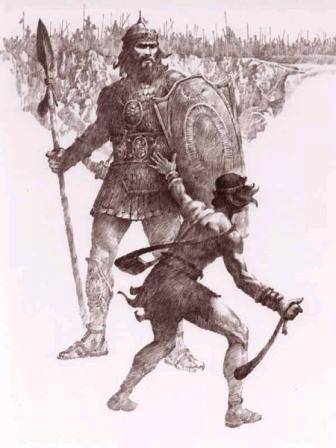
8 Then David said to Ahimelech, “Then have you not here a spear or a sword at hand? For I have brought neither my sword nor my weapons with me, because the king's business required haste.” 9 And the priest said,“The sword of Goliath the Philistine, whom you struck down in the Valley of Elah, behold, it is here wrapped in a cloth behind the ephod. If you will take that, take it, for there is none but that here.” And David said, “There is none like that; give it to me.”

10 And David rose and fled that day from Saul and went to Achish the king of Gath. 11 And the servants of Achish said to him, “Is not this David the king of the land? Did they not sing to one another of him in dances,

‘Saul has struck down his thousands,
    and David his ten thousands’?”

12 And David took these words to heart and was much afraid of Achish the king of Gath. 13 So he changed his behavior before them and pretended to be insane in their hands and made marks on the doors of the gate and let his spittle run down his beard. 14 Then Achish said to his servants, “Behold, you see the man is mad. Why then have you brought him to me? 15 Do I lack madmen, that you have brought this fellow to behave as a madman in my presence? Shall this fellow come into my house?”

Chpt22 David departed from there and escaped to the cave of Adullam. And when his brothers and all his father's house heard it, they went down there to him. 2  And everyone who was in distress, and everyone who was in debt, and everyone who was bitter in soul, gathered to him. And he became commander over them. And there were with him about four hundred men.
That’s where David is, in a cave with other disenfranchised people – people down on their luck, people in distress and (as the writer of Samuel says) bitter.  Now look: in my view of it, if I were David, and I had been anointed by God to be King because Saul was an unfaithful man, and I had been the one to strike down the Giant from Gath – even by God’s power and not merely my slingshot -- I’m not sure I’d be willing to run away and hide like this.  I’d want God to finish this thing up and make me King already.  I shouldn’t have to run in the wilderness because of a madman – if God is Good.

But David doesn’t reason like I would.  Instead, he writes a song that says this:
4 I sought the LORD, and he answered me
    and delivered me from all my fears.
5 Those who look to him are radiant,
    and their faces shall never be ashamed.
6 This poor man cried, and the LORD heard him
    and saved him out of all his troubles.
7 The angel of the LORD encamps
    around those who fear him, and delivers them.
From our perspective, David is not only the subject of trouble which, frankly, the Lord has created: David is stuck between a madman who wants him murdered, and the King of Gath – that is, the King whose Giant he just killed, and whose sword he has strapped across his back.  David finds himself marching from the claws of his enemy into the mouth of his enemy – and rejoices!

Think about that: David sees that God’s goodness is not found in a kingly court.  Trouble is actually found in the kingly courts.  David finds himself in a cave surrounded by people who, frankly, have been on the receiving end of all the trouble in the world, and he sees God’s hand there with them. With them, there is a refuge from the madness he is escaping on both sides.  In David’s view of it, God has protected him, literally surrounding him with the protection of angels.

I think it’s important here to see that David is not saying, “wow: at least it’s not as bad as it could have been.”  David is in fact saying that God has delivered him from an evil end.  On the one hand, he has been delivered from the hands of Achish who is his true enemy.  David was not put to shame to be either killed or put in debt to the enemy of God’s people.  But on the other hand, David is also delivered from Saul – who ought to be his ally and friend, but is instead jealous of him to the point of madness.

David sees God as delivering from his enemies.  How does he justify that?  We'll talk about that next week.


01 August 2012

Our Bad Taste

by Frank Turk

Louis Berkhof says that the Goodness of God is one of three primary moral attributes of God – the other two being God’s Holiness, and God’s Righteousness.  Just to get the smart person quotient satisfied early, here’s specifically what Berkhof says in his Systematic Theology:
We speak of something as good when it answers in all parts to the ideal. Hence in our ascription of goodness to God the fundamental idea is that He is in every way all that He as God should be, and therefore answers perfectly to the ideal expressed in the word "God." He is good in the metaphysical sense of the word, absolute perfection and perfect bliss in Himself.   …

But since God is good in Himself, He is also good for His creatures, and may therefore be called the fountain of all good, and is so represented in a variety of ways throughout the Bible. …

All the good things which the creatures enjoy in the present and expect in the future, flow to them out of this inexhaustible fountain. And not only that, but God is also the highest good for all His creatures, though in different degrees and according to the measure in which they answer to the purpose of their existence. (Systematic Theology, 70)
That’s quite a mouthful.

It’s obvious that Berkhof is working hard to be as precise as possible to make his point as clear as possible, but the Psalmist takes a different approach.  The psalmist here tells us where our hope lies.  And let’s be clear: the Psalmist, in Psalm 34, is hopeful.  The Psalmist is somehow aligned with the Presbyterians who wrote the Westminster Catechism 3000 years later.  When they asked the question, “What is the chief and highest end of man?”  They responded, “Man's chief and highest end is to glorify God, and fully to enjoy him forever.”

TASTE AND SEE THAT THE LORD IS GOOD, he proclaims.  He is actually a little more emphatic than that, because the Pslamist doesn’t just say “the Lord” here in proper reverence: he says instead, “TASTE AND SEE THAT JEHOVAH IS GOOD!” “TASTE AND SEE THAT YAH-WEH IS GOOD!”  That is: this is not God-in-Theory. This is not a system of understanding an ineffable and incomprehensible God.  This is the God of Joshua, the God of Moses, and Joseph, and Jacob, and Isaac, and Abraham, and Noah.  This is God who called Samuel by name and gave him explicit instruction to anoint David the King of Israel.  This is God in Person, God in Fact, The God who has a living history of making promises, and keeping them.

And that’s the Psalmist’s trope here: Somehow, we have a God who is as real as a delicious meal.  Somehow, we have to get our mouth ready to receive him.  That’s actually what John Calvin says about this Psalm: “the Psalmist indirectly reproves men for their dullness in not perceiving the goodness of God, which ought to be to them more than a matter of simple knowledge. By the word taste he at once shows that they are without taste; … He, therefore, calls upon them to stir up their senses, and to bring a palate endued with some capacity of tasting, that God’s goodness may become known to them.”

Without overstating it, the Psalmist is saying that God is REAL – and that the primary way we know God is REAL is that He is knowably Good.

This is actually our problem, isn’t it?  This is actually the problem that we as people face all the time.  We have lousy taste.  I’m not talking about the way we dress, or the colors we paint our homes or the way we decorate them, or even the kinds of jokes we tell.  I’m talking about keeping our sensibilities on what God intends for this world.  And when bad things happen – things which are inexplicably bad, things which, let’s face it, one Sunday school lesson cannot possibly explain – our bad taste tends to take over.

We forget the broad ways in which the fact that God is Good which must anchor us.


25 July 2012

Not Baby Talk

by Frank Turk

One of the first prayers many of us either learned as children, or taught our own children, is a very simple prayer at mealtime: “God is Great, God is Good.  Let us thank him for our Food.  Amen.”  We do this, I suspect, because we want to teach our children to pray – we want them to understand what is being said when we pray so that it’s not just magic, so that prayer for them is not something they can’t understand.  We want them to know that they can talk to God and understand that He is listening.

I think that it’s a good idea.  In some sense, I wish someone was doing that for us at every stage of our lives so that we can somehow remember that God is listening to our prayers.  I’m afraid that what happens is that as we grow in wisdom and stature and knowledge, eventually we become our own reformed-type people, we get to the book of Romans, and we get overwhelmed by the general Greatness of God – so much so that when we get to Romans 8:26 and we hear the apostle tell us that we don’t even know how to pray, we somehow “grow up” past the place where a prayer like “God is Great, God is Good, let us Thank Him,” sounds like baby-talk.  It sounds like something we have grown up past.

But then we have a week this like last week, where the real world intrudes on our systematically-precise faith.  It’s a week where everyone in his right mind has to ask the question: “If this is the state of the world, how can God be even on-duty – let alone be Good?”  I don’t know where you live or work, but this question came up this week as I talked to the people I know.  The events of the world, the real dreadful tragedies of the world, made this a relevant question this week.  And it made writing a Sunday School lesson about the attributes of God a lot less academic than I expected it would be.

We are studying the attributes of God this summer in this class, and there is quite a list of things guys like Tozer and Pink and Berkhof tell us about the qualities of God.

When we consider this God we are talking about from the Bible, we’re talking about the Omnipotent God whose very words speak the created order into being.

He’s the Transcendent God, the Holy God who is utterly unlike us.

He is the Self-existent God and the immutable God who does not need us for anything, and who has no needs to speak of, and who never changes.

He is the Omniscient God who knows everything, and cannot be taught anything – he’s never surprised or somehow set back on his heels so that he has to resort to Plan “B”.

He is an utterly just and righteous God who cannot abide sin and must punish the guilty.

They say that some attributes of God are incommunicable and some are communicable – that is, some are virtues which God alone possesses, and others are traits or virtues which we can emulate even though we will never get them perfectly right.  And they say that all of these attributes, which are somehow distinct, are also not at all discrete – so you can’t really talk about God’s Just character, for example, without talking about His Long-Suffering.  You can’t talk about his Omniscience without talking about this Immutability, and so on.

But in some sense, then, our expectations of God might be to hope that, at best, he ignores us.   Because when we compare ourselves to Him, He might mean a lot of trouble for us.

Asking God for help could be like being the Tin Man asking Oz the Great and Powerful for help –

Me:  um, God?  May I have a new heart please?

GOD: YOU DARE TO COME TO ME FOR A HEART, DO YOU? YOU CLINKING, CLANKING, CLATTERING COLLECTION OF CALIGINOUS JUNK!

And he’d be right to say that to us – or to say nothing at all to us, to simply leave us to our disobedience, to our trouble, to our ultimate destination of whatever it is he might have decided it to be.

So what hope do we have in this world if the only person or authority who can help me that has all power, all knowledge, and who never changes?  Shouldn’t I only expect him to treat me like the not-much-of-nothin’ that I am?

But one attribute, it seems to me, is the category without which God cannot be God.  And it’s the one which we, sadly, somehow see as the preschool attribute of God – the one we hand over to children because they cannot mistake it or break it.  I'm talking about the Goodness of God.

I'll be talking more about it in the coming weeks.