04 January 2026

A letter from Mentone

Spurgeon penned this letter from Room 14 at the Hôtel Beau Rivage in Mentone, France to the congregation at the Metropolitan Tabernacle, London. He traveled to the south coast of France almost every year during the winter months to escape the harsh London weather. Gout and kidney failure made him physically weak and kept him in constant pain. Compounding Spurgeon's physical miseries was the stress of the Downgrade Controversy, which had boiled over even into North America. Spurgeon had resigned from the Baptist Union a year previously, but the controversy still swirled around him because the majority of British Baptists were unhappy with the stance he took against modernism. It had been a difficult year. He would not return to London until late February of 1889. By then he had less than three years to live. He would die on January 31, 1892, in the same hotel room from which he wrote this letter.

Menton, December 1, 88

Dear Friends,

Although we have had two days of rainy and tempestuous weather, I have improved so greatly that I feel like the man who is described in Scripture as "walking, and leaping, and praising God" [Acts 3:8]. As I cannot quite manage the two former exercises, I desire to be doubly abundant in the third. Watts says,

"When we are raised from deep distress,
Our God demands a song;
We take the pattern of our praise
From Hezekiah's tongue."

That man of God on his recovery said, "The living, the living, he shall praise thee as I do this day" [Isaiah 38:19]. In that spirit I have prepared a sermon to which this note is appended; and I have borne therein my willing testimony to the faithfulness of God and to the certainty that he honors the faith of his people.

From the Tabernacle I hear joyful news of a meeting at which four or five hundred persons came together to confess that they have found mercy during the late services. What a cordial to one's heart! "Therefore we will sing my songs to the stringed instruments all the days of our life in the house of the Lord" [Isaiah 38:20]. Blessed be His name!

With my heart's best wishes for all my hearers and readers,

Their servant for Christ's sake,

C. H. Spurgeon

C. H. Spurgeon


01 January 2026

John Cotton

posted by Phil Johnson

I wrote this piece as a foreword to Nate Pickowicz's edition of John Cotton: Patriarch of New England. It's an excellent, breif biography of America's first, and arguably greatest, Puritan.
     For an affordable introduction to Cotton's works, I recommend Cotton's The Way of Life, published by the Northampton Press, edited by Don Kistler.
     But if you want to dig deep, you absolutely must have this five-volume set: The Works of John Cotton, published by Soli Deo Gloria, and edited by Stephen Yuille.

Among the luminaries of the early Puritan era, none shines brighter than John Cotton. He possessed a remarkable array of spiritual gifts and academic accomplishments. He was a brilliant scholar, a master of the biblical languages, a skilled and perceptive theologian, a proficient writer, a powerful preacher, a tenderhearted pastor, a wise and sympathetic counselor, and an effective evangelist. He had lengthy ministries both in England and in colonial Massachusetts. On both sides of the Atlantic he managed to gain profound and lasting respect from friends and adversaries alike. His character and personality shaped the unique flavor of American Puritanism more than any other single influence. The very best qualities we see among the Puritans of early Massachusetts— their humble piety, their emphasis on sin and repentance, their strong work ethic, their sense of duty to God and community, and their love for Christ and Scripture—all are part of John Cotton's legacy.

During the first decade of the seventeenth century, John Cotton was a lecturer and catechist at Emmanuel College, Cambridge University (a Puritan training institution for pastors). Though he was highly esteemed for his eloquence and erudition, Cotton himself was not yet genuinely converted. A sermon by Richard Sibbes in 1609 truly awakened his heart to believe, and the transformation was immediate and obvious to all. The trademark eloquence of Cotton's lectures gave way to a simple but passionate style of gospel-focused preaching designed not to impress fellow scholars, but rather to awaken the consciences of his hearers. The need for sound conversion is one of the central themes that reverberates through all of Cotton's subsequent sermons and writings.

His fondness for gospel truth was both winsome and infectious. Wherever he preached, people were convicted and converted. A thoroughgoing Calvinist, he powerfully refutes the opinion of those who insist that the doctrine of election is an impediment to evangelism. He was a zealous and effective winner of souls. Just a few months after Cotton's ordination to the ministry in colonial Massachusetts, the First Church of Boston saw a wave of remarkable conversions that can only be termed revival. Governor Winthrop wrote,

It pleased the Lord to give special testimony of his presence in the church of Boston, after Mr. Cotton was called to office there. More were converted and added to that church, than to all the other churches in the bay. . . . Divers profane and notorious evil persons came and confessed their sins, and were comfortably received into the bosom of the church.

It is of course extraordinary that a renowned theologian, scholar, and long-tenured pastor of John Cotton's stature and age (he was nearly 50) would leave everything he knew in order to help establish a colony in the brutal frontier of the New World. How John Cotton came to Massachusetts is one of the central threads in the story of his remarkable life. You can't read any biographical account of John Cotton without noticing the amazing way Providence sovereignly directed this amazing spiritual leader into a role he might never have chosen for himself—and thus magnified his influence and his legacy through circumstances that would have seemed more likely to sideline him or bury his name in obscurity.

Cotton's legacy lives on. His life is instructive even today.

There are, for example, profound lessons about separatism and schism woven into John Cotton's experience. We learn from his struggle with the Church of England that cautious, biblical separatism (2 Corinthians 6:14-18; Revelation 18:4) is sometimes necessary. On the other hand, Cotton himself correctly believed that the schismatic mentality of those who think every disagreement and every error deserves a harsh anathema is destructive to the health and testimony of the church. Faithful believers need to foster both wise biblical discernment and a unifying love for the true Bride of Christ.

This is vividly illustrated not only in John Cotton's failed struggle to remain in and influence the Church of England, but also in his well-documented conflicts with Roger Williams. Williams was a strict separatist who refused communion with the Puritan churches of Massachusetts because they declined to condemn the Church of England as a synagogue of Satan. His views about the church, her purity, her unity, and her role in society set Williams bitterly at odds with John Cotton.

Both John Cotton and Roger Williams had valid points to make. For example, Williams alleged that the churches and the government of early Massachusetts afforded hardly more freedom of conscience than the Puritans themselves had been given under Archbishop Laud in England. The complaint was not far-fetched. The churches of New England had no problem letting the secular magistrates inflict punishments on people who were excommunicated over matters of conscience. Virtually all evangelicals today would have more sympathy with Williams's view on that point than with Cotton's.

But Williams was unquestionably too censorious, too sharp in his criticism, too prone to exaggerate others' flaws, too ready to impute ill motives to his adversaries, and too quick to break fellowship with men who gave every evidence of genuine faith in Christ and his Word.

Both men's shortsighted prejudices made their disagreement far more bitter than it needed to be.

One conviction that John Cotton is especially remembered for is his defense of Congregationalism. More than fifteen years before sailing for the New World, he had embraced Congregationalism, a system of church polity where each individual church, rather than the presbytery, is responsible for its own affairs. (New England Congregationalism is another key feature of Cotton's legacy.) In 1644, at the height of his conflict with Roger Williams, Cotton published The Keyes of the Kingdom of Heaven, an explanation and defense of Congregationalism. The manuscript was sent by ship to England, where it was published. John Owen, the most eminent of Puritan scholars, obtained a copy in order to write a critique, but upon reading the book, he was converted to John Cotton's point of view. Owen wrote,

In the pursuit and management of [Mr. Cotton's] work, quite beside, and contrary to my expectation, at a time wherein I could expect nothing on that account but ruin in this world, without the knowledge, or advice of, or conference with any one person of that judgment, I was prevailed upon to receive those principles to which I had thought to have set myself in opposition.

He then wryly added, "Indeed this way of impartially examining all things by the word . . . laying aside all prejudiced respects to persons or present traditions, is a course that I would admonish all to beware of who would avoid the danger of being made [Congregationalists]."2

It's a shame John Cotton and Roger Williams didn't take Owen's dispassionate approach to examining one another's views. The two were so different that it's unlikely that either would have fully embraced the other's position, but they certainly could have learned from one another.

That seems an important lesson for Christians living in the polemically charged atmosphere of the Internet age. It's one more thing we need to learn from the life and experience of John Cotton.

The only other significant misstep worth pointing out in the career of John Cotton is his early support for Anne Hutchinson and her followers. In the end, Cotton saw that although she claimed to be echoing his teaching, she had actually taken aspects of his teaching on grace to an unbiblical, antinomian extreme. He wisely distanced himself from the error and took the opportunity to clarify his views through careful teaching on the issues that were under debate.

The deep respect Cotton's contemporaries had for him was well deserved, and he also deserves much credit for the moral and biblical foundations that held colonial Massachusetts together from the time of the colony's founding well into the next century. I would argue that the Great Awakening of Jonathan Edwards' era represented a return to New England's spiritual roots—a harvest that sprang from seeds planted by John Cotton and watered by the next two generations of New England Puritans (including Cotton's son-in-law and grandson, Increase Mather and Cotton Mather).

One cannot make sense of early New England history apart from the Puritan influence that shaped that culture—and John Cotton is the key figure in understanding the doctrine, piety, and spirit of New England Puritanism. My hope is that this book will be an introduction for many readers into the rich spiritual history of early New England. May that in turn stir renewed interest in the great biblical truths that shaped the very embryo of American life and values—and (even more foundationally) the lives of the godly men and women who helped found this great nation.

Phil's signature


30 December 2025

More News on the Panhandling Imposter

An update on the case of that fake "Reverend" Hobo
Posted by Phil Johnson

He got off:

SOUTHWARK.—THE CLERICAL IMPOSTOR—CAUTION TO THE BENEVOLENT.—John Elliot Hedlow, alias the Rev. Mr. Hedlow, alias the Rev. Mr. Norman, and a variety of other aliases, well-known to the public for many years, was brought before Mr. Á Beckett for further examination, charged with fraudulently obtaining the sum of half-a-crown from Mr. James Wood, a City missionary, under false pretences, by assuming himself to be an ordained minister of the Church of England. The prisoner has been well-known to the Mendicity Society as a clerical impostor for many years, and has been convicted four times at Marlborough-street Police-court, and other courts. He at times imposes on the public by writing on the pavements, and appeals to the benevolent for himself and starving family. The prisoner, hearing of the charitable disposition of the Rev. Mr. Spurgeon, of New Park-street Chapel, sent him a canting, hypocritical letter, describing himself as an ordained minister of the Church of England—that he had had a fall by connecting himself with a female—and that he had altered his views respecting baptism; also, that his wife died in a mad-house, leaving him with four children unprovided for. Mr. Wood gave him half-a-crown for his immediate use, and made arrangements to meet him on another day. In the meantime Mr. Wood ascertained the prisoner's true character from Horsford, of the Mendicity Society, who took him into custody. He was remanded from Saturday the 16th instant, to enable the Mendicity Society to bring further evidence.

The uncle of the prisoner, a gentleman of independent property, proved him to be a worthless character, but nothing was brought forward to show that the prisoner had actually obtained the half-crown by means of false pretences.

Mr. Á Beckett said that he really believed the prisoner to be a gross impostor, but he was surprised to find that sufficient evidence had not been brought against him. However, he believed that to be sometimes a difficult matter, especially with a confirmed impostor like the prisoner, whose letters he had seen, composed of falsehoods of the vilest description. He could not help it, but, under all the circumstances, he must discharge him from custody; but, at the same time, he hoped that the publicity given to his conduct in the public papers would put an end to his further impostures on the benevolent.

Phil's signature


27 December 2025

Not a Very Convincing Con, If You Ask Me

A tale from the 25 June 1855 London Police Blotter

Posted by Phil Johnson

In June of 1855, Charles Spurgeon was just 20 years old. He had accepted the pastorate of the New Park Street Chapel just 14 months earlier, and his fame was already beginning to spread internationally.

For someone so young, he had gained an unusual amount of pastoral skill and wisdom from observing his father and grandfather (both pastors). He had also pastored a medium-sized congregation for a few years at Waterbeach before coming to London. But all his prior pastoral experiences were in small towns and rural settings. Spurgeon was still a bit callow when it came to discerning the schemes of Victorian con-artists who infested the squalid districts of London. He had a warm, generous heart and a passion to help London's teeming masses of needy and destitute people. He was well known for being always generous and charitable—but he was perhaps too gullible at times.

The following incident was reported in all the London newspapers.

SOUTHWARK.—A Clerical Impostor

JOHN ELLIOT HADLOW (alias the Rev. Mr. Hadlow, alias the Rev. Mr. Norman, alias the Rev. Mr. Hague), an elderly little man, dressed in a very shabby suit of black, with a dirty white neckcloth, and having a superfluity of bushy grey whiskers and a bald head, was charged with obtaining a half-crown* from Mr. James Wood, a scripture reader and distributor of the Rev. Mr. Spurgeon's charities, under false and fraudulent pretences.

Mr. Wood stated that Mr. Spurgeon had received a letter from the prisoner, which was of considerable length, setting forth his extreme poverty, and asking for relief. [Mr. Wood] was deputed to make inquiries about the prisoner. He called upon him at his address, and not finding him at home he wrote asking for an interview. At this meeting the prisoner told a long and melancholy story of his misery. He said his wife had died in a madhouse, leaving him with four children; that he was an ordained minister of the Church of England, but, in consequence of some connexion with a young woman, he had a fall, from which he had never been able to recover himself. Since then his views with regard to baptism were somewhat altered, and he left the Established Church. Witness, believing there was some truth in what he said, gave him half a-crown, and appointed to meet him again. In the meantime, however, he discovered his real character, and that all he had told him was false. At the second interview witness took with him Mr. Hereford, the Mendicity Society's officer, who at once recognised him as an old offender, and took him into custody.

From the statement of the clerk to the Mendicity Society, it appeared that the prisoner had been known as a clerical impostor for nearly 27 years, in which time he had been convicted 11 times at different police-courts, and he had been seen in the streets begging and writing on the pavement.

Mr. á Beckett, after perusing the letters written by the prisoner, said he was quite astonished that any one should be taken in by such letters as these. The obvious cant which the letters contained would have been sufficient to awaken suspicion in any mind. The prisoner had, however, been charged with fraud, and perhaps some other charges would be brought against him; he should, therefore, remand him.

* The purchasing power of a half crown would equal between $50 and $100 in 2025 dollars. It was a substantial sum to hand to a vagrant dressed in shabby religious garb.

Phil's signature


26 December 2025

Critic to Spurgeon: "You are a prodigious quack."

Posted by Phil Johnson

Young Lion; Old Woman
CLICK HERE FOR FULL-SIZE IMAGE

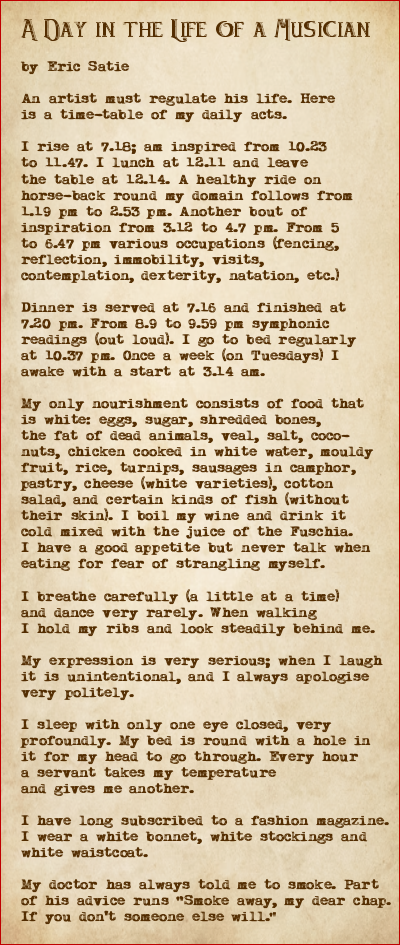
Charles Spurgeon had critics who absolutely loathed him, and they spoke über-harshly to him—and about him—with such relentless ill-will that their words make most of the snark in today's social-media forums sound almost genial by comparison.
     Here is one such example, from an anonymous correspondent who evidently labored for hours to inject as much venom as possible into an open letter. This was published in London's Sunday Times—and carried in newspapers worldwide. This copy is from Melbourne, Australia.
     The year was 1861. Construction on Spurgeon's Metropolitan Tabernacle was finally complete and the congregation had moved into their new home with its famous 5,600-seat auditorium. (Standing room pushed the capacity to 6,000, and it was packed full from the very first service.) Spurgeon had been pastoring in London only seven years, and he was barely twenty-seven years old. His style of preaching was deemed too colloquial and too passionate compared to the stodgy vestment-wearing clergy who dominated the Church of England. When the following letter was published, Spurgeon had not yet preached his famous sermon against the doctrine of baptismal regeneration. That sermon would further—and permanently—elevate the ire of the Anglican establishment. But as this letter shows, there was already an undercurrent of contempt and condescension against Spurgeon from Englanders who equated religiosity with true religion.
     In short, Spurgeon's critics preferred the pomposity and pretentiousness of high-church formalism—and they tended to be rather ill-tempered about it. Spurgeon was regularly drawing capacity crowds of 9,000 or more to the Surrey Gardens Music Hall. Hundreds of converts were leaving the Church of England and attending worship services in non-conformist chapels. One suspects that underlying all this vitriol from Spurgeon's critics was a bitter strain of jealously that someone so youthful could preach with such power and see that kind of success.

THE BORDER WATCH, FRIDAY, SEPTEMBER 20, 1861

A DOSE FOR SPURGEON

A late writer in the "Sunday Times," under the signature of "Warder," addresses the Rev. Charles Spurgeon in the following terms, the style and power of which remind us of the classical Philippics of Junius:—


You are, I am told, to preach in your new monster Tabernacle this very evening. The huge place is built and paid for. I congratulate you. The achievement, considering your youth and your ignorance, is certainly astonishing. Some people predicted that you would fail in this gigantic undertaking: you have disappointed them. Some people predict that you will not be able to fill your chapel now that it is erected: I beg you will not listen to their croakings. Depend upon it: they badly over-estimate the intelligence, wisdom, and common sense of the generation! For years and years to come you may assure yourself there will be fools vast enough in London to make you a congregation vast as your vanity and mighty as your tongue.

For your chapel itself, it is ugly enough in all conscience! Big, to be sure, it is; but more unclassical it could hardly be. It has cost an enormous sum of money; but, then, deformity is always as expensive as beauty in this world. It will suit your worshippers admirably; and I suppose the devotions paid to you will be the chief carried on within its walls. There is nothing akin to religious taste in its aspect; it is a big, ugly staring vulgar profane place; and as such it will harmonize only, and too happily, with the kind of services over which you usually preside. Sir, your chapel is worthy of your genius and your fame.

I frequently meet with people who profess to be amazed at your popularity. Why should they? You work hard. You have an unlimited supply of tongue always at command. You never puzzle the brains of your hearers. Your sermons are well spiced. You are flippant, familiar, and, in a certain fashion, jocose. You are intolerant, dogmatic, and common-place. You revel in judgments. You are precise in all the details of perdition. You have scaled the heights of Heaven. You have fathomed the depths of Hell. You talk with Satan as a man talks with his friend. You talk with the Almighty as no man talks with his friend. You are the munificent patron of the Redeemer. You are the merry playmate of the Holy Ghost.

You are a wholesale and retail dealer in that famous and much sought after article—damnation. Your pulpit is a big brimstone warehouse.

You are one of the Clowns of the church, addressing immortal souls in a "here we are" sort of style. You never pause for a word, because words, in your estimation, are not sacred, and are very cheap. You have no care about religious properties. You own immeasurable quantities of brass. You are a prodigious quack. As you boast of having been told by a gentleman in the street, "you are a great humbug."

Now, these are all elements of popularity. Your gospel is a nostrum which you unlimitedly puff, and it has accordingly an unlimited sale. I see about the street every day, an ugly carriage, blazing with paint, brass and gold, in shape like a teapot; in decoration like a bawd; in character like a child's plaything. On it is the inscription "The Elixir of Life." I dare say you know it. It is a small-headed, big-bellied cannister on a truck.

I can well imagine the elevated complacency with which you gaze upon that carriage. For that carriage you are an impersonation. Your doctrines, you maintain, are the elixir of life. You drive about the street, a self-advertising medium. Children, women, and foolish men stop, stare at you as you go by, give a chuckle, as though they had beheld something very funny and pass on. But the elixir pays. The advertisement, however impudent, is not thrown away. Thousands go and buy the miserable compounds that you proclaim to be medicine of the soul, they give a good price for the article. To be sure it does not cure them of their moral infirmities; but you make the profit; and why should not all mankind be satisfied?

Illustrations cadger! I almost adore you. The facility with which you convert brass into tin is something to be admired in this age of money-hunting. You bring Omnipotence itself into your shop, and set it up behind the counter as chief salesman.

You beg and pray in the same holy name—the same unholy spirit. You sell your blessings as the priests of another sect used to sell their indulgences. You are the cheap-jack of the religious world; and you drive a roaring trade.

"So many Divine grains for so much! A dose of damnation and a pun for so much. Here you have a poke in the ribs of Ineffable for so much. What shall be the next article gentlemen? I will dance a heavenly hornpipe for so much! Jigs of grace are going at so much! The irresistible burlesque of redemption is now offered—who bids? The devices of the devil denounced for so much! Babylon exposed in a screech of bigotry for the smallest possible consideration! The doctrine of Salvation discounted at so much percent! Dishonored bills of conscience bought in to any amount! A case against any man's soul granted on the lowest possible terms! Sacred sneers by the dozen! Jibes of spiritual joy by the gross! Pay up stiff and prompt and I will pray for you! Whoso giveth unto Spurgeon lendeth unto the Lord: whoso giveth not unto Spurgeon shall be given over to the wicked one. Gentlemen, the chapel is paid for, and now it belongs to my friend Jesus."

Such, sir, is your boast one night. The next, you blow up your guests because the collection is a small one. Your congratulations are in God's name: so are your censures. You are like an Irish beggar in this respect. Give; and no benediction can be too gracious: deny; and no denunciation can be too withering! If you receive a donation, the promises of Heaven fall from your lips. If you do not, you find the threats of Hades just as easy!

To my mind, sir, your assumption of personal identity with the Great Jehovah is the most offensive feature in your entire character. With the zealots of your sect this vice is frequently too apparent, though I believe it is often most unconsciously indulged. In you it assumes most horrible proportions.

It is not the complacency of assured faith; but the swagger of egotism without culture—of audacity without conscience. Were it not for this, you would be a harmless amusement for ignorant people; as it is, I fear your influence must tend powerfully to bring religion into the contempt of all thoughtless minds.

The gospel is not a vulgar joke. Christianity is not a burlesque extravaganza. Faith is not a farce. Hell and heaven are not the words to be made the stock-in-trade of a vulgar punster. Salvation is not a quack remedy. Apostleship is not a merry-Adrewism. The sanctuary is not a play-house. But your prayers are profane gossip with God. Your comments on Scripture are the paltry gag of a low comedian. Your preaching is the religious nonsense of an improvisator. Your earnestness is impudence.

Your success is a national scandal.


CLICK HERE FOR FULL-SIZE IMAGE


PS: I found and colorized this photograph of a Victorian-era coach in Central London like the one described in the above diatribe. Turns out "The Elixir of Life" is sarsparilla.

The Elixir of Life
CLICK HERE FOR FULL-SIZE IMAGE
Phil's signature

23 December 2025

"The Other People's Preacher"

The following article is from The San Antonio Daily Light, 3 February 1892. It was published three days after Spurgeon went to heaven.

REV. CHARLES SPURGEON.

A San Antonian's Visit to the Great
Tabernacle—Extract From a
Personal Letter.

The recent death of the Rev. Charles Haddon Spurgeon, at Mentone, Italy, where he had gone to seek rest from his excessive labors, too late to repair the wastage of a most laborious life, invests with a fresh interest all that surrounds him and his work for the poor of London. The following description of Spurgeon's tabernacle is from the pen of an old resident of this city, two years since in London for his health, and will be of more than passing interest:

LONDON, England, Sept. . ., 18.

DEAR M.......

I have a few spare moments, and as I have just returned from Spurgeon's famous Tabernacle and was much impressed with what I saw and heard there. I will tell you all about it.

I took a cab at Charing Cross Station, where I am stopping, and in fifteen minutes after having paid [no doubt overpaid] the cabbie I found myself at the entrance of the great Tabernacle. I cannot give any correct idea of the exterior of the building, except that it is very ordinary looking and the brickwork somewhat dingy from long exposure to London smoke and grime.

As I entered a deacon hailed me [I knew he was a deacon. Why is that one never mistakes a deacon?] and asked me if I had a ticket, at the same time tendering me one. I was confused and put my hand into my pocket to respond to the rules of the Tabernacle as to price. When he saw my intention he said that there was no regular charge, implying as I thought an irregular one, but he was particular to say that I might put anything that I liked into the large box on my right, which of course I did. After this I felt relieved, as did also the deacon, for he smiled, but not in the San Antonio way, although I would not like to tempt him on a week day. Of course on Sunday it was not to be thought of.

I now thought myself at liberty to enter the races. I mean the race for a good seat. I finally picked out the best, and softest place that was handy, and as the services progressed took the following summary.

The room is oblong and evidently built for acoustic effects and large seating capacity, which latter I should say was about five thousand. There are two galleries running around the room, and the pulpit is on a level with the first gallery, the choir being just in front of the pulpit. I should think that there were one hundred choir boys, but the singing was of the most simple character and always joined in by the congregation.

By half past ten the Tabernacle was full, and those arriving after that were glad of standing room. All classes were there, but I thought the middle class the more numerous, and there were evidently many strangers. I was impressed that Spurgeon was the teacher of England in a popular sense. Mr. Spurgeon entered the room from the rear, accompanied by several other gentlemen, apparently connected with the church.

His theme was well chosen and his discourse of a character and so handled as to make him beloved by the common and lower classes. I did not notice many aristocratic faces, I suppose because Mr. Spurgeon is really the other people's preacher. And by the way, it seems to me a pity that preachers have to cater to classes. It was not so with the Great Preacher.

A gentleman on my left said that Mr. Spurgeon was not in very robust health, and no doubt his great load of responsibility and work was telling upon him. Of course everything was English from the pulpit to the pronunciation, but I left the church feeling that Mr. Spurgeon was a good man, and on the principle that it is better to be right than to be president, felt drawn to him. He impressed me as having a great heart, and a love for his fellows so strong that he felt called upon to better their condition, and there can be no doubt that the simple though fervid eloquence of Spurgeon has done more to raise the moral tone of London's poor and middle classes than any other one influence.

The Dear Old Man is nearing his end, so his friends fear. When he has gone his place will be hard to fill, both because of his own peculiar genius and power, and also because there are so few nobler and unselfish men in the world.

J. M. E.


19 December 2025

Spurgeon on the Eternality of Hell

posted by Phil Johnson

The following is an excerpt from sermon #669, "The Smoke of Their Torments," in Charles Haddon Spurgeon, The Metropolitan Tabernacle Pulpit, 63 vols. (Passmore & Alabaster, 1864), 10:670-71.

he Judge of all the earth cannot but do right. Though he is terrible and dreadful in his anger, as a consuming fire, yet is he still our God for ever and ever, full of goodness and full of truth.

There is a deep-seated unbelief among Christians just now, about the eternity of future punishment. It is not outspoken in many cases, but it is whispered; and it frequently assumes the shape of a spirit of benevolent desire that the doctrine may be disproved. I fear that at the bottom of all this there is a rebellion against the dread sovereignty of God.

There is a suspicion that sin is not, after all, so bad a thing as we have dreamed. There is an apology, or a lurking wish to apologise for sinners, who are looked upon rather as objects of pity than as objects of indignation, and really deserving the condign punishment which they have wilfully brought upon themselves. I am afraid it is the old nature in us putting on the specious garb of charity, which thus leads us to discredit a fact which is as certain as the happiness of believers.

Shake the foundations upon which the eternity of hell rests, and you have shaken heaven's eternity too. "These shall go away into everlasting punishment: but the righteous into life eternal." There is precisely the same word in the original. We have it translated a little more strongly in our version, but the word stands the same; and if the one be not eternal, the other is not. Brethren, this is a fearful thing. Who can meditate upon the place appointed for the wicked without a shudder?

Ungodly men affect to think we like to preach upon these topics. Far, far enough is it from being the case. I have had to censure myself of late for scarcely having preached at all upon them. They fancy that Christian men can look with complacency upon the torment of the lost, imagining themselves to be safe. They know not what they say. The very reverse of such a spirit is common among us. We shudder so much at the thought of men being cast away for ever, and horror takes so strong a hold upon us, that if we could doubt it, we would; and if we could disprove it altogether, we feel we should be glad. But we dare not attempt the task, because we know that it were to impugn the sentence of the Almighty, and provoke a quarrel against the Most High. Great Judge of all! thou shalt trample upon thine enemies in the day of thy wrath; yet shalt thou be as glorious in that act as when thou dost pardon sin, and pass by transgression.

Christian, look there, and, as thou lookest, rebel not, but say, “True and righteous art thou, O God; let thy name be honoured evermore!

C. H. Spurgeon