Showing posts with label fads. Show all posts

04 February 2014

Donald Miller's "trinity" votes church involvement optional

by Dan Phillips

Good brothers Denny Burke and Todd Pruitt are writing about this post from Donald Miller in which is says he doesn't go to church much.

Why not?

Because: I, Me, My.

(That's shorter Miller, distilling a post [as our elders might have said] utterly innocent of the least allusion to Scripture.)

All I have to add is to say that you Pyro readers would have been already abundantly well-prepared to respond to Donald Miller decisively and finally, as well as to all the thousands of anonymous donaldmillers running about clutching their notes from "god" excusing them from doing what the actual living real God of Jesus Christ has called all believers to do for the last 2000 years.

"Freshen my memory," you ask? Sure, I'm here to serve. To pluck out just three:

Thinking like a slave

Thinking Biblically about church attendance, involvement, and membership

Why you need to be in church this Sunday

And then finally and specifically to Miller, there is the indispensable Open Letter to him by the indispensable Frank.

About all of these, and the use they could have been made of in a cooperative Christian blogosphere that was really about the issues concerning which we claim to be passionate rather than the petty maintenance of clubhouses membership lists, I have a great deal to say.

But not here, and not now.

ADDENDUM: Miller circles a bit around the theme of "intimacy with God," free-associating as if Scripture had nothing to say on the topic. But it does. Were anyone to read Miller, then work through sermons 17-24 on Proverbs 3 in this series, he might think they were preached in response to Miller's entirely erroneous notions... if it weren't for the dates on them.

Dan Phillips's signature

03 January 2013

How to stay ahead of the curve

by Dan Phillips

Hordes about us are desperate to be liked and well thought of by the current age. They seek this approval by trying to fit in, trying to keep up with each moment's swelling wave.

By contrast, I've often written and said that the real way to stay ahead of the curve is stick to what the Bible says. Eventually, in waves, reality has to come 'round and touch home with truth every so often, to avoid becoming completely unhinged.

Part of my morning reading afforded me an example of this from the 1800s. I'm reading Bible Interpreters of the 20th Century as part of my morning fare, and currently am on the chapter introducing Adolf Schlatter (1852-1938). Though little-known today, Schlatter was a voluminous writer and a meticulous student of the text of Scripture.

One of the reasons he was disregarded in his day was his refusal to bow the knee to the Biggest Things in Academics of his day. Rather, Schlatter plodded along with a single-minded focus on the precise wording of the text of Scripture. Schlatter was far from perfect, but where he fell short is where he failed to be true to Scripture.

All that to introduce this one paragraph, which gives one example of the sort of thing I have in mind. Breaking company with contemporary schools of thought, which created a philosophically motivated fiction of sheer antithesis between Judaism and Christianity, Schlatter wrote
“If we surround [the New Testament] with pieces of background which contradict its clear statements, we are making historical research into a work of fiction. In my view, New Testament theology only fulfills its obligations by observation, not by free creation.”* Schlatter argued for a Palestinian origin of John’s Gospel. In both technical monographs and his critical commentary on John, Schlatter advanced extensive linguistic and historical arguments to support his view. He went largely unheeded in his lifetime—but was vindicated after Dead Sea Scroll discoveries in the late 1940s bore out his contentions about the Palestinian flavor of the fourth Gospel. 
[Elwell, W. A., & Weaver, J. D. (1999). Bible interpreters of the twentieth century: A selection of evangelical voices (68–69). Grand Rapids, MI: Baker Books.]
In this, he struck a note that's often occurred to me. In some authors, any extra-Biblical writer is treated as (pardon me) Gospel, but the Gospels are treated as necessarily unreliable and secondary. By treating the original texts, by contrast, with respect, Schlatter actually was ahead of the scholarly curve.

My, such a simple principle; so many applications. I can't help but recall Spurgeon's anecdote:
I am bound to say, also, that our object certainly is not to please our clients, nor to preach to the times, nor to be in touch with modern progress, nor to gratify the cultured few. Our life-work cannot be answered by the utmost acceptance on earth; our record is on high, or it will be written in the sand. There is no need whatever that you and I should be chaplains of the modern spirit, for it is well supplied with busy advocates. Surely Ahab does not need Micaiah to prophesy smooth things to him, for there are already four hundred prophets of the groves who are flattering him with one consent. 
We are reminded of the protesting Scotch divine, in evil days, who was exhorted by the Synod to preach to the times. He asked, “Do you, brethren, preach to the times?” They boasted that they did. “Well, then,” said he, “if there are so many of you who preach for the times, you may well allow one poor brother to preach for eternity.” 
We leave, without regret, the gospel of the hour to the men of the hour. With such eminently cultured persons for ever hurrying on with their new doctrines, the world may be content to let our little company keep to the old-fashioned faith, which we still believe to have been once for all delivered to the saints. Those superior persons, who are so wonderfully advanced, may be annoyed that we cannot consort with them; but, nevertheless, so it is that it is not now, and never will be, any design of ours to be in harmony with the spirit of the age, or in the least to conciliate the demon of doubt which rules the present moment.
[Spurgeon, C. H. (2009). An All-Round Ministry: Addresses to Ministers and Students (317–318). Bellingham, WA: Logos Bible Software.]
And yet, once again, the irony: it is those desperate to fit in with the times who doom themselves to pass into irrelevancy with them, while the few who stick with revealed truth remain always ahead of the curve.

Because, as we should never forget, everything — this material universe, human society, as well as all politics and all the sciences — is inexorably and certainly hurtling towards the day when all will be brought up under the headship of Christ (Eph. 1:10) in a universe where righteousness, no longer a stranger, is permanently at home (2 Pet. 3:13).

The great thing is to be on the right side of that curve.


*Adolf Schlatter, “The Theology of the New Testament and Dogmatics,” in The Nature of New Testament Theology, ed. and trans. Robert Morgan (London: SCM, 1973), 135. This seminal essay also appears as an appendix in Werner Neuer, Adolf Schlatter, trans. Robert Yarbrough (Grand Rapids: Baker, 1996), 169–210 (the quote is found on p. 185).

Dan Phillips's signature


21 September 2012

Created an Appetite


Every Friday, to commemorate the stellar contributions to internet apologetics and punditry made by our founder and benefactor, Phil Johnson, the unpaid and overworked staff at TeamPyro is posting a "best of Phil" post to give your weekend that necessary kick.

This excerpt is from the original PyroManiac blog back in July 2005.  Phil deals with the fleeting fads of evangelicalism as a warning to remember what is really happening when a "movement" starts.


As usual, the comments are closed.


evangelicalism in ruinsVirtually all the people on Time magazine's list of "The 25 Most Influential Evangelicals" share at least one glaringly significant trait:

For the most part, these are the fadmakers. They are the cheerleaders for whatever is fashionable. They are the designers of the programs that are peddled by the out-of-control Christian publishing industry and purchased and implemented with little critical thought or concern by hundreds of thousands of people in the movement that calls itself "evangelical."

  • Rick Warren, who heads the list, is the chief architect of the currently-dominant fad, "Forty Days of Purpose" and all the other Purpose-Driven® spinoffs.
  • Tim Lahaye is the "theological" mind behind the best-selling fad of all time—the "Left Behind" series.
  • J. I. Packer and Richard John Neuhaus have been the prime movers in the ecumenical fad—probably the last bandwagon we would have expected evangelicals to jump aboard 20 years ago.
  • Bill Hybels masterminded the "seeker-sensitive" fad.
  • Brian McLaren basically took Hybels' strategy ("contextualizing" the message for the extant culture) to the next level. McLaren is the leading figure in the "emergent church" fad.
  • James Dobson is the most powerful figure in the "culture war" fad.

Too bad for Bruce Wilkinson that Time didn't do this piece two years ago when the "Jabez" fad was still hot, or he would have almost certainly been near the top of this list. The fact that he didn't even get mentioned is a testimony to how fleeting the fads can be.

Fifteen minutes of fame

Someone will almost certainly challenge whether it's right to label all those trends and programs "fads." But that is exactly what they are. They are popular for the moment, but they have nothing to do with historic evangelicalism or the biblical principles that made evangelicalism an important idea.

Not one of those movements or programs even existed 35 years ago. Most of them would not have been dreamed of by evangelicals merely a generation ago. And, frankly, most of them will not last another generation. Some will last a few short months (like the Jabez phenomenon did); others may seem to dominate for several years but then die lingering deaths (like Bill Gothard's movement is doing). But they will all eventually fade and fall from significance. And some poor wholesale distributor will be left with warehouses full of Jabez junk, Weigh-Down Workshop paraphernalia, "What Would Jesus Do?" bracelets, Purpose-Driven® merchandise, and stacks and stacks of "emerging church" resources.

...

How post-evangelicalism gave birth to the Fad-Driven® Church

So why has the recent culture of American evangelicalism—a movement supposedly based on a commitment to timeless truths—been so susceptible to fads? Why are evangelical churches so keen to jump on every bandwagon? Why do our people so eagerly rush to buy the latest book, CD, or cheap bit of knockoff merchandise concocted by the marketing geniuses who have taken over the Christian publishing industry?

To borrow and paraphrase something the enigmatic Dissidens recently blogged (see "Remonstrans"), evangelicals and fundamentalists alike "have a genuine affection for the ugly and the superficial, whether in their art, their preaching, or their devotion." A few years ago, marketing experts learned how to tap into evangelicals' infatuation with the cheap and tawdry and turn it into cash.

Some of the beginner-level fads have seemed harmless enough—evangelical kitsch like Kinkade paintings, Precious Moments® collectibles, singing songbooks, moralizing vegetables, bumper stickers, Naugahyde® Bible covers, and whatnot. Such fads themselves, taken individually, may not seem worth complaining about at all. But collectively, they have created an appetite for "the ugly and the superficial." They have spawned more and more fads. Somewhere along the line, evangelicals got the notion that all the fads were good, because the relentless parade of bandwagons gave the illusion that evangelicals were gaining significant influence and visibility. No bandwagon was too weird to get in the parade. And the bigger, the better.

As a result, several of the more recent fads have been downright destructive to the core distinctives of evangelical doctrine, because most of them (Promise Keepers, Willow Creek, and the various political and ecumenical movements) have taken a deliberately minimalistic approach to doctrine, discarding key evangelical distinctives or labeling them nonessential. All of them adhered to a deliberate strategy that was designed to broaden the movement and make each successive bandwagon bigger and easier to climb onto.

"Bandwagons"? Somewhere along the line, the bandwagons morphed into Trojan horses.


Phil's signature


13 February 2012

The Antidote to Contemporary Evangelicalism's Addiction to Novelty

by Phil Johnson

"I charge you in the presence of God and of Christ Jesus, who is to judge the living and the dead, and by his appearing and his kingdom: preach the word; be ready in season and out of season; reprove, rebuke, and exhort, with complete patience and teaching. For the time is coming when people will not endure sound teaching, but having itching ears they will accumulate for themselves teachers to suit their own passions, and will turn away from listening to the truth and wander off into myths. As for you, always be sober-minded, endure suffering, do the work of an evangelist, fulfill your ministry" (2 Timothy 4:1-5)


n all of Paul's instructions to Timothy and Titus, there is not an ounce of encouragement for the person who thinks innovation is the key to an effective ministry philosophy.

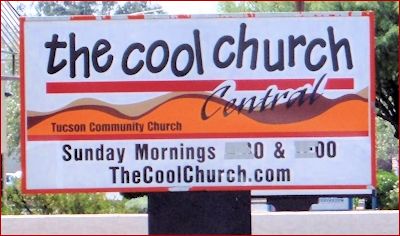
Much less is there any room for the pulpiteers of today who like to exegete the latest movies, or preach on moral lessons drawn from television sitcoms, or build their sermons on themes borrowed from popular culture. You know what I mean: the kind of preachers who insist they are being "missional" when they are merely being worldly.

Still less is there any warrant for the celebrity rock-star pastor who continually makes himself the focus of his preaching. "For what we proclaim is not ourselves, but Jesus Christ as Lord, with ourselves as your servants for Jesus' sake" (2 Corinthians 4:5). "Necessity is laid upon me. Woe to me if I do not preach the gospel!" (1 Corinthians 9:16).

Paul's focus is extremely narrow—stiflingly narrow for the typical young-and-restless church planter for whom "style" is everything; and whose style (let's be honest) is conspicuously dictated by secular fashion rather than by the worldview Paul was exhorting Timothy to embrace.

"Preach the word." That's the centerpiece and the key to everything Paul tells Timothy about how to shepherd God's flock. That command is followed immediately by a second imperative that simply makes the first one more emphatic: "Be ready in season and out of season." The Greek verb means "stand by," and it does have the sense of readiness. (In fact, in radio, that is exactly what the expression "stand by" means: "Be ready." But the word Paul uses is richer and stronger than that.) It also carries the connotation of expressions like: "take a stand," "stand upon it," "stick to it," "stand up to it," or simply "carry on."

Paul is urging Timothy to be absolutely, unswervingly devoted to the truth of the Word and to the task of proclaiming it. "Stand firm, and stand ready. Keep at the task, no matter what." That's the idea. And the proof is in the rest of the phrase: "Be ready in season and out of season"—literally, "when it's timely and when it's untimely": when it's popular and when it's not.

Or to contextualize the phrase for the current crop of evangelical fashionistas: Preach the Word even when preaching the Word seems hopelessly uncool and unstylish.

The expression is ambiguous as to whether Timothy or his audience is the barometer declaring what's "in season [or] out of season." It doesn't matter. Regardless of how you or your audience—or anyone else—feels about it, keep preaching the Word.

Preach the word whether the timing seems opportune or awkward. Preach it whether it's convenient or inconvenient. Preach it whether you feel like it or not. Preach it whether the door is open or closed. Preach it no matter how much resistance you encounter. Preach it whether or not people say they want it. Preach it—and make it the heart and soul of your ministry strategy—no matter how many church-growth experts tell you otherwise.

Paul goes on to give several more imperatives, and all of them expand on or modify this initial command: "Preach the Word."


In a follow-up post or two we'll look at the whole series of imperatives, and I think you'll see in a graphic way that Paul's ideas about ministry philosophy church growth run fairly contrary to the received wisdom of most who claim expertise in these matters today.

Phil's signature

06 February 2012

"Innovation" and Irrelevance

by Phil Johnson

After five decades spent obsessing over a warped notion of "relevance," American evangelicalism is overrun with "change agents" who are so steeped in worldly values that they can't distinguish true relevance from mere trendiness. Their philosophies of ministry are complex, wrong-headed, counterproductive, and hostile to the notion that some things—namely God Himself and the truth He has revealed in His Word—are by definition not susceptible to change.
    By contrast, what Paul bequeathed to Timothy in two brief epistles was a remarkably simple, straightforward, but comprehensive ministry philosophy. Not only did Paul not urge Timothy to be innovative; what he
did urge Timothy to do flatly contradicts practically every ministry philosophy currently in vogue.
    This is part 1 in a series of posts I intend to write in the days to come.


onsider the undue stress today's leading church-growth gurus invariably put on innovation. We are relentlessly told that pastors and church leaders must be novel, "contemporary," cutting-edge—architects of change within the church.

Evangelicals have been obsessing for at least four decades about "relevance." But that word as used in evangelical circles has become practically synonymous with novelty and fashionableness. It has little to do with actual relevance.

Of course, the church's only true relevance lies in her role as a community where God's Word is proclaimed, where the whole counsel of God is taught, and from which the gospel is taken into the world. But when a church nowadays advertises itself as "relevant," we know exactly what is meant—and let's be honest: it isn't about anything Paul told Timothy to do; it's about being "innovative."

Consider how an organization like Leadership Network sells itself: "Leadership Network seeks to help leaders navigate the future by exploring new ideas and finding application for each unique context." "Our free indispensable twice-monthly email newsletter featur[es] the best in innovative church strategies." Podcasts feature "numerous conversations about various topics of church innovation." The organization sponsors three series of books:
  • Leadership Network Publications (Jossey-Bass) present thoroughly researched and innovative concepts from leading thinkers, practitioners and pioneering churches.
  • The Leadership Network Innovation Series (Zondervan) presents case studies and insights from leading practitioners and pioneering churches that are successfully navigating the ever-changing cultural landscape.
  • The Exponential Series (Zondervan) highlights the innovative practices of healthy, reproducing churches.
And don't forget "Engaging and inspirational videos from a number of today's innovative church leaders." Then there's "Connections,"—"Inspiring stories that show how Leadership Network is helping innovative churches and church leaders better realize their vision and maximize their impact." Something about "innovation" appears on virtually every line of that web page. The Catalyst Conference has a similar theme. The main qualification for being a speaker at any of the Catalyst events is that you must be perceived as an innovator—a "change maker." But, as it turns out, "innovation" in evangelical contexts almost never has anything to do with real originality. The best-known fruits of recent "innovative" thinking in the evangelical realm have been Emergent religion and hipster Christianity. But both Emergents and hipsters slavishly ape worldly fads and conform to postmodern and politically-correct values. "Innovation" has conditioned evangelical churches to follow every new wind of faddishness. "Innovation" itself turns out to be a worn-out cliche. There's nothing truly fresh or original about it. How it coninues to get so much publicity is a mystery to me. The more evangelicals imitate worldly fads and values, the more irrelevant they become. Here's a gentle word of admonition for those who have made an idol out of "innovation": There is hardly any more wrong-headed approach for anyone who aspires to be a true spiritual and biblical leader in the church. It's an emphasis that is entirely missing from Paul's instructions to Timothy. Actually, the truth is even more alarming than that: The church's current infatuation with novelty and contemporary fashion is antithetical to Paul's message to Timothy. It is irreconcilable with a Pauline approach to ministry. It represents precisely the path Paul warned Timothy not to follow:
"I charge you in the presence of God and of Christ Jesus, who is to judge the living and the dead, and by his appearing and his kingdom: preach the word; be ready in season and out of season; reprove, rebuke, and exhort, with complete patience and teaching. For the time is coming when people will not endure sound teaching, but having itching ears they will accumulate for themselves teachers to suit their own passions, and will turn away from listening to the truth and wander off into myths. As for you, always be sober-minded, endure suffering, do the work of an evangelist, fulfill your ministry" (2 Timothy 4:1-5).
Phil's signature

25 July 2011

Why Shallow Evangelicals Are So Susceptible to Charismatic Frauds

The Death of Discernment and the Rise of the Lakeland "Revival"
by John Macarthur
(Adapted from Ashamed of the Gospel, 3rd ed., Crossway)


ome of the most popular and dangerous evangelical fads of the past fifteen years have involved waves of charismatic fervor that have sown confusion and discord in every culture where they have been embraced. I'm talking about the Toronto Blessing (where "holy laughter" and other forms of pseudo-drunkenness were declared to be signs the Holy Spirit was moving); the Kansas City Prophets (a movement led by a group of self-appointed seers whose prognostications were usually false and whose private morals were even worse); the Pensacola outpouring (whose major features were gold dust and gold tooth fillings that supposedly appeared miraculously, but the revival disbanded amid charges of fraud and embezzled funds). Then (most recently) those movements were all eclipsed by a supposed revival in Lakeland, Florida whose leader embodied all those errors and turned out to be twice as much a son of hell as all the religious scoundrels he imitated (cf. Matthew 23:15).

Here's how Charisma magazine summed up that debacle:
[Lakeland Revival founder Todd] Bentley's faith and exuberance impressed seasoned, prominent revivalists while his wild tactics often tempered the enthusiasm of other leaders. When praying for healing, the tattooed evangelist was known to hit the sick in the stomach with his knee in a move more common among wrestlers than preachers. Bentley even recounted kicking a woman in the face in an act of "obedience to the Lord."

Yet, with the exception of a few ministers, many charismatic leaders chose to overlook Bentley's peculiar methods for the sake of what they saw as "fruit." They claimed the revival stirred many Christians worldwide to pursue God with a renewed hunger.

"Personally, I believe that the Lakeland Outpouring was another wave of revival like Toronto and Brownsville," said Los Angeles-area pastor [Ché] Ahn, referring to the Toronto Blessing and the Pensacola Revival, both of which occurred during the 1990s. "Each wave has its own life span." [Paul Steven Ghiringhelli, "Lakeland Revival Officially Ends" Charisma (13 Oct. 2008).]


You might think the cumulative effect of so many "prophetic" movements, all of them being totally discredited in fairly rapid succession, would heighten a craving for more careful discernment among evangelicals. But every new charismatic tsunami seems to grow larger and confound more people than the previous ones. Each wave is considerably more bizarre and certainly more grossly unbiblical than all its predecessors, yet each one pulls in Christians who previously seemed fairly mainstream. Craving something more than the shallow fare they are force-fed in the average evangelical church, they are eager patsies for a charlatan who promises supernatural signs and wonders instead of the superficial skits and tomfoolery they have grown accustomed to.

John MacArthur's signature

25 April 2011

A Double Repost? Why Not?

by Phil Johnson

Salad Days
I wanted to do a repost today, and this one struck me as fairly important and yet potentially fun. Yes, I know there's a repost within this repost, but these days I think it's important to keep trying to get people to realize that doctrinal statements really are more important than fashion statements.

(First posted Thursday, March 01, 2007)

by Phil Johnson


   have two things to say to those who think "relevance" is related primarily to matters of style, youthfulness, and external appearance:


First, what seems really hip today might just make you look like J. R. "Bob" Dobbs tomorrow. There were people on the fringes of evangelicalism pushing a superficial notion of "relevance" for several decades before the Emergers emerged with the idea, and the cooler those people seemed at their peak, the more ridiculous their style looks today. When a particular "style" is your main distinctive, you're guaranteed to be outmoded soon. More important, if "style" is your main contribution to the conversation, you're already irrelevant, whether you know it or not.

Second, to stress the point a little more, here's a repost from my original blog that seems apropos to the current discussion. It was a reply to an e-mail from a reader who was irritated with me:

To: "Savage Countenance"
From: "Phillip R. Johnson"
Subject: Re: Cr—t-r?!!

Dear "Savage Countenance,"

Many thanks for your message. You wrote:

> why would you question a brother
> who just wants to fit in with the
> people he's trying to reach?...you
> should quit trying so hard to be
> different and try harder to be
> genuine...i'm making this point
> b/c my eyebrow is pierced and i
> have a tatoo on the back of my
> neck...i wear combat boots...and
> i usually wear all black..i listen
> to Christian metal and industrial
> music—i've seen too many christians
> hide in a corner away from the world
> and wait for them to come to
> us...and it just doesn't work
> that way, you know?

OK, first of all let me say that the point I want to make here has very little to do with the question of whether body piercing and tattoos are always inherently sinful.

Don't misunderstand: I would indeed argue that if you pierce or tattoo yourself as an act of self-mutilation, narcissism, or rebellion, then the motivation for such "body modification" is clearly sinful and therefore something Christians ought to avoid.

But that's really beside the point at the moment. Because your whole argument is that you have tattooed yourself and put studs in your face in order to be more "genuine" and to have a better testimony for Christ.

And that's what I want to respond to: the notion that adopting the fads of a juvenile, egomaniacal, shallow, self-destructive, worldly culture "works" better as an evangelistic strategy than a lifestyle that gives more prominence to the principle of Matthew 5:16 and 1 Peter 2:9.

As you have described it above, body modification and combat boots are a significant and deliberate part—if not the very centerpiece—of your evangelistic strategy. You seem to imagine that if you try hard enough to fit into the punk culture, you might actually win people by convincing them that Jesus would fit nicely into their lifestyle, too.

But wouldn't you yourself actually agree that there is—somewhere—a limit to how far Christians can legitimately go in conforming to worldly culture? Surely you do not imagine that the apostle Paul's words about becoming all things to all men is a prescription for adopting every vulgar fashion of a philistine culture. Do you?

Can we agree, for example, that it wouldn't really be good or necessary to get a sex-change operation in order to reach the transgendered community? OK, you might dismiss that as something inherently sinful and wrong for that reason. Well, how about pulling a few teeth and adopting the trashy patois and tasteless lifestyle of Jerry Springer's guest list in order to have a more effective outreach to the underbelly of the cable-TV community? How serious are you about your strategy of accommodation and conformity?

And why is it mainly the lowbrow and fringe aspects of Western youth culture that this argument is invariably applied to? Why are so few Christian young persons keen to give up video games and take up chess in order to reach the geeks in the chess club? or give up heavy metal and learn the cello in order to have a ministry to the students who play in the orchestra?

There used to be a misguided youth on the Web who ran a website called "Backyard Wrestlers for Jesus." He was trying to tap into the backyard wresting culture as a mission field. So he set up a Web site showing kids how to build a backyard wrestling ring, how to do what The Rock and the Dudley Boys do without getting hurt, and how to talk smack without really talking dirty—so that kids who wrestle in their own backyards could improve their style. Along the way, he figured they would see that his Web site had something to do with Jesus, and they'd know Jesus is cool, and they'd like Jesus better because he's so cool.

I admire his desire to reach a troubled culture, but the methodology is all wrong and completely without any credible biblical warrant. I realize making Jesus seem cool is the dominant evangelistic strategy of this age, and everyone from Rick Warren to Brian McLaren is trying in whatever way they think best to make Christianity more hip and trendy.

But I still think it's a bad idea.

Incidentally, I grew up in the 1960s in a liberal church with a fairly sizable youth group where dances with live rock music were the bait used to draw us on a regular basis. So there's nothing particularly fresh or innovative about this philosophy. It didn't work in my generation, and it's not really working now. It's made the church more worldly; it hasn't made the world more spiritual.

In fact, I'd say that this strategy represents the wholesale abandonment of the church's responsibility to a sinful culture.

The most effective way to minister to any culture—and this goes for every culture, from highbrow society to white middle-class suburbia to the urban street gang—is to challenge and confront the culture instead of conforming to it. "Therefore 'Come out from among them and be separate, says the Lord. Do not touch what is unclean'" (2 Corinthians 6:17).

Yes, I know Jesus was a friend of sinners, and His enemies accused Him—wrongly—of participating in their excesses. The truth is that He became their friend without adopting their values. That's the example we should strive to follow, not the example of worldly culture itself.

Phil's signature

04 November 2010

How to forgive yourself; or instead....

by Dan Phillips

Tuesday, we springboarded off a WikiHow article on "How to Forgive Yourself." I concluded with this:
So where does this whole idea come from? I think a lot of it comes from psychologized, man-centered nonsense.
But I also think some of it doesn't, at least not as directly. I think some of it comes from Christians who have sinned, who know they've sinned, and who nonetheless continue in guilt and misery. What shall we tell them, then?
So, what of those situations? Since I'm not writing a book on the subject, let's just dart into some of the possible causes of a lingering, unassuaged sense of guilt:

FIRST: Given that "lingering" is a relative term, one possibility is that this is a normal part of the conviction process, part of the Holy Spirit bringing one to a full grasp of the enormity of what he's done. After David's sin with Bathsheba, the brief narrative alludes to no inner conflict within David; merely that he marries Bathsheba (2 Samuel 11:27). Yet he himself gives us a window into his internal life in that period, in Psalm 32:3-4 --
For when I kept silent, my bones wasted away
through my groaning all day long.
4 For day and night your hand was heavy upon me;
my strength was dried up as by the heat of summer. Selah
I take it, then, that David was feeling the pressing weight of conviction for his unrepented sin during this period. The closeness he'd enjoyed with the Lord was gone, and he was haunted with nagging guilt and restlessness (cf. Proverbs 28:1, 17).

In this case, the confrontation by Nathan was the lance that pierced the boil and released the infection of truth-based guilt (2 Samuel 12:1ff.). The spear went straight into David's heart, he accepted the reproof, humbled himself, and repented. David found sweet relief when he confessed and acknowledged his sin, and knew the purifying and forgiving grace of God (Psalm 32:1-2, 5, 11; 51). The genuineness of his repentance was shown in part by how he accepted the consequences of his sin.

SECOND: injured pride. In this case, the stinging, lingering pain is not a heart aching over the affront done to God, and God's name and glory -- but the embarrassment of letting myself down. Here I'd thought of myself as such a fine Christian, and I did that. My friends so look up to me; what will they think? What will happen to my reputation? How could such a great guy/gal do such a thing?

All the worse if we've resisted rebuke for awhile, insisting that our sewage doesn't stink, that the sin we sinned wasn't sin when we sinned it. Then we feel we'd have to eat humble pie... which is exactly what we need to do. But our defense and attempted prettification of our sin didn't un-sin the sin, and if'we're Christians, we know that at some level.


In this case, Satan has successfully misdirected us. We've lost the whole focus of the situation. Sin is sin because it is an affront against God. What makes it awful is what it does to His glory, and what it cost Him to redeem us from it. There is no excuse and no buffer for it. Getting our eyes on ourselves and our own wounded dignity and majesty indicates that:
  1. We think far too highly of ourselves; and
  2. We think far too lowly of God
Only with such an orientation can we let loose with nonsense about needing / being unable to forgive ourselves.

In such cases, we must humble ourselves before God, ask Him to open our eyes to see our sin as He sees it, start analyzing it Biblically, and take it to the Cross.

THIRD: works-righteousness. This is related to the previous, though it feels more like humility. I cling to the feelings of misery and guilt and shame, because I have an unspoken (and perhaps unconscious) belief that I am myself atoning for my sin thereby. I am not bringing bulls or lambs or chickens to any altar; but I am bringing my frowns and moans and sighs and moroseness. Maybe enough of that will satisfy... will satisfy....

Well, whom? See, here's where we so often get mired in the bottomless swamp of our own subjectivity. Do we really think we'll appease God by these sacrifices? Odds are we don't really think it out that far, as we're being ruled by our emotions. The truth is, however, that it is ourselves we are trying to appease, and we cherish murky hopes of reaching some point of satisfaction that we have "suffered enough."

In this case, we must repent of our "repentance" that is not repentance. If we feel that our feelings (of misery) can atone for our feelings (of guilt), we haven't yet grasped the weight of sin as objective wrong against the holy God.

What is more, we have not seen that there is only one suffering that atones for sin, and it is not our suffering. It is the suffering of Christ that atones for our sin (Hebrews 9:26; 1 Peter 3:18). How can the Father declare that He is satisfied with Christ's suffering (Romans 4:25), yet we insist that we are not?

FOURTH is pretty obvious: we simply have not repented. Instead, we have rationalized our sin, redefined it in some way that it is not sin, made excuses and distractions and dodges and scenarios. God does not forgive rationalizations, He does not forgive excuses, He does not forgive dodges and blame-shifting. Those, we keep, until they neutralize our prayers and destroy us (Proverbs 28:9, 13a; 29:1). God forgives sins, when we repent of them as sins (Proverbs 28:13b; 1 John 1:9).

Nuts, isn't it? By our refusal to deal with sin as sin, we cling to it and all the miseries and harm that it brings in its train.

So we must repent, which is Bible-oriented and God-centered and involves specificity and mortification, and possibly a commitment to restitution (an essential element of mortification).

FIFTH, a simple lack of faith. Twenty-five years ago, I would have felt this was far too simplistic. But I've come to see that it's dead on the money.

Jesus announces that He is about to pour out His blood to establish the new covenant, with its element of the forgiveness of sins (Matthew 26:28). He does pour out His blood, forsaken by God for our sins (Matthew 27:46), and announces that "It is finished" (John 19:30). He is buried. When He rises from the tomb, He signals the Father's acceptance of His sacrifice as sufficient to bring us a righteous legal standing before Him (Romans 4:25). In His blood, through faith, we have forgiveness and a fully-righteous standing (Romans 3:25; Ephesians 1:7).

It is for this reason that John says that, when we confess our sins, He is faithful and just/righteous to forgive our sins and cleanse us from all unrighteousness (1 John 1:9). Though we need not sin and should not sin, if we do sin we have an attorney to plead our case before the Father -- Jesus Christ, the righteous.

I want to close with that though, as developed to my own great comfort and encouragement by Charles Spurgeon. It comes from his meditation for the evening of October 4, and it's worth quoting at length:
“If any man sin, we have an advocate.” Yes, though we sin, we have him still. John does not say, “If any man sin he has forfeited his advocate,” but “we have an advocate,” sinners though we are. All the sin that a believer ever did, or can be allowed to commit, cannot destroy his interest in the Lord Jesus Christ, as his advocate. The name here given to our Lord is suggestive. “Jesus.” Ah! then he is an advocate such as we need, for Jesus is the name of one whose business and delight it is to save. “They shall call his name Jesus, for he shall save his people from their sins.” His sweetest name implies his success. Next, it is “Jesus Christ”—Christos, the anointed. This shows his authority to plead. The Christ has a right to plead, for he is the Father’s own appointed advocate and elected priest. If he were of our choosing he might fail, but if God hath laid help upon one that is mighty, we may safely lay our trouble where God has laid his help. He is Christ, and therefore authorized; he is Christ, and therefore qualified, for the anointing has fully fitted him for his work. He can plead so as to move the heart of God and prevail. What words of tenderness, what sentences of persuasion will the anointed use when he stands up to plead for me! One more letter of his name remains, “Jesus Christ the righteous.” This is not only his character BUT his plea. It is his character, and if the Righteous One be my advocate, then my cause is good, or he would not have espoused it. It is his plea, for he meets the charge of unrighteousness against me by the plea that he is righteous. He declares himself my substitute and puts his obedience to my account. My soul, thou hast a friend well fitted to be thine advocate, he cannot but succeed; leave thyself entirely in his hands.
Amen.


Dan Phillips's signature

02 November 2010

How to forgive yourself: a Biblely appraisal

by Dan Phillips

Here's a site called WikiHow, which publishes a wild array of "how-to" articles. Some of the topics include:
How to appreciate death metal, mosh in a mosh pit, care for a library book, start a jazz collection, survive a freestyle rap battle, convert bicycle tires into studded snow tires, save money on gas, get out of a cellular service contract, open rigid plastic clamshells safely
Now comes "How to Forgive Yourself."

So, before reading it all though, here's the article I would write, were that the title I was assigned. Ahem.
There are two steps to forgiving yourself.
  1. Make yourself God, so that your moral offenses are committed primarily against yourself rather than against God
  2. Since you can't do #1, bail out on the whole project and come up with a more Biblely analysis of the situation.
The end.
I can hear what "Statler and Waldorf" (as Marley and Marley) from the Muppet Christmas Carol might say:
- That was the [article]?
- It was dumb!
- It was obvious!
- It was pointless!
- It was... short.
{pause}
- I loved it!
- I loved it!
However, the actual WikiHow article shows no concern with being Biblical, so it's a lot longer. It traverses the usual therapeutic route, viewing guilt as a negative feeling, a psychological rather than a moral/spiritual issue, and assuming that the sooner we're rid of it, the better. Period. Then a little video from some mind-science guru serves to poison-cherry the pie. The worldview assumed is relativistic and Godless (— did I just say the same thing, twice?), with me and my feelings at the center (— thrice?).

Puzzlingly, one of the contributors to this article bears the screenname 1sweetchristian, whose self-introduction says "Hi my name is Sarah. I am a follower of Jesus Christ. I am learning how to trust Him with all my heart and be obedient to His will." That is a wonderful goal, and may God bless her; however, I don't see any impact from that perspective on the article.

Sin is a word for which we should keep as strictly-defined a definition as possible, straying only under duress. The apostolic definition is lawlessness (1 John 3:4; cf. Romans 5:13). The definition from Piper's Baptist catechism also works: "Sin is transgression of the revealed will of God which teaches that we are to act in perfect holiness from a heart of faith to the glory of God."

The Bible is really serious about this. How serious?  Well, think of someone who really, really sinned badly against people — sexually used one, had another killed, betrayed the trust of scores and hundreds. Of course, you know I am thinking of King David. And you know right where I'm going, to his head-scratching confession in Psalm 51:4 — "Against you, you only, have I sinned and done what is evil in your sight." On the face of it, this is simply an absurd statement. "You only"? What of Bathsheba? What of his own wife/wives? What of Uriah?

Yet David knew the truth that most deeply offends atheist, humanists, everyone who's bought the big lie: sin is only sin because God defines it as sin. Sin is sin because God says it is sin. Spouse betraying spouse, children failing to honor parents, neighbor slandering or robbing neighbor — all these are sins because God says they are sins.

Apart from God, there would be no sin. All sin is, in the final analysis, against God; for without God there would be no sin. And so, as I have heard D. A. Carson say well more than once, in all sin, God is the primary offended party.

Back to the notion of forgiving yourself. It simply is faddish, man-exalting nonsense to speak of forgiving yourself. In your sin, you aren't the wronged party. If you (or I) really think that it is meaningful to speak of forgiving ourselves for our sins, then I don't think we've got that whole repentance thing straight. It isn't our own forgiveness which we need. It is, of course, God's forgiveness, a forgiveness that cost the Son of God His lifeblood (Ephesians 1:7; Hebrews 9:13-14, 22; 10:4).

It is only meaningful to speak of forgiveness of ourselves, then (A) by God, (B) of sin (C) against God, extended to us only (D) because of the shed blood of Christ, through whom alone we can find forgiveness. Secondarily, it is meaningful to speak of horizontal forgiveness of people upon repentance (that is not the focus of this post; but I can recommend a great book on the subject). But we know that God does command us to repent of our wrongs against others, to pursue restitution for those wrongs. We do those things because God calls us to do them. He defines my sin against my brother, He calls me to repent and pursue restitution and reconciliation (and commands me to forgive those who repent of sins against me). It's still all about God, and it's a subject of direct Biblical teaching.

Forgiving myself, however? Never. Biblically meaningless at best.

"Ah," a deeper scholar might say, "but what of 1 Corinthians 6:18?"
Flee from sexual immorality. Every other sin a person commits is outside the body, but the sexually immoral person sins against his own body.
Yes, what of it? Would anyone argue that immorality is not a sin against God? That it is not a sin against the person used? Would anyone say that he should ask his own body to forgive him? Is it not fairly plain that the meaning is that the sin harms, wrongs, defiles the body — not that the body becomes the offended party, of which forgiveness must be sought and from which it must be received? How would such an apology proceed? Never mind, I don't want to go there.

Worse, the usual application is made to sins that really are clearly sins against God, and/or sins against others. The man who has committed adultery says, "God has forgiven me, but I just can't forgive myself." The woman who has failed her husband or her children in some way says "God has forgiven me, but I just can't forgive myself." And on it goes.

So where does this whole idea come from? I think a lot of it comes from psychologized, man-centered nonsense.

But I also think some of it doesn't, at least not as directly. I think some of it comes from Christians who have sinned, who know they've sinned, and who nonetheless continue in guilt and misery. What shall we tell them, then?

My, such a long post already.

Better finish up Thursday, Lord willing.

Dan Phillips's signature

04 February 2010

Faith v. faux humility: a parting philippic plea

by Dan Phillips

After his conversion, Paul says that he was still unknown in person to the churches of Judea. Then he adds:
[Christians] only were hearing it said, "He who used to persecute us is now preaching the faith he once tried to destroy."  And they glorified God because of me.  (Galatians 1:23-24)
Were this passage written of the big noises in the 1800s and 1900s, and their "bold" and "daring" and "questioning" mirror images today, we would have to make some changes:
[Despisers] only were hearing it said, "He who used to persecute us is now trying to destroy the faith he once preached."  And they glorified me at the expense of God.  (2 Nuances  0:0-0)
 Leaving me only to attempt a few parting pithicisms:
  1. There is a reason the faith is called the faith (cf. Acts 6:7; 13:8; 14:22; 16:5; 1 Corinthians 16:13; 2 Corinthians 13:5; Galatians 1:23; Jude 1:3, etc.).
  2. There is a reason Christians — saints, the people of God — are called believers (cf. Acts 5:14; 10:45; 19:18; 1 Thessalonians 1:7; 2:10; 2:13; 1 Timothy 4:12, etc.).
  3. There is a reason why God the Holy Spirit often moved men to write positively of growing in the faith, progress in the faith, continuing in the faith, building up in the faith, and the like (cf. Ephesians 4:13; Philippians 1:25; Colossians 1:23; 2 Thessalonians 1:3; 1 Timothy 3:13).
  4. There is a reason why God the Holy Spirit often moved men to write terrible warnings against denying the faith, wandering from the faith, abandoning the faith, swerving from the faith, upsetting the faith of some, being disqualified concerning the faith, and the like (1 Timothy 4:1; 5:8; 6:10, 21; 2 Timothy 2:18; 3:8; Revelation 2:13)
All that (and much more) being the case, it seems wiser to devote one's energies to promulgating truths which lead to faith that brings life (John 20:31) — truths of God's Word, which "is able to build you up and to give you the inheritance among all those who are sanctified" (Acts 20:32) — rather than pushing away the full authority of God's Word (1 Timothy 6:3), and ending up "conceited, understanding nothing, but having a sick interest in disputes and arguments over words" (1 Timothy 6:4 CSB).

Dan Phillips's signature

06 January 2010

Peanut-butter Passion

by Phil Johnson

'm a passionate person. People who know me will affirm that. I think Christians ought to be passionate about truth, passionate in our love for God and for one another, and (above all) passionate about the glory of God.

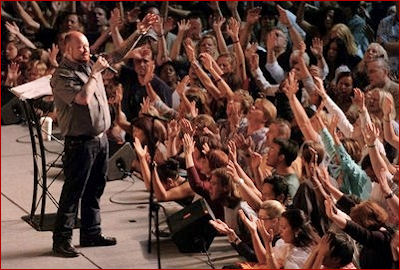
But raw passion is not the point. Passion is valid and edifies only when it's the right kind of passion, based on legitimate affections for the right things. I'm concerned about the unbridled passions frequently turned loose by people whose only religious affections were cultivated in evangelical youth groups. (And if I can speak freely: that includes a lot of of our so-called young, restless, and Reformed frends.) Everything seems to unleash stadium-style passions. I've even seen people scream, whistle, stomp, and cheer at baptisms, as if they were celebrating a touchdown. Many Christians glorify passion for passion's sake—as if raw passion per se were something praiseworthy and deeply spiritual. It's not. And this has become a serious problem in today's post-pentecostal, post-evangelical, anything-goes era.

The problem is exacerbated by the fact that so many Christians imitate all the world's passions. Christian leaders invent gimmicks to try to win worldly people by appealing to their worldly passions. All of us devote energy and emotion to things that are not even worthy of our attention. And then we bring our addiction to raw passion into our corporate gatherings. We do things to stir artificial passions—which is a form of false worship, no better than idolatry, really.

Our passions should not need to be artificially stirred up by spiritual cheerleaders and team chants. We shouldn't have to be worked into an emotional state by melodrama and musical manipulation. If we can get pumped to a fever pitch by some preacher's antics rather than by the truth of the biblical message, then whatever we are feeling isn't even a legitimate passion in the first place.

And sometimes it gets even worse than that.

Someone a few months ago sent me this article about a youth leader who likes to provoke his students to a state of screaming enthusiasm with gross-out games. (Warning: the article itself and the other links in the following paragraph are extremely gross. Home-school moms might want to look away.) The article describes how this youth leader had a teenager with hairy armpits smear gobs of peanut butter on his underarms; then the youth pastor asked for volunteers to lick it clean and swallow the peanut butter. The youth leader uses skits like that to "shock and astound." (Those are his exact words.) He told that secular reporter that he does things like that all the time to get the students excited, so that they will talk about the church. He says he wants to start "a buzz that [will] go viral, [so] that teens [will] text and Twitter about [it]." And notice what the youth leader said about his strategy: "The idea is to get students here to meet our Savior. They are getting all this crazy stuff out there in the world all the time. We are trying to show them that God is cooler."

You may think that's an extreme, one-of-a-kind example, but that type of thing is far more common than you think. It illustrates rather vividly the foolishness of trying to stir artificial passions by making God seem "cool" rather than simply uplifting His glory and letting the grandeur and majesty of our God move people's hearts to more legitimate expressions of deep passion.


That sort of artificial enthusiasm actually hinders (and in some cases totally nullifies) the message we're supposed to be proclaiming. With so many churches merely trying to entertain people, or lull them into a state of self-satisfaction, or simply gross them out, it's no wonder the world is not being won to Christ but actually becoming steadily more hostile to Christianity.

Phil's signature

02 August 2009

Message for a Worldly Church

Your weekly dose of Spurgeon
posted by Phil Johnson


The PyroManiacs devote some space each weekend to highlights from The Spurgeon Archive. The following excerpt is from "Restoration of Truth and Revival," an article published in the December 1887 Sword and Trowel.


t is clear to every one who is willing to see it that laxity of doctrine is either the parent of worldliness, or is in some other way very near akin to it. The men who give up the old faith are the same persons who plead for latitude as to general conduct. The Puritan is not more notorious for his orthodoxy than for his separateness from the world.


Liberal divines do not always command the respect of the public, but they gain a certain popularity by pandering to prevailing tastes. The ungodly world is so far on their side that it commends them for their liberality, and rails at the orthodox as bigots and kill-joys.

It is a very suspicious circumstance that very often the less a man knows of the inner life, and the less he even cares to speak of it, the more heartily he is for the new theology, the theory of evolution, and the condemnation of all settled doctrine.

Those who would have a blessing from the Lord must avoid all this, and determine to follow the Lord fully. Not only must they quit false doctrine, but they must receive the gospel, not as dogma, but as vital truth. Only as the truth is attended with living faith will it prove its own royal power.

Believers must also sweep the house of the leaven of worldliness, and the frivolities of a giddy generation. The evil which is now current eats as doth a canker, and there is no hope for healthy godliness until it is cut out of the body of the church by her again repenting, and doing her first works.

Those who through divine grace have not defiled their garments must not content themselves with censuring others, but must arouse themselves to seek a fuller baptism of the Spirit of God. Perhaps these evils are permitted that they may act as a sieve upon the heap gathered on the Lord's threshing-floor. Possibly they are allowed that our apathetic churches may be aroused. We know already of several cases in which true ministers have gone over the foundation truths again with their people, and have preached the saving Word with clearer emphasis. In other cases churches have been summoned to special prayer about this matter.

This is a good beginning: let it be carried out on the widest scale. As one man let us cry mightily unto the Lord our God, that he would arise and plead his own cause. Now, if never before, let those who are loyal to Jesus and his Word be up and doing. A boundless blessing is waiting for the asking. We believe in prayer. LET US PRAY LIKE ELIJAHS.

C. H. Spurgeon