by Phil Johnson
"God is spirit, and those who worship Him must worship in spirit and truth" (John 4:24).
 od is spiritual in His very essence, and therefore He must be worshipped with spiritual worship—worship in the energy of spirit; worship that engages and employs our entire spirit, not just the motions of our hands and the words we form with our lips; not bare ritual; but a true expression of the heart and soul. "Worship in spirit."
"God is spirit, and those who worship him must worship in spirit and truth." Jesus is making a deliberate contrast between the worship God seeks and the typical kind of worship that is dominated by human tradition, obscured by empty ritual, and buried under meaningless layers of pomp and ceremony.
Listen to Christ's criticism of the Pharisees' religion (Matthew 15:3, 8): "Why do you break the commandment of God for the sake of your tradition? . . . You hypocrites! Well did Isaiah prophesy of you, when he said: 'This people honors me with their lips, but their heart is far from me.'"
They had all the ceremonies down. Many of these were rituals prescribed by Moses' law, ordained by God, and therefore good things if used properly. They were fine if seen for what they really were: symbols of a greater reality, aids to worship; not the end-all and be-all of worship. But the Pharisees were more enamored with the rituals than they were with the truth the rituals signified. And so they added layers of their own manmade rituals on top of what the law prescribed: extra washings; more complicated ceremonies; more elaborate costumes—longer tassels on their robes and whatnot to exaggerate the liturgical impact of all the pageantry and spectacle.
 The flesh loves that. And the ceremonies themselves became what they thought of when they thought of "worship." It was a flamboyant display for the benefit of the worshiper rather than an expression of praise and honor to God. They were worshiping Him with their lips, but their hearts were far from Him. They were indulging their flesh, not worshiping in spirit.
And let's be honest: we all have a sinful tendency to do that. We go through the motions without really engaging our spirit in worship. We seize the opportunity during the pastoral prayer to look at our watch, or send a text message during the congregational hymn, or whatever. Jesus said that's not authentic worship; It's not worship at all unless we "worship in spirit and truth."
This is a much abused and widely misunderstood principle today. Jesus is not calling for the kind of shallow passion that responds to the music and the atmosphere. He's not saying we should aim at working ourselves into a frenzy of feeling and passion devoid of any rational content.
Authentic worship is concerned with truth, not bare passion.
It's a common misconception today that worship in the spirit requires us to empty the mind of anything rational. I visited a charismatic church a few years ago where the worship leader said that very thing: He encouraged people to "sing in the spirit"—and in order to do that, he said, "you need to empty your mind and let the spirit take over your voice. Close your eyes and forget where you are, and just feel the worship."
A lot of contemporary worship is just like that. We use music and atmosphere to build raw passion to a crescendo. And lots of people think that's the purest form of worship—when you are basically so overwhelmed with emotion that your mind is unattached and unengaged in any kind of rational thought. In fact, music is so important to the process that when you use the word "worship" today, most Christians assume you are talking about music.
But notice that Jesus gave truth, not music, the place of prominence in worship: "God is spirit, and those who worship him must worship in spirit and truth."
That's loaded with implications. "Truth" here stands in contradistinction to bare ritual. It also contrasts with raw passion. Jesus is saying that sound doctrine, a clear conscience, and a true heart are infinitely more important for authentic worship than the place where we worship, the forms with which we worship, the style of our music, or any of the other things people usually want to talk about and fight over whenever the subject of worship comes up.
What's important in worship is what you believe, not what tribe you belong to. Authentic worship is about how you think of God, not just how you "feel" when you sing about Him. It's about lifting up your spirit and opening your heart before Him, not merely raising your hands and closing your eyes.
"God is spirit, and those who worship him must worship in spirit and truth." The Father is seeking such people to worship him.






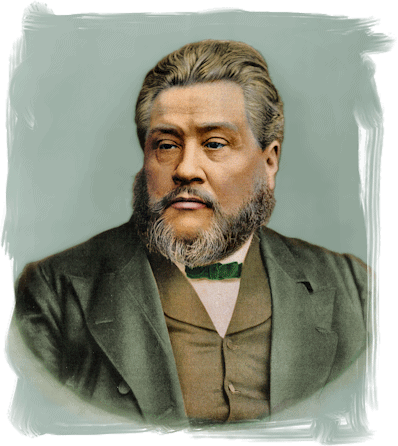
 have found, in my own spiritual life, that the more rules I lay down for myself, the more sins I commit. The habit of regular morning and evening prayer is one which is indispensable to a believer's life, but the prescribing of the length of prayer, and the constrained remembrance of so many persons and subjects, may gender unto bondage, and strangle prayer rather than assist it.

 rarely post book reviews here. (Challies does them so well, why should I?) But from time to time I get the urge to feature a book I totally love—or more rarely, to critique a book I really hate.
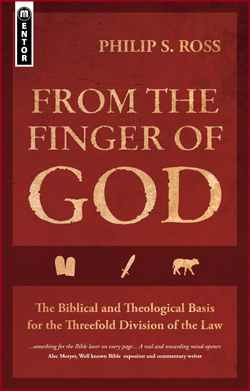 The book is From the Finger of God: The Biblical and Theological Basis for the Threefold Division of the Law, by Philip S. Ross, published last year by the Mentor imprint of Christian Publications.




 Salad Days
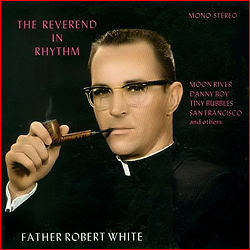 First, what seems really hip today might just make you look like
  > why would you question a brother

 he wrath of God and the judgment of the day of the Lord cannot be a trifling matter. How emphatically are we told in Scripture, that it is "a fearful thing to fall into the hands of the living God." Upon such a subject we cannot afford to trifle.



 eter wrote those words to Christians living in exile (1 Peter 1:1) and suffering under the cruelest kind of Satanically-inspired persecution (1 Peter 5:8-9). Their lives were constantly in danger because of their faith; most had already lost all their earthly posessions. Their suffering was multilayered and relentless.
 t is no use to try to get more zeal except in the right way, knowing more of Christ; and if we seek to grow in zeal as certain people we might mention have done, we shall have a zeal like a house on fire! It will do more mischief than it will do good. There may be some heat, and a deal of illumination; but it will die away, by-and-by, into black ashes, poisoning the churches everywhere.