02 September 2018

My ways and yours

Your weekly Dose of Spurgeon


The PyroManiacs devote some space each weekend to highlights from the lifetime of works from the Prince of Preachers, Charles Haddon Spurgeon.  The following excerpt is from The Metropolitan Tabernacle Pulpit, volume 48, sermon number 2,796, "A man of God alone with God."  
Image result for charles spurgeon

"Can each one of us now say, in this sense, 'I have declared my ways' to the Lord? For this should be done, not only at our first coming to him, but continually throughout the whole of our life." 

We should look over each day, and sum up the errors of the day, and say, “I have declared my ways,’—my naughty ways, my wicked ways, my wandering ways, my backsliding ways, my cold, indifferent ways, my proud ways;—the way of my words, the way of my thoughts, the way of my imagination, the way of my memory, for it has a treacherous way of remembering evil and forgetting good;—the way of my actions towards thee, my God, and there is much to regret there; the way of my actions in my family, in the world, and in the church.” 

What a sorrowful stock-taking each day would be to many professors if they were honest to themselves and to their God! Even those who “walk in the light, as God is in the light,” and have the closest fellowship with him, yet know that it is a very sweet and blessed thing even for them that “the blood of Jesus Christ his Son cleanseth us from all sin;” for even they still sin, and it is necessary for each one of them to say continually, “I have declared my ways.”

Do you try to hide your sin, dear friend? It is useless for you to attempt to do so, for God ever sees it. Why do you seek to conceal what is always before his eye? Better far to confess it to him, that he may then cast it behind his back, and remember it against you no more for ever. 

I believe that, often, as sinners confessing to God, we miss much true comfort for want of making a clean breast of our transgressions. Yet the Lord knows what is in our heart even though we do not own it. It has been well observed that, when Moses tried to excuse himself to God for not wanting to go to deliver Israel, he said that he was slow of speech, and God met that objection by giving him Aaron his brother to speak for him; but the Lord, in his reply to Moses, also said, “All the men are dead who sought thy life.” 

Moses had not said anything about that matter; but God knew that there was that fear in his heart, so he put his finger on the sore place at once. It is well when we can do that for ourselves; when, in our spirit, there is no guile; when we come, as David did, in the 51st Psalm, and confess the very sin which we have committed: “Deliver me from bloodguiltiness, O God,” calling it by its right name, then is it that the soul begins to get peace with God.

“But,” someone asks, “are we, then, to confess to God every sin in detail?” No, that would be impossible, and probably it would not even be useful; but there must be no wish to conceal any sin from God. Such a desire would be a vain one, for “all things are naked and opened unto the eyes of him with whom we have to do.” 

There must be an acknowledgment of the sins which we have not yet seen in their full heinousness. Each of us will do well to offer David’s prayer, “Cleanse thou me from secret faults.” If we have committed faults, which are hidden even from ourselves, we desire to be delivered from them so that they should not remain to our condemnation.


31 August 2018

Sheep, or Wolf? A Call to Discern

by Dr. Colin Eakin


If you were asked to identify the Bible's most neglected command for the Christian today, how would you answer? Richard Stearns of World Vision has written that our greatest neglect—what he terms the "hole in our gospel"—is failure to address adequately the physical/material needs of the world's less fortunate. Is that true? Is this where Christians are most deserting Christ's work today?

Here is a survey of mission projects featured on the websites of a random selection of Bay Area churches this past year: homeless shelter, fair trade, sex trafficking, micro-lending to the Third World, food for the hungry, Africa relief, Haiti relief, flood relief, fire relief—the list goes on. Even a cursory glimpse of area churches across a wide spectrum of doctrinal beliefs shows a tremendous commitment to the downtrodden, to those most materially "at risk." There may be a "hole" in our outworking of true Christian faith, but it doesn't lie in inattention to the less fortunate. So if there is a so-called "hole," a most neglected biblical doctrine, wherein does it lie?

Looks Can Be Very Deceiving

As a hint, imagine this scenario. Maybe someone you know is alone, wandering in his own spiritual desert. Not only that, maybe he has unmet physical needs, maybe even actual hunger. To go even further, maybe to all appearances he cannot or will not recognize his innate capacity for success, his opportunity to exert his God-given aptitude for noteworthy accomplishment.

Then along comes someone of friendly countenance, one who is sensitive to the loner's difficulties. He appears on the scene just in time to encourage and uplift the forlorn stranger. He sees his hunger and provides an opportunity for food. He senses the loner's spiritual longing and encourages him with promises from Scripture. He grasps the unrecognized or unacknowledged potential in the loner and exhorts him to fulfill all that he is designed to be.

Pretty magnanimous, wouldn't you say? This would seem, at least on first glance, to mirror sound Christian practice in every sense. In fact, this outreach seems not unlike the Good Samaritan in action. He has come alongside the loner when no one else has or will. He has tended to the loner's physical, spiritual and psychological needs in a noble manner. And in so doing, he has walked in Jesus' footsteps, hasn't he? He has proven himself to be a true "Jesus-follower," right?

There's just one problem. The scenario outlined above is not hypothetical. This scenario actually happened and is recorded in the Bible. The loner described above is Jesus, as depicted in Matthew 4:1-5. The "friend" is Satan.

Whoa! What's going on here? How could this be? Isn't Satan always despicable in practice? Doesn't he only work in the realm of violence, hatred, wickedness, perversity and other forms of obvious evil? The friend here seems loving. The friend here seems kind. The friend here is meeting the loner's needs, addressing Stearns' "hole" in the gospel. The friend here couldn't be Satan, could he?

The process of detecting satanic activity from true righteousness concerns the vital area of spiritual discernment. It is the ability to separate biblical truth from falsehood accurately and reliably. And without a doubt, the lack of spiritual discernment among professing Christians is the most neglected demand God makes upon believers in our day.

Discernment: The Neglected Imperative

Where does God command believers to exercise spiritual discernment? Perhaps a better question is, where doesn't He? The answer is Philemon. Of all the books in the New Testament, this letter of twenty-five verses is the only one in which there is no instruction for the believer to be on guard against falsehood. All remaining twenty-six books of the New Testament (and many of the Old Testament) exhort the believer, to a greater or lesser degree, to discern truth from falsehood and to act upon it. In fact, Second Peter and Jude were written explicitly for this purpose. A summary statement on the need for spiritual discernment comes in Christ's warning at the end of His Sermon on the Mount (Matthew 7:15): "Beware of false prophets, who come to you in sheep's clothing but inwardly are ravenous wolves."

Wow! There it is in plain language, from no less an expert than Jesus! This is the climax of Jesus' longest uninterrupted teaching in Scripture. Jesus could have focused on a number of other issues as He concluded His momentous sermon, but He chose spiritual discernment. Not only that, He warned His listeners that the threat to them was as if being attacked by a wolf! Jesus is implying here that the threat of spiritual death—eternal destruction!—weighs in the balance. With such clear instruction from God, how could this imperative escape the Church's notice? How could today's professing believers be so blind to this threat? The answer is three-fold:

Ignorance. Many professing believers today are ignorant of what God's Word has to say and how it is to be interpreted, especially in the area of spiritual discernment. Many are not instructed in the complete counsel of God (Acts 20:27), and so are ignorant of its demands upon them. In fact, because a number of modern evangelical churches are themselves pastored by wolves, the teaching these congregations hear will tiptoe around any explicit warning to be on guard against spiritual falsehood.


Difficulty. Detecting falsehood from truth is challenging. It requires an awareness of how Satan operates (2 Corinthians 2:11). It requires constant vigilance, knowing that Satan is ceaseless and relentless in seeking to devour the unwitting and naïve (1 Peter 5:8). And it requires insight into his typical guise and ploy, that he resembles not the comically devilish caricature he has gone to great lengths to propagate, but rather an "angel of light," and that his demons resemble "servants of righteousness" (2 Corinthians 11:13-15). It has been said that Satan would always rather slightly pervert the truth than utter a complete falsehood. He does his best work, not by attacking the Church, but by joining it. This is why the great 19th century preacher Charles Spurgeon once wrote that discernment is not telling right from wrong; it is telling right from almost right—an arduous task indeed, especially for the uninformed and disinterested.

Unpopular. Even when falsehood is discovered, it is rarely denounced. Why not? Because in today's evangelical morass, that is to be unloving. Rather than follow God's dictum to expose and denounce falsehood for what it is (Ephesians 5:11; 2 Corinthians 10:5; Titus 1:9; 2:15; 2 Timothy 4:1-5; Rev. 2:2), today's pattern heads 180-degrees in the opposite direction, sweeping aside any doctrinal differences in the "broad-minded" search for unity. The modern evangelical ecumenical drive redefines love as acceptance and kindness as the universal embrace of any and all ideas with even the slightest patina of "Christian-ese." All that is required for entrance to the club is to be earnest and agreeable. Small wonder, then, that those raising their hands to identify unbiblical ideas and their source are more often scolded than applauded. The zeitgeist of today's Church finds it unkind and unloving to inspect the ideas of a would-be Christian leader or teacher, looking for any telltale seams in an otherwise congenial veneer that might uncover lupine intent.

Biblical Strategies for "Wolf Detection"

So how do we correct this disobedient drift? Supposing one wants to obey God's guidelines regarding the detection and denigration of falsehood, how does the believer exercise such biblical discernment? Christ's example in His confrontation with Satan gives us straightforward guidelines:

Read, study and apply God's Word. Jesus answers each of Satan's temptations with Scripture, quoting Isaiah every time in retort to the devil's lies. In doing so, He establishes the pattern for His true followers in their confrontations with Satan and his minions. Christians need to use the Word of God just as Jesus did, as a weapon for both defending the truth (1 Peter 3:15) and for tearing down falsehood (2 Corinthians 10:3-5). God describes His Word as a fire, a rock and a sword in destroying all forms of falsehood (Jeremiah 23:29; Hebrews 4:12). Christians must have a ready command for the martial use of God's Word against false doctrine, just as God intends.

Pray. Although Matthew 4:1-2 does not explicitly mention that Jesus was praying, we can infer that He did this along with His fast. Prayer and fasting are often linked in Scripture (Dan. 9:3; Luke 2:37; Acts 14:23). Moreover, all other passages where Jesus goes to be alone mentions His praying (Matt. 14:23; Luke 5:16; 6:12; 9:28; Mark 1:35).

Prayer helps the discernment-desiring believer in a number of ways. It brings him or her into a proper place of reverence, awe and humility before God, recognizing that there is a fearsomeness to His holiness and to His wrath against falsehood. It sharpens one's commitment to righteousness through repentance of encumbering sins so that one might be sober-minded and alert to falsehood. It invites the Holy Spirit to bring illumination of the Word and its uses against Satan. And it solicits the blessing of God for those wayward in their doctrine, that He might open their blind eyes and redirect them toward truth—the ultimate goal of any discernment ministry.

Test the spirits (1 John 4:1). What does that mean? It means to place what you are hearing, reading or witnessing from those professing like-minded faith alongside what God has put in His Word. Does it align? Does the would-be partner in faith know and embrace the gospel? Is he or she able to articulate it accurately and clearly as "the power of God for the salvation of all who believe" (Romans 1:16)? Or is it in some refurbished form focused more on earthly considerations and culturally-approved values? In His temptation, Jesus knew the Word of God so perfectly that He easily identified its violation in the wiles of Satan.

Differentiate a person from his/her ideas. The Bible says we are always to be ambassadors for people (2 Corinthians 5:18-21), even as we war for and against ideas (2 Corinthians 10:5). The Christian has no enemies, only opportunities to proclaim God's Word, that God might turn hearts and minds towards Him. As such, we need not fear the denunciation of falsehood as though it somehow endangers its proponent. After all, ideas are fungible. No one is inextricably connected to his or her own error, as though it is integral to his or her makeup. Part of the process of growing in the grace and knowledge of the Lord Jesus Christ—which all believers are to do (2 Peter 3:18)—involves the abandonment of error for truth. So don't recoil from the confident censure of a professing believer's error, provided it is done in love, gentleness and respect (1 Corinthians 13:1-3; 2 Timothy 2:24-26). You are not undermining who he or she is as a person. On the contrary, you are opening him or her to the opportunity to exchange error for truth.

So how is your commitment to spiritual discernment? How sensitive is your antennae to the beckoning of Satan? Who are today's evangelical wolves? Can you recognize and name them readily?

The widespread and pervasive biblical exhortation to practice spiritual discernment is not an option for the believer. It is, rather, God's oft repeated and enduring command for those who would honor and glorify Him. With this in mind, let us commit ourselves to learning and applying God's Word, to praying, to testing the spirits and to exercising godly wisdom as we, as Christ's sheep, persevere on the lookout for wolves.

Dr. Colin L. Eakin
Pyromaniac

Dr. Eakin is a sports medicine orthopædic surgeon in the Bay Area and part time teacher at Grace Bible Fellowship Church's Stanford campus ministry. He is the author of God's Glorious Story.

26 August 2018

A word to soul winners

Your weekly Dose of Spurgeon


The PyroManiacs devote some space each weekend to highlights from the lifetime of works from the Prince of Preachers, Charles Haddon Spurgeon.  The following excerpt is from The Sword and the Trowel, volume 7, pages 124-26, Pilgrim Publications.   

Image result for charles spurgeon

"Are you not willing to pass through every ordeal if by any means you may save some?"


I want to say a word to you who are trying to bring souls to Jesus. You long and pray to be useful: do you know what this involves? Are you sure you do? Prepare yourselves, then, to see and suffer many things which you would rather be unacquainted with. Experiences which would be unnecessary to you personally will become your portion if the Lord uses you for the salvation of others. 

An ordinary person may rest in his bed all night, but a surgeon will be called up at all hours; a farming-man may take his ease at his fireside, but if he becomes a shepherd he must be out among the lambs, and bear all weathers for them; even so doth Paul say, “Therefore I endure all things for the elect’s sakes, that they may also obtain the salvation which is in Christ Jesus with eternal glory.” For this cause we shall be made to undergo experiences which will surprise us.

Suppose that by some painful operation you could have your right arm made a little longer, I do not suppose you would care to undergo the operation; but if you foresaw that by undergoing the pain you would be enabled to reach and save drowning men who else would sink before your eyes, I think you would willingly bear the agony, and pay a heavy fee to the surgeon to be thus qualified for the rescue of your fellows. 

Reckon, then, that to acquire soul-winning power you will have to go through fire and water, through doubt and despair, through mental torment and soul distress. It will not, of course, be the same with you all, nor perhaps with any two of you, but according to the work allotted you will be your preparation. 

You must go into the fire if you are to pull others out of it, and you will have to dive into the floods if you are to draw others out of the water. You cannot work a fire-escape without feeling the scorch of the conflagration, nor man a life-boat without being covered with the waves. 

If Joseph is to preserve his brethren alive, he must himself go down into Egypt; if Moses is to lead the people through the wilderness, he must first himself spend forty years there with his flock. Payson truly said, “If any one asks to be made a successful minister he knows not what he asks; and it becomes him to consider whether he can drink deeply of Christ’s bitter cup and be baptized in his baptism.”


19 August 2018

The catholicon for church problems


Image result for charles spurgeon

Your weekly Dose of Spurgeon


The PyroManiacs devote some space each weekend to highlights from the lifetime of works from the Prince of Preachers, Charles Haddon Spurgeon.  The following excerpt is from the Metropolitan Tabernacle Pulpit, volume 36, sermon number 2127, "Love's competition."   


"Love to God is a sort of natural consequence which follows from a sight and sense of the love of God to us."

Where there is much love, there is sure to be much service in proportion to the strength. Give us a church that loves Christ Jesus much. 

You will have mighty prayer-meetings; you will have a holy membership; you will have liberal giving to the cause of Christ; you will have hearty praising of his name; you will have careful walking before the world; you will have earnest endeavours for the conversion of sinners. 

Missions at home and abroad will be set on foot when love is fervent. When the heart is right, everything is likely to be right; but when the heart goes wrong, oh, what a fatal thing it is! 

A disease of the heart is looked upon as the worst of mischiefs that can happen to a man. One old doctor of my acquaintance used to say, “We can do nothing with the heart.” 

God keep us from a diseased heart: a fatty degeneration of the heart, or an ossification of the heart towards the Lord Jesus Christ!


12 August 2018

The Parting


Image result for charles spurgeon

Your weekly Dose of Spurgeon


The PyroManiacs devote some space each weekend to highlights from the lifetime of works from the Prince of Preachers, Charles Haddon Spurgeon.  The following excerpt is from According to Promise, pages 28-30, Pilgrim Publications.   


"If my reader would feel freer and more at home in society than in the church of God, let him know assuredly that he belongs to the world, and let him not deceive himself."

Isaac and Ishmael lived together for a time. The self-religionist and the believer in the promise may be members of the same church for years, but they are not agreed, and cannot be happy together, for their principles are essentially opposed. As the believer grows in grace and enters upon his spiritual manhood, he will be more and more disagreeable to the legalist, and it will ultimately be seen that the two have no fellowship with one another. 

They must separate, and this is the word that will be fulfilled to the Ishmaelite: “Cast out this bond-woman and her son: for the son of this bond-woman shall not be heir with my son, even with Isaac.” Grievous as the parting may be, it will be according to the divine will, and according to the necessities of the case. Oil and water will not mingle, neither will the natural man’s religion agree with that which is born of the promise, and sustained by the promise. Their parting will be only the outward result of a serious difference which always existed.

Outwardly, and in this present life, the heir of the promise did not appear to have the best of it. Nor, indeed, should this be expected, since they who choose their heritage in the future have, in fact, agreed to accept trial in the present.

Isaac experienced certain afflictions which Ishmael never knew: he was mocked, and he was at last laid on the altar; but nothing of the sort happened to Ishmael. You, who like Isaac are the children of the promise, must not envy those who are the heirs of this present life, though their lot seems easier than your own. Your temptation is to do so; even as the Psalmist did when he was grieved because of the prosperity of the wicked.

There is in this fretting a measure of running back from our spiritual choice: have we not agreed to take our part in the future rather than in the present? Do we rue the bargain? Moreover, how absurd it is to envy those who are themselves so much to be pitied! To lose the promise is practically to lose everything; and the self-righteous have lost it. 

These worldly professors have no spiritual light or life, and they desire none. What a loss, to be in the dark and not to know it! They have enough religion to make them respectable among men, and comfortable in their own consciences; but this is a sorry gain if they are abominable in the sight of God. They feel no inward fightings and wrestlings; they find no contention of the old man against the new; and so they go through life with a jaunty air, knowing nothing till their end come. 

What wretchedness to be so besotted! Again, I say, do not envy them. Better far is the life of Isaac with its sacrifice, than that of Ishmael with its sovereignty and wild freedom; for all the worldling’s greatness will soon be ended and leave nothing behind it but that which will make the eternal world to be the more miserable.


05 August 2018

Prescient medicine for social media (circa 1883)


Your weekly Dose of Spurgeon


The PyroManiacs devote some space each weekend to highlights from the lifetime of works from the Prince of Preachers, Charles Haddon Spurgeon.  The following excerpt is from the The Sword and the Trowel, May, 1883, "The use of wool in the ears."   


Image result for charles spurgeon


"It will be a mark of wisdom to be impatient with the follies of human converse."

We are told concerning Bernard of Clairvaux that, after he had given himself up entirely to contemplation and walking with God, he met with a considerable difficulty in the visits of those friends who were still in the world. Their conversation brought back thoughts and feelings connected with the frivolities which he had for ever forsaken; and on one occasion, after he had been wearied with the idle chit-chat of his visitors, he found himself unable to raise his heart towards heaven. 

When he was engaged in the exercise of prayer he felt that their idle talk was evidently the cause of his losing fellowship with God. He could not well forbid his friends coming, and therefore he prepared himself for their injurious conversation by carefully stopping his ears with little wads of flax. He then buried his head deep in his cowl, and though exposed for an hour to their conversation, he heard nothing, and consequently suffered no injury. He spoke to each of them some few words for edification, and they went their way. 

We do not suppose that for any great length of time he was much troubled with such visitors, for he must have been an uncommonly uninteresting companion. If people once discover that their clatter is lost upon you, they are not quite so eager to repeat the infliction.

We are not admirers of Bernard’s monastic severity, but we wish it were possible to imitate his use of wool, in the spirit if not in the letter. We are all thrown in the way of persons who will talk; and their talk has in it about as much solidity as the comet, of which we are told that a thousand square miles, if condensed and compressed, would go into a thimble or an acorn-cup. Cowper made an accurate computation of the value of ordinary conversation when he said, —

Collect at evning what the day brought forth,
Compress the sum into its solid worth,
And if it weigh the importance of a fly,
The scales are false, or algebra a lie.

If it were of any use to these human fog-horns, whose noise so much disturbs gracious souls, we would reason with them: but, alas, it would be casting pearls before parrots, who would hop off with them, drop them, and come back to scream again. 

Still, though it may be wasted effort, we would tell them a little story, which we met with in a tiny book called “Gold Dust.” “‘ Mother,’ asked a child, 'since nothing is ever lost, where do all our thoughts go?’ ‘to God,’ answered the mother, gravely, ‘who remembers them for ever.’ ‘For ever!’ said the child; he leaned his head, and drawing closer to his mother, murmured, ‘I am frightened!’”

Do you triflers never feel frightened too? If so, permit this healthy fear to grow; and remember that idle words are worse than idle thoughts, for they lead others into evil, and murder good thoughts in those who else might have quietly meditated.

As the topics of conversation which are usually intruded upon devout minds are worthless, if not worse, the best way is to escape from them altogether; but when this is not possible; oh, would that the gift of deafness could be conferred upon us! Oh, to protect the drum of the ear with a plate of iron! Will no one invent us ear-shields? 

The process of letting chit-chat go in at one ear and out at the other is greatly injurious to the brain; and the mere passage of such traffic through the mind is painful to the spiritual man’s heart. It would be a far better thing not to let it enter at all. 

Could we not manage, by determinedly introducing holy topics, to become as truly bores to the foolish talkers as the chatterboxes are to us? or, better still, could we not turn the flood of conversation into a profitable channel, and subdue wild tongues to some useful service, as men tame rushing rivulets and make them turn their mill-wheels? Oh, that it were possible!

How often, immediately after a holy service, where in heart and mind we have been carried to the top of Tabor, so that we have beheld the transfiguration of all gracious truth, have we come down to the foot of the mountain to meet with very fools! They have inane remarks to offer upon the congregation, the faults of the singing, the mistakes of the preacher, or other worthless trifles. They behave as if, in the presence of God, and heaven, and hell, they found a fit place for acting the merry-andrew, and playing their fantastic tricks. 

If they have ever been in the presence of the King of kings, they have been more engrossed by the dust beneath his feet than with his majesty and glory. This dust they bring away, and throw into our eyes, so that with the pain thereof the holy vision vanishes away. Oh, that such beings should exist! 

02 August 2018

Sola Scriptura vs. Church Traditions

by Phil Johnson


I'm in Finland to speak to a group of Reforming church leaders on the subject of sola Scriptura. The conference here started tonight. I'll be covering topics like the authority, accuracy, and sufficiency of Scripture. I'll also be highlighting the dangers of vesting too much authority in ecclesiastical tradition—especially when our traditions might burden or obscure the simplicity of the gospel. Or worse yet, in some churches and denominations, long-treasured church traditions have often been used to adjust or nullify clear statements of Scripture (cf. Mark 7:13).

To be clear: I am not one of those who thinks we need to jettison every order of service, structure, or interpretation of Scripture that has some pedigree in church tradition. (I'm not an organoclast.) I would be the very last person to advocate ignorance of church history, show sneering contempt for the very idea of tradition, or recommend a haughty, overweening attitude toward godly churchmen and their beliefs and practices from past ages. Tradition has a legitimate place in the church; but that place is not near the top of the hierarchy.

Anyway, while I was at dinner with conference attendees tonight, a friend in America texted me a question about those very issues. He was asking if we could have an extended conversation when I get back in the office. I'm looking forward to that. Meanwhile, I thought his question so good and the issue so important that I decided to answer him briefly with a text message on the spot. My Finnish friends around the table were engaged in conversation with one another, so I thought I could dash off a quick reply without being impolite.

Wrong. My reply became a bit longer than planned, and by the time I finished thumb-typing, I was the only one left at the table. So with apologies to my Finnish hosts to whom I was unintentionally rude, here's my reply to my friend's question. My answer should give you sufficient clues to discern everything you need to know about the gist of what he asked. Here you go:

Short answer: as in all structures, authority is definitionally hierarchical. I think well-established ecclesiastical traditions can carry some authority, but never in a way that trumps the Bible.

In other words the practice and teachings of our spiritual forefathers ought to be studied and taken seriously, and though they have no authority to challenge or add dogmatic articles of faith to what the Bible teaches, certain traditions do have more authority than whatever "God told me this morning. . . "

I think one of the besetting sins of the current generation(s) is a tendency to ignore the voices of godly men who preceded us. Sola scriptura properly understood is not a recipe for each person arriving at his or her own interpretation of the text without any insights gleaned from commentaries, reference works, or the history of what godly men and councils have said in the past. (The notion that me and my Bible are all the instruction I'm willing to heed is what I would typically refer to as "nuda scriptura rather than sola Scriptura.")

In short, if I arrive at a belief or interpretation that no one before me has ever seen, my assumption should be that I'm probably wrong.

On the other hand, the danger of placing too much weight on tradition was shrilly rejected by Christ himself, so I'm inclined to think the greater danger lies there. But there's a deep, deadly ditch on both sides, and it behooves us to stay between those ditches.

See also: Sola Scriptura and the role of teachers in our spiritual growth.

Phil's signature

29 July 2018

Foul falls


Image result for charles spurgeon

Your weekly Dose of Spurgeon


The PyroManiacs devote some space each weekend to highlights from the lifetime of works from the Prince of Preachers, Charles Haddon Spurgeon.  The following excerpt is from the The New Park Street Pulpit, volume 1, sermon number 22, "A caution to the presumptuous."  


"He who thinks he stands is in danger of a fall. The true Christian cannot possibly suffer a final fall but he is very much disposed to a foul fall."

My brother, could I take thee into the wards of that hospital where lie sick and wounded Christians, I could make you tremble. I would show you one, who, by a sin that occupied him not a single moment, is so sore broken, that his life is one continued scene of misery.

I could show you another one, a brilliant genius, who served his God with energy who is now--not a priest of the devil it is true, but almost that--sitting down in despair, because of his sin.

I could point you to another person, who once stood in the church, pious and consistent, but who now comes up to the same house of prayer as if he were ashamed of himself, sits in some remote corner, and is no longer treated with the kindness he formerly received, the brethren themselves being suspicious because he so greatly deceived them, and brought such dishonour upon the cause of Christ.

Oh! did ye know the sad pain which those endure who fall. Could ye tell how many have fallen, (and have not perished, it is true,) but still have dragged themselves along, in misery, throughout their entire existence, I am sure ye would take heed.

Come with me to the foot of the mountain of presumption. See there the maimed and writhing forms of many who once soared with Icarian wings in the airy regions of self-confidence; yet there they lie with their bones broken, and their peace destroyed. There lies one who had immortal life within him; see how full of pain he appears, and he looks a mass of helpless matter. He is alive, it is true, but just alive. Ye know not how some of those enter heaven who are saved, “so as by fire.”

One man walks to heaven; he keeps consistent; God is with him, and he is happy all his journey through. Another says, “I am strong, I shall not fall.” He runs aside to pluck a flower; he sees something which the devil has laid in his way; he is caught first in this gin, and then in that trap; and when he comes near the river, instead of finding before him that stream of nectar of which the dying Christian drinks, he sees fire through which he has to pass, blazing upon the surface of the water. The river is on fire, and as he enters it he is scorched and burned.

The hand of God is lifted up saying, “Come on, come on;” but as he dips his foot in the stream, he finds the fire kindling around him, and though the hand clutches him by the hair of the head, and drags him through, he stands upon the shore of heaven, and cries, “I am a monument of divine mercy, for I have been saved so as by fire.”

Oh! do you want to be saved by fire, Christians? Would ye not rather enter heaven, singing songs of praises? Would ye not glorify him on earth, and then give your last testimony with, “Victory, victory, victory, unto him that loved us;” then shut your eyes on earth, and open them in heaven? If you would do so, presume not. “Let him that thinketh he standeth take heed lest he fall.”


22 July 2018

“Alone"

Your weekly Dose of Spurgeon


Image result for charles spurgeon
The PyroManiacs devote some space each weekend to highlights from the lifetime of works from the Prince of Preachers, Charles Haddon Spurgeon.  The following excerpt is from the The Cheque-Book of the Bank of Faith, September 26, Pilgrim Publications.

"Lo, the people shall dwell alone, and shall not be reckoned among the nations." Numbers 23:9

Who would wish to dwell among the nations, and to be numbered
with them? Why, even the professing church is such that to follow the Lord fully within its bounds is very difficult. There is such a mingling and mixing that one often sighs for “a lodge in some vast wilderness.”

Certain it is that the Lord would have his people follow a separated path as to the world, and come out decidedly and distinctly from it. We are set apart by the divine decree, purchase, and calling, and our inward experience has made us greatly to differ from men of the world; and therefore our place is not in their Vanity Fair, nor in their City of Destruction, but in the narrow way where all true pilgrims must follow their Lord.

This may not only reconcile us to the world’s cold shoulder and sneers, but even cause us to accept them with pleasure as being a part of our covenant portion.

Our names are not in the same book, we are not of the same seed, we are not bound for the same place, neither are we trusting to the same guide, therefore it is well that we are not of their number. 

Only let us be found in the number of the redeemed, and we are content to be odd and solitary to the end of the chapter.


21 July 2018

What Are You Wearing? Part 2: On the Modern Day Assault Against the Dress Code of Heaven

by Dr. Colin Eakin


n our previous post, we asked the question that supersedes all others: What does it take to be right with God? The answer, as established in God's Word, is straightforward and consistent throughout: to be of the same glory as God Himself—holy, pure, perfect.

This is ominous for all of us, because in our flesh we are inherently incapable of such perfection. But the most glorious of all biblical truths is that such a requirement need not spell our certain doom, because God has made possible the provision of Christ's righteousness to the penitent and believing sinner. Through the process known as imputation, the Bible tells how the repentant believer's sins can be exchanged for Christ's righteousness as a pauper might be redressed from his soiled garment into a pure and spotless robe.

That is the only manner by which the sinner might stand acceptable before God. And although the rebellious heart of sinners yearns for any mode of spiritual dress other than the one stipulated by God, the Bible makes clear that all such endeavors are vain, despicable and worthless substitutes.

God's Dress Code Under Attack

Now, we might expect those who reject outright the God of the Bible to formulate their own manner of acceptable dress before God—as it were, to clothe themselves in their own "righteous" works. But are you aware that God's singular manner of reconciling believing sinners by applying to them Christ's righteous robe is under attack from within the church as well? N.T. Wright—a darling among the revisionist evangelical set—has lead this attack in recent years. His so-called "New Perspective" on the gospel seeks to undermine the traditional, orthodox understanding of God's plan of salvation in several ways, including his claim that God never meant that Christ's righteousness could somehow be imputed to sinners. Wright is derisive of such an idea, claiming this doctrine is a misunderstanding of the gospel. He writes, "In certain circles within the church . . . 'the gospel' is supposed to be a description of how people get saved; of the theological mechanism whereby, in some people's language, Christ takes our sin and we his righteousness." [N.T. Wright, What Saint Paul Really Said: Was Paul of Tarsus the Real Founder of Christianity? (Grand Rapids: Eerdmans, 1997), p. 39.]
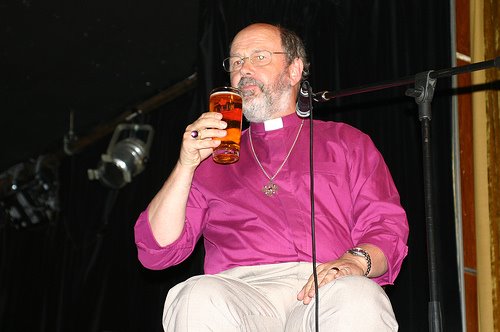


Wright is insistent that this traditional Reformed understanding of the gospel involving penal substitutionary atonement has it all wrong. "This is not the gospel," he writes in his latest book, The Day the Revolution Began. "This is paganism. To worship God as one who justifies by imputation is nonsense." So as to leave no question on his denial of penal substitutionary atonement, he adds: "That Christ died in the place of sinners is closer to the pagan idea of an angry deity being pacified by a human death than it is to anything in either Israel's Scriptures or the New Testament." [N.T. Wright, The Day the Revolution Began: Reconsidering the Meaning of Jesus' Crucifixion (New York: Harper One, 2017), p. 147.]

Elsewhere he writes: "If we use the language of the law court, it makes no sense whatsoever to say that the judge imputes, imparts, bequeaths, conveys, or otherwise transfers his righteousness to either the plaintiff or the defendant. Righteousness is not an object, a substance, or a gas which can be passed across the courtroom. This gives the impression of a legal transaction, a cold piece of business, almost a trick of thought performed by a God who is logical and correct, but hardly one we want to worship." [Wright, What Saint Paul Really Said, p. 113.]

And what is his alternative? Wright contends that no one is justified—in other words, declared righteous by God—until one's final, future assessment. At that time—according to Wright—what the Apostle Paul meant as present justification by faith will be affirmed or denied on the basis of one's entire life. [Ibid, p. 129.] Wright speaks of a person's "covenant faithfulness," wherein one maintains membership in God's covenant with His followers through vocational means (i.e. through obedience to His teaching), and anticipates a final justification at the end of time based at least partly in these obedient works. As Phil Johnson has remarked, this makes a person's faithful discipleship a factor in final justification. In other words, Wright's theology would ground ultimate salvation at least partly in the believer's activity while on Earth (Wright describes this as the "covenant of vocation"), and not completely in the finished work of Christ on the sinner's behalf. [Phil Johnson, "What's Wrong with Wright?" Ligonier Ministries.]

Wright's purpose is to re-envision the traditional gospel away from its insistence on repentance and faith in God's substitutionary atoning sacrifice in exchange for God's imprimatur of righteousness. Instead, Wright would have us believe that all who dedicate themselves to Christ and follow-through with behaviors consistent with His ethics are in God's family and belong at His table. The late philosopher and author Dallas Willard (another favorite among revisionist evangelicals) would seem to concur when he remarks, "It isn't that we become righteous by having the correct beliefs. We become righteous by trusting God and living from Him." [Dallas Willard, interview with John Ortberg, Menlo Park Presbyterian Church, Menlo Park, CA, Dec. 13, 2009.] In the same interview, Willard declares it is a mistake to think that "God has a list of things you must believe, and then He'll have to let you into heaven." [Ibid.]

Jesus: Heaven's Dress Code Enforcer

So which are we to believe? Is the gospel the imputation of Christ's righteousness in the form of a holy robe to all who repent and (in Willard's sardonic lexicon) "believe the right things," or is it Wright's version of covenant membership that comes to all would-be disciples of Christ as they live out their faith in obedience to His teaching?" Does the Bible provide any insight on this critical divide?

Indeed it does, and from no less an expert than Jesus Christ Himself. In Matthew 22:1-14, Jesus tells a parable to His disciples, the ending of which addresses this exact issue. At a banquet meant to represent the eternal celebration between God and His true companions, Jesus tells of someone God deems unacceptable at the feast—an unwelcome intruder. In an astonishing turn of events, this impostor is confronted by the King, the Lord Jesus Christ, and summarily tossed from the banquet into outer darkness, a figurative description for hell.

For what crime? The King Himself had declared that invitations were to be sent far and wide, to whomever could be found (v. 9). Not only that, invitations were sent out without regard to one's moral standing (v. 10); in fact, the event was to include (v. 10) "both bad and good." The man is at the banquet when confronted by the Lord, implying his intention to participate in the communal gathering. Ostensibly he is there on the basis of fulfilling his part in a "covenant of vocation" while on Earth. There is no mention of any obvious treachery, and his presence at the banquet would presume at least an outward demonstration of allegiance to the King. None of his fellow celebrants seem to have any inclination that the man's admission to the event was illegitimate.

So why did Christ throw him out of the celebration and into hell? For one reason alone. In the midst of the celebration, Christ discovers the man and asks him a single question (v. 12-13): "'Friend, how did you get in here without a wedding garment?' And he was speechless. Then the king said to the attendants, 'Bind him hand and foot and cast him into the outer darkness. In that place there will be weeping and gnashing of teeth.'"

This is most extraordinary. Jesus confronts a would-be disciple and fellow celebrant at His kingdom celebration and forth-with tosses him into hell for violating the dress code! Jesus is saying that whether or not you are wearing the proper wedding garb in His presence will determine whether you celebrate with Him forever, or whether He orders you cast into hell. Jesus' words leave no doubt as to His implication: no matter what, it is vital to be found wearing the proper wedding garment in the presence of God!

So let's take Christ's teaching and apply it to what we have already learned. From the Scriptures referenced in the previous post, we can deduce: (1) the wedding dress Christ requires comes entirely through the initiative and activity of God (Isa. 61:10); (2) the process includes the removal of the soiled garment of the sinner in exchange for the righteous robe (Zech. 3:4); and (3) the event must occur prior to one's meeting with the Lord Himself (Matt. 22:11-13).

Compare this with Wright. On all three measures, Wright's theology misses the mark. How so? (1) His ideas would introduce a disciple's faithful obedience as a factor in determining his acceptance before God, in violation of Isaiah 61:10. (2) Wright's theology minimizes or negates altogether the gospel's insistence on a specific garment exchange which serves to cleanse the sinner's stained nature, in violation of Zechariah 3:4. Finally, (3) Wright insists that no one will be justified, or declared righteous—including, by analogy, wearing any robe of righteousness—until he reaches Heaven. This perspective dismisses outright any prerequisite dress code that must be applied prior to the afterlife and one's ultimate encounter with Lord Jesus Christ, in clear violation of the Lord's own teaching in Matt. 22:11-13. On all three accounts, Wright's ideas oppose the distinct and indisputable instruction of the Word of God.

Conclusion: What Are You Wearing?

Make no mistake. Whether they recognize it or not, those who tamper with the Bible's wondrous and clear presentation of God's provision of a holy garment to penitent believers, through Christ's penal substitutionary atonement, do so from the corruption and pride of their carnal selves. It arises from the age-old, grotesque desire to offer up some form of human activity designed to merit God's acceptance. These would-be spiritual leaders and religious teachers resent God's impossible righteous standard, so they devise one of their own. Here, Proverbs 14:9 applies: "Fools mock at the guilt offering, but the upright enjoy acceptance." Those who dislike God's bar of approval will mock at what He has done to reconcile repentant and believing sinners to Himself. But rather than enjoying God's acceptance, they are counted as fools.

Why do such fools mock in this way? Ultimately, it is because they do not want to share in the persecution Christ says will come to His true followers (Gal. 6:12; see also John 15:18-25; 16:1-4; 2 Tim. 3:12; 1 John 3:13). Those who deny the doctrine of substitutionary atonement do so to avoid telling sinners they have neither the autonomous will nor ability to merit any favor of God (Phil. 2:12), that they live under God's contemporary judgment even now (John 3:18, 36; Gal. 3:10), and that apart from faith in Christ's Person and saving work, they are headed for eternal punishment (Matt. 25:46; John 8:24). That is exclusive, divisive, even inflammatory language, and those who deny the true gospel message want no part in such polemical discourse that might invite rejection and open hostility.



But such a polemic is precisely the intent of the true gospel, which is why Christ is depicted in both the Old and New Testaments as a "rock of offense" (Isa. 8:14; Rom. 9:33; 1 Pet. 2:8). The gospel is a polemical message designed to convict the sinner of damning sin and the utter ineptitude of any self-rescue. If humans, through their estimable efforts, can affect their standing before God, then these modern-day evangelical revisionists can appeal to the pride of humans in presenting their good deeds before God, and maintain their popular standing among like-minded objectors. But none of this is new. These latest attempts to undermine God's righteous standard are but recycled heresies which, regardless of the age or form, are subject to the same chilling and dire sentence Christ gave to the improperly-clothed wedding celebrant.

N.T. Wright, Dallas Willard and all who follow in their wake are wrong. Heaven has a dress code, and it is strictly enforced. The robe of righteousness that must be worn in the presence of Christ has no input from human hands, comes through the imputation of Christ's righteousness in exchange for the penitent believer's sins, and must be applied by Christ alone prior to the one's progression to the afterlife. This is the clear statement of Scripture. May God continue to call forth an army of righteously robed converts to proclaim His true gospel, and to rebuke all assaults against it.

Dr. Colin L. Eakin
Guest Contributor

Dr. Eakin is a sports medicine orthopædic surgeon in the Bay Area and part time teacher at Grace Bible Fellowship Church's Stanford campus ministry. He is the author of God's Glorious Story.

20 July 2018

What Are You Wearing? Part 1: On the Modern Day Assault Against the Dress Code of Heaven

by Dr. Colin L. Eakin


What does it take to be right with God? That is the central question of human existence. What are God's criteria for eternal life with Him? What does He require?

Job had this question on his mind. The Book of Job is likely the oldest book in the Bible, so it is fitting that in it Job asks the question the Bible is written to answer: "How then can man be in the right before God?" (Job 25:4; also 4:17; 9:2). The correct answer determines the fate of everyone for all time. And because this is so, the correct answer is not only the most pondered and debated topic by humans, it is also the most undermined and attacked by God's number one enemy, Satan.

God's Perfect Standard

So what is the Bible's answer to this most fundamental question? What is God's demand upon those who would be received by Him? Answer: perfection. God's bar for His approval is perfection. Anything less brings eternal condemnation as the price of disobedience. Ezekiel writes what God has determined: "The soul that sins shall die" (Ezek. 18:4, 20).

This is God's consistent standard throughout Scripture. When God created the first humans, Adam and Eve, His instruction to them was straightforward: if you disobey Me, you will die (Gen. 2:17). When God delivered His Law to the people of Israel, His oft-repeated injunction—"Be holy, for I am holy" (Lev. 11:44-45; 19:2; 20:7)—remained the same. And what was God's threat for all who fail in this? "Cursed be anyone who does not confirm the words of this law by doing them" (Deut. 27:26). Be perfect, or be cursed. Those have always been God's two options.


This righteous standard was on David's heart when the Holy Spirit inspired him to write, "O LORD, who shall sojourn in your tent? Who shall dwell on your holy hill? He who walks blamelessly and does what is right and speaks with truth in his heart" (Ps. 15:1-2). In another Psalm, David continues on this theme: "Who shall ascend the hill of the LORD? And who shall stand in His holy place? He who has clean hands and a pure heart, and does not lift up his soul to what is false and does not swear deceitfully" (Ps. 24:3-4).

When God came to earth in the Person of Jesus Christ, His condition for acceptance was unchanged and explicit: "You therefore must be perfect, as your heavenly Father is perfect" (Matt. 5:48). Earlier in the same sermon, Jesus warns those who would listen, "For I tell you, unless your righteousness exceeds that of the scribes and Pharisees, you will never enter the kingdom of heaven" (Matt. 5:20). In the Book of Hebrews, the Holy Spirit reiterates through the writer, "Strive for peace with everyone, and for holiness, without which no one will see the LORD" (Heb. 12:14).

So the standard of God for those who would commune with Him is consistent throughout Scripture and unequivocally clear: holiness. Moral perfection. A life lived flawlessly before God, free of even the slightest taint of sin. That is the Bible's daunting yet unambiguous requirement for fellowship and eternal life with God. Then the Bible dooms its reader even further, declaring that on one's own, such perfection is impossible. According to the Bible, no one can live in such a manner, in perfect obedience before a righteous and holy God. David moans, "No one living is righteous before you" (Ps. 143:2). And in the New Testament, Paul concurs when he writes, " . . . all have sinned and fall short of the glory of God" (Rom. 3:23a). Therein lies the fundamental predicament of mankind: God demands holiness to match His glory, and everyone throughout all time falls short of this standard.

Imputation: God's "Robe of Perfection" Applied to Penitent Sinners

Most fortuitously, God has provided a manner by which sinners can acquire the holiness necessary to commune with Him: through the imputation of Christ's righteousness to those who repent and believe in His saving work. Imputation means the transfer of condition from one account to another—in this case, the transfer of Christ's perfection to the unworthy. This imputation comes from God's provision of penal substitutionary atonement, wherein through faith God attributes the righteous life of Christ to the penitent sinner, and places that sinner's sins upon Christ, for which He was punished once and for all time upon the cross (Isa. 53:10; 2 Cor. 5:21). This is exactly what Isaiah was expressing when he says of Christ (Isa. 53:11), " . . . by His knowledge shall the Righteous One, My Servant, make many to be accounted righteous, and he shall bear their iniquities."

The Bible uses a number of images to depict all that occurs in redeeming the sinner via imputation through substitutionary atonement, including speaking of being clothed with the righteousness of God (Job 29:14; italics added). The prophet Isaiah was beside himself at this possibility, exclaiming, "I will rejoice greatly in the LORD, My soul will exult in my God; For He has clothed me with garments of salvation, He has wrapped me with a robe of righteousness" (Isa. 61:10; italics added). Zechariah elaborates on this sartorial makeover: "He [God] spoke and said to those who were standing before him, saying, 'Remove the filthy garments from him.' Again He said to him, 'See, I have taken your iniquity away from you and will clothe you with festal robes' " (Zech. 3:4; italics added).

This transfer of Christ's righteousness to sinners—pictured as a holy robe, given in exchange for their sinful soiled garment—is the most extraordinary transaction imaginable. It is almost beyond our ability to conceive that God would punish His own Son for the sins of others in order to provide this holy vestment, by which the sinner can stand perfectly righteous—and thus accepted—in the presence of God. Substitutionary atonement and its provision of a righteous robe to unworthy sinners is thus the pinnacle demonstration of God's grace and mercy and love. As such, it is the supreme feature for which He deserves their highest and ceaseless praise.

But the prideful human heart is wired to reject God's offer of Christ's righteous robe, and to come up with one of its own. Ever since Adam and Eve made garments of leaves in the vain attempt to cover the shame brought on by their sin, it has been mankind's nature to reject the covering God would apply, and endeavor instead to apply an alternative. This, in fact, is the impetus behind every false religion. Every false form of belief in the world is predicated, at its core, upon developing some alternative garment that might cover the sin and shame of its converts and somehow still allow them to stand acceptable before God.
Here is how Pastor John MacArthur describes this tendency:
What did Adam and Eve do? "They sewed fig leaves together and made themselves loin coverings" (Gen. 3:7). That is the launch of false religion . . . that is the symbol of false religion. That is the first act of man to create a way in which he himself could deal with his own shame, in which he could cover his own iniquity. And then he hides, because he hasn't yet found a way to face God.
     This is the birth of false religion: men make ways to cover their own sin. But it does not salve their guilty conscience, and so they hide from God. False religion is a form of hiding from God, hiding from His true presence. That is the symbol of all false religion, that a guilty, dying sinner can make a covering for his own shame, and that somehow he can cover his shame and hide himself from God. He hides himself in his own self-made coverings. [John MacArthur, from the sermon, "The Danger of Adding to the Gospel: Gal. 2:11-12," delivered at Grace Community Church, Sun Valley, CA, June 4, 2017.]
Isaiah confirms the futility of these efforts: "For all of us have become like one who is unclean, and all our righteous deeds are like a filthy garment; and all of us wither like a leaf, and our iniquities, like the wind, take us away" (Isa. 64:6). According to the prophet, these "righteous deeds" not only fail to cover one's sins and deliver the righteousness God requires, but are actually fetid waste which bespeak of the sinner's unrighteous core and augur his demise.

With such straightforward and consistent biblical instruction on God's righteous standard for acceptance, the gracious and singular manner He has arranged for this to occur, and the failure of all substituted human effort, one might think God's prescription for His approval would be immune to dispute. But if that is your conclusion, guess again. We'll cover the modern day assault against God's standard of righteousness in our next post, "What Are You Wearing? Part 2."

Dr. Colin L. Eakin
Guest Contributor

Dr. Eakin is a sports medicine orthopædic surgeon in the Bay Area and part time teacher at Grace Bible Fellowship Church's Stanford campus ministry. He is the author of God's Glorious Story.

18 July 2018

Don Green on Biblical Justice vs. "Social Justice"

posted by Phil Johnson


My friend and one-time joint pastor of GraceLife wrote this brief post on FaceBook yesterday, and it was so good I wanted to save it here for easy access. FaceBook posts always disappear into the timeline, and it's really hard to search for them, so let's preserve this here:

When like-minded brothers and I voice warning about the so-called Christian justice movement, it would do you good to recognize something important.

(I speak primarily to those who are confused and trying to sort it out; I realize the main speakers, writers, and promoters have chosen their way and resent the fact that we won’t hop on their train.)

We are trying to safeguard you and your faith. We think there is a genuine danger to this movement that will lead you far away from the simplicity and purity of devotion to Christ.

The burden of proof is not on us to defend a continuance of the faith once and for all delivered to the saints, but entirely upon those men who point to an immoral heretic as grounds for re-defining the very nature of what historic Christianity should be and do. We don’t believe these men have come close to making their case.

We see them driving people from their churches with harsh words and judgment. We see them calling their opponents racist Confederates. We see their defensiveness when sincere concern is expressed against their agenda.

We assess all that and say, “That is not the Spirit of the Good Shepherd who cares for His sheep.”

We fear lest the precious good news be obscured and hidden by men with a grievance trying to accomplish political and economic goals rather than pursuing the interests of Christ Jesus, who plainly said His kingdom is not of this world.

To be sure, we are men of clay feet. We never said anything different. We are near Paul at the front of that long line of men who are foremost among sinners.

But over time we’ve seen these kinds of movements come and go. They’re fundamentally all the same. Biblical preaching and the transforming power of God’s Word isn’t enough to them.

We disagree. And we’re not moving. The angrier they get, the more resolved we are—whether we are in the majority or minority is of no consequence to our position.

We do it preeminently for love for Christ, who loved us and gave Himself up for us in His atoning death on Calvary. Loyalty to Him allows us no other option and we wouldn’t take a different path if we could.

But know this. We do it in love for you, too. We seek to feed His lambs and tend His sheep.

We believe that’s the ultimate justice we can render in respond to Christ, who not only saved us, but who also in one way or another has put us in a position of ministry.

          Don Green
          Pastor
          Truth Community Church, Cincinnati
And follow Don on FaceBook. He's not the most prolific FaceBook celeb, but when he posts anything substantive, he always has great stuff to say.

Phil's signature