27 December 2025

Not a Very Convincing Con, If You Ask Me

A tale from the 25 June 1855 London Police Blotter

Posted by Phil Johnson

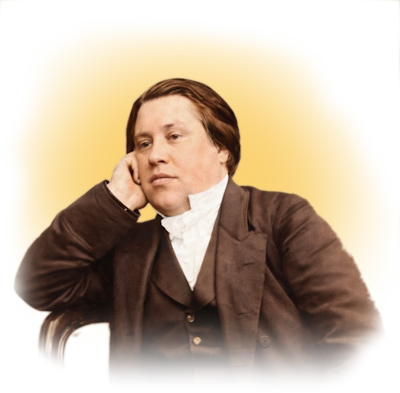
In June of 1855, Charles Spurgeon was just 20 years old. He had accepted the pastorate of the New Park Street Chapel just 14 months earlier, and his fame was already beginning to spread internationally.

For someone so young, he had gained an unusual amount of pastoral skill and wisdom from observing his father and grandfather (both pastors). He had also pastored a medium-sized congregation for a few years at Waterbeach before coming to London. But all his prior pastoral experiences were in small towns and rural settings. Spurgeon was still a bit callow when it came to discerning the schemes of Victorian con-artists who infested the squalid districts of London. He had a warm, generous heart and a passion to help London's teeming masses of needy and destitute people. He was well known for being always generous and charitable—but he was perhaps too gullible at times.

The following incident was reported in all the London newspapers.

SOUTHWARK.—A Clerical Impostor

JOHN ELLIOT HADLOW (alias the Rev. Mr. Hadlow, alias the Rev. Mr. Norman, alias the Rev. Mr. Hague), an elderly little man, dressed in a very shabby suit of black, with a dirty white neckcloth, and having a superfluity of bushy grey whiskers and a bald head, was charged with obtaining a half-crown* from Mr. James Wood, a scripture reader and distributor of the Rev. Mr. Spurgeon's charities, under false and fraudulent pretences.

Mr. Wood stated that Mr. Spurgeon had received a letter from the prisoner, which was of considerable length, setting forth his extreme poverty, and asking for relief. [Mr. Wood] was deputed to make inquiries about the prisoner. He called upon him at his address, and not finding him at home he wrote asking for an interview. At this meeting the prisoner told a long and melancholy story of his misery. He said his wife had died in a madhouse, leaving him with four children; that he was an ordained minister of the Church of England, but, in consequence of some connexion with a young woman, he had a fall, from which he had never been able to recover himself. Since then his views with regard to baptism were somewhat altered, and he left the Established Church. Witness, believing there was some truth in what he said, gave him half a-crown, and appointed to meet him again. In the meantime, however, he discovered his real character, and that all he had told him was false. At the second interview witness took with him Mr. Hereford, the Mendicity Society's officer, who at once recognised him as an old offender, and took him into custody.

From the statement of the clerk to the Mendicity Society, it appeared that the prisoner had been known as a clerical impostor for nearly 27 years, in which time he had been convicted 11 times at different police-courts, and he had been seen in the streets begging and writing on the pavement.

Mr. á Beckett, after perusing the letters written by the prisoner, said he was quite astonished that any one should be taken in by such letters as these. The obvious cant which the letters contained would have been sufficient to awaken suspicion in any mind. The prisoner had, however, been charged with fraud, and perhaps some other charges would be brought against him; he should, therefore, remand him.

* The purchasing power of a half crown would equal between $50 and $100 in 2025 dollars. It was a substantial sum to hand to a vagrant dressed in shabby religious garb.

Phil's signature


26 December 2025

Critic to Spurgeon: "You are a prodigious quack."

Posted by Phil Johnson

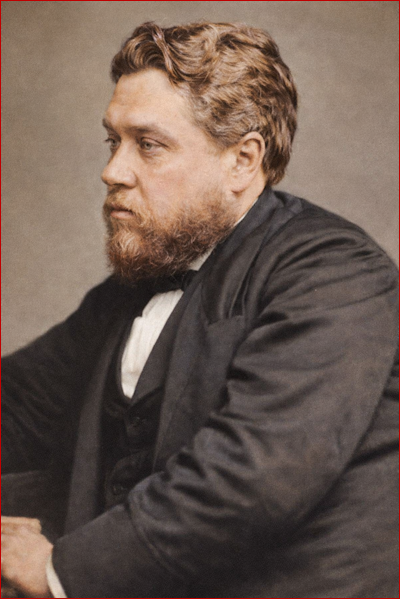
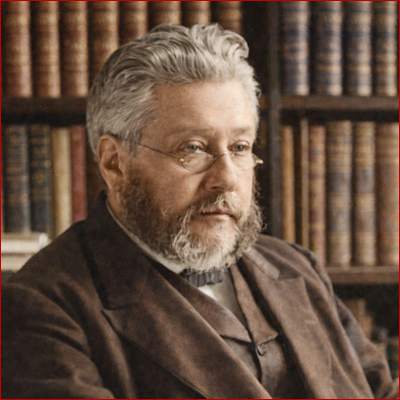
Young Lion; Old Woman
CLICK HERE FOR FULL-SIZE IMAGE

Charles Spurgeon had critics who absolutely loathed him, and they spoke über-harshly to him—and about him—with such relentless ill-will that their words make most of the snark in today's social-media forums sound almost genial by comparison.
     Here is one such example, from an anonymous correspondent who evidently labored for hours to inject as much venom as possible into an open letter. This was published in London's Sunday Times—and carried in newspapers worldwide. This copy is from Melbourne, Australia.
     The year was 1861. Construction on Spurgeon's Metropolitan Tabernacle was finally complete and the congregation had moved into their new home with its famous 5,600-seat auditorium. (Standing room pushed the capacity to 6,000, and it was packed full from the very first service.) Spurgeon had been pastoring in London only seven years, and he was barely twenty-seven years old. His style of preaching was deemed too colloquial and too passionate compared to the stodgy vestment-wearing clergy who dominated the Church of England. When the following letter was published, Spurgeon had not yet preached his famous sermon against the doctrine of baptismal regeneration. That sermon would further—and permanently—elevate the ire of the Anglican establishment. But as this letter shows, there was already an undercurrent of contempt and condescension against Spurgeon from Englanders who equated religiosity with true religion.
     In short, Spurgeon's critics preferred the pomposity and pretentiousness of high-church formalism—and they tended to be rather ill-tempered about it. Spurgeon was regularly drawing capacity crowds of 9,000 or more to the Surrey Gardens Music Hall. Hundreds of converts were leaving the Church of England and attending worship services in non-conformist chapels. One suspects that underlying all this vitriol from Spurgeon's critics was a bitter strain of jealously that someone so youthful could preach with such power and see that kind of success.

THE BORDER WATCH, FRIDAY, SEPTEMBER 20, 1861

A DOSE FOR SPURGEON

A late writer in the "Sunday Times," under the signature of "Warder," addresses the Rev. Charles Spurgeon in the following terms, the style and power of which remind us of the classical Philippics of Junius:—


You are, I am told, to preach in your new monster Tabernacle this very evening. The huge place is built and paid for. I congratulate you. The achievement, considering your youth and your ignorance, is certainly astonishing. Some people predicted that you would fail in this gigantic undertaking: you have disappointed them. Some people predict that you will not be able to fill your chapel now that it is erected: I beg you will not listen to their croakings. Depend upon it: they badly over-estimate the intelligence, wisdom, and common sense of the generation! For years and years to come you may assure yourself there will be fools vast enough in London to make you a congregation vast as your vanity and mighty as your tongue.

For your chapel itself, it is ugly enough in all conscience! Big, to be sure, it is; but more unclassical it could hardly be. It has cost an enormous sum of money; but, then, deformity is always as expensive as beauty in this world. It will suit your worshippers admirably; and I suppose the devotions paid to you will be the chief carried on within its walls. There is nothing akin to religious taste in its aspect; it is a big, ugly staring vulgar profane place; and as such it will harmonize only, and too happily, with the kind of services over which you usually preside. Sir, your chapel is worthy of your genius and your fame.

I frequently meet with people who profess to be amazed at your popularity. Why should they? You work hard. You have an unlimited supply of tongue always at command. You never puzzle the brains of your hearers. Your sermons are well spiced. You are flippant, familiar, and, in a certain fashion, jocose. You are intolerant, dogmatic, and common-place. You revel in judgments. You are precise in all the details of perdition. You have scaled the heights of Heaven. You have fathomed the depths of Hell. You talk with Satan as a man talks with his friend. You talk with the Almighty as no man talks with his friend. You are the munificent patron of the Redeemer. You are the merry playmate of the Holy Ghost.

You are a wholesale and retail dealer in that famous and much sought after article—damnation. Your pulpit is a big brimstone warehouse.

You are one of the Clowns of the church, addressing immortal souls in a "here we are" sort of style. You never pause for a word, because words, in your estimation, are not sacred, and are very cheap. You have no care about religious properties. You own immeasurable quantities of brass. You are a prodigious quack. As you boast of having been told by a gentleman in the street, "you are a great humbug."

Now, these are all elements of popularity. Your gospel is a nostrum which you unlimitedly puff, and it has accordingly an unlimited sale. I see about the street every day, an ugly carriage, blazing with paint, brass and gold, in shape like a teapot; in decoration like a bawd; in character like a child's plaything. On it is the inscription "The Elixir of Life." I dare say you know it. It is a small-headed, big-bellied cannister on a truck.

I can well imagine the elevated complacency with which you gaze upon that carriage. For that carriage you are an impersonation. Your doctrines, you maintain, are the elixir of life. You drive about the street, a self-advertising medium. Children, women, and foolish men stop, stare at you as you go by, give a chuckle, as though they had beheld something very funny and pass on. But the elixir pays. The advertisement, however impudent, is not thrown away. Thousands go and buy the miserable compounds that you proclaim to be medicine of the soul, they give a good price for the article. To be sure it does not cure them of their moral infirmities; but you make the profit; and why should not all mankind be satisfied?

Illustrations cadger! I almost adore you. The facility with which you convert brass into tin is something to be admired in this age of money-hunting. You bring Omnipotence itself into your shop, and set it up behind the counter as chief salesman.

You beg and pray in the same holy name—the same unholy spirit. You sell your blessings as the priests of another sect used to sell their indulgences. You are the cheap-jack of the religious world; and you drive a roaring trade.

"So many Divine grains for so much! A dose of damnation and a pun for so much. Here you have a poke in the ribs of Ineffable for so much. What shall be the next article gentlemen? I will dance a heavenly hornpipe for so much! Jigs of grace are going at so much! The irresistible burlesque of redemption is now offered—who bids? The devices of the devil denounced for so much! Babylon exposed in a screech of bigotry for the smallest possible consideration! The doctrine of Salvation discounted at so much percent! Dishonored bills of conscience bought in to any amount! A case against any man's soul granted on the lowest possible terms! Sacred sneers by the dozen! Jibes of spiritual joy by the gross! Pay up stiff and prompt and I will pray for you! Whoso giveth unto Spurgeon lendeth unto the Lord: whoso giveth not unto Spurgeon shall be given over to the wicked one. Gentlemen, the chapel is paid for, and now it belongs to my friend Jesus."

Such, sir, is your boast one night. The next, you blow up your guests because the collection is a small one. Your congratulations are in God's name: so are your censures. You are like an Irish beggar in this respect. Give; and no benediction can be too gracious: deny; and no denunciation can be too withering! If you receive a donation, the promises of Heaven fall from your lips. If you do not, you find the threats of Hades just as easy!

To my mind, sir, your assumption of personal identity with the Great Jehovah is the most offensive feature in your entire character. With the zealots of your sect this vice is frequently too apparent, though I believe it is often most unconsciously indulged. In you it assumes most horrible proportions.

It is not the complacency of assured faith; but the swagger of egotism without culture—of audacity without conscience. Were it not for this, you would be a harmless amusement for ignorant people; as it is, I fear your influence must tend powerfully to bring religion into the contempt of all thoughtless minds.

The gospel is not a vulgar joke. Christianity is not a burlesque extravaganza. Faith is not a farce. Hell and heaven are not the words to be made the stock-in-trade of a vulgar punster. Salvation is not a quack remedy. Apostleship is not a merry-Adrewism. The sanctuary is not a play-house. But your prayers are profane gossip with God. Your comments on Scripture are the paltry gag of a low comedian. Your preaching is the religious nonsense of an improvisator. Your earnestness is impudence.

Your success is a national scandal.


CLICK HERE FOR FULL-SIZE IMAGE


PS: I found and colorized this photograph of a Victorian-era coach in Central London like the one described in the above diatribe. Turns out "The Elixir of Life" is sarsparilla.

The Elixir of Life
CLICK HERE FOR FULL-SIZE IMAGE
Phil's signature

23 December 2025

"The Other People's Preacher"

The following article is from The San Antonio Daily Light, 3 February 1892. It was published three days after Spurgeon went to heaven.

REV. CHARLES SPURGEON.

A San Antonian's Visit to the Great
Tabernacle—Extract From a
Personal Letter.

The recent death of the Rev. Charles Haddon Spurgeon, at Mentone, Italy, where he had gone to seek rest from his excessive labors, too late to repair the wastage of a most laborious life, invests with a fresh interest all that surrounds him and his work for the poor of London. The following description of Spurgeon's tabernacle is from the pen of an old resident of this city, two years since in London for his health, and will be of more than passing interest:

LONDON, England, Sept. . ., 18.

DEAR M.......

I have a few spare moments, and as I have just returned from Spurgeon's famous Tabernacle and was much impressed with what I saw and heard there. I will tell you all about it.

I took a cab at Charing Cross Station, where I am stopping, and in fifteen minutes after having paid [no doubt overpaid] the cabbie I found myself at the entrance of the great Tabernacle. I cannot give any correct idea of the exterior of the building, except that it is very ordinary looking and the brickwork somewhat dingy from long exposure to London smoke and grime.

As I entered a deacon hailed me [I knew he was a deacon. Why is that one never mistakes a deacon?] and asked me if I had a ticket, at the same time tendering me one. I was confused and put my hand into my pocket to respond to the rules of the Tabernacle as to price. When he saw my intention he said that there was no regular charge, implying as I thought an irregular one, but he was particular to say that I might put anything that I liked into the large box on my right, which of course I did. After this I felt relieved, as did also the deacon, for he smiled, but not in the San Antonio way, although I would not like to tempt him on a week day. Of course on Sunday it was not to be thought of.

I now thought myself at liberty to enter the races. I mean the race for a good seat. I finally picked out the best, and softest place that was handy, and as the services progressed took the following summary.

The room is oblong and evidently built for acoustic effects and large seating capacity, which latter I should say was about five thousand. There are two galleries running around the room, and the pulpit is on a level with the first gallery, the choir being just in front of the pulpit. I should think that there were one hundred choir boys, but the singing was of the most simple character and always joined in by the congregation.

By half past ten the Tabernacle was full, and those arriving after that were glad of standing room. All classes were there, but I thought the middle class the more numerous, and there were evidently many strangers. I was impressed that Spurgeon was the teacher of England in a popular sense. Mr. Spurgeon entered the room from the rear, accompanied by several other gentlemen, apparently connected with the church.

His theme was well chosen and his discourse of a character and so handled as to make him beloved by the common and lower classes. I did not notice many aristocratic faces, I suppose because Mr. Spurgeon is really the other people's preacher. And by the way, it seems to me a pity that preachers have to cater to classes. It was not so with the Great Preacher.

A gentleman on my left said that Mr. Spurgeon was not in very robust health, and no doubt his great load of responsibility and work was telling upon him. Of course everything was English from the pulpit to the pronunciation, but I left the church feeling that Mr. Spurgeon was a good man, and on the principle that it is better to be right than to be president, felt drawn to him. He impressed me as having a great heart, and a love for his fellows so strong that he felt called upon to better their condition, and there can be no doubt that the simple though fervid eloquence of Spurgeon has done more to raise the moral tone of London's poor and middle classes than any other one influence.

The Dear Old Man is nearing his end, so his friends fear. When he has gone his place will be hard to fill, both because of his own peculiar genius and power, and also because there are so few nobler and unselfish men in the world.

J. M. E.


19 December 2025

Spurgeon on the Eternality of Hell

posted by Phil Johnson

The following is an excerpt from sermon #669, "The Smoke of Their Torments," in Charles Haddon Spurgeon, The Metropolitan Tabernacle Pulpit, 63 vols. (Passmore & Alabaster, 1864), 10:670-71.

he Judge of all the earth cannot but do right. Though he is terrible and dreadful in his anger, as a consuming fire, yet is he still our God for ever and ever, full of goodness and full of truth.

There is a deep-seated unbelief among Christians just now, about the eternity of future punishment. It is not outspoken in many cases, but it is whispered; and it frequently assumes the shape of a spirit of benevolent desire that the doctrine may be disproved. I fear that at the bottom of all this there is a rebellion against the dread sovereignty of God.

There is a suspicion that sin is not, after all, so bad a thing as we have dreamed. There is an apology, or a lurking wish to apologise for sinners, who are looked upon rather as objects of pity than as objects of indignation, and really deserving the condign punishment which they have wilfully brought upon themselves. I am afraid it is the old nature in us putting on the specious garb of charity, which thus leads us to discredit a fact which is as certain as the happiness of believers.

Shake the foundations upon which the eternity of hell rests, and you have shaken heaven's eternity too. "These shall go away into everlasting punishment: but the righteous into life eternal." There is precisely the same word in the original. We have it translated a little more strongly in our version, but the word stands the same; and if the one be not eternal, the other is not. Brethren, this is a fearful thing. Who can meditate upon the place appointed for the wicked without a shudder?

Ungodly men affect to think we like to preach upon these topics. Far, far enough is it from being the case. I have had to censure myself of late for scarcely having preached at all upon them. They fancy that Christian men can look with complacency upon the torment of the lost, imagining themselves to be safe. They know not what they say. The very reverse of such a spirit is common among us. We shudder so much at the thought of men being cast away for ever, and horror takes so strong a hold upon us, that if we could doubt it, we would; and if we could disprove it altogether, we feel we should be glad. But we dare not attempt the task, because we know that it were to impugn the sentence of the Almighty, and provoke a quarrel against the Most High. Great Judge of all! thou shalt trample upon thine enemies in the day of thy wrath; yet shalt thou be as glorious in that act as when thou dost pardon sin, and pass by transgression.

Christian, look there, and, as thou lookest, rebel not, but say, “True and righteous art thou, O God; let thy name be honoured evermore!

C. H. Spurgeon

18 December 2025

Spurgeon on Funeral Reform

posted by Phil Johnson

rior to the middle of the 19th century, burial of the dead usually took place in churchyards. These were small, often overcrowded burial grounds—especially those that got severely squeezed by urban development.

London in particular had this problem. The city was well known for the powerful stench that emanated from sewage in the Thames. Foul odors that wafted into the atmosphere from decaying bodies in shallow churchyard graves added to the fetid ambience of the city. Londoners believed the nauseating odor that hung in the air over their communities carried infection. "Bad air," known as the miasma, was commonly believed to be a major factor in the spreading of disease.

In Europe and America, city planners began to build rural cemeteries—parklike acreages located (at the time) well outside the city limits. London, for example, built seven expansive burial parks circling the city (dubbed "the Magnificent Seven" sometime in the 1980's). One of these was the West Norwood Cemetery, where Charles Spurgeon would be buried in early 1892.

Crowded cemeteries such as Bunhill Fields and most churchyard burial grounds within the city limits were closed by the Burial Act of 1852. Then during the 1854 cholera epidemic, a physician, John Snow, proved that the disease was not airborne; it was spread by contaminated water. Ground-water pollution was the result of poor management of London's sewage. Cesspools, slaughterhouses, and other sources of wastewater were draining into the aquifer, contaminating well water. That was the real culprit—not the air, and not old graveyards.

By the 1870s, England's Funeral Reform Movement had turned its attention to the extravagant costs and pretentious pageantry associated with typical Victorian funerals. These were lavish formal affairs with professional mourners (known as "mutes"), who followed ornate hearses festooned with ostrich plumes, carrying expensive coffins. Mourners were expected to wear formal clothing made of black crepe and march in procession to the burial. Burial monuments were often large, heavily ornamented stone structures. The cost of a "decent" burial could bankrupt a working-class family.

Funeral Reform activists lobbied and campaigned for more modest, less expensive, more simplified ceremonies. The movement soon became noisier and more aggressive, and they solicited Spurgeon's influence in support of their efforts. He replied in his typically elegant fashion, indicating frankly that while he was fully sympathetic with the cause, he did not want to be associated with the reputation or rhetoric of the movement. He gently suggested that the movement itself could use some reform.

This type of gentlemanly candor is one of the features of Spurgeon's style that I appreciate most. The Philadelphia Times (February 5, 1888), p. 2 carried his reply:

Anything which will lessen the foolish expenses of funerals and make them less pompous has my hearty approval, yet I cannot become an official, whether a patron or otherwise, for I think that this business also wants reforming, and that societies with committeemen who do nothing and patrons who know nothing about it are getting to be an evil. Wishing you every success in reforming away the absurdities connected with the burial of the dead, I am, dear sir, yours truly.
C. H. Spurgeon
Phil's signature

10 December 2025

Regarding Predestination and Free Agency

Spurgeon explains the principle of concurrence

Posted by Phil Johnson

Many have failed to understand how everything, from the smallest event to the greatest, can be ordained and fixed, and yet how it can be equally true that man is a responsible being, and that he acts freely, choosing the evil, and rejecting the good.

Many have tried to reconcile these two things, and various schemes of theology have been formulated with the object of bringing them into harmony. I do not believe that they are two parallel lines, which can never meet; but I believe that, for all practical purposes, they are so nearly parallel that we might regard them as being so. They do meet, but only in the infinite mind of God is there a converging point where they melt into one. As a matter of practical, everyday experience with each one of us, they continually melt into one; but, so far as all finite understanding goes, I do not believe that any created intellect can find the meeting-place. Only the Uncreated as yet knoweth this.

It would be a very simple thing to understand the predestination of God if men were clay in the hands of the potter, and nothing more. That figure is rightly used in the Scriptures because it reveals one side of truth; if it contained the whole truth, the difficulty that puzzles so many would entirely cease. But man is not only clay, he is a great deal more than that, for God has made him an intelligent being, and given him understanding and judgment, and, above all, will. Fallen and depraved, but still not destroyed, are our judgment, our understanding, and our power to will; they are all under bondage, but they are still within us.

If we were simply blocks of wood, like the beams and timbers in this building, it would be easy to understand how God could prearrange where we should be put, and what purpose we should serve; but it is not easy—nay, it is difficult,—I venture to say that it is impossible for us to understand how predestination should come true, in every jot and tittle, fix everything, and yet that there should never be, in the whole history of mankind, a single violation of the will, or a single use of constraint, other than fit and proper constraint, upon man, so that he acts, according to his own will, just as if there were no predestination whatever, and yet, at the same time, the will of God is, in all respects, being carried out.

In order to get rid of this difficulty, there are some who deny either the one truth or the other. Some seem to believe in a kind of free agency which virtually dethrones God, while others run to the opposite extreme by believing in a sort of fatalism which practically exonerates man from all blame. Both of these views are utterly false, and I scarcely know which of the two is the more to be deprecated. We are bound to believe both sides of the truth revealed in the Scriptures, so I admit that, when a Calvinist says that all things happen according to the predestination of God, he speaks the truth, and I am willing to be called a Calvinist; but when an Arminian says that, when a man sins, the sin is his own, and that, if he continues in sin, and perishes, his eternal damnation will lie entirely at his own door, I believe that he also speaks the truth, though I am not willing to be called an Arminian.

The fact is, there is some truth in both these systems of theology; the mischief is that, in order to make a human system appear to be complete, men ignore a certain truth, which they do not know how to put into the scheme which they have formed; and, very often, that very truth, which they ignore, proves to be, like the stone which the builders rejected, one of the headstones of the corner, and their building suffers serious damage through its omission.

Now, brethren, if I could fully understand these two truths, and could clearly expound them to you,—if I could prove to you that they are perfectly consistent with one another, I should be glad to do so, and to escape the censures which some people constantly pour upon those who are trying to preach the whole of revealed truth; but it is more than my soul is worth for me to attempt to alter and trim God's truth so as to make it pleasing to men. I preach it as I find it in God's Word; I am not responsible for what is in the Book, I am only responsible for telling out what I find there, as it is taught to me by the Holy Spirit.

But mark this; to the mind of God, there is no difficulty concerning these two truths, though there is, to us, so much mystery and perplexity. It is all simple enough to him; he is omnipotent in the world of mind as well as in the world of matter; and he is omniscient, he knows everything, he foresees everything, so that there are no difficulties to him.

C. H. Spurgeon

This excerpt is taken from Charles Haddon Spurgeon, sermon # 2862, "The Way of Wisdom" in The Metropolitan Tabernacle Pulpit (London:Passmore & Alabaster, 1903) 49:601. This sermon was originally preached on Thursday Evening, 28 March 1872 at the Metropolitan Tabernacle, London.

08 December 2025

Mr. Spurgeon in Rome

Posted by Phil Johnson
From The Spectator, 6 January 1872, pp. 10-11.

The reporter who wrote this account was not impressed with Charles Spurgeon's worldview. "The narrowness of the circle of Mr. Spurgeon's interests in his journey is something stupendous. . . . Every fibre of interest in his mind that was not English was of Hebrew origin. The Bible was his only passport to interest."

The reporter didn't acually hear Spurgeon's lecture; he wrote this account "from a careful reading of two separate reports of it." Nevertheless, it's a fascinating report of Mr. Spurgeon's 1871 journey to Rome.

MR. SPURGEON IN ROME

There is a good deal of nature about Mr. Spurgeon. He is not only a very clever and homely preacher, who makes his people realize the wrong and the right in every day's moral alternatives with a vigour and freshness such as few of his class manage to obtain; but he is in himself a very interesting type to study, because he reproduces the ideas of a very large class of English folk with the cleverness and emphasis of a strong nature quite devoid of shyness and reserve. His lecture on his Italian journey to the audience of seven thousand at the Tabernacle on Tuesday was a very remarkable one, if only in this light, that it shows what matters chiefly interested Mr. Spurgeon in his journey to Rome, and interested him so much that he was able to impart that interest quite freshly to his crowded congregation, and also what did not interest him at all. Judging of Mr. Spurgeon's lecture from a careful reading of two separate reports of it, the following appear to have been the chief impressions left on Mr. Spurgeon's memory by his journey.

In Paris he was struck by the crimes of the Commune, and the necessity of enlightened religious teaching to keep down the deadly impulses in every people, the priests having lost their hold on the people of Paris. From Paris he travelled to Dijon, where he was much struck by the short time allowed for dinner in the buffet, and thought it hard that travellers should be shouted at and hurried by railway people, to the great injury of their dinners, without any occasion for the disquietude.

At Lyons he was struck by the cold where he had hoped for warmth, and disgusted with the stoves which sent all the heat up the chimney, "like professing Christians" who spread no warmth around them, but send all their heat up the chimney too. At Marseilles he got completely warm, even in the evening; but what pleased him most was to see the Mediterranean, the sea whereon "the apostle of the Gentiles" sailed, which is beaten by the wind called in the Acts Euroclydon, on which St. Paul was wrecked, and from which he landed near Rome, and perhaps also on the shores of Spain.

The ride from Marseilles to Nice delighted him with its loveliness, with its "rocks on both sides like shot-silk," with its great clumps of olives and its groves of oranges, so full of fruit that you could hardly see the trees for the oranges. The olive trees made him think of Gethsemane, and seemed to be always preaching to him, "We are a type of Jesus," because they would grow on hard lime rock where nothing else would, and "deriving nothing from the hand of man, give him plenty." The oranges he admired, but did not enjoy as fruit,—we suspect he might have said the same of the olives, if he had not magnified them for typical purposes,—being much struck by the superiority of the oranges brought to London, and making the soothing reflection,—"there was no place in the world where they could get things as they could get them in London."

At Nice he was lodged very high up, which he liked because he was near to the roof, on which he could get out, and realize better how Peter felt on the top of the house of Simon the tanner at Joppa. Mr. Spurgeon had not the vision of a vessel let down from heaven with all sorts of beasts, clean and unclean, in it; but he bethought himself seriously on his house-top at Nice, that nothing, even in foreign lands, was "common and unclean," except so far as it is made so by "the thoughts of the heart." One of his fellow travellers was afraid to look much about him, lest he should have his thoughts led away from holiness, but Mr. Spurgeon's feeling was more robust. Fortified by Simon Peter's vision, he looked at Alps and sea, and declared to himself that neither was common or unclean.

However, the idea that foreign countries required some such inspired excuse for being what they are, was evidently not far from him. For instance, the continual washing of clothes at Nice exercised Mr. Spurgeon much, as he did not see many clean clothes, and could not help thinking the people kept one suit of clothes to wear and a separate one to wash, a remark which he improved by a hit at Pharisaic purism and ostentatious observances, so supplementing the stove-smoking analogy for merely "professing" Christians. Mr. Spurgeon was tormented by the mosquitoes, which he called "gnatty little creatures,"—surely such a pun was common, if not unclean,—in spite of his mosquito-curtains, which only shut the mosquitoes in with him, instead of keeping them out, and they seemed to him a type of the cares of the world, which men are always trying to shut out by expedients which only succeed in shutting them in;—in this connection Mr. Spurgeon was hard on the Prussian Palace of Sans Souci at Potsdam, for affecting to be "without care," and he conjectured shrewdly that the said palace only performed the functions of his mismanaged mosquito-curtains at Nice,—we say mismanaged, because a very little care will really suffice to keep mosquitoes out of a mosquito-curtain.

While at Nice Mr. Spurgeon preached on board an American man-of-war, and found a boy who had been brought up in the Newington Schools, and who sent his love by Mr. Spurgeon to his uncle, who was a member—though Mr. Spurgeon had forgotten the name—of the congregation of the Tabernacle. Mr. Spurgeon was duly pleased with the scenery of the Riviera, though he does not describe well. Of Genoa he said nothing except of the remarkable skill in cheating of the Jew population there. Of the Italian railways, he remarked that they were "the slowest things out." He thought the leaning tower of Pisa more crooked even than its reputation, and had evidently an uneasy feeling that it would tumble, and he confessed that it taught him the great superiority of "the straight and square style of building." But Mr. Spurgeon was gratified with the sight of an old baptistery so big as clearly not to be meant "for children," and therefore a testimony to the antiquity of the doctrine of the Baptists.

At Rome he was very cold, and found snow fallen on the morning after his arrival, but he owns that, though quite devoid of superstition, he felt a "thrill" at being there that no other place except Jerusalem would have given him. It was the associations of the place, "which must be felt by any man who has a soul at all." These associations, he goes on to imply, had no connection with republican or mediæval Rome at all.

The Arch of Titus was a memorable thing to stand and look upon. The relief showed Titus returning from the war of Jerusalem with the golden candlesticks and trumpets; and while those things stood there it was idle for infidels to say the Bible was not true. There was the plain history written in stone, and the more such discoveries were made, the more would the truth of the grand old Book be confirmed,"—from which one would suppose both that Mr. Spurgeon had had his doubts as to the historical truth of the siege of Jerusalem before he went to Rome,—or, at least, would have had them, but for hearing of the Arch of Titus,—and that he considers that the siege of Jerusalem, with the carrying off of the golden candlesticks and trumpets, is recorded in the Bible, and not merely prophesied; otherwise the confirmations alleged do not strike us as very telling. As we never yet heard of a sceptic who doubted the one, nor of a believer who affirmed the other, the thrill which ran through Mr. Spurgeon on reaching Rome, so far as it was due to the Arch of Titus, was more creditable to his susceptibility than to his reasoning powers. It was rather of the nature of the stimulus given to the imagination of the Yorkshireman who said he felt as if he had seen London, when he had had a good look at the coachman who drove the London coach the first stage out of York.

Besides the Arch of Titus, Mr. Spurgeon was struck with the Coliseum, especially its size. His own Tabernacle, he said, would have to grow for a thousand years before it reached the same size. He was gratified with the Appian Way, which he described as "the British Museum along both sides of the road for eight miles." He was struck with the evidence of the existence of early Baptists in the Roman catacombs as well as at Pisa, for he found a true Baptistery there also, just as big as the one in the Tabernacle, and he was delighted with a picture of John the Baptist, baptizing our Lord by total immersion.

He was properly shocked at St. Peter's:—"St. Peter's was a church indeed. Looked at from the outside the dome seemed squat, and it had nothing of the glory of our own St. Paul's. But it was a thing that grew upon you; it was so huge and enormous that it filled the soul with awe; you had to grow big yourselves if you would appreciate it, and its excellent proportions. What shocked him was to see the statue of St. Peter there. Some people said it was the statue of Jupiter, and to that it had been replied, if it was not Jupiter it was the Jew Peter, so it did not matter. The amazing thing was to see the people kissing the toe of the statue. His audience might laugh, but it was actually done. He saw gentlemen wiping the toe with their handkerchiefs and kissing it, old women being helped up to do the same, and little children lifted up to follow the example. There also was the chair in which Peter never sat, and people bowing down to pay homage to it. It was, in truth, a big joss-house; an idol shop, and nothing better. It was not the worst image-house in Rome, but it was bad enough, and whatever might be said by those who turned to and professed the Catholic faith, if they were not idolators there were no idolators on earth."

For the rest, Mr. Spurgeon saw the miraculous print of St. Peter's image on the walls of a dungeon in which, according to tradition, he had been confined,—made when he was pushed against it by the brutality of his guards,—saw, and was wroth in his heart. He looked at the Vatican, saw the Papal soldier higher up on the flight of steps than the Italian soldier, who stood sentry at the door, and was convinced,—with about the same cogency of reasoning as that furnished by the Arch of Titus to the truth of the Bible,—that the Papal Government had been the worst on earth; but he had his fears for the stability of the Italian Government, as it had sprung out of a political, and not a religious revolution. Such were Mr. Spurgeon's most vivid memories of his journey to the Eternal City,' and his stay there.

Now, we have two remarks to make on this remarkable record of what this very clever and active-minded preacher did, and, as we may assume, did not, see in this journey, He seems to have seen everything on the surface which he could easily measure by an English standard. His spirit was moved within him at the rain caused by the Communists at Paris, whom he evidently compared with the mobs of London; he was indignant at the needless hurry of his digestion at Dijon, disgusted with the stoves at Lyons, and the gnats and uncleanliness at Nice; could not contain himself about the sluggishness of the Italian railways,—'the slowest things out,'—was overwhelmed with the cunning of the Genoese Jews, amazed at the size of the Coliseum and St. Peter's, and heartily appreciated the Baptizing apparatus of Pisa and the Roman Catacombs. But on the manners, even of the most superficial kind, of the countries he passed through (except in relation to the cleanliness of the clothes, a thoroughly English category of thought), he never seems to have made a single comment, except so far as their religious rites offended him.

There is not a word on the demeanour of the French or Italian peasantry or the bearing of the Roman women, not a remark (in the report at least) on a single piece of famous sculpture or a single great picture, not a memory of the marble palaces of Rome and Genoa, or of the gardens which give so strange a charm to those palaces; not a thought of the secular history of the Italian or Roman republics, not even a reference to Columbus—most English of Italian heroes—at Genoa; not a reference to the Rome of Scipio, or Camel, or Rienzi; not a trace even of the charm of the Campagua or the orthodox delight In the Coliseum by moonlight.

Mr. Spurgeon, though of a remarkably conventional type of character, is utterly unconventional in his want of deference for what be was expected to admire and didn't, and he speaks only of what interested him, and that was, most of all, the idolatry of Rome; next its political independence of the Pope;—then the indications of a sometime Baptist creed still lingering in the Catacombs; and finally, the bigness of one or two Roman buildings, and the Appian Way, because it was by that that St. Paul approached Rome. We cannot help observing that the narrowness of the circle of Mr. Spurgeon's interests in his journey is something stupendous. The mosquitoes and the slow trains evidently made much more impression on him than the soft or stately manners of the Southern peoples, than the grandeur of a world of art entirely new to him, than the associations of places with events which have made history what it is. If Mr. Spurgeon had visited Syria instead of Italy, he would have known much better what he cared to see; but he would probably have described the solitaries of the Lebanon,—the nearest approach he could find to the Elijah and Elisha of Mount Carmel,—in words rather more contemptuous than he applied to the Roman monks; and would certainly have considered the Arab Sheik—his best type for Abraham or Chedorlaomer—one of the "slowest things out" in the way of social intercourse.

The next remark we have to make is that whatever there is of real fascination for Mr. Spurgeon in the journey he undertook, was not given to it by interest in Italian literature, but by interest in Hebrew literature,—that such tincture of universal history as he had at all, was evidently real to him only in connection with the Bible. At Nice he cared to be on the roof of his hotel, because it reminded him of Peter's trance on the roof of the house at Joppa; the blue waters of the Mediterranean interested him so much because they had been swept by the storms which wrecked St. Paul, and are still, no doubt, liable to be lashed into tempest by the Euroclydon under some other name. The olive-trees reminded him of Gethsemane, and the Appian Way of St. Paul's journey. Every fibre of interest in his mind that was not English was of Hebrew origin. The Bible was his only passport to interest in those Southern peoples; it was not only the spiritualizing, but the humanizing and cultivating element of his knowledge. And as it was with him, so was it evidently with the majority of his seven thousand hearers. Should not this make us pause a very long time before we consent to strike out of our popular education the one element which, for a very large section of the English people, constitutes the only real link between the present and the past, between the North and the South, between the West and the East?