Showing posts with label Anglicanism. Show all posts

15 August 2010

Churchianity versus Christianity

Your weekly dose of Spurgeon
posted by Phil Johnson

The PyroManiacs devote some space each weekend to highlights from The Spurgeon Archive. The following excerpt is an article that was published in the April 1868 issue of The Sword and the Trowel.

In the second paragraph below, Spurgeon refers to "spirits in red, white, and blue." That was a reference to the colorful ecclesiastical vestments that had become fashionable among Anglicans in the wake of the Oxford movement, an Anglo-Catholic party of high-church Anglicans—also known as the Tractarian Movement. In another place below, Spurgeon refers to the same movement as "Puseyism," after Edward Pusey, an Oxford professor and Anglican ultra-high churchman who became the movement's de facto leader after John Henry Newman joined the Roman Catholic Church). This is a classic diatribe—one of many Spurgeon issued against Romanizing tendencies in the English Established Church.


WHEN a genuine Christian happens to find himself settled down as a clergyman of the church of England in addition to the troublesome memories of the inconvenient declarations by which he reached his position, he must frequently be the victim of mental nausea at the sight of the motley squadron in which he is enrolled.

There is good Mr. Ryle, an indefatigable Tractarian, who hates Romish Tractarianism, and preaches the gospel thoroughly and there are many, like him the excellent of the earth, distinguished for piety, who would be an honor to any denomination of Christians: a believer in Jesus feels much comfort in such company; but who are those spirits in red, white, and blue? Aliens from the commonwealth of Israel, in their dress at any rate. Their voice is Babylonian even as their apparel; they hail from Rome, and are affectionately attached to the Mother of Harlots. Can the lover of truth go with these? Can the believer in the Lord Jesus Christ's pure gospel sit in the same congress with these priests? Bow at the same altar? Unite in church fellowship with them?

Surely the more gracious a man is the more irksome must such fellowship become. That searching question, "What concord hath Christ with Belial?" if it ever intrudes itself into rectories, must torture any evangelical clergyman who keeps a tender conscience.

Moreover, on the other side of the quadrangle of the Establishment one sees a Philistine regiment of skeptics, with a bishop to head them, and all sorts of dignitaries to make up the battalion. Can the spiritual mind find peace in an affinity with these? Can it be to the evangelical clergyman, who is truly converted, a fact to sleep quietly upon, that he is in full communion with these unbelievers? The apostolical inquiry, "What part hath he that believeth with an infidel?" must surely at times ring through the manse, and startle the quiet of the vicarage library.

How our brethren manage to read the burial service over ungodly men, how they can subscribe to the catechism, and many other enormities of the Book of Common Prayer, remains to us an enigma towards the solution of which we have not advanced a hair's breadth since the day when we provoked so much indignation by our sermon on "Baptismal Regeneration;" but the first bitter draught of subscription, and the subsequent doses of catchism and rubric, are not all the annoyances of conforming Puritans, for many of them are so sorely vexed with daily ecclesiastical troubles, that they might almost say with David, "All the day long have I been plagued, and chastened every morning."

We would pity them for being placed in so unenviable a position were they not free to get out of it whenever they please: lacking room for commiseration, we adopt another form of good wishing, and pray that their yoke may become heavier day by day, and their surroundings more and more intolerable, until they are driven forth from their self-chosen bonds.

We are the best friend of the Evangelicals, because we do not delude them into the notion that their ecclesiastical union with Puseysim and Rationalism is justifiable, but honestly urge them to quit their indefensible and dishonorable position, and come out decidedly from all communion with the monster evils of the Establishment. None will welcome them more heartily or help them more industriously than he whom they adjudged to be unkind because of his outspoken rebukes.

Disapproving of Episcopacy as a form of church government, many Dissenters would nevertheless rejoice to assist a free evangelical episcopal community formed by a great secession from the state church, and freed from its glaring errors; and such a church would be vexed by no special bickerings and jealousies between itself and the other members of the great evangelical family, it would most probably enjoy a place of more than ordinary prestige, and might possibly become the largest religious community in England. A little Scotch backbone and wonders would be wrought. Alas! we fear that the Record school teaches no lessons which can educate heroes, and we are afraid the evangelicals will continue to be what the Puseyites call them, "the jellies," to the end of the chapter.

In their work for the Lord, our Christian brethren in the Establishment of the bolder stamp frequently find Churchianity a sad incumbrance to them. In favored regions, where the gospel has long been preached, a circle of believers has been formed, who form a church within the church, and contribute greatly to the success and comfort of the clergyman; but in other cases the Churchmen of the parish are a terrible nuisance to the Christian incumbent.

Laying aside for a moment our opinion of the inconsistency of his official position, we cannot help sympathizing deeply with the minister who, hampered and bound by his ecclesiastical connections, is nevertheless struggling, as manfully as his condition allows, to preserve a gospel testimony in the land. We wish God-speed to all such, as ministers of our Lord Jesus, although we anxiously desire that their membership with the corrupt church of England may, at any cost, speedily come to an end. We know that hundreds of the excellent of the earth are preaching the pure word of truth every Sabbath within the bounds of Episcopalianism, with hearts breaking for heaviness because their parishioners loathe the gospel, and hate them for the gospel's sake.

"Ah," said a clergyman to us a few months ago, "your people love you, and if you are ill they are all praying to have you restored, but as for me, they would set the bells ringing in my parish if I were dead, for gospel truth is abominable in the esteem of most of them, and they hate me for keeping ritualism out of my church." This was, probably, an extreme case, but there are many of a similar kind, though not so intense in degree. May such brethren be upheld by their great Master to war a good warfare, and to remain faithful to the faith once committed to the saints. Inconsistent as they are, we cannot deliberate for a single moment as to which side to take in the contest between them and Ritualists and worldlings; they are our brethren notwithstanding their shortcoming, their cause is the cause of truth and righteousness, so far as they preach the gospel of Jesus, and may it triumph beyond their own expectation, even to the destruction of the union between church and state.

They deserve to be driven out of the Establishment, in which they are intruders, towards which they are Dissenters, for which they have defiled their reputations among their Nonconforming brethren, but, as men fighting in a wicked world against deadly errors, they deserve the prayers of all believers, and the best assistance that can be rendered by all Christians.

In the Bucks Herald a serious complaint is laid against the zealous Vicar of Winslow, by a Churchman, which we shall use as an illustration of the quarrel between Christianity and Churchianity. The allegations appear to us to be very justly brought by the writer from his Churchianity point of view; the vicar is a Christian, and has no right in the Anglican church, and when his vestry condemns him, it is simply the voice of the church with which he has unhappily allied himself protesting against the religion of Jesus, which shines in his course of action. If an honest Englishman enlists in the French army in time of war, he must not wonder if his British manners are offensive to his Gallic connections; he should not put himself in so false a position, but range himself on the side to which, by lineage and loyalty, he belongs.

It is curious to note that the great sins which the Vicar of Winslow has committed against Churchianity, are precisely the very acts which, under Christianity, are accounted as virtues. His good before the Lord of hosts is evil in the judgment of perverse men. "In Winslow," says the Churchman, "there is a most decided church feeling. Many of us, with the greatest regret, leave our parish church, who have never done so before; others, who from circumstances are unable to do so, feel the want of good services, but submit to what they get. Our vicar, I believe, thinks himself sincere and right; but he forgets that other persons may (as in this instance they do) hold contrary views to his, to which views he will not yield in the slightest degree, although it would be for the benefit of the church of which he is a priest, and of which we are the true and loving people."

Of course he is a priest, and his own prayer book calls him so, and yet we venture to guess that he disowns the title. His parishioners are right enough in murmuring at his want of churchmanship, but he is more right still, though very inconsistent, in putting Christ before the church.

Now for the gross transgressions of the vicar, which are chiefly threefold.

Item the first. He has been guilty of Christian love. He has committed against Churchianity the high crime and misdemeanor of loving his brethren in the faith, whereas he ought to have denounced them all as schismatics and heretics. The charge needs no comment from us, all sound judges will see that the case is parallel to that against Paul and Silas, at Philippi, "these men, being Christians, do exceedingly trouble our city, and teach customs which it is not lawful for us to receive, being Churchmen." Here are the very words of the accusation—"the holding of prayer meetings, at which all denominations of Christians were invited to attend, and to offer up prayer in alphabetical order, regardless of sect, and under the presidency of the vicar."

Horrible! is it not, O bitter bigot? Lovely! is it not, disciple of Jesus?

Item second. He has vindicated, as well as he could, a weak point in his teaching, and has been anxious to win over those who differ. He is accused of preaching "special sermons upon such subjects as Holy Baptism, and inviting the Baptists to attend, when that denomination of Christians had just established a new place of worship." Churchianity does not think those vile Baptists to be worth powder and shot. To preach to them is as bad as Paul preaching among the uncircumcised Gentiles. It is useless to try to convert them, and it is dangerous to ventilate the subject of Baptism, because the church is so very fond of Infant Baptism, and the matter is so exceedingly doubtful, that it is better not to stir in it.

The Baptists, mark you, reader, do not complain; they are glad that every Paedobaptist should declare his own views, and they feel so safe in their own entrenchments that they look for converts whenever the subject is brought before the public mind; but the churchman complains grievously because Baptists are even bidden to come and be rectified by the vicar; let them alone, they are heretics and arch enemies of Churchianity; let them go to their own place, both here and hereafter.

Item third. The vicar has had the impertinence to be faithful as a pastor. This is a very serious business, and, we should imagine, is at the bottom of the whole complaint. He has trodden on some people's gouty toes, and touched their besetting sins with too rough a hand. "Thus," saith the church-scribe, "the preaching of sermons upon such subjects as balls and concerts, when such private and public entertainments were about to be given; I say that, in my belief, these things have been calculated to send church-goers elsewhere, such sermons as I have mentioned coming under the head of personal ones, which should always be avoided."

Christianity approves of holy boldness in reproof, and integrity in declaring the whole counsel of God, but Churchianity loves gaiety and frivolity, and would have a dumb dog in the pulpit, who will not rebuke it. Whenever Churchianity has ruled, revelry and wantonness have been winked at, so long as saints' days, sacraments, and priests have been regarded. God's law is nothing to the high church, so long as church forms are scrupulously and ostentatiously observed. We should see maypoles erected and danced around on a Sunday afternoon within a year, if Churchianity had its way; the Book of Sports would be revived, and the evening of the Lord's day would be dedicated to the devil. Leave the church open, observe saints' days, decorate the altar, sing "Hymns Ancient and Modern," put on tagrags, and all goes smoothly with Churchianity: preach the gospel, and denounce sin, and straightway there is no small stir.

Well, good Mr. Vicar, may you be yet more vile in these men's sight, until they cast you out of the national church as your Master was driven forth before you. May you please God more and more, and make the devil and all his allies heartily sick of you. Saving your vicarage, and professed churchmanship, about which we can see nothing desirable, we esteem you highly, and hope that you and the like of you may evermore be sustained by the abounding mercy of the great Head of the one only true church, which is the remnant according to the election of grace: May Christianity rule and Churchianity be cast to the moles and to the bats.

C. H. Spurgeon


25 July 2010

Against Popish Ritual

Your weekly dose of Spurgeon
posted by Phil Johnson

The PyroManiacs devote some space each weekend to highlights from The Spurgeon Archive. The following excerpt is from "The Axe at the Root—A Testimony Against Puseyite Idolatry," a sermon preached Sunday Morning, 17 June 1866 at the Met Tab in London. I chose this excerpt because it goes with what I'll be preaching tonight at Grace Church.


hy did not God ordain worship by windmills as in Thibet? Why has he not chosen to be worshipped by particular men in purple and fine linen, acting gracefully as in Roman and Anglican churches? Why not?

He gives two reasons which ought to suffice. The first is, he himself seeks spiritual worship. It is his own wish that the worship should be spiritual, And in the second place, he is himself a spirit, and is to be spiritually worshipped.

Whatever kind of worship the great Ruler desires he ought to receive, and it is impertinence on my part if I say to him, "No, not that, but this." It is true I may say, "I am very sincere in all this, very earnest in it. It suits my taste. There is a beauty about it; it excites certain emotions which I think to be devotional."

What is all that but saying, "Great God, thou hast chosen such-and-such a way of being worshipped, but I will not render it to thee?" Is not that in effect saying, "I will not worship thee at all;" for must not worship, to be worship, be such as the person worshipped himself will accept?

To invent our own forms of worship is to insult God; and every mass that is ever offered upon the Romish altar is an insult to heaven, and a blasphemy to God who is a Spirit. Every time any form of worship by procession, celebration, or ceremonial of man's invention is offered to God, it is offered in defiance of this word of Christ, and cannot and will not be received; however earnest people may be they have violated the imperative canon of God's Word; and in fighting for rubrics they have gone against the eternal rubric that God as a Spirit must be worshipped in spirit and in truth.

The second reason given is, that God is a Spirit. If God were material, it might be right to worship him with material substances; if God were like to ourselves, it might be well for us to give a sacrifice congenial to humanity; but being as he is, pure spirit, he must be worshipped in spirit.

I like the remark made by Trapp in his commentary on this passage, when he says that perhaps the Savior is even here bringing down God to our comprehension; "for," saith he, "God is above all notion, all name." Certainly, this we know, that anything which associates him with the grossness of materialism is infinitely removed from the truth.

Said Augustine, "When I am not asked what God is, I think I know, but when I try to answer that question, I find I know nothing."

If the Eternal were such an one as thou art, O man, he might be pleased with thy painted windows. But what a child's toy must coloured glass be to God! I can sit and gaze upon a cathedral with all its magnificence of architecture, and think what a wonderful exhibition of human skill; but what must that be to God, who piles the heavens, who digs the foundation of the deep, who leads Arcturus with his sons? Why, it must be to him the veriest trifle, a mere heap of stones.

I delight to hear the swell of organs, the harmony of sweet voices, the Gregorian chant, but what is this artistic sound to him more than sounding brass or a tinkling cymbal? As a sight, I admire the choristers and priests, and the whole show of a grand ceremonial; but do you believe that God is imposed upon by those frocks and gowns of white, and blue, and scarlet, and fine linen? It seems to me as if such a notion brings down God to the level of a silly woman who is fond of finery.

The infinite God, who spreads out the heavens and scatters stars with both his hands, whom heaven and earth cannot contain, to whom space is but a speck, and time is as nothing, do you think that he dwelleth in temples made with hands, that is to say, of man's building? And is he to be worshipped with your organs, and your roodscreens, and your gaudy millinery? He laugheth at them, he treadeth on them as being less than nothing and vanity. Spiritual worship is what he regardeth, because he is a Spirit.

My brethren, if you could get together a procession of worlds, if you could make the stars walk along the streets of some great new Jerusalem, dressed in their brightest array; if instead of the songs of a few boys or men you could catch the sonnets of eternal ages; if instead of a few men to officiate as priests you could enlist time, eternity, heaven and earth to be the priesthood, yet all this would be to him but as a company of grasshoppers, and he would take up the whole as a very little thing.

But let me tell you that even God himself, great as he is, does not despise the tear that drops from a repentant eye, nor does he neglect the sigh that comes from a sinner's soul. He thinks more of your repentance than of your incense, and more of your prayers than of your priesthoods. He views with pleasure your love and your faith, for these are spiritual things in which he can take delight; but your architecture, your music and your fine arts, though they lavish their treasures at his feet, are less than nothing and vanity.

Ye know not what spirit ye are of. If ye think to worship my God with all these inventions of man, ye dream like fools. I feel glowing within me the old iconoclastic spirit. Would God we had men now like Knox or Luther, who with holy indignation would pull in pieces those wicked mockeries of the Most High, against which our soul feels a hallowed indignation as we think of his loftiness, and of that poor paltry stuff with which men degrade his name.

C. H. Spurgeon


02 August 2008

Things a pastor isn't (part 2): Lord Vader

Your weekly dose of Spurgeon
posted by Phil Johnson

The PyroManiacs devote some space each weekend to highlights from The Spurgeon Archive.

In honor of the Fourteenth Lambeth Conference (which ends—at last—this weekend), we reproduce the following article, which Charles Spurgeon wrote during the first Lambeth Conference in 1867. Published in the October issue of
The Sword and the Trowel that year, this article was originally titled "Bishops! Bishops! Bishops!" (We've added some paragraph breaks because we have neighbors with short attention spans, but other than that, this article is complete and unrevised from the original. There's so much more we could say by way of introduction—and really want to say. But let's just leave it at that.)

IF BISHOPS be, as certain ecclesiastics appear to think, the panacea for all the ills of the church, the church in London ought to be in the soundest condition, for the town swarms with bishops as Egypt once swarmed with frogs. English, Scotch, Irish, Colonial, American, all the varieties are abundant, and make their appearance in public too, in processions, and sermons; indulging humanity with beatific visions of lawn and black silk.


Now that they are all here, there is one question which we should like to ask them. Dr. Watts asks the youthful catechumen, "Can you tell me, child, who made you?" Now, your grace of Oxford, Nassau, Quebec, Graham's Town, never mind which, can you tell me who made you? Who made you bishops? Who gave you prelatical power over the ministers of the gospel? Who anointed you to be lords where Jesus says that all are brethren? That the Holy Spirit did it, is impossible, for he did never by a single line in Scripture so much as sanction anything like a prelate; indeed, the office lives in defiance of all inspired canons.

Moreover, my lords, to make short work of a long story, you know as well as any of us, that Lord Palmerston and other prime ministers, made the most of you; indeed, they created all of your Britannic graces; and you know equally well that election by your brethren, and your special call by the Spirit, were all a matter of course, after C'sar's representative had resolved to frock you. You cannot say with the apostle that your office is "not of man, neither by man;" you are the creatures of the civil power, and owe your crowns of rejoicing, in other words, your pontifical mitres, to a decree of the rulers of this world.

Another question we might also trouble you with. We have heard of your being enthroned, in fact, in cathedrals we have seen your thrones; can you tell us where the apostles, pastors, or evangelists appointed by Jesus of Nazareth, were ever enthroned upon this earth? My lords, these men who were not lords, nor prelates, waited for their thrones in heaven, but rested upon far other seats on earth. Your throne is here below, as your dominion is of the earth earthy, but they looked for another kingdom, invisible and eternal.


Did it ever strike you what Bible-reading Christians must think of you and your claims, or what the great Judge of all will say to your pretensions at the last great day? "Right Reverend Fathers in God," when you have to stand like common mortals before the judgment-seat, how will those infamous words of flattery grate in your ears! It will be a dread scene indeed, if the great mercy of God does not forgive you for your arrogance, when your graces will have to give an account for having tolerated such titles as addressed to your sinful selves. You have lived long enough in your sinful dignities, lay them down, drop your titles of pride, go on with your work wherein it may be good, walk humbly before men, and then you may hope to rest in peace.

This is far too much to expect from their lordships, and we do but hint at the path of duty, knowing that it will not be followed. We have a great respect for some of these dignitaries personally, although their office we hold in utter abhorrence, but we must confess to some little amusement, when we found one of them, last Sunday, September 15, magnifying his office at a rate the most surprising, and in a manner the most novel. It is a fact not generally known, that the revolt of the American states from British rule was mainly caused by the absence of bishops in America, in those benighted times; and moreover, the United States as a nation, is not at all what it might have been if bishops had been there from the very dawn of colonisation. If any should doubt this new historical fact, we refer them to the infallible testimony of a bishop, and who can ask for more convincing evidence?

The Bishop of Louisiana, according to the daily papers, "spoke of the manner in which the work of the church was advancing in the colonies and dependencies of the British crown, a matter in which he said he had much experience. If the same had been done for America in days gone by, it might have been a greater and a better country than it was now. For a hundred years there existed in America an Episcopal church without bishops, and the church which had government protection was that which was left without any organisation.

In vain that church pleaded with the government of England for redress. Archbishops and bishops pressed the matter upon the attention of the crown, and year after year the Society for the Propagation of the Gospel made strenuous efforts to remedy the evils; but while it was allowed to the Roman Catholic Church to have what bishops she pleased in her discretion, the sons and daughters of the Church of England were left without the ministrations which were pledged to them at their baptism. Nothing so much us this strengthened the Americans for their struggle against this country; nothing induced them more than this to look with interest upon the struggle for independence, and to delight in seeing the secular power scattered into fragments, until at length it entirely disappeared."

He who doubts must be a heretic indeed. Receiving the episcopal statement for truth, we see the proper method of securing our colonies to us for ever. Should Australia grow perverse, or Canada become restive, our government cannot do better than double or treble the dose of bishops. We shall heartily concur in the plan of sending off Oxford, and Salisbury, and others, to Botany Bay, and hope they may prove a blessing abroad, for they are the reverse at home. But no, we are supposing what cannot possibly occur, these colonies can never grow rebellious, for they have imbibed the specific, they are blessed with bishops; even Natal has its Colenso.


We venture to predict that when the Christian church returns to her pristine purity, it will be difficult for her young members to believe the profane history in which the existence of officers, such as those meeting at Lambeth, will be recorded. The unsophisticated mind of an enlightened Christendom in another two or three centuries, if time keeps on its axles so long, will be staggered at the possibility of the past existence of many things in our professedly Protestant church, but at nothing more than at the creation of prelates, and the reverence given to such unscriptural lordlings by avowed believers in the lowly Jesus.

If all Christians will at this present, search the word of God as to the true position and office of a Christian bishop, the present swarm of bishops may not have come together in vain. Otherwise, we can only repeat the answer which we gave the other day to the question, "What will be the end of this synod of bishops?" We ventured to predict that it boded no good to anybody, and was only one wheel in the machinery by which it is hoped to re-establish a universal Popedom, under certain modifications. First the fusion of all Anglican episcopacy, then union with the Greek church, and then with the Roman; this we suspect to be the full programme, not perhaps endorsed by all, but clearly in the minds of those who pull the strings, that is to say, the Ritualists, to the music of whose pipes of Pan the broad church, and many of the evangelicals, are made to dance. May the Lord deal with them and their manœuvres according to his wisdom.
C. H. Spurgeon


28 July 2008

If you spend an evening, you'll want to stay

by Phil Johnson
'll be speaking next month at Cape Cod Bible Church, during their "Pursuing God" conference. I normally don't publicize my travel schedule ahead of time here on the blog, but last time I was on the east coast, lots of Pyrofans showed up, and a few others e-mailed me afterward to scold me for not saying ahead of time that I was coming.

So if you're in the vicinity of Cape Cod or want to come there in mid-August for a conference, join us. My friend Lou Faustino is the host pastor, and he assures me he wouldn't mind having some Pyro-readers show up.

Incidentally, a few close friends have remarked that my blogging and preaching rarely overlap. That is by design. I don't like to preach about what I am currently blogging about (and vice versa), because that would tempt me to be obsessive about the blog. Sometimes I'll adapt a sermon for a blog series, but only after I'm well past preaching it.

Yesterday, however, I preached on Ephesians 5:3-7, which is one of those passages that forbids filthiness, foolishness, and crude jokes. I'm thinking about blogging on that subject next month or thereabouts. Get some steel-toed work boots, and get ready for a long comment-thread. When this subject has come up on the blog before, it's always been volatile.

One other thing: I'm going to start feeding my blogposts to my Facebook page. I confess I don't get Facebook's appeal. I'd rather use e-mail. But Darlene likes Facebook more than the blog. This way she can have both.
PS: Speaking of Facebook, Frank and Dan are Facebook members too. All of us (especially Frank) could use more friends. If you're on Facebook, feel free to add us as friends, but don't poke us. We get poked too much. (Pecadillo's there somewhere, too, but let's leave him alone for a few weeks.)

Phil's signature

03 December 2007

Christianity Astray

by Phil Johnson


his post by Rob Bowman over at "Parchment and Pen" last week got me thinking again about the rapid erosion of evangelical distinctives and the major role the editors of Christianity Today have played in muddling the question of what differentiates historic evangelicalism from everything else—including Mormonism's aberrant doctrine of God.

So I hunted up an article published exactly three years ago in CT. It was an editorial that wagged a hypocritical finger at Anglican Church leaders for failing to deal with apostasy in their midst. The piece recounted how the Anglican Communion worldwide (American Episcopalians in particular) got to the point where they are today, rent asunder by a de facto schism over the question of whether sexually-active homosexuals qualify to be bishops in the church.

I clipped and saved that article in December 2004, because the disconnect seemed so profound between what CT's editors said and what they actually do. Their analysis of the Anglicans' failure was right on. But they themselves have been doing the very same thing to the evangelical movement.

The editorial catalogued about a half-century of low points in Episcopalian infidelity, starting with Bishop James Pike, who first openly expressed doubt about the doctrine of the Trinity back in the 1960s. According to the editorial, "[Pike's] fellow bishops, afraid that church discipline would seem medieval to the rest of America, only mildly rebuked him and dropped the issue."

CT's editorial then smugly intoned, "This failure of nerve gradually opened a hole in the church that truckloads of aberrant critics have since driven through."

That's really rich, coming from CT, whose own reportage on Mormon-Evangelical ecumenical rapprochement for more than a decade running hasn't managed to muster any kind of rebuke at all—mild or otherwise—for those within the ranks of CT's own evangelical constituency who have decided Mormonism is sound enough on the Trinity to be regarded as a version of authentic Christianity rather than a quasi-Christian cult.

In fact, the CT editors themselves have apparently accepted a broad enough view of Christ's deity that they are now comfortable saying "Mormons hold firmly to the deity of Christ." Moreover, they're so set in that view that they are not interested in publishing any reviews or articles challenging their position.

But wasn't that precisely the state of things in the Episcopalian Church in the 1960s? Too many Episcopalian leaders were unsure whether Bishop Pike's denial of the Trinity was really all that serious. CT knew better in those days. They understood that Pike's attack on historic and biblical Trinitarianism was a flat-out denial of essential Christian truth.

Today's CT editors are making the very same errors that earlier generation of Episcopal bishops made.

And don't think for a moment that re-imagining Trinitarianism in order to accommodate Mormonism is the only way CT has been demolishing the boundaries of historic evangelicalism. The magazine has consistently treated Open Theism as fodder for opinion polls and evangelical "dialogue." CT's editors have been annoyingly more obsessed with the tone of the conversation than they are with the truth of the issue; more concerned about what's "collegial" than they are with what's biblical. At times, CT's sentiments have even appeared to be on the side of those who reject the historic evangelical commitment to God's full omniscience.

CT's coverage of Emergent neo-liberalism has likewise been unnecessarily generous.

So it was ironic to see an editorial in CT taking a previous generation of Episcopal leaders to task for dealing with 1960's heresies pretty much the same way CT routinely deals with the abandonment of core evangelical principles today.

All that aside, the editorial was essentially correct. The foundation was laid years ago for the current rift in the Anglican movement. In fact, the real roots of the problem go back to Archbishop William Laud in the early 17th century, and Richard Hooker a generation before that. Hooker canonized the principle of via media (the "middle road") as the Anglican approach to Reformation, church polity, and theological controversy. Laud enforced the resulting lukewarmness and formalism of the Anglican hierarchy against everyone in the church who believed Scripture, not politics, should guide the church. Compromise has been central to the ethos of Anglicanism practically since the start of the Protestant Reformation. (Read the CT editorial for a partial inventory of recent Anglican controversies, and realize that these are only the tip of a massive, ancient iceberg.)

What I said last week about Fuller Seminary could be said of Christianity Today as well: CT's proneness to compromise is rooted in its founders' thirst for academic respectability. The pattern has been clear and is getting clearer every day with the increasing radicalization of evangelical fads. Every time a new trend, controversy, or challenge to evangelical principles arises, CT leads a stampede in whatever direction its editors think the via media lies. The resulting dialectic has dragged key sectors of today's evangelical movement into territory some of the most liberated free-thinkers of our grandfathers' generation would have probably deemed too radical.

Christianity Today has been instrumental in opening several holes in the fences around the evangelical movement. They have then paved roads for truckloads of dissidents—who are now doing the same thing to the broader evangelical movement that Bishop Pike and those who came after him did to Anglicanism in the past half century.

I'm certain I'm not the only longtime reader of Christianity Today who has that perspective. I just thought someone should actually say it right out loud.

Phil's signature

06 December 2006

The Tinker of Bedford


n Tuesday, Darlene and I went with Tom and Kathy McConnell and sons to Bedford to visit the Bunyan Meeting Free Church, whose name (of course) comes from their best-known pastor, John Bunyan (1628-1688).

In keeping with this week's theme, Bunyan was another uneducated preacher who had a few things in common with the Lollards. Like them, Bunyan was a severe irritant to the pompous hierarchy of the established church. Also like them, he was especially annoying to high-sacramentalist types who loved ceremonies and vestments more than powerful preaching, and who valued erudition more than plain speaking.

Between you and me, I think Bunyan also would have greatly appreciated this week's Dose-o'-Spurgeon.

So we're on a bit of a roll here, and I want to say another word or two about John Bunyan's career.

But first . . .

It appears I need to clarify something regarding Monday's dispatch about Wycliffe and the Lollards.

It has been brought to my attention that Kevin Johnson has managed to unearth from somewhere in the white spaces of that post several outlandish but unstated assertions that even I didn't know I had made. Kevin evidently feels I have somehow indicated that the Lollards were Reformed Baptists, or something like that. He is (to put it as mildly as possible) rather cross with me.

Now, Kevin rarely misses any opportunity to demonstrate how much he hates Baptists (and all evangelicals, for that matter). So we're not really surprised that reading PyroManiacs occasionally tends to elevate his sense of ecclesiastical outrage. This time, though, Kevin was left so thoroughly gobsmacked—so profoundly smitten with "stunned amazement" (his words)—that pretty much all he could do was sputter and fulminate.

Sadly, poor Kevin wasn't even able to recover his rational senses in time to point out or refute any of my actual statements that he disagreed with. But at least it was clear that he disagreed.

Moreover, he was by no means alone in his staggered sense of bewilderment. Most of the commenters over at "Reformed Catholicism" were nearly as stupefied as Kevin was.

Did I really suggest that the Lollards believed exactly as I do about all the distinctive points of my doctrinal stance? I would of course immediately retract and correct such a statement if I could find it in Monday's post. But since I didn't actually say that (or anything like it), and since I don't even hold a view that remotely approximates any form of "Baptist successionism" or any of the other grotesquely naïve caricatures Kevin loves so much to lampoon, I don't really have anything I can honestly retract.

And if my post contained any subliminal messages visible only to those wearing their cardboard episcopalian secret-decoder glasses, I was totally unaware of it.

I'll leave the post completely unedited and let more objective readers compare it with the comments made by Kevin Johnson and company. You can judge for yourself whether truth and accuracy really appear to be the driving concerns in Kevin's post. Compare his professed concern for honesty and objectivity in the handling of historical figures with the rhetorical way he distorts the views and statements of his own contemporary theological opponents. Then draw your own conclusions.

Anyway, I think it odd that men who profess to have so much esteem for "generosity" and "catholicity" instantly swarm so angrily whenever they think they see an opportunity to vituperate against evangelicals or Baptists.

That's OK. Kevin and friends were not one-tenth as outraged to see a picture of me in an Anglican pulpit as I am by the way Anglicans themselves have abused their own pulpits—and allowed them to be regularly misemployed by men (and women!) who possess all the right academic credentials and lots of initials after their names, but who have none of the spiritual qualifications for church leadership.

But that's a story for another post.

Back to Bunyan

John Bunyan was both poor and uneducated. He was born into a traveling tinker's family November 28, 1628 and lived a typically shallow and worldly life as a youth, caught up in the entertainments of the time. He followed his father's trade, becoming an itinerate tinker at an age when most youth of today are still in high school.

Tortured by fears and nightmares, and fearful that he might have already committed the unpardonable sin, he finally found peace and assurance in Christ through the gospel. He was baptized by immersion in 1653 and received into a Baptist church.

Within a few years he began preaching, and the response to his preaching was dramatic almost immediately. His sermons were imbued with pathos and delivered with amazing power.

Bunyan was concerned about the rising influence of early Quakerism, and that prompted him to take part in written debates with Quakers. This both prompted him to undertake an earnest study of doctrine and demonstrated his natural flair for writing.

Bunyan was put in jail in 1660 for preaching without a license. He could have been released at almost any time if he had merely promised to stop his unlicensed preaching. He refused, and was kept in prison for the better part of twelve years. He redeemed the time and worked to support his family by writing while in prison. Released in 1672, he became the pastor of the Bedford church.

In 1675, he was arrested and jailed for unlicensed preaching again, but the public outcry against his imprisonment was so fierce that this time he obtained release after just six months.

It's ironic that this uneducated workman became one of the best-known preachers of the Puritan age (an era rich with well-schooled pastors, theologians, and doctors of divinity). Perhaps it is even more ironic that such a man made so important a contribution to English literature—writing one of the greatest allegories of all time, Pilgrim's Progress.

That work was most likely begun during Bunyan's first imprisonment and completed during his final stint in jail. The work is in two parts, the first of which was originally released in 1678, three years after Bunyan's final release from the Bedford Jail. It may be the most popular book ever written in English. It was a favorite of Charles Spurgeon's, who read it at least once a year and said before he died that he had probably read it more than a hundred times.

Spurgeon wasn't the only important admirer of Bunyan. John Owen, probably the most prominent and respected academic leader of Bunyan's own era, once went to hear Bunyan preach. Charles II, hearing of it, asked the learned doctor of divinity why someone as thoroughly educated as he would want hear a mere tinker preach. Owen replied: "May it please your Majesty, if I could possess the tinker's abilities to grip men's hearts, I would gladly give in exchange all my learning."

Owen, of course, never joined any movement that was drifting in a Romish direction.


Anyway,

Today we're taking the train to London, where we'll be for the rest of the week. I'll be attending a board meeting of the Martyn Lloyd-Jones Recordings Trust this morning; calling in at the Metropolitan Tabernacle Book Shop and seeing Dr. Masters on Thursday; visiting the V&A (our first time there) on Friday; teaching a men's group, and then spending the day with Doug McMasters and family (who have recently relocated from California to pastor a church in the London area) on Saturday; and preaching in Doug's pulpit at Trinity Road Chapel in Upper Tooting on the Lord's Day morning.

I'll be back in California Monday evening, Lord willing. See you then.

Phil's signature

04 December 2006

Lollardy


iggybacking on the theme introduced here by Spurgeon yesterday, I want to say a word about the Lollards today.

OK, this is actually a not-very-subtle way of sneaking one of those confounded this-is-where-I-am-right-now-type posts in the back door, because today Darlene and I are in the English midlands, and we visited St. Mary's parish church in Lutterworth, where John Wycliffe served as rector in the fourteenth century.

On Dec. 28, 1384, Wycliffe had a stroke while leading a service here and was carried out on his chair through the diminutive door in the photo at the left. He died three days later.

Wycliffe was a consummate scholar and churchman, so it may seem ironic that the movement he inspired was a campaign led by lay preachers without formal education, known for the simplicity and directness of their preaching, and who operated outside the established church. The Lollards were one of the bright spots of late medieval church history, and they laid the foundation for the Protestant Reformation in England. You can read about them here or here.

Wycliffe, of course, is known as "the Morning Star of the Reformation." He was a harsh critic of priestly and ecclesiastical corruption and an early advocate of practical and theological reform in the church. He was the first to call the Pope "Antichrist." He taught predestination, opposed the doctrine of transubstantiation, and above all, believed the Bible should be translated into the vernacular. His translation, based on Jerome's Vulgate (the only source text Wycliffe had access to), was the first-ever English version of the Scriptures.

Wycliffe and the Lollards created so much trouble for the Pope that in 1415 (30 years after Wycliffe's death), the Roman Catholic Council of Constance condemned him as a stiff-necked heretic on 267 counts, ordered his books to be burned, and formally excommunicated him. They decreed that his bones should be exhumed from their resting-place in this parish church, burned, crushed, and scattered in the river Swift (a tributary of the River Avon).

Twelve years later this decree had not yet been carried out. Pope Martin V was enraged by this and personally ordered that the bones of Wycliffe be dealt with immediately according to the Council's wishes. That order was dutifully carried out in December 1427 by the toadying Bishop of Lincoln, Richard Fleming, who had actually been one of Wycliffe's earliest students.

Wycliffe is disinhumed,
Yea, his dry bones to ashes are consumed,
And flung into the brook that travels near;
Forthwith that ancient Voice which streams can hear
Thus speaks (that Voice which walks upon the wind,
Though seldom heard by busy human kind):
As thou these ashes, little Brook! wilt bear
Into the Avon—Avon to the tide
Of Severn—Severn to the narrow seas—
Into main ocean they,—this deed accurst,
An emblem yields to friends and enemies,
How the bold Teacher’s Doctrine sanctified
By truth, shall spread throughout the world dispersed.
William Wordsworth
Many of the Lollards were made martyrs as well, but they continued their ministry underground. The speed with which the Reformation overtook England is owing in large part to their faithful work.

May their tribe increase.

Phil's signature

04 September 2006

Iceberg Ecclesiology 101

by Phil Johnson

he following is a sample from the premier issue of Pulpit (Sep/Oct 2003). This piece was featured in a regular column called "Christianity Astray" which column critically assessed various fads, ideas, and evangelical apostasies that had somehow won Christianity Today's seal of approval. I hope to make "Christianity Astray" a regular feature of the new Pulpit blog. This piece also makes a nice rejoinder to something the iMonk recently posted:

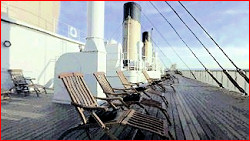
Too Late to Steer the Titanic
Christianity Astray
by Phil Johnson

Perhaps you page through each month's issue of Christianity Today as we do—baffled and disconcerted to see that venerable magazine being used as a platform for so many of the dubious fads and disturbing theological trends that constantly flourish at the fringes of the evangelical movement.

Until now, all we could think to do was wince and file the magazine in the circular file.

But from now on, we're going to vent our frustration by writing about it.

This section of Pulpit is devoted to exposing and responding to the latest aberrations seeking acceptance from the evangelical mainstream—in the pages of CT and elsewhere.


September 2003—The August 2003 issue of CT features a cover article suggesting that there may yet be hope for those denominations that abandoned biblical Christianity last century in favor of modernism, liberalism, and neo-orthodoxy. The cover illustration features a tiny tugboat with a church steeple nudging the massive bow of a gargantuan ship.
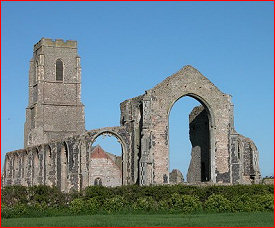
Both the illustration and the article imply that the liberal "mainline denominations"—groups like the United Methodists, PCUSA Presbyterians, Episcopalians, and Disciples of Christ—are slowly being turned toward orthodoxy.

"We may soon witness a new thing under the sun," the article breathlessly announces. "Contrary to folk wisdom and traditional sociological theory, the mainline Protestant denominations may be poised for a historic change—a return to orthodox Christianity."

The facts actually cited in the article itself hardly support such a rosy outlook. In fact, the authors more or less begin by acknowledging that "the mainline Protestant denominations seem as liberal in theology as ever."

The article cites, for example, the case of a Methodist bishop recently exonerated by his church's hierarchy after "asserting that Jesus was Joseph's biological son, that he never performed any supernatural miracles, that his body was never raised from the dead, and that the orthodox creeds of the historic church are true only to the extent that they mean something different [from what] they say." Church officials actually praised the bishop and censured his critics.

In one of those wonderful, providential twists of perfect irony, on the same day the CT article was released, World magazine published a feature article reporting on the groundswell of support for acceptance of homosexuality within the mainline denominations. (World's editors apparently aren't as giddy as CT about the future of mainline denominationalism.)

Not that the authors of the CT article ignored the growing influence of gay activism among mainliners. Of course they see it too, and they mention it as one of the issues denominational reformers must face. But far from seeing this as a disheartening trend, the CT writers say it is "high-octane fuel" for renewal, because of the backlash the gay-rights movement is expected to generate within the denominations.

"Likewise with abortion," the article says, noting that staff members in United Methodism's national office are so committed to abortion-on-demand that they regularly "march with the prochoicers, boycott prolife demonstrations, and are working behind the scenes to eliminate the church's nominal opposition to partial-birth abortion."

So how does CT find a glimmer of hope in that? Again, one of the main theses of the article is that the politics of abortion and gay-rights issues could finally galvanize and mobilize lay church members to unite for reform.

For that very reason, the authors of the CT piece think the brightest prospect on the horizon is a loose conglomerate of lay-led renewal movements seeking to reform the denominations. "Contemporary renewal groups have greater staying power and more supporters than ever," the article triumphantly assures us.

Best of all, according to the authors of the CT article, the lay reformers have gone parachurch: "This time around, the renewal movements within the denominations are being fueled by evangelical parachurch movements that stand outside the denominations."

And yet "they are committed to staying within their denominations rather than leaving."

The exquisite incongruity of those statements seems to have escaped CT's editors.

Of course, the vast majority in the evangelical mainstream that originally gave birth to CT have always believed that once a denomination's leadership officially embraces and institutionalizes liberal apostasy, the most effective way to fight the drift is from the outside.

Certainly, the weight of Scripture seems to suggest that when an organization officially sanctions a bishop who teaches that Christ is a mere man—that organization is no true church, and believers ought to cease participation in "worship" with such a group (2 John 7-9; 2 Cor. 6:14-17; Eph. 5:11; 1 Cor. 10:21). Moreover, a bishop who denies the deity of Christ is at least as gross an abomination as a lesbian "pastor."

And one breeds the other. Where doctrinal apostasy is tolerated, moral decay is inevitable. If evangelical hangers-on in the denominations have been unable to stem the tide of rank heresy for decades, why would anyone hold out hope that extreme moral rot might finally cause a backlash that will turn the denominations around spiritually?

But lay people who get exercised over moral issues can't fix the problem in the denominations anyway. You don't reform a harlot by giving her lessons in how to apply cosmetics. Besides that, Scripture never encourages believers to try to reform the harlot church in the first place. Rather: "Come out of her, my people, lest you share in her sins, and lest you receive of her plagues" (Rev. 18:4).

History would also seem to be overwhelmingly on the side of that perspective. Lay renewal efforts among Methodists, Lutherans, and Episcopalians date back at least to the 1960s—and they have always been colossal failures. The article even tacitly concedes this point. ("In the past evangelicals have tried to reform the denominations, but each time they failed.")

So one wonders precisely what is gained by institutionalizing the renewal movements as non-profit corporate entities and thus giving them "more staying power."

In any case, the CT article is unstintingly positive about efforts to reform apostate churches from within. At one point the article even seems to sound a note of caution about "parachurch ministries [that compete] against the denominations. Every missionary for Wycliffe Bible Translators has the potential to draw funds away from the denominational missionary agencies. Every Young Life group has the potential to lower attendance at local church youth groups." The tone of the article suggests that this would be a bad thing, because it is perceived as detrimental to the denominations' numerical, financial, and political strength.

But (the CT writers hasten to add) the denominations have actually gained numeric strength from the work of the parachurch organizations. "Flying under the radar. . . is the surprising fact that parachurch ministries have for years been giving transfusions of members and energy to the mainline churches." They credit Billy Graham with "enormous courage" for including mainline denominations as sponsors in his crusades, and for channelling large numbers of his converts back into liberal churches. So "the payoff for the mainline was enormous."

Indeed. We have long believed that the apostate denominations would have mercifully died off years ago if not for "transfusions" of cash and people from well-meaning but misguided evangelical organizations.

Meanwhile, are the denominations themselves actually showing any signs of being "turned"? Is it true, as the article claims, that "underneath the surface evangelical forces are reshaping mainline Protestantism"? Nothing in the article gives any good reason to think this may be the case.

Well, OK. One paragraph celebrates the fact that a group of lay Presbyterians succeeded in getting the PCUSA General Assembly to declare it "unbiblical" to worship the pagan goddess Sophia in place of the God of Scripture. But the same paragraph immediately adds, "On homosexuality, however, the renewal movements have succeeded only in fighting normalization to a rancorous draw."

The article also reports on recent joint efforts between the United Methodist Publishing House and Bristol House to publish "orthodox" Sunday-school curricula. We'll reserve judgment on the "orthodoxy" of that curricula until we have an opportunity to review it. But we can't resist pointing out that what's "orthodox" to CT's current core constituency seems to be little more than user-friendly morality lessons virtually devoid of any doctrine, conservative or otherwise. Let's just say this one factoid did little to buoy our enthusiasm about the coming "renewal" in the denominations.

Face it: the mainline denominations have been utterly apostate for decades and remain so today. They have officially championed virtually every liberal cause—moral, political, social, and theological—since at least the 1960s, and they continue to do so at this very hour.

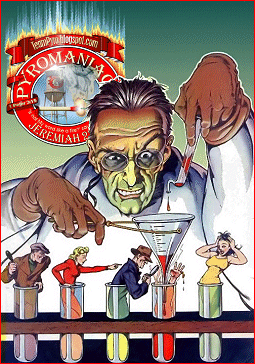
Meanwhile, CT, which was founded as an alternative to Christian Century and other liberal magazines shortly before the birth of the baby-boom generation, is steadily becoming more and more like those journals were fifty years ago. What's "turning" is CT and the evangelical subculture it represents. And perhaps that explains how CT is able to find so much to celebrate in the state of modern mainline denominational Christianity.

We think the one truly hopeful trend reported in the CT article is seen in statistics that show drastically declining membership rolls in the mainstream denominations while church membership in general is on the increase. We call on the faithful remnant among evangelicals to do everything possible to help keep CT's influence from steering our movement onto an iceberg like the one that sank the mainline churches nearly a century ago.

Phil's signature

19 April 2006

The Wright Stuff


A parting gift
from Phil Johnson

Here's a letter I wrote to the iMonk a year ago this very week, before I ever even considered entering the blogosphere. (As a matter of fact, the episode that precipitated the following letter, closely followed by a campaign of terror at the Boar's Head Tavern, is the biggest factor that finally provoked me to start blogging. I made that decision last year, a couple of weeks after this letter was written.)

Some background: Last March, the iMonk stumbled across a critical review of an NT Wright book from a lecture I gave in London more than a year before that. (I also gave a completely different review of the same book last year at the Shepherds' Conference, a couple of weeks before Michael Spencer's diatribe. The two reviews were for completely different audiences. They complement, but don't contradict one another, and—just to be clear—it was the earlier one that was the object of so much derision from Michael Spencer last April.)

It's putting it mildly to say that the iMonk hated my critique. He dashed off an angry post about it at the Boar's Head Tavern Blog. He didn't bother interacting with the substance of what I actually said, but he took quite a bit of liberty misrepresenting what I said. For example, here's how he paraphrased the thrust of my message: "Just keep reading those Macarthur commentaries, and all will be well. Consider us warned."

Of course, I hadn't mentioned MacArthur or anyone's commentaries anywhere in my critique. I had described Wright's book and disagreed with four points, all related to his view of justification.

Anyway, the following letter was my response to Michael's suggestion that Wright should be off limits to lesser beings like me:

13 April 2005

Dear Michael,

Readers of your blog have informed me that there is some controversy there concerning how much of N.T. Wright I may or may not have actually read. Someone sent me a collection of remarks you have posted about me ["he hasn't read the people he's citing. . . . He's only read WSPRS {What St. Paul Really Said} and he's only going to critique WSPRS. Tell-tale sign of what you are getting. . . . If I'm wrong about this, I will publically apologize"]—and strongly suggested that in the interests of self-preservation I need to write and give you an accounting.

At the moment, I'm supposed to be editing a book that's due to the publisher at the end of the month, so I don't have time to peruse many blogs or even keep my own website up to date. I apologize for missing the brawl over at The Boar's Head Tavern. But you have my permission to post this e-mail in full as my one and only contribution to the brouhaha. I wish I could come and join the fray personally, but my schedule seriously doesn't permit me to do so at the moment.

Anyway, to the business at hand:

I am by no means any kind of expert on Wright's written corpus (nor did I ever claim to be). On the other hand, I've read a little more Wright than you originally guessed.

Of Wright's large works, I have read only The Resurrection of the Son of God and a generous helping (but not much more than half) of Jesus and the Victory of God. Of his smaller works, I have read The Challenge of Jesus, Who Was Jesus? and What Saint Paul Really Said. I actually had to read WSPRS multiple times, because after my first reading, I participated in two semester-long discussion groups with a dozen or so seminary students who were particularly keen to study that book. Then I was asked to review it twice in separate conferences.

Also, when N. T. Wright was canon theologian of Westminster Abbey, the gift shop there used to carry his books. (They quit doing that when he became Bishop of Durham. So much for brand loyalty.) I once stopped in there and bought a bagful of his little commentaries in the "For Everyone" series. I've used them frequently (the "Galatians" volume is particularly dog-eared); I have listened to several lecture series by Wright; and I have read virtually all the short pieces by him posted at http://www.ntwrightpage.com/.

WSPRS is the only Wright book I have ever formally reviewed. For the most part, I thought The Resurrection of the Son of God was superb. I do greatly appreciate Wright's unrelenting defense of the historicity of Jesus and the resurrection. I've seen him a couple of times on the BBC, dismantling the latest skepticism, and I appreciate how he handles that kind of nonsense. As I have said often and publicly, we owe him a great debt for the clarity and force with which he has answered the left wing of contemporary "Jesus scholarship."

But I don't think it necessarily follows that it's impossible or unreasonable for anyone who truly appreciates those contributions to conclude that Wright's view on justification by faith poses certain serious dangers.

And to suggest that all my concerns about Wright boil down to "four paragraphs in a small book" is the very kind of ham-handed hyperbole I think you rightly deplore. (Likewise for your comment that I am "freaked out" and "panicked" about Wright's "attack on transactionalism.") Wright has written a considerable amount to try to clarify his position on sola fide. I have read as much of it as I have been able to obtain. I still have grave concerns. Sorry, but I do.

The earliest thing I read from Wright on justification was a chapter titled "Justification: The Biblical Basis and its Relevance for Contemporary Evangelicalism," which he originally wrote in 1980. I first saw a reference to it in the late '90s in Philip Eveson's book on Justification. (Eveson's published criticism of Wright actually preceded WSPRS.) So I acquired a copy and read it. That chapter contained the seeds of almost everything that troubles me about Wright's view of justification and the atonement. It was written 20 years before WSPRS, so to suggest that Wright only recently got himself in trouble with Reformed critics because of "four paragraphs" in one of his less technical books doesn't really do justice to the larger argument.

The folks at http://www.ntwrightpage.com/ have kindly posted that chapter from 1980, as well as several other articles by Wright in which the Bishop attempts to defend his views on justification. I've read all of those, and obviously, I remain deeply troubled about Wright's position.

However, let me address the larger issue of "the Grand Canyon of scholarly gravitas that exists between Phil Johnson and N.T. Wright," and the corresponding question of whether a "hack" like me has any right to subject a scholar like Bishop Wright to the kind of scrutiny the Bereans employed when they analyzed the teaching of the apostle Paul:

  1. I admit freely and without reservation that there is a vast, almost unbridgeable chasm—nay, virtually a bottomless pit—of "scholarly gravitas" between Wright and Johnson. No argument there.
  2. And insomuch as my first review of WSPRS (especially the printed editions of my transcripts) may have failed to pay due respect to the Bishop's scholarly credentials, I do humbly acknowledge and bewail my manifold sins and wickedness, which I, from time to time, most grievously have committed, by thought, word and deed. And I promise to try to do better in the future.
  3. On the other hand, I wasn't actually critical of Wright's scholarship so much as his theological opinions. Oh, sure—I noted at one point that there are still some fairly competent New Testament scholars who would strongly disagree with Wright's characterizations of Second Temple Judaism. But I didn't pretend to be one of them. If that wasn't completely clear, I herewith apologize for that, too, and I repent in dust and ashes.
  4. Still, hopefully even you would agree that the world's most decorated canon theologian's academic status doesn't ipso facto translate into sound doctrine. Nor should scholarly credentials be used as a shield to guarantee immunity from criticism. Else you and I both might be forced to put our hands over our mouths whenever John Dominic Crossan speaks.
  5. I'm not the least bit offended by those who notice my lack of scholarly credentials. I'm not even offended by legitimate questions about whether I have done my homework. From time to time I have had to be put right on theological issues by people who know better than me. No one needs to apologize for challenging me. I herewith formally absolve you from any guilt on that score.
  6. However, I don't think the dispute between NPPers and critics like me hinges on the issue of anyone's academic credentials. It's a fundamental difference of enormous magnitude, encompassing basic theological, hermeneutical, and world-view issues.

Which is to say that I don't think the debate over the New Perspective on Paul is going to be won by Wright's devotees if their only answer to every argument is, "You just haven't read enough Wright." I know only one guy who really has read all of Wright. (Who can keep up with the Bishop's pen? Does the man never SLEEP?)

But the argument is little more than a convenient dodge. Every time I hear it, I am tempted to ask why Wright never seems to explain his controversial statements in the context where he MAKES them. After all, why do I have to read all 741 pages of Jesus and the Victory of God plus 300+ pages of The Climax of the Covenant to understand Wright's attack on the concept of imputation in WSPRS? Or is your real point that no one can possibly understand Wright without agreeing with him?

Some Wright enthusiasts have flatly denied sola fide. Others (usually his more Reformed devotees) insist that his views pose no threat whatsoever to the formal principle of the Reformation. Wright himself rather weakly and obliquely seems to make that same claim in WSPRS (p. 113), but he's not explicit enough to know for sure what he means. Do we really have to wait for his next volume before we're allowed to complain about this rather glaring ambiguity?

In short, how much of Wright should I expect to have to read before I am entitled to criticize what he has written specifically about the doctrine of justification?

(By the way, the apostle Paul himself really isn't that hard to make sense of.)

Meanwhile, Wright is aiming books like WSPRS and his small commentaries at lay people, some of whom are under my pastoral care. He has also given a glowing, unqualified recommendation to Steve Chalke's blundering attempt to blend post-modernism and Socinianism and sell it to grass-roots churchgoers as a "lost" form of Christianity. I'm not going to stifle my criticism of stuff like that just because someone tries to intimidate me with insults about what a hopeless Luddite I am intellectually, academically, or theologically. I'll accept those criticisms, but they don't really speak to the doctrinal and biblical issues I have raised, do they?

Phil Johnson
The Spurgeon Archive http://www.romans45.org

P.S. BTW, if you really think about it, John MacArthur or Michael Horton aren't really germane to the differences between us, either. I'm a little mystified about why their names keep getting thrown in and kicked around in this particular discussion. After all, trashing MacArthur doesn't really answer what I have written. And as far as the New Perspective is concerned, Horton has raised concerns that are strikingly similar to mine. So he isn't really going to help you much here, either.

I am surprised to see how well the letter works a year later. I am even trying to finish another major editing project. (I wish this stuff would come up in August, when my schedule isn't so hectic.)

Anyway, what made me think of this letter was a comment by "Dr Thomas" (an imaginary character with an imaginary degree) in the mega-thread of comments under Dan's post. Several of us had taken pains to explain why we think nothing—no academic credentials, and no philosophical sophistry—could possibly justify Wright's endorsement of Marcus Borg's "passionate" love for "Jesus." (Especially given the fact that Borg's actual idea of Jesus is that He was a mere human who is now dead.)

Then "Dr. Thomas" wanted to know if I was familiar with Wright's epistemological framework as explained in Wright's 550-page tome, The New Testament and the People of God. I gotta admit: That's one of Wright's books I haven't read yet. (Though I did finally finish with Jesus and the Victory of God.)

But I still think what Wright said about Borg is unjustifiable, no matter how much "academic respectability"-capital it may have earned for Wright.

Phil's signature


17 April 2006

Resurrection not essential? (More of Those Wacky Academics!)

by Dan Phillips

Remember the lively discussion we had about whether being able to wave around a doctoral sheepskin entitles one to a "pass" from the First and Second great commandments? (I argued for the "No" position.)

Today, I'm really wondering how those leaning in the opposite direction will, mm, "explain" the latest emulation from everyone's favorite oil-and-water man, the Bishop of Durham, the Right Hon. Rev. Dr. Nicholas T. Wright.

Offered yet another opportunity to sound the trumpet with a clear and hard-hitting witness to the waiting world, here's what Wright told The Australian (h-t James White), emphases and bracketed comments added:
"I have friends who I am quite sure are Christians who do not believe in the bodily resurrection," he says carefully, citing another eminent scholar, American theologian Marcus Borg, co-author with Wright of The Meaning of Jesus: Two Visions.

"But the view I take of them - and they know this - is that they are very, very muddled. They would probably return the compliment.

"Marcus Borg really does not believe Jesus Christ was bodily raised from the dead. But I know Marcus well: he loves Jesus and believes in him passionately. [My advice: don't even try to make sense of those two statements. That way lies madness.] The philosophical and cultural world he has lived in has made it very, very difficult for him to believe in the bodily resurrection. [In other words, Jesus and Paul were both wrong: some folks really do have a legitimate pretext for unbelief (John 9:41; 15:22-24; Romans 1:20; 3:19).]

"I actually think that's a major problem and it affects most of whatever else he does, and I think that it means he has all sorts of flaws as a teacher, but I don't want to say he isn't a Christian. [Well, I guess if you don't want to say something, and you're an academic, you don't have to... is that it?]

"I do think, however, that churches that lose their grip on the bodily resurrection are in deep trouble and that for healthy Christian life individually and corporately, belief in the bodily resurrection is foundational." [But they can still love Jesus and believe passionately in Him... while calling Him a liar about arguably the central vindicating event of His earthly ministry.]
With our other recent discussion of Dynamic Equivalent versions fresh in my mind, I guess I have to allow that perhaps the good Bishop is reading out of a DE version of 1 Corinthians 15:14 that reads, "And if Christ has not been raised, then our preaching is not as helpful as it might be, but still healthy and foundational; and your faith is in deep trouble, though you can still love Jesus and believe in Him passionately." Perhaps it also re-envisions verse 17 as really meaning, "And if Christ has not been raised, your faith may still be passionate, and you can stop worrying about your sins."

One must seriously ask the question: if Wright has a view of Christianity that pencils in the bodily resurrection of Jesus as an optional add-on, and embraces Marcus Borg as a "passionate" and believing lover of Jesus... can there possibly be any doctrine that isn't optional? What would merit the apostolically-mandated "sharp rebuke" (Tit. 1:10)?

Dan Phillips's signature


19 March 2006

Double-talk is "diabolical cruelty"

posted by Phil Johnson

Your weekly dose of Spurgeon

The PyroManiacs usually devote Monday space to highlights from The Spurgeon Archive. This week, as a special treat, we give you Spurgeon a day early. The following excerpt is an entry from the May 1885 issue of The Sword and the Trowel.

Be Plain

Is it not very possible for a man to talk without knowing what he is saying?

Certain "modern thought" teachers appear before us as a luminous haze. It is "not light, but darkness visible." Like M. De Biran, our learned lumberer might say, "I wander like a somnambulist in the world of affairs." He has an idea, but he does not quite know where to find it; and so all through his talk he hunts for it, "upstairs, downstairs, and in my lady's chamber."

We once heard a sermon which for half an hour did not convey to us a single thought. We whispered to our neighbour, and found that he was equally befogged, and so we concluded that the density was not in our brain, but in the discourse; yet the preacher was no fool, and we therefore concluded that he had been taking an overdose of metaphysics.

It did not matter much, for the sermon was not upon a subject of any material importance to man or beast; but when a person is preaching the gospel of our Lord Jesus Christ it does matter a great deal.

It is treason to men's souls to conceal the plain truth of salvation beneath a cloud of words: where God's honour and man's eternal destiny are concerned, everything should be as clear as the sun at noonday. Metaphysical becloudment, when a soul is at stake, is diabolical cruelty.
C. H. Spurgeon

The apostle Paul would agree. He wrote, "If the trumpet give an uncertain sound, who shall prepare himself to the battle?" (1 Corinthians 14:8).

The postmodern preference for ambiguity and uncertainty is seriously at odds with Scripture. It also runs contrary to every lesson church history teaches.

Study any era of revival or the style of any great preacher and you will discover that boldness and clarity were their hallmarks—never qualities like vagueness, ambivalence, hesitation, wavering, apprehension, a cloudy message, fickle opinions, obsessive self-criticism, or any of the other qualities postmodernism falsely equates with "humility."

Incidentally, Pilgrim Publications have recently released volume eight in their collection of material from the original editions of The Sword & the Trowel. Volume 8 covers the years 1885-1886, and the above excerpt is taken from this volume.

Phil's signature