Showing posts with label children. Show all posts

22 October 2014

The Wrong Kind of Ice Cream

by The late Frank Turk

On principle, let me say this before I say the other thing, below: we're fans of Todd Friel. He's pretty much in our neighborhood, our orbit on a lot of things. When he's good, he's clever and clear and winsome.

And then there are videos like this one:


Which, let's face it ... I mean: I like Potato Soup, and I like Ice Cream, but I would be very hesitant to try Potato Soup Ice Cream because maybe not everything that is good is good when you mix it together like that.  And to be fair to Todd, my twitter feed has noted that this 2 minutes is actually out of context of a larger segment on the show, and maybe that causes it to lack nuance.

I don't have any adult children yet, so please take my advice about how to raise children theologically with a large warning label on it which says, "this man receives sinners and eats with them," yes?  But it seems to me that what happens in this video is that Todd has forgotten how a few categories overlap without the whole thing becoming the wrong kind of soup or the wrong kind of ice cream.

Imagine with me my son and I driving along someplace, and we're discussing our mutual inclination to sin.  That is: he lives with me.  He sees me every day and he knows that his Dad, while awesome, is still a sinner.  And because I live with him, I know that he is also a sinner.  He's just like his Dad after all.  So my son tells me, "Dad, I know it's a sin, but sometimes I'm just so angry I could pop, and sometimes I do.  What am I going to do?"

Now imagine that what I say to him about his anger is this:
You have to try to not be angry, but if you do get angry, you can go to the cross and seek forgiveness.  Think about this, son: of course I don’t want you to run out into the snow and get frostbite, but if you do, I want you to go ahead and dial 9-1-1 for help.  Because that’s the Gospel – angry people get forgiveness from Jesus.  Jesus makes angry people happy in God’s eyes.
That's simply not it -- that's simply not how Paul talks about the problem of sin, the solution in the Gospel, and the battle for sanctification.  Now, if I had less time this week, I would simply point you to this post from me from a while ago (2012) and be done with it.  But I want to approach this topic in the context Todd has laid out here (such as it is) as there are important differences from that previous situation which I think you personally will benefit from.

The one thing Todd gets right in this video, if there is anything, is that the Gospel is actually the solution to the problem he is pointing at.  The Gospel is actually the solution to lust and fornication.  For those who are in adultery and fornication right now, the Gospel is the solution to them because let's face it: Jesus did die for sinners.  But Jesus didn't just die for us because of the things we do: Jesus died for us because of who we really are.  Think about this: we aren't sinners because we have fornicated.  We fornicated because we have yet been sinners with no hope; we have sinned out the the overflow of our hearts. That act is simply what seems or seemed right in our own eyes in spite of God's law telling us the truth.

But those of us who have more than God's law -- that is, those of us who have the fulfillment of the Law in the Gospel, fulfilled for us because we were yet sinners -- have the means to do something other than what seems right in our own eyes.

First, we have the ability to see that Christ died to highlight the great value of the things which God has set forth as holy through the great price which Holiness demands.  This should give us a measuring stick which upsets the apple cart of what seems good in our own eyes at least long enough to reset our thinking caps.  Second, we have the ability to see that we are changed by the death of Christ from those who were no people at all to being God's holy people. born again with a new ability to want what God wants.  That's New Covenant language, I'll grant you, but what it means is that we are no longer dragged around by the cares of this world, but willing to do what God wants us to do.  It's funny that here when it matters most Todd misses this when in other places he has been so adamant that an unwillingness to do what God wants is a sign that one might actually not be saved at all.  Third, the reason handing a child a condom and saying, "well, best of luck; don't use that unless you have to," seems to look a lot like Todd's version of how to handle this is because it really is a lot the same.  That is, it is offering the wrong solution to the problem by looking only at the consequences and not at the causes.

You know: one cause of finding yourself working out the necessary consequences of unbridled lust is that you have already given away all the bridles on your lust -- for example, thinking primarily of the safety and honor of the other person; keeping a relationship under the accountability of others; staying on the right side of the right doors.  The condom is a solution to a problem which one ought not to create for one's self.  Thinking before it happens that Jesus will love you anyway is, in fact, the same thing: trying to find a solution for something you can absolutely picture yourself doing.

The right solution here (and there are more, which I suggest are best discussed between a child and a parent rather than on a blog) is not to find the way to resolve the worst possible moral failure before it happens.  It is to use the solution God gave us in order to see the problem for what it is and see his solution for what it is really doing for us in order to defeat the problem, not to merely hope that we don't have to trust Jesus to forgive us for that.






26 September 2014

Some here, some there — September 26, 2014

by Dan Phillips

Here's your spankin'-new collection, which should be expanded throughout the day:
  • There is a lot of discussion of corporal punishment at present. 
  • First, on my birthday (anniversary of my first spanking?) Jonathan Merritt arrogated to himself the position of lecturing Christians in general (and Bible scholars in particular!) on what the Bible means, and what Science says.
  • Denny Burk alludes to an earlier post of his on the Bible and spanking.
  • In that post Denny cites an article by Andy Naselli on child training.
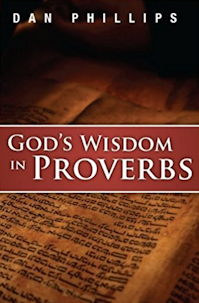
  • In his article, Andy refers here and there to material from my book on Proverbs (also in Logos). So just to tell you: Chapter Eight in that book is titled "Skill in Godly Child-Training," and there is a lengthy appendix on the oft-misunderstood Proverbs 22:6. Here's a snippet from chapter eight:
We should see “the rod” is emblematic. That is: the rod is a literal object representing a metaphorical reality, larger than (but including) itself. It is similar to “the sword” in Romans 13:4, which denotes government’s legitimate punitive power, not limited to but leading up to and including the death penalty. The rod represents the parent’s God-given authority to enforce house law, not limited to corporal punishment, but including it and everything leading up to it. Standing in a corner is a legitimate use of the rod; writing sentences or doing chores is a legitimate use of the rod; a spanking is a legitimate use of the rod.
[Dan Phillips, God’s Wisdom in Proverbs: Hearing God’s Voice in Scripture (Woodlands, TX: Kress Biblical Resources, 2011), 274.]
  • Yesterday, David E. Prince responded to Merritt from a Biblical perspective.
  • In other news...
  • This will resonate with pastors:
  • My birthday-brother Mike Riccardi found an interesting evangelistic video concerning the Islamic dilemma, asks whether those evangelizing Muslims would find it useful. (I think Cripplegate may have broken that part of the intrawebz; the video hangs at 4:20 for me.)
  • Lyndon Unger addresses an open letter to newly-converted celebrities. Every bit of it's good. I, however, would have chosen a different first item: 1. Become a baptized, involved member of a Biblically-faithful church with a membership of no more then 200, maximum, where you will be pastorally overseen and discipled, and in relationship with mature, growing Christians. Attend every meeting you can, faithfully. Then everything Lyndon said, except perhaps for one other book recommendation, one that relates the Gospel to a complete paradigm-shift in worldview.
  • Aside: apparently Stephen Baldwin shows up in the meta, and is displeased with Lyndon's thoughts. Lyndon, in response, is not bovvered.
  • Relatedly: I just concluded what was really a single sermon, preached over four Sundays. It was called The Good News Path. The fourth was titled What Does Jesus Say to Do Now? It was addressed to the new convert. I packed and aimed it best I could, but was agonizingly aware of a dozen could-have-said's.
  • Charismatics have been working so hard to show why Strange Fire was so necessary, and you've got to love them for it. Today's edition of What Charismatics Do Instead of Study the Bible is brought to us, natch, by Charisma Magazine, and it is titled: Prophecy: Posture Your Hearts to Receive Power at 5:55.
  • See, this is why we need Sufficient Fire. The best argument against fake steak is the real thing. Do come!
  • Until then, maybe you could use a little altar call self-defense:
  • Okay, one more:
  • Janna Darnelle writes a very thoughtful and thought-provoking piece on the other side of the giddy new world of same-sex mirage. She focuses on the harm done to abandoned and disenfranchised spouses and/or parents, and to the children. It's a fine blend of substance and passion, born of the fact that she is one of the victims. Only one thing is missing: the Gospel. She believes her husband should have kept his vows and commitments and stuck it out; but she doesn't provide either a transcendent Why?, or a reason for hope. Both are found in the Gospel, with much more. (h-t The Aquila Report.)

Dan Phillips's signature

13 December 2012

Notes from God

by Dan Phillips

When I was a child, I had a pretty prodigious case of asthma. During the days when doctors made house calls, my parents would have to call the doctor occasionally to come and give blue-lipped gasping young me a shot of adrenalin to open up my lungs, so I could breathe again.

So later on in school I had a note from Mom, excusing me from physical activities such as track and the like. Running meant wheezing, and that wasn't good. So that note from Mom meant I didn't have to do what all the other kids had to do. Them, yes. Me, no.

That was a real note, a literal note, for a real reason. I didn't write it; my mother did. Behind her was the doctor. It had oomph. It was legit.

Throughout the 400 or so years of my Christian life, I have been astonished over and over at how many Christians imagine they have "a note from God." Unlike my mother's note, it isn't visible, it isn't readable by others, and it won't stand inspection. The oomph it has is supplied by their own imagination, and a complex series of accompanying diversions and rationalizations.

This phantom note excuses them from having to do what every other Christian in every other age and every other location on the globe (other than their little 2X2 spot) has been morally obliged to do.

Them, perhaps. Me, no. I have this note.

Such notes, and usually for such transparently flimsy reasons!

Here is a representative, non-exhaustive list:
  • Scripture says that God calls me to involve myself in a local church, but I'm excused because no church leaders measure up to Biblical standards.
  • Scripture says that God calls me to involve myself in a local church, but I'm excused because I haven't found a church that _____ (insert non-essential requirement of perfect adherence to personal demands).
  • Scripture says that God calls me to involve myself in a local church, but I'm excused because ______ (insert sad story of bad past experience).
  • Scripture calls me to love my wife as Christ loved the church, to nourish and cherish her, to assign her honor and live with her in an understanding way, but I am excused because she _____ (insert non-divorce-warranting litany of complaints here).
  • Scripture calls me to subordinate myself to my husband in all respects as the church subordinates itself to Christ, to help him and respect him from my very heart, to win him by godly and respectful behavior and not a barrage of verbal abuse, but I am excused because he _____ (insert non-divorce-warranting litany of complaints here).
  • Scripture calls me never ever even to think of abuse, threats, or divorce as marital aids or ways to resolve marital conflict,* but I am excused because _____ (that isn't my calling / I wouldn't be lauded as being nuanced and helpful and thoughtful / the Club will rescind my membership).
  • Scripture calls me to honor my father and mother and make them glad I'm their child and not ashamed, but I am excused because they _____ (insert irrelevant personal issue here).
  • Scripture calls me to devote myself to giving and serving in a local church that puts the preaching and doing of Christ's Word central, rather than shopping churches as if they were my personal Walmarts, stressing my convenience and my comfort-level and my desire to be served and coddled rather than called to serve and love, but I am excused because ______ (rationalization; or "my wife ___").
  • Scripture calls me to study and learn and grow in my understanding of the word of God, but I am excused because it's hard / I can't concentrate / I'm just not a student (which = "I'm just not a Christian").
  • Scripture calls me as a pastor to put the Gospel and the preaching of the whole counsel of God, including both the positive ministry of exhortation and the negative ministry of rebuking error, and to do it heartily, boldly, and without compromise wherever I go, but I am excused because _____ (that isn't my calling / I wouldn't be lauded as being nuanced and helpful and thoughtful / the Club will rescind my membership).
  • Scripture calls me as a pastor to warn the folks in my congregation against serious sin and error regardless of how they will respond to me, but I am excused because _____ (it'd split the church / I'd lose too many members / that isn't my ministry).
  • Scripture calls me to own and repent of the sin isolated and nailed by one or more of the previous bullet-points, no matter what anyone else does or does not do, but ____ (insert rationalization that will not stand up to the Judgment Seat of Christ here).
To make any personal use of the list, we must understand an axiom of human nature. It is the characteristic of each note-holder is that he will insist that his note is legitimate. He really does have a note from God, excusing him. He is the exception. Anyone not convinced by his rationalization "just doesn't understand," or worse.

But such note-holders need to remember: every unrepentant sinner is convinced that his sin is different. (See #15 here.) No exceptions. It's axiomatic.

Every one of us sinners insists that what we're doing is right — until we repent of it. So the person who refuses to get involved in a local church, refuses to treat his/her spouse as Christ commands, commits rape or murder or theft, refuses to love/respect his/her spouse, indulges homosexual desires, gossips, gripes, mopes as if he had no grounds for hope — they're all the same; and they're all the same in that each imagines he's different.

Repentance changes all that. Repentance puts God's finger on me, stops me dead, isolates me from everything, changes the issue to God and His Word and me, shatters all pretenses, and requires death and resurrection.

See, we tend to forget that the Gospel is radical and transformative. We tend to forget: when Jesus calls us to Himself, He calls us to deny ourselves, pick up our cross, and follow him. To deny myself is radical and transformative. It is to unseat myself as lord. To take up my cross is radical and transformative. It is to die to that life of rationalizations and excuses designed to cushion the pursuit of my own wants, needs and desires. To follow Jesus is radical and transformative. It calls on me to take my internal Canaan, city by city, and subject all of it to the Lordship of Jesus.

And we'll never make headway in any of that until we learn to shred every last one of our imagined "notes from God." 

* Note that this is carefully worded. I am not speaking of those areas where God does expressly permit divorce as an option — and, even then, not a requirement.

Dan Phillips's signature


30 June 2011

The richest legacy for parents and children

by Dan Phillips

As you may recall, in May of 2010 we helped reader Mike Dickey (vcdechagn) work with his dying mother to compose a gravestone as a lasting testimony to Christ. Mike much appreciated your help. His mother was not expected to live much more than a month. In fact, she went to be with the Lord less than a week after that post.

Mike has given me permission to show you the gravestone the family ended up composing.


Mike's mother was very concerned to be a testimony to Christ. Mike showed me a letter his mother wrote an unbelieving friend. I am sure it's now a dear memento to Mike: the letter is earnest, passionate, loving, and Christ-centered. For instance, check this out, unedited:
Here is the problem as I see it, and I don’t mean to be unloving. As I read through your list I can’t help but be struck by the fact that you are setting yourself up as judge. Now, if your morals are perfect and you are the one who judges the entire world that might work. But if each person is the final judge of what is good and what is evil we are going to end up with chaos…which is exactly what we have.

Since God is holy then every act that He performs is holy and righteous. While I know this doesn’t satisfy your questions I think you are seeking a God that you approve of. Instead, what we need to seek is the truth. It is not about a feeling. My feelings are often wrong. It’s about what the truth is. I can identify with a lot of what you’re saying because I used to find so many things in this world that went against my understanding of what God “should be like.”
Then she quotes Calvin, as well as the Word! This, from a lady who knew she was dying of cancer (though she does not mention it in the letter). The sister could have been a guest-poster at Pyro.

Right now, reading this, many of us are wishing one or both of our passed parents had left us such a testimony. They are gone, now; and they did not leave us such clear, shining beacons to their own love for Jesus Christ. Either they were outright unbelievers, or they lefty a murky, muddled profession. Perhaps they left us property, land, money... but we'd gladly trade all of it for the legacy of a crystal-clear, unambiguous testimony to a living faith in Christ.

In my upcoming book of studies in Proverbs (scheduled for September, last I heard), I have an extended section on the legacy parents can and should leave their children. Financial and property inheritance are great things, but they are nothing compared to a clear and unambiguous legacy of godliness, of a professed and practiced living faith in Christ. In fact, to quote, er, well... me, from what will be page 301:
I have seen far too many parents who see to their children’s every material need, but who leave this one crucial, indispensable, all-important necessity neglected. A great many verses in Proverbs point to the blessedness of the children of righteous, God-fearing parents. “In the fear of Yahweh is strong confidence, And his sons will have a refuge” (Prov. 14:26 DJP). See also: Proverbs 3:33; 11:21; 12:3, 7, 12; 13:22; 14:1, 11, 26; 15:6, 25; 17:6; 19:14; 20:7; 24:3. Each of these verses is worth serious meditation by parents who would please God.
So if you're a parent, this is your best and dearest legacy.

But before I leave this, let me add: children are similarly obliged to their parents. God obliges children to give joy to their parents (Prov. 23:25). (I have another section on that in the Proverbs book, as well.) Many parents are forced by their feckless offspring to live in a state of anxiety, since the children either profess no faith at all, or give lip-service to a faith to which they give the lie by their lawless, Christ-shaming lives.

Such sad parents are robbed of the assurance they should have from children who have honored God by honoring them (Exod. 20:12; Mark 7:10; Rom. 13:1ff.; Eph 6:2) in the most meaningful way: by hearing, believing, receiving, and practicing the Word of God which they were taught from infancy on (cf. 2 Tim. 1:5; 3:15-17).

Have you given that most precious gift to your children? Your parents?

Do.

Dan Phillips's signature

01 December 2008

Trump Card

by Frank Turk

I usually have this thing in an argument -- when one side invokes the epithet "Nazi", I recognize things have gone from reasonable or rational to absurd.

In that context, I present the following, HT: Abraham Piper & Andrew Jones.

Mind your coffee ...


Have at it.


17 July 2008

July 4 in the Sierra: pyrotechnics with a Pyro

by Dan Phillips

July is likely to end up being a Tale of Two Jonathans for Phil and me. We may both temporarily leave off the customary theology and exposition and whatnot. And so, for my part, at the urging of some kind souls....

At the last moment, it was decided that my Jonathan (8) and I would keep our family's annual date with fireworks in the Eastern Sierra. It keeps a half-century-plus-long Phillips tradition of vacationing in the area between Mammoth Lakes and Bishop, California. It was hot, and smokier than I've ever seen it, but Jonathan and I had a great time. Let me show you some of it. (Click on any picture to see a larger version.)

First we stopped at a stream where highways 88 and 89 intersect, and Jonathan was eager to do some splashing. The water was cool...

...and the wildflowers were beautiful.

Then we descended into Nevada, passing through Gardnerville, where we took advantage of the much lower gas prices. Then we stopped at a favorite restaurant at Topaz Lake, enjoying a sumptuous dinner. Jonathan finished his with some chocolate ice cream.

The next step has been a Phillips Men tradition for many years. We stop at a day area campground by the West Walker River, and we — well, we....

Ahh. (Yes, I dipped too. But since my camera is worth more than I am, I just set it safely aside rather than asking Jonathan to snap a shot.)

After a nice sleep, the next day we made our way to Mammoth village, and enjoyed the annual craft fair. Jonathan was pretty sure he recognized a guy who'd commented at Frank's blog.

Jonathan made several passes through a pretty tough, inflated obstacle course. Among other things, it involved a slide....

...and walking across a rolling barrel.

(Jonathan accepted some help.)

Then we went up to the Mammoth lakes proper, the lowest of which is (are?) Twin Lakes. Here's the gorgeous view of upper Twin Lake, and the waterfall that flows from Lake Mamie, with Crystal Crag in the background.

Then we went down to Lake Crowley to take our places, waiting for it to get dark enough for the fireworks show. We had a good view of the neck of land whence the displays would be launched.


Then the show began!

Finishing with the Grand Finale.

After a good night's sleep, the next day found us hiking the length of beautiful Convict Lake. (Jonathan brought along his longtime friend [and mine], Bear. For one sermon, Bear [full name: Bear-Bear] graciously lent his services as an illustration. It was very apropos. Remind me to tell you about it some time.)

Once again, Jonathan cooled his feet...

...and heeded my counsel to stay well-hydrated.

Jonathan enjoyed the lovely, subtle fragrance of the wild roses by the lake's shore.

That evening we enjoyed barbecued steaks and S'mores in a campground by a creek.

One more sleep in Bishop, and we headed for home the next day. But no need to hurry!

We explored by a creek we'd never seen before, and found some of my Indian Paintbrush...

...and another lovely wildflower.

On the way back, Jonathan was determined to get a really good, deep dip in the East Walker.

Leaving the last adventure to me, at the 150-plate buffet:


Hey — I can't let Phil have all the fun!

Thanks for your interest and patience. Jonathan was absolutely delightful company, the scenery is always a balm to my soul, the food was great, and we filled some of the drive-time by listening to Jonathan Park and Adventures in Odyssey. Hope to make it back up to the Sierra with a different configuration of Phillipses later this year.

(Are there any Pyro readers in the Mammoth-Bishop area?)

Dan Phillips's signature

18 November 2007

Teach Your Children Well

Your weekly dose of Spurgeon
posted by Phil Johnson

The PyroManiacs devote some space each weekend to highlights from The Spurgeon Archive. The following excerpt is from "The Form of Sound Words," a message delivered Sunday morning, 11 May 1856, at the New Park Street Chapel, Southwark. The entire sermon is filled with insight, as usual. But Spurgeon's remark in the penultimate paragraph of this excerpt is an especially fitting analysis for our times—perhaps more true today than when he first spoke it.

f you want to hold fast the truth, seek to get an understanding of it. A man cannot hold a thing fast, unless he has a good understanding of it. I never want you to have the faith of the collier who was asked what he believed; he said he believed what the Church believed. "Well, but what does the Church believe?" He said the Church believed what he believed, and he believed what the Church believed, and so it went all the way round.

We do not want you to have that faith. It may be a very pertinacious faith, a very obstinate faith, but it is a very foolish faith. We want you to understand things, to get a true knowledge of them.

The reason why men forsake truth for error is, that they have not really understood that truth, in nine cases out of ten they have not embraced it with enlightened minds.

Let me exhort you, parents as much as lieth in you, to give your children sound instruction in the great doctrines of the gospel of Christ. I believe that what Irving once said is a great truth. He said, "In these modern times you boast and glory, and you think yourselves to be in a high and noble condition, because you have your Sabbath-schools and British-schools, and all kinds of schools for teaching youth. I tell you," he said, "that philanthropic and great as these are they are the ensigns of your disgrace; they show that your land is not a land where parents teach their children at home. They show you there is a want of parental instruction; and though they be blessed things, these Sabbath-schools, they are indications of something wrong, for if we all taught our children there would be no need of strangers to say to our children 'Know the Lord.'"

I trust you will never give up that excellent puritanical habit of catechising your children at home. Any father or mother who entirely gives up a child to the teaching of another has made a mistake. There is no teacher who wishes to absolve a parent from what he ought to do himself! He is an assistant, but he was never intended to be a substitute. Teach your children; bring up your old catechisms again, for they are after all blessed means of instruction, and the next generation shall outstrip those that have gone before it, for the reason why many of you are weak in the faith is this, you did not receive instruction in your youth in the great things of the gospel of Christ. If you had, you would have been so grounded, and settled, and firm in the faith, that nothing could by any means have moved you.

I beseech you, then, understand truth, and then you will be more likely to hold fast by it.
C. H. Spurgeon


13 October 2007

How to Feed the Children

by Frank Turk

Yeah, OK: eventually we'll get back to the question of whether the church is necessary for the sake of the Gospel, but the comments from previous posts keep derailing my nice outline.

Somebody who calls himself "dogpreacher" said this in the meta of the last post:
I agree with Cent about "staying" or "leaving", EXCEPT one thing that I don't think was addressed. If you are "staying" (in the manner prescribed)...you still have the responsibility of your children, and DO NOT think your children are spiritually mature enough to sift through the worldliness that is calling itself their youth group. THEY ARE NOT. Nobody elses are either. WHY would you subject them to such?

Hey, your pastor may have to answer to God for allowing that "on his watch", but as far as your children he will be in line behind you.

Oh yeah...FAMILY WORSHIP!
I have a friend who I have known since college, and he and I have a set of filters we run everything through when people say things. It's a sort of Rube Goldberg hermeneutics machine, used to see if someone is trying to hide bad reasoning under conventional wisdom.

Now, before I explain how it works, let me say something explicitly: there's no question that you personally are responsible for your kids – morally, legally, physically, intellectually, and spiritually. You. They are your kids, and God gave them to you – whatever the circumstances – for His glory and your personal holiness and sanctification. Your kids: your responsibility.

Got it? OK – because I don't want anyone reading this post and then hypothesizing that cent thinks that people should be careless or cavalier about their kids.

There are a series of phrases that me and my college buddy look for in someone's very serious moral pronouncements, among them being "safety", "freedom" and "prosperity" or "opportunity". But the one which is probably the most amazing detector of fallacious moral reasoning is the phrase "for the sake of the children".

Because almost anyone will do almost anything if they think their kids' health, welfare, freedom, prosperity, playstation, comic books, or whatever is in jeopardy – we tend to lose our perspective on things when we think our kids are involved. And let me say that we are actually responsible for our kids in a way that most of us are not at all responsible for anything else, so I give everyone a gold star for at least understanding that there's something serious at stake when our kids are involved.

But let's be serious about something else, too: doing something "for the sake of the kids" is not hardly a trump-card moral precept. You shouldn’t break up your marriage "for the sake of the kids". You shouldn’t rob a bank "for the sake of the kids". You shouldn't run up your credit card debt "for the sake of the kids".

But should you leave your church "for the sake of the kids"?

Listen: I want us to start answering this question by understanding something first. At some point, we have to grapple with the statement "I joined a church". To "join" a church doesn't mean I started coming on Sunday morning, and occasionally I drop by for the second-shift service on Sunday night, and I have my name on a roll in a Sunday school class. "Joining" a church doesn't mean "you can find me there from time to time". It means that you are part of the life of that church.

Here's what it says in Acts 2:

So those who received his word were baptized, and there were added that day about three thousand souls. And they devoted themselves to the apostles’ teaching and the fellowship, to the breaking of bread and the prayers. And awe came upon every soul, and many wonders and signs were being done through the apostles. And all who believed were together and had all things in common. And they were selling their possessions and belongings and distributing the proceeds to all, as any had need. And day by day, attending the temple together and breaking bread in their homes, they received their food with glad and generous hearts, praising God and having favor with all the people. And the Lord added to their number day by day those who were being saved.
And before anyone takes this post off-topic, I haven't highlighted all the things this passage says, but I have highlighted the ones relevant for this topic.

And let's also make sure we note that this isn’t the be-all and end-all of passages on ecclesiology – but how about if we did at least this much before we went to the spiritual nuclear option of "leaving" churches because we think the pastor is a pawn of Satan? You know: what if we joined our churches for the sake of the kids before we started expounding about how we must leave our churches "for the sake of the kids"?

See – I think it's a legitimate claim to say, "my kids are in spiritual danger because the church I attend refuses to teach kids that the reason Christ is glorious and beautiful is because our sin is so great, and instead teaches that the point of the story of the loaves and fishes is that you should share your lunch." If that is the only spiritual guidance your kids get, you're right: they are in spiritual danger. I'm just not sure you and I mean the same thing.

If that's how you run your family's spiritual life – that is, you expect them to pick it up at church, primarily at church with only your rubber stamp rather than your example – maybe the root problem is not the church. Maybe the root problem is that you yourself have delegated your spiritual responsibilities.

I taught 1st grade boys for a year at our church, and we were using what I thought was frankly-insipid denominational literature that set its sights way below the capacity of these boys to learn. So I decided to upgrade the curriculum by trying to make some broader-picture applications for the boys by helping them memorize two things and fitting those two things into the lessons: the Lord's Prayer, and the names and identities of the 12 Apostles.

When I told the parents that this is what we were going to do, I got the feedback that there was no way the boys could do that – they just can't. The problem is that when I asked the boys if they could name 10 pokemon and their powers and masters, anyone one of them could name 20 – including the homeschool kids.

Because, as I said in the meta yesterday, there's no problem with them seeing that every day.

Another great example is when our youth pastor started teaching church history [!] to his teens on Sunday morning, and suddenly parents started threatening to "leave the church" because he pointed out that we're Protestants who believe in Sola Scriptura, along with the other 4 of the 5 solas. These being parents who, btw, who couldn’t tell you the difference between Beza and Bozo, and have a casual relationship (to say it nicely) with our youth facility and its activities.

So if you're going to come across with the packaged objection, "I'm leaving for the sake of my kids," make sure that one of the things inside that package was that you actually joined for the sake of your kids, and that somehow your joining was demonstrating your spiritual responsibility to your kids.

And I say that because dogpreacher wants to drive-by with the exclamation "FAMILY WORSHIP" – and I think there's a lot to be said for "FAMILY WORSHIP", almost all of it good. If we are really living as Christians, disciples of Christ, we are sort of 24/7 in the thing. You know: I don't just show up to coach soccer twice a week. I sweat our lineup; I think about drills we can work on which will improve the way our team plays. I have a real abiding concern for the new kids who are only getting the minimum half-game playing time that they will have a good experience, learn something, and not get discouraged but will learn to love the sport even though they are not going to get full-game playing time this year. They may not even score any goals – how can sports be fun if you don't get to score?

But if I'm sweating it, and all the kids on my team –don't- sweat it and never touch a ball except when it rolls past them on the field, have they joined the team – or are they merely spectating from on the field? And "FAMILY WORSHIP" time is –certainly- something we do away from church. But the question has to be, "does that take the place of church?"

Is it really an either/or situation? I mean, do we make church life reductive down to our doorstep where our doctrine and practice never has a chance to rub up against someone who might have some kind of spiritual maturity advantage (let alone spiritual authority) over us – so we only pastor our kids and we call that "church"? Isn't it both/and where we (the Moms and Dads) have one kind of spiritual authority, and then we participate in another kind of relationship outside of the home where we ourselves are held responsible for being inside the boundaries of orthodoxy?

In that loop, we're back to the question of "join" before we can bring up the consequence "leave". If you haven't really "joined" your church in an Acts 2 sort of way where you are a consequential member of a community joined in spiritual unity in truth which lives out in real relationship, I think you have a lot of nerve to say you're "leaving". That's not headline-quality news.

If you're leaving "for the sake of the kids", I say leave – go ahead and go. But get joined to a church for the sake of the kids in such a way that you demonstrate to the what joining means.

And all that said, since we haven't said it in a long time, be with the Lord's people on the Lord's day in the Lord's house because you have been called out to be there. If you're going to do something for the kids' sake, do it for God's sake first and show that you understand obedience before you try to exercise authority.


27 February 2007

A word to Christian yoots

by Dan Phillips

As I am reading through Proverbs, it strikes me that I may aim my posts too narrowly. When I write I think of male and female, married and single, pastors and not. But usually I am writing to adults, folks who have established their own homes.

But surely not all our readers are adult. Surely some are single teens and twenties (--and thirties?), still under their parents' authority and/or roof. The Bible addresses such frequently. It occurs to me that I should do the same, at least from time to time. (And besides, the rest of you can use the material in your ministry to the "yoots.")

Here is the verse that put this thought to me:
A wise son makes a father glad,
But a foolish man despises his mother
(Proverbs 15:20 NKJ)
My own rewording of the verse's contrast is "Glad dad / glum mum." Let's see who makes who what, and how, and why.

Exposition:
Here's the DPUV: "A wise son makes his father rejoice,\But a stupid man belittles his mother." Proverbs, by nature, speaks in black and white generalities. So it is here: the wise son is contrasted with the stupid man (kesîl); the glad, happy, rejoicing father is contrasted with — well, with whom?

The glad dad is contrasted, the ESV says, with a despised mother. Now first, the presence of the mother is worth noting. Sometimes it is said that Proverbs focuses solely on males, and we see here that this is not entirely true. Also, it is said that the "father" and the "son" are simply teacher and student, respectively, in a school or courtly setting. If so, then, who is the "mother"? The secretary? Hardly. My revolutionary suggestion is that "mother" means "mother."

But what of despise? English translations use this word lazily and misleadingly, I think. We associate despise with strong negative emotions, such as those I feel towards any kind of squash, or loudmouth actors.

This isn't that. It is from the verb bāzâ, of which Bruce Waltke in TWOT says:
The basic meaning of the root is "to accord little worth to something." While this action may or may not include overt feelings of contempt or scorn, the biblical usage indicates that the very act of undervaluing something or someone implies contempt.
So the stupid man looks down on his mother, sees her as of little worth or value, regards her disdainfully and contempt. My own little mnemonic device for the feel of bāzâ is "Buzz off!"

In this, the stupid child exhibits the opposite of the attitude Yahweh enjoins as the fifth commandment, which is the first horizontal commandment: "Honor your father and your mother, that your days may be long in the land that the LORD your God is giving you" (Exodus 20:12; cf. Ephesians 6:1-3). To honor (kabbēd) means to give weight to, to regard and treat with respectful deference, to show honor to. In some texts, the two words ("despise" and "honor") are semantic opposites (cf. Psalm 15:4; Malachi 1:6).

How does the wise child do that? Proverbs itself probably gives us a lot of guidance here. The wise child listens hard and closely to his father (Proverbs 2:1), and memorizes it (3:1; 6:21-23). He does not merely remain outwardly silent but inwardly inattentive; he gives his heart to his father (23:26). He gives his parents rest and delight (29:17).

Other texts grant still more light, which would take us beyond a simple essay. Leviticus 19:3 adds an imperative to revere; the Hebrew tîrā'û ("fear") introduces that element found so frequently in Scripture, and so seldom in our society, of a submissive respect that conditions a heart genuinely to shrink from giving offense. Malachi 1:6 treats this honor a son owes his father as a duty, something inherent in the relationship.

By contrast, in Proverbs the foolish child is neglectful during his years of instruction and learning (10:5), disregards what he has been taught (19:27), is abusive and insulting to his parents (19:26), is stupid (17:25; 19:13), ignores correction (13:1), and hangs around with the sorts of people his father warned him against (1:10; 24:21; 28:7).

If the stupid man embodies the opposite of the Fifth Commandment, the wise son embraces and embodies its values. We read that the wise son makes his father glad, rejoicing, merry. Doesn't this do what Proverbs so often does—give specificity to the Law's generality? A legalistic rebel could think that by hewing to the bare letter of the Law, by giving the bare minimum of compliance to orders when given, he is honors his father and mother. But God has more in mind than bare, grudging, occasional outward compliance to parental commands.

The wise son embraces his father's values, and seeks to please him, to make him happy—not just to avoid getting in trouble. His measuring line is not merely, "How much can I get away with?" It is "How can I please my parents?"

"Any parents?" one might ask. The focus of the proverb (and this essay) is on the child, but I'd feel amiss if I didn't re-state the obvious. This is a proverb. It is brief and pointed, and makes certain assumptions. Would a believing child be expected to make a Baal-worshiping dad happy in every way? Of course not. The assumption is a wise parent, operating within the bounds of his delegated sphere of authority.

This proverb, then, is a down-home picture of two children: one responds to the Fifth Commandment in the warmth and enthusiasm of a living faith. The other does not.

Questions for application: Do you really honor your father and your mother? What part does their upbringing and their teaching play in your major decisions? Do you even consult them, let alone give weight to their input?

Do you think, not just of not angering them, or what you can get away with—but actually of gladdening your parents, making them happy by your choices, attitude, behavior?

Can your friends bear witness to the respect and honor in which you hold your mother and father? Do you bring them around to show your parents off to your friends, and to show your parents how you've taken their counsel to heart in who you associate with (Proverbs 13:20)? Is it obvious to all your friends that you think God gave you pretty neat parents? Or do you clearly act embarrassed by them? Is your behavior anything like Solomon's very public honor shown his mother (1 Kings 2:19)? Do you treat your parents as optional, dispensable "extras" in the drama of your life?

Or let's just bring it home like this. What if I were to look at your father, your mother, as they think about you? What would I see?

Glad Dad?

Or glum Mum?

Confession: I wish I could say this post is about "how to be a godly kid...as I was!" The truth lies far more in the opposite direction. In my testimony, I asked and answered: "Had I dishonored my father and mother? Since I could talk." That wasn't much of an exaggeration. If I wasn't born with a disrespectful, backtalking mouth, I developed it soon enough.



And I wish I could say it changed from black to white instantly, on the day of my conversion. I can't. But I can say that it began to change, I came to see it had to change, and God started me working on that change for the rest of my parents' lives. It did take work.

Our culture is not conducive to respect of anyone, much less our parents, least of all our fathers. I used to fit in just fine with that culture, more's the shame.

But when God saves us, He changes our culture. He transfers our citizenship from the domain of darkness to the kingdom of His beloved Son (Colossians 1:13). We have different standards, and different values.

And home's where we need to show them first.

(BTW, my pastor preached an excellent sermon on just this theme, from Ephesians 6:1-4. Some of his on-target applications are woven into my essay.)

Dan Phillips's signature