Showing posts with label pragmatism. Show all posts

02 April 2012

Pragmatism vs. Biblical Preaching

Thoughts on The Purpose-Driven® Church (18 years late)
by Phil Johnson


In 2005, a little more than a week after I started blogging, I posted an item about Rick Warren's The Purpose-Driven® Life. It was literally just a photograph and transcript of some marginal notes I had jotted in the flyleaf when I read the book, not anything like a full review.
    Then almost exactly two years ago, when the blogosphere was abuzz with controversy over the lineup for 2010's Desiring God Conference, I posted my thoughts on the Piper-Warren connection.
    Aside from those two posts, I can't think of any other blogposts I've written that deal with Rick Warren and his deleterious influence—which has been considerable. That seems like a major omission on my part, so today I'm going to post something I would have posted in 1997 if I had been blogging then. At the time, Warren's book on the church was required reading for evangelicals. To this day, countless evangelicals uncritically accept the Purpose-Driven® philosophy as received wisdom—and far too many pastors regard The Purpose-Driven® Church as virtually canonical. Warren now even has John Piper's seal of approval.
    I have a different point of view, and I'd like to share it with you.
    This post, like that first one, is not meant to be a thorough review; it's just some thoughts on preaching that were prompted by the claim Warren makes in his book's subtitle.


ick Warren's The Purpose Driven® Church is now 18 years old. It is the best-selling book on church ministry philosophy ever.
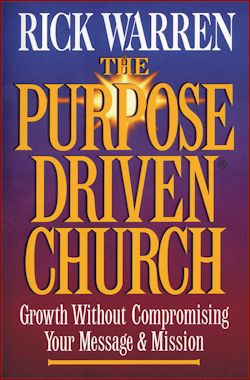
Warren is sensitive about complaints that his overtly pragmatic strategy for church growth leads to doctrinal compromise, so he subtitled his book, "Growth Without Compromising your Message & Mission." He insists throughout the book that you can follow his "seeker-sensitive" model of ministry without compromising or watering down your message. On page 244, he writes, "A worship service does not have to be shallow to be seeker sensitive. The message doesn't have to be compromised, just understandable."

But then, just a few sentences later, he writes, "The unchurched . . . do want to hear how the Bible relates to their lives in terms they understand and in a tone that shows you respect and care about them. They are looking for solutions, not a scolding."

Notice how quickly Warren undermines his own commitment not to compromise the message. People don't want to be scolded, he tells us. And yet Paul told Timothy that Scripture is "profitable for doctrine, for reproof, for correction, for instruction in righteousness" (2 Timothy 3:16). How do you preach reproof and correction—not to mention instruction in righteousness—without someone feeling scolded?

I frankly don't think it's the business of the preacher to trouble himself with whether people feel scolded. The preacher's task is to unfold the meaning of Scripture in a clear, authoritative, and persuasive manner—and if people feel scolded when Scripture rebukes them (as they inevitably will), then that is between them and the Lord. As a matter of fact, as preachers, we are instructed to reprove and rebuke, as well as exhort—with all longsuffering and doctrine (2 Timothy 4:2).

Doctrine?

Doctrinal preaching also takes a hit from Rick Warren. Notice in that quote that I cited above, he says, "The unchurched . . . want to hear how the Bible relates to their lives." He makes clear throughout the remainder of the book what he means by this. He is arguing for an emphasis in our preaching that is practical rather than doctrinal—more "emotional, experiential, and relational" than didactic. He is dismissively critical of what he calls "classroom churches." In Warren's words: "Classroom churches tend to be left-brain oriented and cognitive focused. They stress the teaching of Bible content and doctrine, but give little, if any, emphasis to believers' emotional, experiential, and relational development" (p. 340).

Now I happen to believe that all doctrine is inherently practical—or at least I would say that there is inherent practical value in understanding and defending sound doctrine. Furthermore, all legitimate religious emotions, experiences, and relationships are a believing heart's response to biblical truth soundly taught: doctrine.

So I don't quite agree with the dichotomy that is typically made by advocates of "seeker-sensitive" ministry. But they make this dichotomy nonetheless. They suggest that there is a significant distinction to be made between truth that is doctrinal and truth that is practical. And according to them, any style of ministry that is too didactic—more "doctrinal" than "practical"—is inappropriate for seeker-sensitive worship.

For example, a defense of the deity of Christ or a systematic presentation of justification by faith might have some academic interest, but doctrinal messages like that aren't deemed sufficiently practical and felt-needs oriented for the seeker-sensitive church environment. You are not at all likely to hear such truths dealt with from the Purpose-Driven® pulpit.

Newsweek once quoted a seeker-sensitive megachurch pastor who said it like this: "People today aren't interested in traditional doctrines like justification, sanctification, and redemption." What people want to hear, this pastor believes, are sermons that address their "felt needs"—how to improve our relationships with other people, how to have success in business, how to find peace of mind—and other things more instantly relevant to busy lives than academic doctrines like justification and sanctification.

Rick Warren is one of the foremost advocates of preaching to people's "felt needs." That is the expression he prefers: "felt needs." That's what he says should determine what we preach. He claims that is how Jesus Himself preached, and he even implies that the didactic content of Paul's epistles contrasts unfavorably with the more practical preaching of Jesus in the Sermon on the Mount. Instead of urging preachers to declare the whole counsel of God, Rick Warren expressly encourages preachers to consider what the audience wants to hear and let those "felt needs" determine what they preach.

Naturally, Warren attempts to argue that this approach in no way compromises the message. On p. 228 of his book, he writes, "The crowd does not determine whether or not you speak the truth: the truth is not optional." But then in the next breath he says, "Your audience does determine which truths you choose to speak about. And some truths are more relevant than others to unbelievers."

If that sounds like double-talk, it's because that is precisely what it is. The truth itself is not optional, but some truths are optional in practice, because they are not relevant? So much for the whole counsel of God.

Now, I realize that most evangelicals who have bought into the Purpose-Driven® philosophy wouldn't dream of attacking the doctrines of justification by faith, or the deity of Christ, or the absolute authority of Scripture. But they ignore such doctrines rather than risk boring people with academic teaching. The long-term effect is the same as a full-scale assault against those doctrines.

In short, although Rick Warren claims his brand of pragmatism doesn't compromise doctrine, it absolutely does. From the very start, pragmatic considerations determine what he will preach and how he will preach it. And because pragmatism establishes the value system by which he assesses everything, he is not even capable of appreciating how man-centered and watered down his message has become.

Phil's signature


26 March 2012

Celebrity Pastors and the Roots of American Evangelical Dysfunction

by Phil Johnson


everal weeks before the Shepherds' Conference, all the plenary speakers were sent a sheet of survey questions. Their replies were excerpted and published in the Official Conference Guide.

The first question was, "What books have you read recently and how have they made an impact on your thinking?" The answer I gave was wordy and my reading list was—let's say "eclectic." (Some would say "motley.") So—no real surprise to me—my answer to that question didn't get published in the Guide. But I wanted to mention part of my answer here, because it prompted an interesting observation.

In answering that first question, I divided the lists of books I've been reading into "Biography & History; Theology; Commentaries; and Biblical Subjects." I didn't plan this, but the first three volumes I listed in the "Biography & History" category revealed an intriguing pattern:

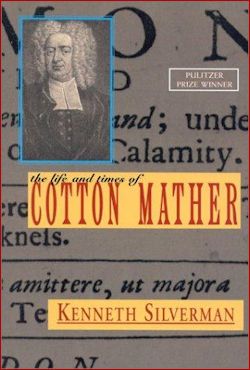
The Life and Times of Cotton Mather, by Kenneth Silverman

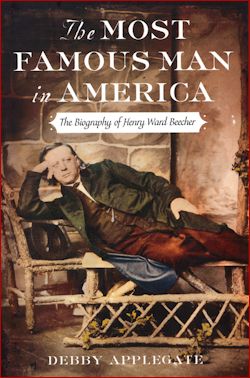
The Most Famous Man in America: The Biography of Henry Ward Beecher, by Debby Applegate

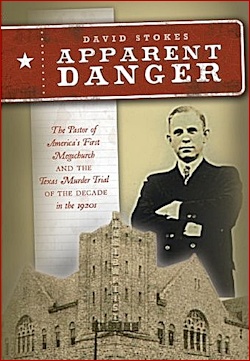
Apparent Danger: [J. Frank Norris,] The Pastor of America's First Megachurch and the Murder Trial of the Decade in the 1920s, (also published under the title The Shooting Salvationist) by David Stokes


The first two books on that list won Pulitzer Prizes. The third one is as compelling as any Pulitzer winner—a pastoral biography in classic true-crime genre. All three are books I would highly recommend.

The subjects of all three books are celebrity pastors—Cotton Mather, Henry Ward Beecher, and J. Frank Norris—three very different men whose ministries left indelible imprints on three successive centuries of American history. They represent three vastly different strains of evangelical Protestantism. At the peak of their ministries, each of these three men could have legitimately claimed to be the most famous pastor in the country. All three were too enthralled with their own celebrity status. And all three were at the center of scandals that diminished their reputations.

Consequently, all three books are instructive about the various dangers of evangelical mass movements and man-centered leadership models. Large personalities often have large character flaws. Celebrity leaders and the personality cults they tend to cultivate are fraught with danger. Sycophants and simpletons tend to mimic and exaggerate the shortcomings of men with big egos while spurning the lessons of their failures. The aftermath leaves a long wake. It's my belief that ripples of the various errors made by these three men are still reverberating on the surface of American evangelicalism.

Mather

Cotton Mather is the most likable of these three superstar historical figures. Two of his grandfathers (John Cotton and Richard Mather) were respected and respectable Puritan pastors who came to America with some of the first settlers. Their goal was to found a Puritan society. Cotton's father, Increase Mather, was also an excellent pastor and an influential political leader in the Massachusetts Bay Colony. So the heavy mantle of two previous generations fell on Cotton Mather.

The controversy for which Cotton Mather is remembered—and the episode that tainted his reputation in American history—was of course the Salem Witchcraft crisis. Mather chronicled the events of that catastrophe in a manner calculated to put himself in the hero's role, but when the witch trials were discredited and even one of the leading judges, Samuel Sewell, publicly repented for his part in condemning people to death who turned out to be innocent, Mather became the main target of critics and satirists. His sometimes pompous, overbearing demeanor made him an easy mark for ridicule.

In later years Cotton Mather became intrigued with German pietism. The virile, gospel-centered Reformed teaching he had learned from his grandfathers slowly, almost imperceptibly became mixed and diluted with whiny moralism and pious-sounding platitudes. Mather was satirized by young Benjamin Franklin, whose imaginary alter-ego, a cranky, outspoken, holier-than-thou woman named Silence Dogood, was based on Mather's personality. (Mather had written a famous book titled Essays to Do Good.) It's my conviction that Mather's moralistic shift unwittingly helped open the door for Socinianism and Deism in the generation that followed him.

Beecher

Henry Ward Beecher was likewise the son of a very famous preacher, Lyman Beecher. (The whole Beecher family were famous. One of Henry's sisters, Harriet Beecher Stowe, wrote Uncle Tom's Cabin. Another sister was an influential women's-rights activist. A niece was married to Edward Everett Hale.) The elder Beecher was originally a strict subscriptionist to the Westminster Confession. At first he opposed the doctrines and methodologies ("new measures") that Charles Finney made popular. But Lyman Beecher later softened his stance against Finney and he himself began to advocate the "new measures." The famous patriarch of the Beecher family was subsequently charged with heresy and tried by his session, but he was acquitted.

The son, Henry Ward Beecher, a young, struggling pastor at the time, seemed to take his father's shift (and acquittal) as permission to throw off the shackles of orthodoxy completely. He began to employ methodologies and teach doctrines that were novel at the time but have become standard fare for today's seeker-sensitive and highly-contextualized ministry styles. Beecher was openly and proudly devoted to worldly values and stylish causes. He reveled in his celebrity status and the petty scandals his lifestyle provoked.

Then a major scandal broke when a parishioner (the wife of one of Beecher's assistants) admitted to her husband that she had engaged in an adulterous affair with Beecher. In those days adultery was a criminal offense, and Beecher was formally charged. After a scandalous public trial, which was played out on the front pages of every newspaper in America, the jury was unable to reach a decision, and Beecher returned to ministry. In my judgment Henry Ward Beecher bears as much responsibility as (perhaps more than) Charles Finney for the pragmatism that dominates evangelical ministry philosophy today.

Norris

Frank Norris had a decidedly different style and he was a classic fundamentalist with regard to doctrine, but he shared Beecher's love of celebrity and his penchant for scandal. Norris pastored two churches concurrently—one in Detroit and one in Ft. Worth, TX. Before the era of jet travel, he would fly back and forth between the two cities, preaching on alternate weeks at one location, then the other.

Norris's most notorious scandal occurred when he shot a man to death in the pastor's study in Ft. Worth. He claimed it was self-defense, but there were no witnesses, and he was charged with murder. Norris's trial was also meticulously covered by every newspaper in America. Ultimately, he was acquitted, but he incurred the contempt and distrust of many, including a number of his own former followers.

That wasn't even Norris's only criminal trial. He was charged on another occasion with arson when the Ft. Worth Church burned under highy questionable circumstances, but Norris was acquitted of that charge as well. The various trials and acquittals seemed to make Norris more brash and pugnacious. He epitomized the "fighting fundamentalist" style. Later fundamentalists, including Jack Hyles and Peter Ruckman, openly revered and imitated him. The Bible Baptist Fellowship considers Norris a founder, and his controversial style is definitely still alive in that group.

Three centuries. Three celebrity pastors. Three completely different ministry philosophies. And yet there are so many similarities. Reading these three books in relatively close succession drove home the point for me that evangelicals historically haven't been very good at differentiating between men who have character and men who merely are characters.

There's nothing inherently wrong with fame, of course. But a love of fame for fame's sake—the modern notion of celebrity—is deadly, especially in the church. We ought to learn the lessons of our own past, and we ought to heed the words of the Lord Jesus, who said, "Whoever would be great among you must be your servant, and whoever would be first among you must be your slave, even as the Son of Man came not to be served but to serve, and to give his life as a ransom for many" (Matthew 20:26-28).


Phil's signature

24 February 2012

After All, I'm Not a Pragmatist!

by Frank Turk

I'm loading this in today's queue, but under Phil's post as.  His post isn't bumpable, and I'm not up for manning the top headline today.

As many of you know, Youcef Nadarkhani has been held for almost 900 days in an Iranian prison, and has now been sentenced to death for renouncing Islam and refusing to recant his new religion. If he's put to death, it will be the first time since 1990 that an Iranian will be put to death for apostasy. Our friends at TGC reported on this matter this way on Thursday, 23 Feb 2012:
Iranian pastor Youcef Nadarkhani faces imminent execution for charges of abandoning Islam and refusing to recant his Christian faith, the American Center for Law and Justice reports. The 34-year-old husband and father of two, whose case was temporarily delayed in December, may now be executed at any moment without warning, according to a new---and apparently final---trial court verdict. Unfortunately, many of the details surrounding the case remain unclear.
Our other good friend and mentor James White tweeted the clarification that Nadarkhani was an anti-trinitarian heretic without further comment (disclaimer: that's via twitter anyway and I am not current on my DL podcasts, so if I missed something I will gladly update and amend this report). His tweet was retweeted by a few people, and I admit that I was under-edified overall with the net effect.

UPDATED: To make good on the bold/underlined promise, above, our alert readers have found the comments from James on the DL yesterday, and they underscore the on-going good judgment of Dr. White.


Quoth James: "I think it is important information to know. It would be a little bit, like… We don’t want to see stories about Jehovah’s Witnesses or Mormons in that situation. Religious persecution is religious persecution, and if the Muslims are going to persecute heretics they’re going to persecute the orthodox as well. But it is somewhat different to pray for someone who is opposed to your faith and someone who is your brother. That fundamental connection - as in that of a common faith - is not there. So I had a number of people on Twitter say, ‘Well, are you saying we shouldn’t pray for him?’ And of course I never said anything of the kind. As someone else rightly pointed out, ‘Well, this helps my prayers even more, because now I’ll pray for his salvation as well.’ I never said, ‘Oh, well we should pray less,’ or ‘We shouldn’t worry about this guy.’ I just pointed out, I would think you’d want to know something about where this guy really is."


Compare that to the comment from Marcus Pittman to me on Twitter:
God wasn't concerned with death before repentance what if's. He commanded men to give death penalty for idolatry. Called it just. 
I am not advocating the re institution of ceremonial laws. I [am] saying God's requirements for civil justice are eternally just.


The net effect of Marcus' point of view is what I am here blogging about; using James' Tweet/Link to advocate Marcus' position (or one like it) is what I am talking about. The pastoral and Gospel-centered view of James White is not what I'm talking about.

Now, why be under-edified when the truth is being spoken?

Let's take it as utterly-unimpeachable that Nadarkhi is a hardened Modalist, a renouncer of trinitarians and all churches with non-modalist theology, and an apologist for Jesus-only baptism and baptismal regeneration. Let's simply admit that while Franklin Graham may be having some pastor qualms about impugning the Christian confession of anyone, the secular press has absolutely no discernment on the matter of who is and isn't a Christian, and they almost always get it wrong. I stipulate these points with no qualifications.

Let's consider a few things:

1. Which is more important at this moment: untangling the cultural and philosophical confusion of Islam toward the Christian faith (especially about a complex and nuanced doctrine like the Trinity), and the secular ignorance of the press in general, or seeking to influence our government and the government about to execute this man for frankly-unjust reasons? If we really are working under a deadline which, at the end, leaves a man dead and in unrepentant sin, should we be working to clarify the Iranian religious courts' view of what is and isn't Christian apostasy, or working to influence them to release this man to a country where he doesn't need to be executed? Because in point of fact, they don't care if he's Christian or Buddhist or a priest to Quezacotl -- they care that he is apostate to Islam, and that's his crime. To save the man, body and soul, we have to first gain mercy, or at least some sort of stay of execution or alternative sentence, from a court which, frankly, has a lot worse problems than what is sizes up as just punishment.

2. Is it merely pragmatic to save this man's life without correcting both the inaccuracies of the Press and the Iranian courts? I'll bite: sure it is. But it's not a rote pragmatism -- a mere appeal to expedience. To say, "first we must save this man's life -- both for the sake of his mortal life and immortal soul -- and then we can continue the apologetic fight against heresy and public ignorance of our faith," is setting priorities, which is not a disgraceful thing but in fact stewardship of resources, and putting God's view of human life and of human justice in the right place in our apologetics.

3. This goes back to my post regarding Nuance from earlier this week: at some point, whatever it is we are doing has to represent the whole counsel of God and not just our pet projects. At some point, we have gotten our few favorite pixels of the whole picture of theology right -- and lost sight of the whole picture, presenting to the world instead a jumble of squares which demonstrate Pantone-precision for their colors, but an utter lack of context and clear-sightedness about what we are actually supposed to be doing. You may not realize this, but this is exactly how we look to people in this situation:

Like it? Create your own at GoAnimate.com. It's free and fun!

And seriously: I know you don't want to be that guy on the right. Think harder about this issue and this situation. Sometimes getting both/and means you have to get one and then the other -- rather than all or nothing.