Showing posts with label prayer. Show all posts

08 July 2014

Overlong prayer interrupted — the rest of the story

by Dan Phillips

The man who gave me my first pastoral training, David Morsey, told the story once of a meeting at which a man stood to open in prayer. The man went on and on, and after a time the meeting's leader arose and said, "While the brother finishes his prayer, let us turn to hymn 242."

It was one of those apocryphal-type stories that one hears, with various famous names attached (Wesley, Whitfield, and so on). After a time, one decides it may never have happened — but, if it didn't, it should have, and it still makes a good point.

I'm sure you know a number of the kind. Like the story of (Whitfield, Wesley, Whoever) walking down the street when a drunken bum grabs him arm and says "I'm one of your converts!" The great man replies, "Yes, you must be. If you were one of Christ's converts, you'd not be in this state." We all know a number of stories like this.

I quoted the long-prayer-interrupted one during our last Wednesday-night meeting, making the point that length in public prayer does not necessarily equal godliness. I noted that I couldn't source the story.

Imagine my delight when I did a bit of research, and found the specifics. It did actually happen. In fact, the story even gets better after the bit that's often told.

The leader in question was none other than D. L. Moody. A brother had been asked to pray, and he was going on and on. After a while, Moody stood and said, "Let us sing a hymn while our brother finishes his prayer." It's already a delightful and instructive story.

But the source of the story is British physician Dr. W. T. Grenfell, in his autobiography, A Labrador Doctor. It turns out that Grenfell himself had wearies of the prayer, and he'd taken his hat and was about to leave. Hear him tell it:
It was in my second year, 1885, that returning from an out-patient case one night, I turned into a large tent erected in a purlieu of Shadwell, the district to which I happened to have been called. It proved to be an evangelistic meeting of the then famous Moody and Sankey. It was so new to me that when a tedious prayer-bore began with a long oration, I started to leave. Suddenly the leader, whom I learned afterwards was D.L. Moody, called out to the audience, "Let us sing a hymn while our brother finishes his prayer." His practicality interested me, and I stayed the service out.
This meeting and what followed influenced Grenfell to become a medical missionary. Note this, from the article on Grenfell in the Dictionary of Christianity in America:
After five years ministering to deep-sea fishermen across the Atlantic, he visited Labrador in 1892 and resolved to devote his life to alleviating the misery of the poor folk there. Beyond numerous persons converted or strengthened in the faith, his over forty years of labor produced six hospitals, seven nursing stations, four hospital ships, four boarding schools, twelve clothing-distribution centers, about a dozen cooperative stores, a cooperative lumber mill, a dry dock and a YMCA/ YWCA He also developed cottage industries and directed the first mapping of the Newfoundland coast. Grenfell’s books and his visits to Britain, Canada and the U. S. raised funds for the mission and brought him acclaim. Among other honors, he was awarded Oxford’s first honorary M.D. in 1907 and was knighted in 1927. [Reid, D. G., Linder, R. D., Shelley, B. L., & Stout, H. S. (1990). In Dictionary of Christianity in America. Downers Grove, IL: InterVarsity Press.]
And all because Moody cut short a "tedious prayer-bore" in a public meeting!

And now you know... well, you know.

Dan Phillips's signature


08 October 2010

Sigh of Despair, Song of Triumph

by Phil Johnson


How long, O LORD? Will you forget me forever? How long will you hide your face from me?
How long must I take counsel in my soul and have sorrow in my heart all the day? How long shall my enemy be exalted over me?
Consider and answer me, O LORD my God; light up my eyes, lest I sleep the sleep of death,
lest my enemy say, "I have prevailed over him," lest my foes rejoice because I am shaken.
But I have trusted in your steadfast love; my heart shall rejoice in your salvation.
I will sing to the LORD, because he has dealt bountifully with me.
salm 13 is a fascinating look into a side of David's prayer life we can all easily relate to. This man after God's own heart pours his soul out in frustration, fear, and ultimately faith as he struggles through the ordeal of tribulation.


The psalm is first of all a great prayer. There's nothing typical about it; in fact, it shatters our presuppositions about what really "spiritual" praying is like. But a close look shows it is in perfect harmony with how Jesus taught us to pray. Brevity and honesty—two qualities sadly missing from most of our prayers—stand out as its hallmarks.

More than a lesson about prayer, however, this psalm is a model response for those of us going through deep trials. David wrote it in anguish over the apparent success of an unrelenting enemy. We don't know which enemy—it might have been Saul, the renegade king, who chased David like an outlaw; or it could have been the Philistines, who as a nation epitomized all that God hates.

Imagine David's frustration, seeing enemies like that prosper while it seemed God was hiding His face from him! If we're honest, we have to admit that we understand David's inner turmoil in the opening cry of this psalm all too well.


But that initial, desperate groan is only the beginning of the story. In the six brief verses of Psalm 13, David moves from doubt to deliverance, teaching us the sublime and emancipating principle that victory depends chiefly on how we look at our trials.

The Inward Look
At first David looks inside himself, and sees only his own sorrow (vv. 1-2a). See how many times in these early verses he uses the first-person pronouns: "I," "me," "my," "my soul," "my enemy," "my heart." He's questioning God, wallowing in his own defeat, wondering why God seems to be hiding His face.

Was God hiding His face? Of course not! David was merely looking in the wrong place.

There's a serious danger in the wrong kind of inward look. Healthy introspection, the kind that leads to confession of sin and the humble brokenness of which Jesus spoke in Matthew 5:3-5, is critical to our spiritual survival. But looming in the face of those who look within themselves is a monstrous peril: a morbid preoccupation with our own inadequacies that breeds depression and debilitates us spiritually.

The difference between the two kinds of self-reflection is not so subtle. A wholesome look inside becomes hurtful when we begin looking within ourselves for a solution to the problems we find there. The solution doesn't reside in us; we must look elsewhere.

The Outward Look
David turns his focus from within and begins to look around (vv. 2b-4). Now all he sees are his surroundings. What a different David this is from the young shepherd who strode confidently into the presence of the mighty Goliath with no armor and only a few pebbles for weapons! Pay careful heed to the lesson: one great victory does not ensure future triumph.

This time David is fearful. We can sense his trembling, as he grapples with a paralyzing dread that this trial might ultimately kill him (v. 3).

I've felt that way, too, and in trials of much less consequence than David's. Such fear is the inevitable result of looking at circumstances and hoping some kind of help will come through them.

But deliverance doesn't come through circumstances, either.

The Upward Look
Finally, in verses 5 and 6, David looks to the Lord, and there he sees his salvation. Compare this passage to verses 1 and 2. "Me . . .I . . .mine" has given way to "thy mercy . . . thy salvation . . . the Lord."

Thus what in the beginning sounded like a dismal wail of unbelief becomes an exhilarating hymn of faith. What's the difference? The trial has not changed—but David's point of view has. Now his eyes are clearly directed upward.

Salvation belongs to the Lord (Psalm 3:8)—that goes for deliverance from trials as well as salvation from sin. No other truth emerges from everywhere in Scripture so definitively. If we look around or within—or anywhere but to God—for a way of escape, we are condemned to disappointment and ultimate failure.

It is God who provides the way of escape—not out of our trials, but rather through them. He enables us to bear testing, not avoid it (1 Cor. 10:13). And He uses our tribulations to accomplish His wonderful purpose in us (Rom. 5:3-5, James 1:3-4).

Thus God works all things—including our hardest testings—together for our good. That's the ultimate victory, and it's how even in our darkest hour of trials, we can fix our eyes on Him and say confidently with David, "He hath dealt bountifully with me" (v. 6).

Phil's signature

05 March 2010

Redneck Atheism, Part 3: Prayer

by Phil Johnson

his week is Shepherds' Conference so I don't have a lot of time to write detailed blogposts. Incidentally, you can watch the livestream of this morning's session at 9:00 PST here. I'll be preaching from 1 Corinthians 16:13 ("Act like men!").



we're in the process of replying to our Atheist friends' Ten Most (currently) Popular Sneers against Christians. Given my jammed schedule, I've decided to take up just one of their arguments today, and on top of that, I'm picking the easiest one:

  1. You define 0.01% as a "high success rate" when it comes to answered prayers. You consider that to be evidence that prayer works. And you think that the remaining 99.99% failure was simply the will of God.

I can't speak for people who deliberately pray for things that are manifestly opposed to the will of God, but my prayers are all answered. While I don't tabulate the answers statistically, I'm confident that the majority of my prayers are answered with some kind of yes—often far more abundantly than anything I could ask or imagine (cf. Ephesians 3:20).

In any case, your exaggerated (and obviously undocumentable) statistic is pathetic evidence of how desperate you are to discredit the One whom you are clearly obsessed with yet adamantly insist doesn't even exist. I doubt even the most wild-eyed, biblically-illiterate, superstitious, name-it-claim-it charismatic could honestly say only .01% of what they pray for goes unanswered. If they follow Christ even nominally—enough to pray once a day or so for "our daily bread"—I'll guarantee the "success rate" (as you so elegantly put it) is much higher than one hundredth of a percent—one in ten thousand.
Anyway, if a person takes time to learn to pray by studying the Lord's Prayer (and the other prayers in Scripture); and then prays diligently, importunately, and sober-mindedly—not "ask[ing] wrongly, to spend it on your passions" (James 4:3)—that person will certainly have no reason to take such a cynical attitude toward prayer.

Phil's signature


23 June 2009

What prayer is and isn't [requested classic re-post]

by Dan Phillips

[From September of 2006 comes this (slightly-edited) post, requested by Jude (who also caught my attention with a string of non-top-40 Chicago titles off of their third album). The post swings a Louisville slugger at a couple of evangelidom's most treasured traditional fictions, as both part of the original meta and a couple of attempted rebuttals on other blogs attest. Enjoy. Or whatever verb fits.]

The minefield that is prayer. I can't offhand think of one specific doctrine which is more tradition-laden, nor buried under sentimentality, than that of prayer.

For that very reason, it's a risky topic. Step in any direction, and you land on someone's toes. Worse, diverge from the "party line," and it's as if you're insulting Mom. Only a fool, or someone with nothing to lose, would knowingly poke a stick at that particular venerated bovine. (Say... why are you looking at me like that?)

Christianoid notions. Common Christian coinage describes prayer as a conversation, declares that "there is power in prayer," makes prayer out to be the be-all and end-all of Christian living. Prayer is "the greatest power on earth," we're told. Is this Scriptural thinking?

Think of Frank Peretti's Darkness books. I read one or two. I thought them imaginative and fast-moving, but neither great theology nor great literature.
In his imagination, Peretti pulls the curtain aside on the spiritual battle that Scripture describes. He shows demons and angels alike in action, fabricates their dialogue, fantasizes their attempts to ruin or protect human beings.

Here's what sticks in my mind. What do you suppose strikes terror into Peretti's demons? When does everything start to turn around, for the demons' defeat and the saints' victory? It's when the saints pray. Nothing scares fallen angels, apparently, like praying Christians.

Now, it strikes me that all of this is backwards at worst, sideways at best.

Biblical teaching. What is prayer, in the Bible? It's one thing, and one thing only: prayer is talking to God. Period. That's it.

Prayer might be talking-to-God in the form of praise, petition, confession, supplication, exclamation, or a host of other forms. It might be talking to God while happy (Psalm 43:4), sad (Psalm 42:9), mad (Psalm 10:15), hurried (Nehemiah 2:4), guilty (Psalm 51:1), busy and distracted (Nehemiah 4:9), or near death (Acts 7:59-60). But it all boils down to that one irreducible: prayer is what you say to God.

No arguments so far? Great. Now fasten your seatbelts, and consider this:
  • Prayer is not a dialogue.
  • Prayer is not a conversation.
  • Prayer has no intrinsic power, whatever.
"What?! Heresy! Get the comfy chair!"

Oh? Fine: show me from the Bible. In the Bible, what I say to God is prayer, what He says to me is revelation, it is prophecy. If I am a Christian, I talk to Him. If He talks directly to me, unmediated, so that I can inerrantly communicate that to others, I am a prophet, or a seer.

And I'm neither; nor are you.

Scripture constantly urges believers to pray, in both covenants (Psalm 32:6; 72:15; 1 Thessalonians 5:17; 1 Timothy 2:1f., etc.).

By contrast, Scripture never urges believers to pray and then wait for God to speak back in that prayer, expecting (demanding?) that God engage us in conversation as a regular facet of normal Christian living. (I am using "conversation" in the strict sense: I speak, then God talks back, unmediated, verbally. "How's your day?" "Oh, fine, thanks. Yours?"). Scripture never directs us to an Eastern-style emptying of the mind and listening in and to the numinous silence, for an imaginary "still, small," never-promised "voice" of God.

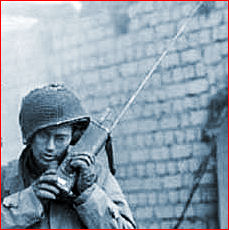
Prayer, if you will, is depressing the button on the walkie-talkie, and talking. No more, no less. It has been described as a soldier in the field calling for supplies and reinforcements, and that's not bad. Prayer is you, talking.

Now, if you want to hear God speak to you, go to His Word in faith, and He will (Proverbs 6:20-23; Hebrews 3:7ff.; 2 Peter 1:19-21, etc.).

Not only is prayer not the be-all and end-all; in fact, sometimes it is positively wrong to pray.

What? More heresy? Where's that chair?!

Except it isn't heresy if your Bible contains Proverbs 28:9, which reads "He who turns away his ear from listening to the law, Even his prayer is an abomination" (NAS). Such prayer is appalling to God. It (so to speak) turns His stomach, when someone turns a deaf ear to His voice in Scripture, but expects God to hear him rattling off his "honey-do" (or "Deity-do") list of requests.

Nor is it heresy if your Bible still features the devastatingly wondrous first chapter of Isaiah, where we read in verse 15, "When you spread out your hands, I will hide my eyes from you; even though you make many prayers, I will not listen; your hands are full of blood." (Remind me sometime to tell you what I think of the National Day of Prayer. Or maybe you can guess. [A few years later, I did.]

What does this mean? It means that sometimes, when someone says "I'll pray about that," the most Biblical response is, "No, please — don't pray. Don't bother. You'll only make it worse." In such cases as these, the only appropriate prayer would be a prayer of broken, heartfelt repentance and confession (Psalms 32; 51; 1 John 1:9).

Now, wonderful things can happen in response to prayer. When prayer is expressive of a relationship with God, and in accord with God's will as revealed in the Bible alone, prayer can accomplish much (James 5:16; 1 John 5:14). But of course, in these cases, the prayer itself is of no power, whatever. It is the God who hears prayer — He is the powerful one.

Think about it. When the bully is beating you up, and all you can choke out is "Dad!" What is it that dooms your tormentor? Is it the power of your word, your cry for help, your "prayer"?

Or is it the big, angry man who loves you, hears your voice, and comes running?

So is it prayer per se that really strikes terror into demons' hearts in this spiritual battle of ours? I do read some detail about the armor of God, crafted in Heaven to equip us for that battle (Ephesians 6:10ff.). I do read somewhere around there of prayer, and I do read of a weapon.

One weapon.

But the weapon isn't prayer (Ephesians 6:18). Prayer is just us talking to God. Our words are without intrinsic power. I don't think that us talking, per se, scares demons. In fact, I'm pretty sure that sometimes it positively cracks them up.

The weapon is the sword of the Spirit, which is the Word of God (Ephesians 6:17). God's Word sent Satan running from our Lord (Matthew 4). It will do the same for us.

Now, there are some words with power (Psalm 33:6, 9; Jeremiah 23:29; Hebrews 4:12)! Read, them, study them, believe them, embrace them, glory in them, live them — and use them in prayer.

That would result in some quaking, shaking, and glory.

Dan Phillips's signature

21 January 2009

Short and Sweet

by Frank Turk


Because I think there is a certain degree of crassness involved in doing the post-game wrap up on someone's prayer (because all prayers we make are defective, and are thereby interpreted by the Holy Spirit to the Father into something more sublime, a la Rom 8), let me only say this about the much-discussed prayer by Rick Warren at the inauguration yesterday:

It started out OK, ended on a classic note, and caused me to ask a single question in the middle.

The single question is this: is it a legitimate thing to pray to God that we as a nation be united by anything other than the cross of Christ (a la Eph 2)? It's legitimate and totally understandable to recognize that we are when we think about the things of this world. But when we pray to God, who uniquely reveals Himself in Christ, and by whom enmity between God and man and between the various superficially-different types of men is taken away and knocked down, should we pray that the unity of our nation be based on a merely-temporal civic good?

I don't know. I'd be willing to hear the reasonable exhortations of anyone who thinks "yes", as well as what often happens in the meta.

Play on.


20 January 2009

Inauguration Day Prayer #5: Nobody Of Any Consequence

by Dan Phillips

[See the series introduction/explanation]

I offer this truly apologetically. I've been holding spot #5 open for a particular Invitee. If you knew who the fifth person I asked really was, you'd hate me even worse. But I failed to give him enough notice, so you're stuck with me. Sorry! Put the blame on me.

(If he provides something later, I'll share it, because I know we would all profit by it. I wanted to have all of these up well before the inauguration, or before Warren's prayer might be published, so that they cannot be seen as a reaction to it.)

At least I'll spare you the customary introduction to the guest poster.

But first, please, a round of applause for the four gents who participated and shared their thoughts with us. Let's give it up for Prof. Frame, and Pastors Anyabwile, Brauns, and Johnson!

{ thunderous applause, whistling, lighters in air }

HSAT, I add three more observations before the prayer:
  1. I'm totally cheating in that I, unlike the other four, have read them all. But...
  2. ...believe me or don't, this is the prayer that began forming in my mind when I started thinking about this a month ago.
  3. Would I accept the invitation? I still think what I thought at that point: I would take the opportunity, if they attempted no censorship. I can only recall one opportunity for the Word that I ever turned down on principle, and that decision was reached reluctantly and painfully. Basically my stance is: give me an opportunity to get in the Word, don't try to censor me, and if I can be there, I'm there.
And so, without further eloquence, a very small figure stands among his betters and offers this, which comes in at about three minutes (not allowing for boo's, riots, and a hail of gunfire).


Oh God, our Creator, Sustainer, and Judge, You have blessed America most extraordinarily. No other nation has ever enjoyed such resources, opportunities and freedoms.

Even so, we call to mind what Your only Son, God incarnate, the Lord Jesus Christ, told us: "Everyone to whom much was given, of him much will be required" (Luke 12:48). You have given us much — and what have we done with it?

No other nation in history, since your Son walked the earth, has had such access to Your inerrant Word, the Bible; nor such liberty to preach it and teach it. Against the backdrop of world history, our freedoms are simply staggering. Yet the moral corruption in Washington is rivaled by the spiritual corruption in our pulpits, and in our pews.

Preachers twist and compromise Your truth, selling out on their calling so that they can be loved by those who hate You. People who name Your name choose to ignore Your words, and love the world, love to be stylish. Oh God, grant repentance to us who claim to know You. Inflame preachers with love for you that cannot be bridled nor tamed, love that shows in fearless and uncompromising proclamation of your Word. Inflame believers with love for Christ that cannot be overlooked nor misunderstood, love that shows in lives that reflect the character and revealed wisdom of God.

And God, we confess with shame that, though we are the richest nation on earth, we are among the cruelest when it comes to our most helpless and needy. Thousands of unborn children are killed each day, oh Lord, slain on the altar of our selfishness and lusts. If they are inconvenient or imperfect, we kill them. Our hands are bloody. We are deeply guilty, yet do not even blush. I cannot ask that You forgive us, much less that You bless us with further prosperity to squander. I ask, instead, that You grant us to feel our shame, that You grant us repentance, so that You might forgive us.

Lord, we have sinned. I have sinned. President Obama has sinned. All who hear me have sinned. We know better. Knowing Your Word is not above our pay-grade. We can offer no excuse.

But thank You that You, the God who is holy and just, and loving and merciful, sent Your only Son to give Himself a ransom-price to secure freedom and forgiveness for all who would believe in Him with repentant faith. Thank You for Jesus, born of the virgin Mary, crucified for sinners, dead, buried, and risen to life on the third day. Thank You that He is at your right hand, ever living to grant forgiveness and life to all who call on His name in faith. Thank You for that glorious promise.

And so, our God, we pray that President Obama will know that transforming faith in Jesus. We pray that he will humble himself at the cross of Christ, and know You as Savior and Lord. We pray that Your word will transform his thinking, that Your word will be his law. The king's heart is in Your hands, oh God — and so, surely, is the president's. We pray You grant him this saving grace.

America has been called a shining city on a hill. If that was ever true, the light is guttering, dark and dim now. Oh God, grant repentance to this land, that our spiritual prosperity might outstrip our material prosperity, to the glory of the living, triune God of Scripture.

We pray this in the name of Jesus Christ, the only name given under heaven among men by which we must be saved.

Amen.


The previous rule about not dissing the guest is suspended, in this case. Have at it, within the normal rules.

Dan Phillips's signature

19 January 2009

Inauguration Day Prayer #4: Phil Johnson

posted by Dan Phillips

[See the series introduction/explanation]

Phil Johnson really really needs no introduction here, but let's give it a bit of a go.

I'd say Phil's a Renaissance man, but he's more of a Reformation man. Personally, I'd trade a list of doctorates in the ETS for one Phil Johnson, with his earnest love for God and His word, and the extraordinary diligence he's applied in studying, learning, applying, doing, and communicating.

Phil is the Executive Director of Grace to You, and is a pastor at Grace Community Church. He's also the original Pyromaniac, the founder of this team blog and, to my great blessing, my friend.

Hysterically funny, deep, thoughtful, articulate, energetic, forceful, eater of strange food, wearer of strange sunglasses. That's Phil.

When he's not preaching or serving on various boards or editing books by John MacArthur or running around the country attending conferences, holding them, or guest-preaching, Phil blogs here.

So naturally, he's one of the well-known, faithful pastors I asked to offer his thoughts on praying at Obama's inauguration. Like the previous three, Phil has seen none of the other responses. This is Phil's response, which I received last Thursday:


I would decline.

Not because it’s a political event, or because I don’t agree with Obama’s foreign or domestic policies, but because Obama’s own stated intention is to make his inauguration “the most inclusive, open, accessible inauguration in American history,” and I would not want to affirm that goal, even tacitly. His passion for being “the most inclusive” is the sole reason he has involved both Rick Warren and Bishop Vicki Gene Robinson—not because he agrees or disagrees with either one of them. (Obama is clearly his own god.)

The central message he intends to give through his inaugural ceremony, then, is that truth doesn’t really matter. And I would not want to help him send that message, especially in the context of a prayer offered to God.

I had to think about my answer for awhile, because frankly I would be tempted to say yes and then use the occasion to pray a strong imprecation against the idolatry, unbelief, and pluralistic approach to truth that have drawn our culture so far away from our ancestors’ faith. But it would take a special revelation from God for me to aspire to being that kind of prophet.

-- Phil Johnson


Thank you for more solid fodder for thought, Phil.

And for a post tagged both "guest posts" and "Phil Johnson."

One more invitation is out in the ether; if that good brother's unable to submit a prayer, a very poor-substitute pinch-hitter is warming up.

Remember the Special Rule for all these posts: diss me as you see fit, but nobody disses my guests.

Dan Phillips's signature


Inauguration Day Prayer #3: Pastor Chris Brauns

posted by Dan Phillips

[See the series introduction/explanation]

Pyro readers know Pastor Chris Brauns from the review of his fine book Unpacking Forgiveness. Pastor Brauns has a blog, and is pastor of The Red Brick Church in Stillman, Illinois. He has a Master of Divinity degree from Grand Rapids Theological Seminary, and a Doctor of Ministry degree with a Preaching Emphasis from Gordon-Conwell Theological Seminary.

Here was Pastor Brauns' "hurried draft" in response to my invitation:
Our Father in Heaven, hallowed be your Name.

We stand today to ask you to bless our country and this president. Father, would you guide President Obama and the United States of America through the night with a light from above?

Our petition for light LORD God recognizes that you and your Word are the sum and source of wisdom. We confess that we have oft asked you to bless us with the sunlight of prosperity, but we have been so audacious as to ask on our own terms. So, Lord, we plead today that you would bless us not by endorsing our choices, but rather, that you, God only wise, would guide and direct our paths.

Lord, our request that you would bless with a light from above recognizes that apart from your word and truth, we can only grope in a dark world. While, we see much that is true, noble, lovely, and pure, we are also reminded that the dark night of evil twists, perverts, and destroys whenever given the chance. Lord, God, deliver us from evil, even as we wait for your Kingdom to come.

Lord, we pray that you would protect President Obama from temptation, that you would keep him from situations where he might make mistakes and do that which is displeasing to you. We ask rather that you would give him wisdom with each choice he makes. Lead him to make the right appointment. Give him eyes to act justly, to love mercy, and to walk humbly.

Thank you, Father, for the bounty you have poured out on our country. Give President Obama the wisdom of your word as he leads us through uncertain economic times. We pray that all in our country would have daily bread.

Our Father in Heaven, we know that you are a gracious God, so we ask that you would shed your grace on President Obama and our country; forgive us our trespasses, which are many. But, even in making this request, we remind ourselves that our request for your forgiveness is a pledge to be a country that shows grace domestically and abroad.

Thank you, Father, for answered prayer. We praise you that in electing our first African American president, we have in this instance, ratified a foundational tenet of our country: that all are created equal, whatever their age or race, and that you have endowed all with inalienable rights.

We pray for Mrs. Obama. Would you grant her wisdom and courage as she partners with her husband? We pray that you would strengthen President and Mrs. Obama’s marriage.

We pray for Natasha and Malia Ann. Thank you Father for these lovely little girls. They are already a source of delight to our country, not only for who they are but for all they represent. We pray that you would keep them safe and encourage their hearts, even as we pray collectively for all children of the world who we know are infinitely precious in your sight.

God, on our knees, we ask again, that you would bless our president. Guide Him through the night, with your light from above.

In the name of the only King, your only begotten Son, the Risen Savior, the Lord Jesus Christ,

Amen.
My thanks to Pastor Brauns for taking the time to share this with us. I have one more "on tap," and am waiting hopefully — because who hopes for what he sees? — for a fifth.

Remember the Special Rule for all these posts: diss me as you see fit, but nobody disses my guests.

Dan Phillips's signature

16 January 2009

Inauguration Day Prayer #2: Pastor Thabiti Anyabwile

posted by Dan Phillips

[See the series introduction/explanation]

Everyone who went to T4G 2008 was informed and challenged by Pastor Thabiti Anyabwile's talk on "race" (and how it isn't a Biblical concept). He also joined Phil for the band of Bloggers meeting, where I had the pleasure of meeting and chatting with him. A gracious, thoughtful man, Thabiti is Senior Pastor at First Baptist Church of Grand Cayman, is a blogger and a published author, and I want to trade his voice for my whiny, nasal one.

Here is Pastor Anyabwile's contribution.


I would be torn as to whether to participate or not.

On the one hand, I wouldn’t want the inevitable public clamor that usually surrounds Bible-believing folks who participate in these sorts of things. I’m not sure the witness potential matches the negative runoff that comes with the invitation.

On the other hand, I believe that having the public’s (any public’s) attention riveted to a prayer for a few short minutes could be effectively used in the hands of the Lord.

So, I would be inclined to simply pray through the gospel of our Lord, as the highest possible blessing upon the individuals listening, the country as a whole, and the world in need of a Savior.

The other reason to accept would be to fill the space with an orthodox commitment to the Lord and His gospel instead of having another secular or even anti-Christian voice heard.

But, as I said, I would be torn.

Grace and peace, my friend.

T-


Many thanks to Pastor Anyabwile for challenging our thinking. He raises the issue: view the opportunity as an opportunity, period, and grab it? Or factor in the counter-weight of the likely impact and repercussions?


NOTE: Special Rule for all these posts: diss me as you see fit, but nobody disses my guests.

Dan Phillips's signature

31 July 2008

Guess who said it: best thing for America = "winning people to the Lord one at a time"

by Dan Phillips

Well, I did. But more significantly, this comes from Tony Perkins, president of an organization whose work I appreciate: Family Research Council.

What's more, Perkins
took the unusual step of telling his staff members not to come to work [Monday] in Washington, but rather to take part in a day of prayer and fasting for the nation. The pro-family leader says many Evangelicals and "values voters" are discouraged because there is not one presidential candidate who clearly lines up with their values and beliefs.

"While we need to be involved in shaping public policy, just as we need to be involved in education or entertainment or any other realm of society, I think we have oftentimes placed our hopes on a political candidate in hopes of being able to turn the nation back into the right direction," Perkins contends. "I think we're left only with the choice of returning to God and to Jesus Christ."
I'm trying to see how someone would find fault with that, and not succeeding. (Has he been reading Pyromaniacs?)

Dan Phillips's signature
PS: We don't see many things on "Out of Ur" that we can link to with hearty agreement, but here's an exceptional one, and it's right in line with Dan's post.
--PJ

03 July 2008

Prayer and the might-not-have beens

by Dan Phillips

Some Calvinists have never struggled with prayer in any way. Others of us have struggled with it in almost every way.

Number me with the latter.

One conundrum bogged me down when I was a very young Christian — and long before I was much of a Calvinist. In its simplest terms, it is: how can our prayers make any difference?

If God knows what He is going to do, and has known since before the first tick of the cosmic clock, and if His will is settled and absolute and unalterable, then what possible impact can our prayers have? And even more to the point, what possible purpose could they serve?

I've made sufficient peace with that issue on two fronts:
  1. God says to do it (Luke 18:1; 1 Thessalonians 5:17, etc. ad inf). If I believe Him, that's sufficient in itself. If I don't believe Him, nothing will suffice.
  2. God carries out His sovereign will through means. My prayers are parts of those means (cf. Ezekiel 36:37-38). It isn't mine to divine His sovereign will, but to pursue His revealed will (Deuteronomy 29:29, and see #1 above).
HSAT (Having Said All That), I have also noticed the most remarkable occasions in Scripture when what God had been going to do is presented as influenced by human prayer. Now, I don't want to over-theologize it (and will resist that in the meta). If God says A, and a human says oh please, do B; and God says OK, I'll do B, then He meant to do B all along — and meant to do it in response to human petition. Plus as an added bonus, He meant to do the petitioner good by involving him or her in the process.

Instances where prayer factors in to God's plan
  1. Genesis 18. In this passage, God comes in judgment to Sodom and Gomorrah. When Abraham catches wind of it, he pleads with God for the cities. Finally, God agrees not to destroy Sodom if ten righteous can be found (v. 32).
  2. Exodus 33:1-14. Yahweh says "Go up to a land flowing with milk and honey; but I will not go up among you, lest I consume you on the way, for you are a stiff-necked people" (v. 3) But Moses pleads with Yahweh, and Yahweh agrees that His presence will go with Israel (vv. 12-16).
  3. Numbers 9. Some Israelites were unable to keep the Passover. The law made no provision for them, so they were shut out. Yet they asked God, because they wanted to worship and participate. God provided a second Passover for those who, for unavoidable reasons, were unable to participate on the correct date.
  4. Amos 7:1-6. Yahweh threatens judgment on Israel, the prophet intercedes, Yahweh (at least) forestalls the judgment.
  5. Mark 7:25-30. A Syrophoenician woman with a possessed daughter implores Jesus for help. He puts her off, gives no encouragement to ask further. But ask she does, and Jesus frees her daughter.
Now, you may see these discussed here and there, particularly from the perspective of whether this shows a mutable God. (It doesn't, but that is not our concern here.)

There are also other examples that I might call OTOH examples — examples where God announces a decision, is asked to change that decision, and refuses to do so.

Instances where prayer is flatly rejected
  1. Deuteronomy 3:23-28. Yahweh has told Moses that he may not enter Canaan with Israel due to his sin at Meribah (Numbers 20). Moses asks God to relent, and let him enter. "Enough from you; do not speak to me of this matter again," God replies (v. 26).
  2. Matthew 16. Jesus announces that He is to die on the cross. Peter reproves him. Jesus rebukes Peter sharply, and goes to the cross regardless — thank God!
HSAT, have you ever wondered about a third category? Have you ever wondered which Bible stories might have gone differently, and how so, if someone had just asked God?

For instance, what would have happened if Eve had asked God how to respond to the Serpent, rather than blundering on into gawping rebellion? What if, after Eve's sin, Adam had asked God what to do about Eve?

We could go on and on.

Here, in one final enumeration, is what I take from this:
  1. God gives believers' prayers a significant place in His plans.
  2. We should never downplay the importance of approaching God in prayer, Biblically understood.
  3. It is the height of folly to let circumstance or human reasoning discourage us from bringing our petitions to God. In other words...
  4. Let God say "No, I have a better plan," rather than, "Since you did not ask (James 4:2b)...."
Dan Phillips's signature