My problems
So, as I explained, I had two problems. The minor problem was Jesus, the major problem was me.How can I say Jesus was a "minor" problem? As I explained, I had this nagging awareness that
 his teaching wasn't really quite what my cult made it out to be. But in itself, that wasn't huge. Jesus was one religious teacher among many. A really impressive one, true; but just one. Knowing that He disagreed with me was not, in itself, shattering.
But when conjoined to the major problem, it took on a different significance. See, I had realized that I basically was the founder of my religion. I was my authority, my judgment and character were the basis. And I'd come to see that this foundation was irredeemably corrupt.
Praying, but not "through"
So I actually prayed, which was new. We Religious Scientists (like Christian Scientists) did not pray. To speak to God implied separation from God, and we believed we were one with Divine Mind. So we meditated, we affirmed. We didn't pray.But now I did, as I became increasingly gripped with a desire to know God, and be saved—though I'd not have used the word—from the wretched heap of my internal life.
I remember praying once, in my darkened room, "Father--" I got no further. It was as if a voice came back: "Who said I was your Father?"
I had to admit, "I did." And that was the problem.
So I prayed that God would lead me to know Himself on His own terms, as He really was, whether he was such as I wished Him to be, or wholly other. I was willing to do anything, be anything. "Even if it means becoming a Jesus Freak," I said, because that was the worst thing I could think of.
Well.
God's mole
Meanwhile, as they say in the movies, I had been befriended by this Christian named Greg. He'd seen me walking home from school and offered me a ride. We went to the same high school, but I hardly knew him. Still, it was nice of him, and became a daily thing.
I asked Greg early on what his religion was, and he told me he was a Christian. "If you ever want to know why, or have any questions, just let me know," he added.
"You bet," I replied. That was never going to happen.
Fast-forward a few months of this agonizing process I've described, and that all changed. I had shared with Greg about some of the garbage—though this was not my exact term—that I was finding within. Greg sympathized and commiserated. He was a very real person, not like most sloganeering, plastic Jesus people I had known.
Greg gave me a gospel of John in some modern translation, which I read. He also gave me C. S. Lewis' Mere Christianity. I liked to think I was smart, but most of it was well over my head. Except one part. You know the part.
I am trying here to prevent anyone saying the really foolish thing that people often say about Him: I’m ready to accept Jesus as a great moral teacher, but I don’t accept his claim to be God. That is the one thing we must not say. A man who was merely a man and said the sort of things Jesus said would not be a great moral teacher. He would either be a lunatic — on the level with the man who says he is a poached egg — or else he would be the Devil of Hell. You must make your choice. Either this man was, and is, the Son of God, or else a madman or something worse. You can shut him up for a fool, you can spit at him and kill him as a demon or you can fall at his feet and call him Lord and God, but let us not come with any patronising nonsense about his being a great human teacher. He has not left that open to us. He did not intend to.I remember reading this with a sinking heart. Lewis was talking about me. I was always insisting that Jesus was a great teacher, the greatest—yet I had kept running into things that this "great teacher" taught, that I did not believe, did not want to believe.
And what of that? I'd already established that I, and my judgment, were no fit foundation for life and thought. But what of Jesus? Here was someone we held to be the greatest teacher, the greatest example, the greatest mystic. His life was a life of integrity. The unparalleled symphony of miracles in his life, with the crescendo of the Resurrection, made perfect harmony with the claims He made for Himself. It all fit. If I was no fit foundation, was He?
So somewhere here I surely shocked my friend Greg by telling him I wanted to talk. And talk we did. For hours, and hours. First, at my parents' house. Then the next day, a rainy Saturday, after I'd been at a meeting for the Religious Science church youth group (I was a co-leader; also, I'd taken two of the four-year ministerial training course).
I threw every question I had at Greg, and he kept telling me about Jesus and what the Bible said.
At the end of our second talk, Greg said, "Why don't you just ask God? Ask God if He wants you to believe in Jesus, in order to know Him. What would you be out?"
Made perfect sense to me. So ask I did.
...and the roof didn't cave in
The next day, I went to church with Greg. It was Van Nuys Baptist church, pastored by Harold Fickett. I remember that Fickett preached like a lawyer building an airtight case. I felt myself to be the defendant, and guilty as... well, as sin. I wish I could tell you what he preached. I can't. But I can tell you it was as if Fickett had read my journal. He absolutely nailed me to the pew. And as it all  fell apart, it all fell together.
At the end, Fickett gave an invitation. If you wanted to find out how to know Christ as Savior, come up front, someone would help you. Greg said he'd come with me if I wanted. I did want. So up we went. They may have been singing "Just As I Am," which would have expressed my longing exactly.
The man who talked with me used the Four Spiritual Laws. I remember with crystal clarity when the counselor talked about how my sin separated me from God. This described and made sense of exactly what I'd been coming to see within myself.
Then he showed how Jesus was the sole mediator between God and man, and this made sense of the unbridgeable gap I'd come to see between God and me. It also connected so well with that stubborn text, John 14:6, which had so bothered me (as I mentioned in the first part, and discussed more fully elsewhere). Jesus was the way, none could come to the Father but through Him. Including me.
Then the counselor showed the picture of the chaos of the self-ruled life, and this described me to a "T." I hadn't indulged in some of the particular vices of my generation. But had I loved God above all? Never. Had I taken His name in vain? Constantly and with gusto. Had I dishonored my father and mother? Since I could talk. On and on it went.
And then we prayed together, and I implored Jesus Christ in His fullness to be my Lord and my Savior, to make me His own, and to forgive me of all my sins.
Was it an emotional experience? The emotion I remember feeling first was relief, in the sense that I had come to rest on a real and true foundation in Jesus Christ. "Rock of Ages" was very meaningful to me, as was "How Firm a Foundation." That I now could know
 God, on His terms, and be forgiven my sins. The next I remember was how new everything was to me—God, me, my world, the Bible.
Almost especially the Bible. It was as if someone had come and stolen that dusty, depressing, dead, irrelevant history-book, and replaced it with something that was electric, something that was alive. I could not get enough of it. On my knees, reading and reading, delving, diving, exploring, trying to absorb the whole of it. It was God! Talking to me!
And my, how I needed Him to talk to me. Everything had to be re-thought, re-learned: the meaning of God, of things, of people, of self; how to think and decide; how to pray; how to live. I was conscious that I had had it all wrong, and needed to get it right. Because it mattered now.
Everything changed for me on that day, and since that day: February 11, 1973. Thirty-four years, and counting. The progress has had ups and downs, lags and leaps, "many dangers, toils, and snares." But the Christ I prayed to that day became my Lord that day, and by His grace He remains my Lord, and by His grace and covenant will so remain.
Afterthought
But some of that was done "wrong," wasn't it? Altar call? C. S. Lewis? A "voice"? Four spiritual laws?
Some thoughts on that, and more, next time.
UPDATE: see here for part one; see here for part three.



 ur friends at

 by Frank Turk
 Actually, I think it turns out that this particular criticism is startlingly self-ignorant. Do I have to rehearse why right here—that someone writing has the audacity to assuming that someone reading what they have written doesn't know how to read?
 [2] The text itself tips you off. This is another way the author tells you something, but sometimes they are telling you something they don’t intend. For example, when you read the newspaper, it gets tired when the same reporter/columnist makes the same factual error for the 10th time this quarter. When someone is being dishonest, or disingenuous, or biased, or on the positive side transparent, or exhuberant, or is simply enjoying himself, it’s in the text. The words, the phrasing, the pace, the diction, the technique simply gives itself away.

 For those to whom it applies, another has to be one's
 But granted the foreordained necessity of my existence, my first pivotal date is itself undatable. It takes place in eternity past, in the counsels of the Trinity. It is that moment when the Father saw my helpless and hopeless estate, "knew" me, set His eternal love on me, and gave me to the Son for the securing of my salvation (John 17:6; Ephesians 1:4-11; 2 Timothy 1:9, etc.). At that moment, the course of my life forever was assured (Romans 8:29-30), as on the Cross it was secured (Matthew 20:28; Acts 20:28; Hebrews 9:12).
 to say that Hell was unreal, not a place of God's wrath, just a phase of consciousness; and that we could save ourselves from it at any time. But He kept speaking of it as if it were an objective place of immense and eternal torment (Matthew 5;22, 29-30; 10:28; 18:9; 23:33; Mark 9:43, 43, 47). He even spoke of fearing God for His ability to throw us into this Hell (Luke 12:5).
 And what of that


 n a videotape titled "The Pope: The Holy Father," Catholic apologist Scott Hahn claims the proliferation of Protestant denominations proves the Reformers' principle of sola Scriptura is a huge mistake:
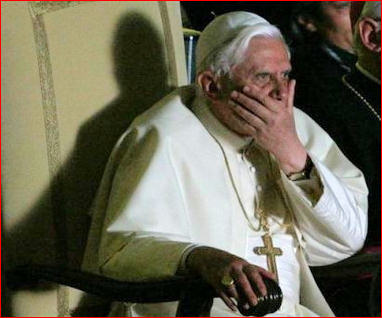

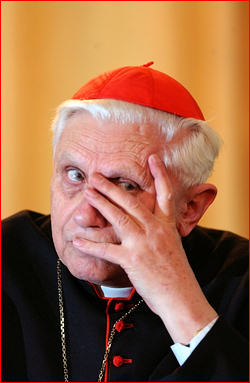 Notice carefully, then, what Fournier is saying: He claims he wants unity without "superficial irenicism," and yet he objects when anyone contends for sound doctrine or (worse still) labels Roman Catholic doctrine "error." It seems the "unity" Fournier envisions is merely the same kind of unity the Roman Catholic Church has sought for hundreds of years: a unity where all who profess to be Christians yield implicit obedience to Papal authority, and where even individual conscience is ultimately subject to the Roman Catholic Church.
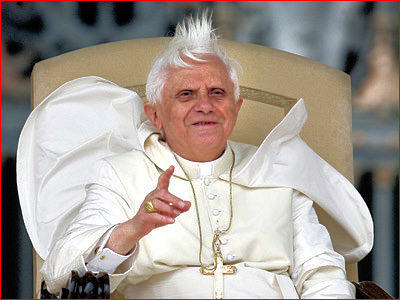
 ere is an item or two for your amusement:
 That's not all. Translate the phrase "Jedi council" into Chinese and back again, and apparently it comes out "Presbyterian Church."
 I wouldn't mention Sith in










 ertain critics have a faith which is very good for discerning, but never for enjoying. They have a fine nose for heresy; the moment it comes anywhere near them they discover it; and if there be half a word in a sermon they do not like how sure they will be to take it home.
 One bad fish in our basket, and it will be cried all round the town before tomorrow; but let us offer never so much that is good we can scarce win a notice.


 afresh as well Psalms 7:6 and 35:23 (Yahweh seems asleep?), 44:24; and even the prayers of the saints in glory, in Revelation 6:10, for starters. I concluded long ago that there is simply no point being disingenuous with God.