 till summing up his own ministry philosophy, expanding what he means in verse 2 ("preach the word . . . in season and out"), and now writing his final words of advice to Timothy, Paul ends with four imperatives in quick succession. Let's look at each one.
"As for you, [in contrast to every popular trend] always be sober-minded" (v. 5). The Greek word Paul uses has all the same connotations as the English word sobriety. Its primary meaning has to do with abstinence from wine.
In this context, however, the admonition is not exclusively—and probably not even primarily—about the consumption of wine. Like our word sober, the Greek term here also speaks of alertness, serious thoughtfulness, dignity. The King James Version translates it as a reference to watchfulness: "But watch thou in all things." And that's certainly an important aspect of the idea.
 Remember, all these imperatives expand and elaborate on the central idea, which is at the head of the list: "Preach the word." Paul is saying, handle it soberly. Treat it with the gravity and sobriety and circumspection your calling warrants. Don't be a clown or a trifler in the pulpit. Especially when people are demanding to have their ears tickled, you need to impress on them the full weight of the profound importance of God's unadulterated Word.
Then: "endure suffering." This is an inevitable and inescapable aspect of every minister's duty. Chapter 3, verse 12: "Indeed, all who desire to live a godly life in Christ Jesus will be persecuted."
Paul's own sufferings bleed into the text of both his epistles to Timothy. Paul keeps telling Timothy he needs to be bold, to embrace suffering, to stand up against opposition and take the blows he would inevitably be dealt—to die for the truth if necessary. Timothy obviously had a much more timid constitution than the apostle Paul. That seems to have been his besetting sin, so Paul tells him repeatedly that he needs to "Share in suffering as a good soldier of Christ Jesus" (2:3). If you aren't willing to do that, you need to get out of ministry.
 I once heard a young seminary student insist that if we're kind enough, and positive enough in what we preach about, and as tender-hearted and compassionate and winsome as we can be—then it ought to be possible to pastor a church in America without causing anyone offense and without being persecuted for our faith. I pointed out 2 Timothy 3:12, and his response was that that verse applied to first-century Roman culture; in a culture like ours where the gospel has fairly well penetrated, we ought to be able to live and minister faithfully without conflict of any kind.
I urged him to do something besides ministry.
It's unusual to hear anyone as candid as that student was, but I know from experience that the typical evangelical today thinks just like that: if people get mad at the preacher, then the preacher needs to tone it down. That isn't what Paul said to Timothy. In fact, it's the polar opposite of what Paul said to Timothy. "Endure suffering"—and keep preaching the Word in season and out of season.
Next: "Do the work of an evangelist." It's easy in this context to know exactly what Paul was saying. It translates to this: preach the gospel. See, all of this is about preaching. "Preach the Word." Preach the whole counsel of God. And keep the gospel at the center of the message, which is to say keep Christ at the center of the message; and in other words, keep the story of redemption at the center of the message—because that is after all the only true and sound way to interpret Scripture. "Do the work of an evangelist." Proclaim the gospel, and never lose sight of it.
The final imperative wraps it all together: "Fulfill your ministry." How do you fulfill your ministry? By preaching the Word in the way described by all those imperatives combined. Paul has come full circle.
Conspicuously absent are all of the fad-words that fill the vocabularies of church planters and missional strategists today. Nothing about innovation; nothing about "cultural engagement"—except for engagement in warfare against the fads and innovations of a generation whose main features are itching ears and a lust for novelty. That is the chief kind of cultural engagement we're called to: to engage our culture in the sense David engaged Goliath.
And you know what? That is the proper medicine for itching ears.
Whenever you proclaim God's Word boldly into a society where people are demanding ear-tickling messages instead, the power of God's Word is unleashed. You see it in the wake of Paul's ministry. Despite all the opposition he faced, he won a remarkable number of people to Christ and planted churches from one end of the Roman empire to the other.
We see it every week at Grace Community Church, as people in this entertainment-saturated, porn-infested, secular southern-California culture respond to God's Word faithfully proclaimed.
The remedy for itching ears is not ear-tickling and story-telling. The true remedy is the faithful and forceful preaching of God's Word, which is "Living and active, sharper than any two-edged sword, piercing to the division of soul and of spirit, of joints and of marrow, and discerning the thoughts and intentions of the heart."
Paul wasn't commanding Timothy to do anything unique or extraordinary. Paul himself had done all those things, faithfully and consistently for years, despite every conceivable type of trial and opposition. The apostle gives testimony to that fact in verses 6-7: "For I am already being poured out as a drink offering, and the time of my departure has come. I have fought the good fight, I have finished the race, I have kept the faith."
I fear the church today is dangerously low on men who will honestly be able to say that when the time comes.




 ere Paul paints a vivid picture of what he merely alluded to in verse 2: an era when biblical preaching would be "out of season." This is what it looks like: "People will not endure sound teaching, but having itching ears they will accumulate for themselves teachers to suit their own passions, and will turn away from listening to the truth and wander off into myths."

 ow let's face it: the church in our generation has been cultivated in a hothouse of evangelical apostasy where unapologetic truth-speaking—especially if it includes rebuke for wrongdoing or the refutation of falsehood—is simply not tolerated. And yet the denizens of this refined society fancy themselves more tolerant than our benighted spiritual ancestors who held strong convictions about moral, ethical, and spiritual matters.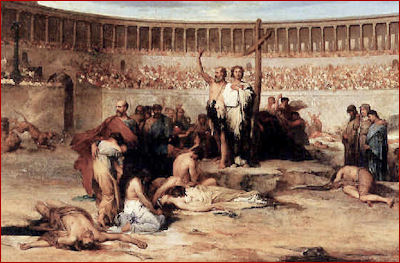
 aul's instructions to Timothy (in 2 Timothy 4) include these imperatives: "reprove, rebuke . . . exhort" (2 Timothy 4:2). That's three successive words in the Greek text, each with a slightly different nuance.

 n all of Paul's instructions to Timothy and Titus, there is not an ounce of encouragement for the person who thinks innovation is the key to an effective ministry philosophy.
 Paul's focus is extremely narrow—stiflingly narrow for the typical young-and-restless church planter for whom "style" is everything; and whose style (let's be honest) is conspicuously dictated by secular fashion rather than by the worldview Paul was exhorting Timothy to embrace.
 Paul is urging Timothy to be absolutely, unswervingly devoted to the truth of the Word and to the task of proclaiming it. "Stand firm, and stand ready. Keep at the task, no matter what." That's the idea. And the proof is in the rest of the phrase: "Be ready in season and out of season"—literally, "when it's timely and when it's untimely": when it's popular and when it's not.
 Or to contextualize the phrase for the current crop of evangelical fashionistas: Preach the Word even when preaching the Word seems hopelessly uncool and unstylish.
 In a follow-up post or two we'll look at the whole series of imperatives, and I think you'll see in a graphic way that Paul's ideas about ministry philosophy church growth run fairly contrary to the received wisdom of most who claim expertise in these matters today.
 econd Timothy 3 begins with a stern, prophetic warning: "But understand this, that in the last days there will come times of difficulty." And then Paul gives a dead-on job description for the typical 21st-century celebrity: "People will be lovers of self, lovers of money, proud, arrogant, abusive, disobedient to their parents, ungrateful, unholy, heartless, unappeasable, slanderous, without self-control, brutal, not loving good, treacherous, reckless, swollen with conceit, lovers of pleasure rather than lovers of God."
 Paul then reminds Timothy of his singular duty to be both a student and a herald of the Word of God: "As for you, continue in what you have learned and have firmly believed . . . . All Scripture is breathed out by God and profitable for teaching, for reproof, for correction, and for training in righteousness, that the man of God may be competent, equipped for every good work" (vv. 14-17).
 What's ironic about that is that even the great apostle Paul would not have measured up to their notion of "fruitfulness" and prosperity. Both of his epistles to Timothy end by noting how many unfaithful former companions forsook him when the cost of standing firm became too high. He was neither popular nor "fruitful" by the Elephant-Room standard of fruitfulness.
 onsider the undue stress today's leading church-growth gurus invariably put on innovation. We are relentlessly told that pastors and church leaders must be novel, "contemporary," cutting-edge—architects of change within the church.
 But, as it turns out, "innovation" in evangelical contexts almost never has anything to do with real originality. The best-known fruits of recent "innovative" thinking in the evangelical realm have been Emergent religion and hipster Christianity. But both Emergents and hipsters slavishly ape worldly fads and conform to postmodern and politically-correct values. "Innovation" has conditioned evangelical churches to follow every new wind of faddishness. "Innovation" itself turns out to be
  Here's a gentle word of admonition for those who have made an idol out of "innovation": There is hardly any more wrong-headed approach for anyone who aspires to be a true spiritual and biblical leader in the church. It's an emphasis that is entirely missing from Paul's instructions to Timothy. Actually, the truth is even more alarming than that: The church's current infatuation with novelty and contemporary fashion is antithetical to Paul's message to Timothy. It is irreconcilable with a Pauline approach to ministry. It represents precisely the path Paul warned Timothy not to follow: