Showing posts with label Zeitgeist. Show all posts

30 May 2018

Regarding "Sexual Orientation," Evil Desire, and the Question of Moral Neutrality


by Phil Johnson

Full disclosure: Here is the development that finally provoked my sense of consecrated indignation enough to motivate me to start blogging again:



It's the latest "evangelical" superconference. As you see, their own ad copy tells us they are devoted to "supporting, encouraging, and empowering gay, lesbian, same-sex-attracted, and other LGBT Christians so they can experience the life-giving character of the historic Christian tradition." The conference is being organized and supported by a large cast of evangelical thought-leaders—including some people generally assumed to be sound and reliable spiritual guides.

Fred Butler blogged about it yesterday, and it'll save me some work if you read his assessment of the actual conference itself. (You may need a translator for the cornpone-and-pot-likker dialect he slips into occasionally, but the cardinal points he makes are unassailable.)

Anyway, I want to comment on the conference's underlying theory, because it strikes me as a Really Bad Idea (and a patently unbiblical opinion). Nevertheless, it seems to be gaining traction rapidly—even among many influential and hitherto trustworthy evangelical leaders. It's the notion that homosexual orientation is morally neutral. The claim being made is that gay desires are not really sinful unless they are acted upon. So a person can fully self-identify as lesbian, bi-sexual, gay, transsexual, gender-fluid, or otherwise "queer" and be a church member in good standing—as long as he, she, xe, (or whatever) remains celibate.

I first began to realize how widespread that idea has become in the evangelical community two years ago, when the following Tweet was posted from the official Twitter account of The Gospel Coalition (TGC):

"It's more masculine to be attracted to men yet obedient to God than attracted to women and disobedient to God."

I referred to TGC's Tweet as a "hazy, misleading sophism" and added, "Lusting for something sinful is not 'obedien[ce] to God.'" A long argument ensued, with several friends on my FaceBook page and lots of my Twitter followers expressing shock and surprise that I would hold an opinion so egregiously out of step with postmodern political correctness. The "proper" postmodern opinion was succinctly stated by an exasperated commenter on my FaceBook page: "Desires are neutral until they are used sinfully," he wrote.
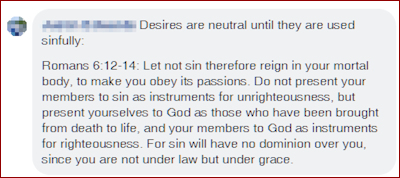


I fear that idea is finding currency among leading evangelicals. But it is dead wrong and subversive to genuine holiness. Scripture is chock full of statements emphatically condemning evil desires—from the Tenth Commandment (Exodus 20:17) to Jesus' words about mental and visual lust in the Sermon on the Mount (Matthew 5:27-29). What, after all, is lust but raw, sinful desire?

Those who argue that LGBT "orientation" is morally neutral often point out that an unmarried heterosexual man's attraction to women isn't necessarily deemed sinful, assuming he remains celibate. Why, then, should we consider a celibate gay man's attraction wrong, as long as he doesn't act on it?

I'd like to suggest two replies to that. First, a celibate heterosexual's attraction to women might indeed be sinful, if, say, he is attracted only to married women or underage girls. It would likewise be sinful if he allowed his interest in a particular young woman to become a fixation that distorts his perception of reality. A perfectly innocent attraction can even become a sinful passion for the person who indulges in immoral fantasies. No sane and reasonable person would try to argue that heterosexual desires are always wholesome. Second (and this is pretty straightforward:) Scripture says inordinate affections are sinful and commands us to mortify them (Colossians 3:5). I didn't make that up.

But my Bible uses the expression "evil desire" in Colossians 3:5. How do I know if a desire is "evil"?

In short, Scripture teaches plainly that any desire is sinful if it entails a wish for what we cannot righteously have.

Far from "supporting, encouraging, and empowering" people beset with perverse sexual desires, Scripture repeatedly urges us to repent of all sinful desires—especially those wicked sexual passions that so easily entrap young minds (2 Timothy 2:22; 1 Peter 2:11). All of us—not just LBGTQ folk—are commanded to renounce and mortify every desire for anything God has forbidden. Those who think people with impure or sinful desires can wear their peculiar lusts as badges of group identity merely demonstrate that they haven't a clue what repentance means. Furthermore, to omit or purposely obscure the Bible's clear call to repentance is to show contempt to one's unbelieving neighbors.

Let me be clear: I, too, have friends and close neighbors who identify as LGBT, and I abominate the way some Christians seem to think it's OK to heap unbridled scorn, mockery, or insults on them. All our neighbors should be shown Christlike, loving compassion with the dignified respect that befits anyone who bears God's image.

But to encourage them in their sin or offer them the false comfort of approval for their sinful desires is a serious breach of the Second Great Commandment.

Let's not try to make any sin seem less wicked than it is.

I would not necessarily single out homosexuality as the chief example of abominable sin if our culture didn't constantly insist on treating homosexual desire as a privileged category. Sodomy is only one of several notoriously odious abominations, and Jesus expressly said the hard-hearted unbelief of those who have actually seen and know the truth is a worse sin than all the evils of Sodom (Matthew 11:24).

Furthermore, I'm happy to assert, emphatically, that any evil attraction is appallingly sinful, including that heterosexual tendency to want to click on clickbait when the link features a picture of some scantily-clad tart.

But this one class of sins (LGBT etc.) is the only one that demands special status and unconditional affirmation.

So perhaps the main point I want to make will perhaps be clearer if we consider one of the sexual perversions that hasn't yet successfully lobbied for social acceptance and special rights.

Here's a real-life example:

During my first year at Grace to You (1983), a man wrote our ministry looking for affirmation and encouragement. He wanted us to agree with his belief that mere attraction to a forbidden object is not inherently sinful. He gave a convincing testimony about his conversion from a life of sin and rebellion. He said he was now serving as an AWANA leader in his church. Then he got specific about what he was asking us to sanction.

He said he felt sexually drawn to "large farm animals." (Those were his exact words.)

I wrote back, citing Matthew 5:28, and told him it is our position that the desires he was describing are not morally neutral at all but a sinful perversion that he needed to repent of and vanquish through the means of grace. I'd give him the same answer today, even after reading reams of sophisticated evangelical reasoning trying to argue that "attraction" and "lust" are categorically different.

One other point needs to be made before I wrap this up.

People sometimes suggest that all sin is equally vile. That's simply not true. It's true that all sin is damnably wicked, but Jesus Himself made clear that some sins are worse than others (John 19:11; Luke 10:12-14). And Scripture clearly portrays certain sexual perversions (lesbianism and bestiality among them) as unusually and unnaturally perverse. (See, for example, Romans 1:26-28.)

All of this raises an important question: How far do the culturally-engaged evangelical trend-setters want to take the notion that mere attraction is morally neutral? I hope we'd be concerned about the sanctification of someone who insisted on self-identifying as a pederast living a celibate life. Or my cowboy correspondent who harbored a secret desire for a closer relationship with his livestock. Or people drawn to any number of kinky fetishes too perverse to even talk about (Ephesians 5:12).

Yes, all of us struggle with evil desires. That's part of our fallenness. Even Paul struggled with covetousness—evil desire (Romans 7:7-25). But Paul's whole point was that those desires (even if never acted on) are sins to be mortified, not prize ribbons to be worn as badges of one's identity.

Phil's signature

02 September 2014

Truth worth dying for? Anyone? Bueller? Today, anyway?

by Dan Phillips

Privately and publicly, Phil Johnson and I have marveled at the spirit of some moderns regarding God's truth. We've wondered how Christianity could have survived, had it been animated by this spirit at its inception. We've wondered what the early martyrs would think of today's sofa-sitting latte-sippers.

One breed that apparently considers itself exempt from All That has long been the Academy, on which subject we've offered some thoughts previously. These are scholars; they're a breed apart from, well, from the folks who pay their salaries. That's because they've had the benefit of special training and special discipline, and thus are privy to special knowledge. They're specialists. They know facts and truths that mere garden-working pastors and ditch-digging churchgoers just can't understand.

It is important (to these folks) that we respect these folks, that we not malign or criticize them or make them feel or look bad. No matter what they say or write, we mustn't challenge their convictions or character. If they tell us that they fit in with a school's doctrinal position or confession, we must take their word for it. If they tell us that their books or lectures or articles are sound and orthodox, well then, they wouldn't lie or dissemble, would they? They're academics.

Their defenders and enablers surely communicate to all that not much is at stake, that it isn't anything to "get het up" about. They'll spill equal amounts of ink lauding the Christian characters of those who depart from anything the great unwashed would recognize as a commitment to inerrancy, and casting aspersions on less sanguine critics or opponents. Because it isn't as if we should expect someone to commit himself to a position as being binding on his conscience, as being something... oh, I don't know... worth dying for, or anything so drastic.

For instance, we recently read this:
Belief in the truthfulness of the Bible, then, like belief in the truthfulness of Christianity or materialism or anything else [!], is provisional—scholars hold to it (or not) on the basis of the evidence they've seen. Affirming the Bible is true, just like affirming the Christian creeds, is a statement of current conviction: “Based on what I know now, I believe that the Nicene Creed/the New Testament is correct, when properly understood.” It doesn't prevent individuals from researching carefully, nor from abandoning or adjusting their commitment if the evidence takes them that way; the changes of conviction, affiliation, and worship practices of many of the “aha” scholars, as well as those who have moved the other way, should be evidence enough. In some cases, no doubt, belief in inerrancy is associated with fearmongering, closed-mindedness, misrepresentation, and rudeness. But the same is true of evangelicalism, and Protestantism, and Christianity as a whole, let alone atheism, Islam, feminism, materialism, and virtually all beliefs held by human beings. I’ve seen a fair bit of it on Pete Enns’s own blog, and I imagine he’d say the same of mine.
Where did I see that? Patheos? BioLogos? Huffington Post? No; in the rarified air of TGC — which, I remind you, ostensibly stands not for The Great Clubhouse, but The Gospel Coalition; and which, I am sure, is funded and read and has its conferences swell with people who certainly are fiercely committed to the Gospel and the truths that underlie it.

This was a post at that site. And since one of the commenters dubbed this article "incredibly thoughtful and nuanced," well then, from one perspective, it must be considered a rousing success, a paradigm of carefulness and all that.

I made a comment in the meta; Phil shared this in Twitter:
Which provoked this wounded-sounding, bemused response from the author:
Now, ponder that, for a moment. Here's a scholar, who knows more than we all know. He professes Christian faith, at least "provisionally," according to what he knows right now. (Well, it's what he knew when he wrote the article; I suppose that may have changed since then.) Yet, speaking of his own fellow-believers ("Christians") in the third person, he professes bewilderment at Phil's eleven-word comment.

Remarkably enough, though, while unable to make sense of Phil's eleven words out there in print, he can read Phil's mood from the unknowable privacy of Phil's heart— and it's angry. Perhaps Phil is one of those scholarship-despising, progress-slowing fearmongerers lamented in the article? Phil certainly isn't being treated to the paeans of praise that the author heaped on those "thoughtful, insightful Christian brothers and sisters" and "good guys" in the Academy who find fault with the Bible.

So: It's all well and good to tell the unwashed that the fear of Yahweh is the beginning of knowledge and wisdom (Prov. 1:7; 9:10). For them, maybe it is. For academics, however, it is at best a provisional conclusion tentatively reached, perhaps, at the end of investigation. It is held as today's conviction, which may be overridden tomorrow, depending on what our real starting-point dictates tomorrow.

Seriously: where would we be, had Doctor Martin Luther said "Here I stand —provisionally. At the moment. I think. Today. But tomorrow... who knows?"

Regardless, I wasn't going to say anything further about it — knowing the waves of anger and offense and indignation that it will provoke from folks who already haven't much use for me, if the usual "ignore it and it will go away" method employed for our posts doesn't serve as well as it usually does for them.

But then I came on this from Spurgeon. As so often, once Spurgeon says a thing, it can't be much improved on. So I'll give him the closing word, and he speaks for me:
I have often wondered whether, according to the notions of some people, there is any truth for which it would be worth while for a man to go to the stake. I should say not; for we are not sure of anything, according to the modern notion. Would it be worth while dying for a doctrine which may not be true next week? Fresh discoveries may show that we have been the victims of an antiquated opinion: had we not better wait and see what will turn up? It will be a pity to be burned too soon, or to lie in prison for a dogma which will, in a few years, be superseded. Brethren, we cannot endure this shifty theology. May God send us a race of men who have backbones! Men who believe something, and would die for what they believe. This Book deserves the sacrifice of our all for the maintenance of every line of it.
[C. H. Spurgeon, The Metropolitan Tabernacle Pulpit Sermons, vol. 35 (London: Passmore & Alabaster, 1889), 264.]
Aha, indeed.

And amen.

Dan Phillips's signature


13 February 2012

The Antidote to Contemporary Evangelicalism's Addiction to Novelty

by Phil Johnson

"I charge you in the presence of God and of Christ Jesus, who is to judge the living and the dead, and by his appearing and his kingdom: preach the word; be ready in season and out of season; reprove, rebuke, and exhort, with complete patience and teaching. For the time is coming when people will not endure sound teaching, but having itching ears they will accumulate for themselves teachers to suit their own passions, and will turn away from listening to the truth and wander off into myths. As for you, always be sober-minded, endure suffering, do the work of an evangelist, fulfill your ministry" (2 Timothy 4:1-5)


n all of Paul's instructions to Timothy and Titus, there is not an ounce of encouragement for the person who thinks innovation is the key to an effective ministry philosophy.
Much less is there any room for the pulpiteers of today who like to exegete the latest movies, or preach on moral lessons drawn from television sitcoms, or build their sermons on themes borrowed from popular culture. You know what I mean: the kind of preachers who insist they are being "missional" when they are merely being worldly.

Still less is there any warrant for the celebrity rock-star pastor who continually makes himself the focus of his preaching. "For what we proclaim is not ourselves, but Jesus Christ as Lord, with ourselves as your servants for Jesus' sake" (2 Corinthians 4:5). "Necessity is laid upon me. Woe to me if I do not preach the gospel!" (1 Corinthians 9:16).

Paul's focus is extremely narrow—stiflingly narrow for the typical young-and-restless church planter for whom "style" is everything; and whose style (let's be honest) is conspicuously dictated by secular fashion rather than by the worldview Paul was exhorting Timothy to embrace.
"Preach the word." That's the centerpiece and the key to everything Paul tells Timothy about how to shepherd God's flock. That command is followed immediately by a second imperative that simply makes the first one more emphatic: "Be ready in season and out of season." The Greek verb means "stand by," and it does have the sense of readiness. (In fact, in radio, that is exactly what the expression "stand by" means: "Be ready." But the word Paul uses is richer and stronger than that.) It also carries the connotation of expressions like: "take a stand," "stand upon it," "stick to it," "stand up to it," or simply "carry on."

Paul is urging Timothy to be absolutely, unswervingly devoted to the truth of the Word and to the task of proclaiming it. "Stand firm, and stand ready. Keep at the task, no matter what." That's the idea. And the proof is in the rest of the phrase: "Be ready in season and out of season"—literally, "when it's timely and when it's untimely": when it's popular and when it's not.

Or to contextualize the phrase for the current crop of evangelical fashionistas: Preach the Word even when preaching the Word seems hopelessly uncool and unstylish.
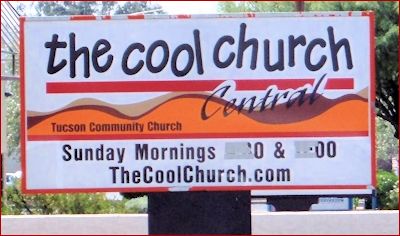

The expression is ambiguous as to whether Timothy or his audience is the barometer declaring what's "in season [or] out of season." It doesn't matter. Regardless of how you or your audience—or anyone else—feels about it, keep preaching the Word.

Preach the word whether the timing seems opportune or awkward. Preach it whether it's convenient or inconvenient. Preach it whether you feel like it or not. Preach it whether the door is open or closed. Preach it no matter how much resistance you encounter. Preach it whether or not people say they want it. Preach it—and make it the heart and soul of your ministry strategy—no matter how many church-growth experts tell you otherwise.

Paul goes on to give several more imperatives, and all of them expand on or modify this initial command: "Preach the Word."


In a follow-up post or two we'll look at the whole series of imperatives, and I think you'll see in a graphic way that Paul's ideas about ministry philosophy church growth run fairly contrary to the received wisdom of most who claim expertise in these matters today.


Phil's signature

10 February 2012

Faithfulness, "Fruitfulness," and the Twisted Notion of Evangelical Celebrity

by Phil Johnson


econd Timothy 3 begins with a stern, prophetic warning: "But understand this, that in the last days there will come times of difficulty." And then Paul gives a dead-on job description for the typical 21st-century celebrity: "People will be lovers of self, lovers of money, proud, arrogant, abusive, disobedient to their parents, ungrateful, unholy, heartless, unappeasable, slanderous, without self-control, brutal, not loving good, treacherous, reckless, swollen with conceit, lovers of pleasure rather than lovers of God."

But get this: When Paul says "People," he is not talking about People magazine or the secular celebrities that grace the cover of that periodical. He is predicting a time when those traits will be characteristic of church leaders. Notice that the people he is describing "hav[e] the appearance of godliness, but [deny] its power" (v. 5).

We are living and ministering in a time such as Paul described. Watch today's rock-star pastors on their YouTube channels and you will see every characteristic Paul listed played out in vivid detail on the church stage.

So what are Paul's instructions to Timothy? Should he mentor these guys, invite them for Elephant-Room-style dialogue, become a headliner in their conferences, or publicly embrace and encourage them in the hope that he can harness their popularity and perhaps influence them for good? Not at all.

With regard to pastors and church leaders who promote and model innovative, worldly, self-loving ministry philosophies, "reckless [church leaders], swollen with conceit, lovers of pleasure"—Paul wants Timothy to be a separatist: "Avoid such people" (v. 5). In fact the Greek term is active, aggressive: "from such turn away."

Paul then reminds Timothy of his singular duty to be both a student and a herald of the Word of God: "As for you, continue in what you have learned and have firmly believed . . . . All Scripture is breathed out by God and profitable for teaching, for reproof, for correction, and for training in righteousness, that the man of God may be competent, equipped for every good work" (vv. 14-17).

This has been a repeated theme in Paul's counsel to Timothy. First Timothy 4:6: "put these things before the brothers." What things? "the words of the faith and of the good doctrine that you have followed." Verse 11: "Command and teach these things." Verse 13: "Devote yourself to the public reading of Scripture, to exhortation, to teaching." Chapter 6, verses 2-4: "Teach and urge these things. If anyone teaches a different doctrine and does not agree with the sound words of our Lord Jesus Christ and the teaching that accords with godliness, he is puffed up with conceit and understands nothing." Second Timothy 1:13: "[Hold fast] the pattern of the sound words that you have heard from me." Chapter 2, verse 15: "Present yourself to God as one approved, a worker who has no need to be ashamed, rightly handling the word of truth."

New Testament pastors are called to be simple and single-minded in the carrying our of a single task. Yet, amazingly, the straightforward clarity of Paul's charge to Timothy seems utterly lost on many 21st-century church leaders. They have been blinded to it by the quest for celebrity and a worldly standard of success.

What's ironic about that is that even the great apostle Paul would not have measured up to their notion of "fruitfulness" and prosperity. Both of his epistles to Timothy end by noting how many unfaithful former companions forsook him when the cost of standing firm became too high. He was neither popular nor "fruitful" by the Elephant-Room standard of fruitfulness.

That ought to make us stop and reassess the direction of the contemporary evangelical movement. I, for one, don't want to go where the movement seems headed.

Phil's signature

06 February 2012

"Innovation" and Irrelevance

by Phil Johnson

After five decades spent obsessing over a warped notion of "relevance," American evangelicalism is overrun with "change agents" who are so steeped in worldly values that they can't distinguish true relevance from mere trendiness. Their philosophies of ministry are complex, wrong-headed, counterproductive, and hostile to the notion that some things—namely God Himself and the truth He has revealed in His Word—are by definition not susceptible to change.
    By contrast, what Paul bequeathed to Timothy in two brief epistles was a remarkably simple, straightforward, but comprehensive ministry philosophy. Not only did Paul not urge Timothy to be innovative; what he
did urge Timothy to do flatly contradicts practically every ministry philosophy currently in vogue.
    This is part 1 in a series of posts I intend to write in the days to come.


onsider the undue stress today's leading church-growth gurus invariably put on innovation. We are relentlessly told that pastors and church leaders must be novel, "contemporary," cutting-edge—architects of change within the church.

Evangelicals have been obsessing for at least four decades about "relevance." But that word as used in evangelical circles has become practically synonymous with novelty and fashionableness. It has little to do with actual relevance.

Of course, the church's only true relevance lies in her role as a community where God's Word is proclaimed, where the whole counsel of God is taught, and from which the gospel is taken into the world. But when a church nowadays advertises itself as "relevant," we know exactly what is meant—and let's be honest: it isn't about anything Paul told Timothy to do; it's about being "innovative."

Consider how an organization like Leadership Network sells itself: "Leadership Network seeks to help leaders navigate the future by exploring new ideas and finding application for each unique context." "Our free indispensable twice-monthly email newsletter featur[es] the best in innovative church strategies." Podcasts feature "numerous conversations about various topics of church innovation." The organization sponsors three series of books:
  • Leadership Network Publications (Jossey-Bass) present thoroughly researched and innovative concepts from leading thinkers, practitioners and pioneering churches.
  • The Leadership Network Innovation Series (Zondervan) presents case studies and insights from leading practitioners and pioneering churches that are successfully navigating the ever-changing cultural landscape.
  • The Exponential Series (Zondervan) highlights the innovative practices of healthy, reproducing churches.
And don't forget "Engaging and inspirational videos from a number of today's innovative church leaders." Then there's "Connections,"—"Inspiring stories that show how Leadership Network is helping innovative churches and church leaders better realize their vision and maximize their impact." Something about "innovation" appears on virtually every line of that web page. The Catalyst Conference has a similar theme. The main qualification for being a speaker at any of the Catalyst events is that you must be perceived as an innovator—a "change maker." But, as it turns out, "innovation" in evangelical contexts almost never has anything to do with real originality. The best-known fruits of recent "innovative" thinking in the evangelical realm have been Emergent religion and hipster Christianity. But both Emergents and hipsters slavishly ape worldly fads and conform to postmodern and politically-correct values. "Innovation" has conditioned evangelical churches to follow every new wind of faddishness. "Innovation" itself turns out to be a worn-out cliche. There's nothing truly fresh or original about it. How it coninues to get so much publicity is a mystery to me. The more evangelicals imitate worldly fads and values, the more irrelevant they become. Here's a gentle word of admonition for those who have made an idol out of "innovation": There is hardly any more wrong-headed approach for anyone who aspires to be a true spiritual and biblical leader in the church. It's an emphasis that is entirely missing from Paul's instructions to Timothy. Actually, the truth is even more alarming than that: The church's current infatuation with novelty and contemporary fashion is antithetical to Paul's message to Timothy. It is irreconcilable with a Pauline approach to ministry. It represents precisely the path Paul warned Timothy not to follow:


"I charge you in the presence of God and of Christ Jesus, who is to judge the living and the dead, and by his appearing and his kingdom: preach the word; be ready in season and out of season; reprove, rebuke, and exhort, with complete patience and teaching. For the time is coming when people will not endure sound teaching, but having itching ears they will accumulate for themselves teachers to suit their own passions, and will turn away from listening to the truth and wander off into myths. As for you, always be sober-minded, endure suffering, do the work of an evangelist, fulfill your ministry" (2 Timothy 4:1-5).
Phil's signature

05 February 2012

If You Marry the Spirit of the Age You'll Soon Be a Widower

Your weekly dose of Spurgeon
posted by Phil Johnson

The PyroManiacs devote some space each weekend to highlights from The Spurgeon Archive. The following excerpt is from "His Own Funeral Sermon." That's a sermon Spurgeon preached on Sunday evening, 19 October 1890, the weekend after the death of William Olney, longtime deacon at the Metropolitan Tabernacle. Mrs. Spurgeon said the message would have been a suitable eulogy for Spurgeon himself. So when he died less than two years later, the sermon was published within a few days of Spurgeon's funeral.


eople talk nowadays about Zeitgeist, a German expression which need frighten nobody; and one of the papers says, "Spurgeon does not know whether there is such a thing."


Well, whether he knows anything about Zeitgeist or not, he is not to serve this generation by yielding to any of its notions or ideas which are contrary to the Word of the Lord.

The gospel of Jesus Christ is not only for one generation, it is for all generations. It is the faith which needed to be only "once for all delivered to the saints"; it was given stereotyped as it always is to be. It cannot change because it has been given of God, and is therefore perfect; to change it would be to make it imperfect. It cannot change because it has been given to answer for ever the same purpose, namely, to save sinners from going down to the pit, and to fit them for going to heaven.

That man serves his generation best who is not caught by every new current of opinion, but stands firmly by the truth of God, which is a solid, immovable rock.

But to serve our own generation in the sense of being a slave to it, its vassal, and its valet—let those who care to do so go into such bondage and slavery if they will.

Do you know what such a course involves? If any young man here shall begin to preach the doctrine and the thought of the age, within the next ten years, perhaps within the next ten months, he will have to eat his own words, and begin his work all over again. When he has got into the new style, and is beginning to serve the present world, he will within a short time have to contradict himself again, for this age, like every other, is "ever learning, and never able to come to the knowledge of the truth."

But if you begin with God’s Word, and pray God the Holy Ghost to reveal it to you till you really know it, then, if you are spared to teach for the next fifty years, your testimony at the close will not contradict your testimony at the beginning. You will ripen in experience; you will expand in your apprehension of the truth; you will become more clear in your utterance; but it will be the same truth all along.

Is it not a grand thing to build up, from the beginning of life to the end of it, the same gospel? But to set up opinions to knock them down again, as though they were ninepins, is a poor business for any servant of Christ.

David did not, in that way serve his own generation; he was the master of his age, and not its slave. I would urge every Christian man to rise to his true dignity, and be a blessing to those amongst whom he lives, as David was. Christ "hath made us kings and priests unto God his Father"; it is not meet that we should cringe before the spirit of the age, or lick the dust whereon "advanced thinkers" have chosen to tread.

Beloved, see to this; and learn the distinction between serving your own generation and being a slave to it.

C. H. Spurgeon