Showing posts with label James MacDonald. Show all posts

30 August 2012

How can Christians hear a word from God? I mean, really?

by Dan Phillips

Some guy named "Phillip R. Johnson" (whatever; I think he writes about creation, or something) posted this video from James MacDonald, in which MacDonald explains ways to receive a word from God. Turns out there are five. To wit:


Wellnow, let's us chat about this.

First, to do that thing that drives drivebys crazy, let's anticipate the first response defenders will have: this is a very small excerpt from must have been a much longer talk, and it is out of context.

Fair enough. Absolutely true. It is possible that, just before this video, MacDonald said,
"For the next two minutes and fifty-six seconds, I am going to present some traditionalistic notions that are very popular among many Christians. I'm going to do it with warmth and enthusiasm, and even add a personal anecdote, just to be sure I'm doing a fair job of representing their position. Then, starting with the fifty-seventh second of the third minute, I'll show you why this is such dangerous nonsense."
If so, that would absolutely change everything, and taking this video as representing MacDonald's thoughts would be very unfair.

So let's just focus on what is actually in the clip, rather than on MacDonald himself.

This is a test. Let's see what you've learned from our dozens of posts on this general area. How would you respond to what he said?

But even beyond that, let me broach something I'm not sure I've said before in this way.

Before giving it, I note that the vid above proceeds on the premise that of course we should accept all five ways as ways "God speaks," as ways to "hear from God," to have "the Holy Spirit speak a word," or to get, as he says explicitly and more than once, "a word from God." It's the results that we are to test by Scripture — not the ways themselves.

Note too that we need these ways, according to MacDonald. We need them. We, Christians, all Christians. He makes that very clear.

But what if we asked a more fundamental question? What if we tested the ways, and not just their results?

Suppose, in response, we just asked this multifaceted question?
What would be the premise for, and ramifications of, promoting only the way(s) in which Scripture directly and in so many words urges and directs all Christians without exception to seek and find what it itself directly calls, in so many words, a "word from God"?


Bam.

Should be both fun and profitable.

POSTSCRIPT: I untangle and answer that question HERE.

Dan Phillips's signature


01 February 2012

Elephantiasis

James MacDonald Plays the Race Card
by Phil Johnson


I know it's not my day to post, but this:


is probably the most blatantly racist presentation I have ever witnessed from an ostensibly "mainstream" evangelical source.

The take-away message is this: If you're an old white guy with any hint of Reformed theology in your confessional statement and you don't think T. D. Jakes's equivocations at Elephant Room 2 were sufficient to erase decades of concern about his Oneness leanings and his relentless proclamation of a false Prosperity Gospel—then you must be a racist. And even if you don't think you're a racist, you should shut up anyway. Because in the black community relationships are more important than any doctrine, including the gospel and the Trinity. We all should strive to subjugate doctrine to relationships anyway.

If on the other hand you are a young black man with Reformed convictions—or any black person who just has a keen interest in doctrinal and biblical accuracy—you are a sellout and a reproach to your own community. The only possible explanation is that you are guilty of "White Idolatry." You secretly wish to earn favor with Whitey. You should not only shut up, you should be ashamed. As far as the importance of relationships is concerned, we don't really care to have one with you.

End of discussion.

So much for open dialogue and not hiding behind walls of disagreement. The Elephant Room experiment clearly wasn't really about that in the first place. It wasn't about real unity or truth, either.

How does 2000 years of Christian consensus on the doctrine of the Godhead get sent to the back of the bus so blithely in the name of unity and racial reconciliation?

And why the deafening silence from so many men and ministries who supposedly are committed to standing for the defense and proclamation of core gospel truths? If you can be intimidated into silence by the race card when a greed-mongering prosperity-gospel Sabellian-sympathizer is being hailed by once-sound evangelicals as someone to be emulated, what doctrine will you defend openly and publicly?

Phil's signature

Addendum 1[Added by Frank]: Chantry dropped a link to an article by Thabiti Anyabwile over at the TGC web site about this sort of thing, published the day before the Elephant Room.  There are probably a dozen money quotes in that essay, but here's the one that stands out like a watchman on the wall:
I also want my non-African-American brothers to realize the harmful dynamic of pitting one African American against another.


When two white brothers disagree publicly over a theological issue, there’s likely not a community “back home” trying to decide which brother is “black” and therefore which brother to follow.


Historically, some white leaders have intentionally played one African American leader against another with the aim of dividing and weakening the community.


That’s a history well-known and a strategy much hated in African-American communities.


So, when a conflict between two African American religious leaders takes place publicly, care must be taken not to walk into this troubled narrative and trap.


Inevitably, pitting two African-American leaders against one another is going to result in (1) one of those leaders losing “black” authenticity in their community, (2) one or both of those leaders being marginalized for their cooperation with “outsiders” to the community, and (3) the White brothers who do the pitting being seen as unconcerned about the Black community and unrighteously attempting to anoint the next Black leader.


No one wins.


If you’re from outside the African-American community, think very long, hard, and carefully about ever calling some African Americans to take your position in defense against other African Americans.


It’s disastrous for everyone, and, frankly, you won’t begin to pay the deeper costs over the longer period that your African American friend will.

Read the Whole Thing.  For the record: I mean you, A29 pastors & leaders (specifically people who were heckling Chad Vegas' blog post on quitting A29 over this event), HBC pastors, and specifically the staff of the mothership at HBC on James MacDonald's staff.


26 January 2012

After the Circus Parade

by Frank Turk

Yes, part 3 of my conference notes are already posted, so you can see them below.  However, yesterday T.D. Jakes (apparently) came clean as a fully-throated Trinitarian, and suffered a round of brotherly acceptance from James MacDonald and Mark Driscoll, so the whole matter is settled and now you people seem to owe everybody an apology for your godless, cessationist carping about orthodoxy and such things.

Right?

Oh wait: James MacDonald resigned from the leadership of The Gospel Coalition just days before Bishop Jakes' revelation that "manifestations" and "persons" are, pretty much, the same thing as long as you make sure your footnotes are properly added (you know: there are things the Father does which the Son did not do, and so on).  And the question of whether or not the Prosperity Gospel is in any way problematic with regards to the preaching of Christ, and Him crucified, (especially when it comes to the consequences of giving and, in the actions of a pastor, taking) just didn't come up.

So here's the deal: Phil is in deepest, darkest Eastern Europe this week, and I gave Dan the week off so I could post my conference notes here and link to the audio.  That means I get to post the first response to the Elephant Room 2 content.

Ready?

Ahem.


1. Someone needs to check the date for Mark Driscoll's shelf life as a reliable person.  In the past month, he utterly disgraced himself on the "Unbelievable" podcast by interrogating this host, Justin Brierly, and accusing him and the whole British Christian church of being a flop because they also don't have a Mark Driscoll, and they have a few women pastors.  But, when the other shoe drops and he has Bishop Jakes sitting before him in a place where there are supposed to be hard conversations, Bishop Jakes gets the velvet gloves -- including a complete whiff at the issue of egalitarianism in Jakes' own theology and church.  Of course, Jakes was not criticizing Driscoll's book, so the question of whether he's a good egalitarian or a bad one seems to fade in the distance.

2. The Gospel Coalition's response to MacDonald's resignation is par for the course for an organization that, frankly, values unity above the means to achieve unity (which is: sharpening each other with the truth).  The dodge that they are a "center-bounded" organization also needs to be checked for its shelf-life date as this kerfuffle demonstrates exactly what it means to be "center-bounded" -- you can hang out with us as long as you don't embarrass us, and when you do embarrass us, you just have to excuse yourself and we'll smile and wave.  If what happened yesterday was that Bishop Jakes exonerated himself from the charges of, as they say, bloggers, then credible people should embrace his clarifications (they certainly weren't any kind of recanting), and we happen to know of a group who are qualified to do just that.  If Jakes' chat with Mark Driscoll does not finally clear things up, then what's the best way for the council of TGC to handle Mark Driscoll's (non-resigned council member) endorsement of Jakes' orthodoxy?  I don't have any suggestions, but I think ignoring it is the way old-school Fundamentalists acted when their leaders did stupid things, and we know that TGC is not a group of Fundies, right?

3. TGC is not the only organization that has bacon in the fire after yesterday.  Acts29 is full of men who, if you ask me, are serious and sober guys with theological convictions that the Gospel matters -- which is why they bring it to the least of these, wherever they are.  I know Acts29 guys.  I know they abhor the Prosperity Gospel, anti-trinitarianism, The Oprah/Osteen axis of feel-good pep talks (which passes directly through the center of Jakes' church), using the Bible like a fortune cookie generator, and phony expressions of anything, including unity.  I'm looking forward to them helping us understand what happened yesterday because they, too, are not old-school Fundies who support their leaders no matter what, and the "matter what" has presented itself as if the circus parade has just come down Main Street.

So there you go -- you're going to miss a great post on what the Gospel means to marriage and the church today because you're going to get totally absorbed by this post.  Good thing nothing ever disappears on the internet.


17 November 2011

T. D. Jakes (and the like) Part Two: thinking clearly about repentance

by Dan Phillips

In part one (which I will assume you've read), I made bold to assert that there were two issues relating to the Elephant Room / T. D. Jakes kerfuffle which (A) I think are crucial, yet (B) haven't gotten the attention that we need to pay them. Interestingly, two Vertical Church posts to which I linked in the first post have since gone the way of an unwelcome Frank Turk comment. Wonder what might happen after today's focus on the second of my two issues?

Let's proceed as I did in the previous post. Let us hope and pray — and, to be clear, I truly do hope and pray — that Jakes comes to repentance on this foundational issue of the nature of God. What would that repentance mean, though? What would that look like, Biblically?

Remember, Luther well began his Top 95 Things Worth Arguing About list with:
When our Lord and Master, Jesus Christ, said "Repent", He called for the entire life of believers to be one of repentance
"Repent" is a Bibley word, a Jesus-word. But what is repentance? It isn't a small topic; I work it out on page 150ff. of TWTG, and it takes some doing to understand.

Many feelings or activities or attitudes mimic repentance, but fall short of it. Feeling bad is not necessarily repentance. Feeling humiliated, or feeling bad about getting caught is not necessarily repentance.

What characterizes genuine repentance? The two most common Hebrew words means (A) to regret, or (B) to turn around, return, turn back. The most frequent Greek word means a mental paradigm-shift.

If we learn of repentance, then, from the Hebrew word shub, to repent involves turning around. You were heading in one direction, now you are heading in its opposite. You confess the rightness of God's judgment (Zech. 1:6). You turn from your wicked ways (Jer. 5:7) and, in the same act, turn to God (Isa. 10:21).

Or to take it from the Greek word metanoia, repentance involves looking at things quite differently. You are operating on a new paradigm. Formerly, your calculations rested on the axiom 2+2 = ; now, you're starting all over and re-calculating from 2+2=4. You were thinking and living as if God's coming kingdom was an irrelevant nothing; you begin thinking and living as if it were an impending certainty (Matt. 4:17).

But we mustn't confine ourselves to synonyms for "repentance" per se. Repentance involves dealing with sin and its fruits. What other language does the Bible use?

Of course, one big word is mortify. It means put to death or, in the vernacular, kill it dead. You don't want to leave it pining for the Fjords; you want it cold, stiff, out of the game. The opposite is presented in Romans 13:14. I discussed all this at length in another post, to which I now direct you, so that I may come directly to the point of this one.

Here are the facts of this situation to the very best of my knowledge:
  1. Jakes has an admitted past in, and a long history of identification with, modalism.
  2. MacDonald — and only MacDonald, to my knowledge — is now saying Jakes is a Trinitarian.
  3. The Bible reveals God as Triune; therefore
  4. Modalism is a heresy.
  5. Heresy is sin.
  6. If Jakes was a modalist, and is a Trinitarian, then he has changed from what is sinful to what is true and pleasing to God, if only in this one specific.
  7. The Biblical noun that describes such a change is repentance.
All that to say this: if T. D. Jakes is a Trinitarian today, then to get there he must have repented of the sin of modalism.

That is the foundation for what follows. And let me say once again with crystal clarity: we all hope T. D. Jakes has indeed repented of the heresy he's (at least) represented and allowed himself to be identified with, and has embraced the God and Gospel of Scripture. That would be wonderful. We would welcome that with joy.

But hoping for the best does not require turning off our brains or our memories.


So: if Jakes has repented of the sin of modalism, and given the Biblical definition and description above of repentance, we have the right (and, in my opinion, James MacDonald has the responsibility) to ask some questions. Among them:
  1. When was it that Jakes repented of the sin of modalism?
  2. What led Jakes to repent of the sin of modalism?
  3. Where are the public confessions of Jakes' repentance of this sin?
  4. If Jakes has come to see that modalism is a sin, and that his allowing himself to be identified with that heresy is a sin, how is it that nobody knew of this change of heart except James MacDonald?
  5. King Josiah had the Word of God around and did nothing about it. But when he really heard it (2 Kings 22), he took immediate and public action, tearing down altars and destroying idols and putting idolatrous priests out of business (2 Kings 23). What altars has Jakes torn down, what idols has Jakes destroyed, what false teachers has Jakes opposed, and why is the public completely ignorant of it? Or, to be specific:
  6. How can Jakes explain waiting months (years?) to make this revelation, and then only in a paid venue?
  7. What does Jakes think of the people who believed his teaching, accepted modalism because of it, and died holding to that false god, as he waited publicly to unveil his change of heart?
  8. What restitution has Jakes made, and what has Jakes done to correct all the people who either were indoctrinated in or made indifferent to the heresy of modalism through his teaching?
  9. What discipline did Jakes accept, and what did he do, when Jakes realized that he had been teaching (or tolerating) a heresy with his very public profile for so many years?
  10. Jakes previously specifically refused to disassociate himself from advocates and purveyors of the modalist heresy. Has Jakes now disassociated himself from them? Where did he say this or do this? Name some individuals and groups, so that people can be warned from them.
That last especially shouldn't be difficult. I'm not just blowing smoke on that, either. Look, you all know that I too was in a cult. I explained that at some length. I also explained how the Lord saved me out of that cult.

Now, wouldn't it have been weird if it had been known that I was associated with that cult, but for the last 38+ years I never once said that what they taught was flat-out error, and that anyone who believed it was lost and had no hope of eternal life? Wouldn't it be odd if I refused to disassociate myself from the advocates of Religious Science?

Nothing to do with hate, although it has everything to do with judging the false teaching. You could ask me if I have fond memories of the people, and I'd say I surely do. Do I care for them? Yes. Were they kind and patient with me? Very much so.

Have I parted ways with them? Absolutely, because what they believe and teach is a lie, is contrary to the Word of God, and will keep any adherent under the wrath of God without hope of pardon or life.

See? It isn't that hard. Even a fumbletongued pinhead like me can do it.

So... will MacDonald ask Jakes those questions, on that big bright international platform he's giving him?

Shouldn't he?

Shouldn't someone?

Hey, like our T4G 2008 T-shirts said: someone has to say these things.

Dan Phillips's signature

15 November 2011

T. D. Jakes (and the like) Part One: isn't "unclear leader" an oxymoron?

by Dan Phillips

Hard as it may be to believe, there are two issues relating to the Elephant Room / T. D. Jakes kerfuffle which (A) I think are crucial, yet (B) haven't gotten the attention that we need to pay them. I'm going to use this platform to feature each, hoping to force them into the spotlight. Today focuses on just one of those issues.

Jakes' history in Modalism and other false teaching is well-known, well-documented, and longterm.  He didn't recently dabble in it, toy with it, get some learned and gracious rebuke, and request some time (removed from teaching) to consider. Jakes has been spoken of and spoken to. He's achieved a big visible platform, which he's used and used. Jakes has never denounced, disowned, nor distanced. In fact, he specifically refuses to do so.

So now comes enabler James MacDonald, who — on the most charitable-yet-truthful read I can imagine — has been trying on various techniques for damage-control, like a sister in a shoe store. MacDonald first says Jakes is going to be a guest on this show which features great Christian leaders. All Heaven breaks loose. MacDonald, who has styled Reformed critics as "Nazis," eventually changes the ER purpose statement, and says he's eating "humble pie."

Selah.

Now MacDonald is back, thumping his chest and bellowing defiance at critics, calling Jakes a "brother" (later trimming the whiskers of the term "brother")... and being a bit coy.

How "coy"? First, MacDonald complains about the "inability of some to reserve judgement til the event." Reserve judgment? About what? one wonders. About the shifting mission of ER? About Jakes' position?

As to the former, it's hard to blame anyone for finding the situation unclear. About the latter, as we noted, Jakes' position has been well-known. Or is it? MacDonald seems to want to imply that it isn't. Is MacDonald unaware of all the work and effort that's been put into that particular project? It's hard to imagine how to excuse such ignorance, given the outpour since MacDonald's initial announcement.

Or is it that MacDonald thinks that everyone (except MacDonald) is wrong about Jakes' position? That would seem to be the case. First, against all known evidence (and citing nothing fresh), MacDonald says Jakes is not — which would have to mean no longer is — a Modalist. MacDonald further says: "I am looking forward to hearing him explain his position currently and how that may have changed from things he has said historically." So he hints that Jakes' position (A) "may have" changed, and (B) is in need of explanation.

What's more, though, MacDonald also now says "clearly I believe Bishop Jakes is trinitarian and will affirm such in ER2." Looks odd, laid against "may have," doesn't it?
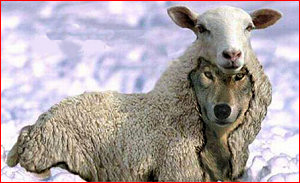
Now, that is a statement meriting a lot of parsing on many levels, not least of them the fact that MacDonald apparently thinks that the hundreds (thousands? tens of thousands?) of Jakes' supporters who know no such thing can safely and responsibly be left in the dark, and conceivably die safely without that knowledge, worshiping what MacDonald himself has agreed is a false (Sabellian) god, until MacDonald's paid event brings enlightenment to those who can afford it.

But this whole post is about focusing on one issue, one question. Here it is. It's worth shouting.
If the world (except for James MacDonald) is unaware of T. D. Jakes' real position on a doctrine as central and foundational as the Trinity, then in what sense is Jakes any kind of a leader, let alone a Christian leader?
It feels surreal to have to explain this. But here we are, aren't we? So let's do this.

What is a pastor's chief "job," according to (hel-lo?) God? It is to labor in the Word and doctrine (1 Tim. 5:17). It is to preach the Word (2 Tim. 4:1-2). It is to preach the Word and truth so clearly as to expose and refute error (Titus 1:9). These are matters of communication, in which it is the very heart and definition of the role of the pastor to (A) communicate (B) truth (C) clearly and (D) convincingly. Obviously, the more important the topic, the more critical these essentials.

Well then: Is the nature of God important? (Again, even having to pose the question makes me feel we're in Bizzaroworld... but that's hardly Breaking News, is it?) Of course the nature of God is important. Living as we are thousands of years after the close of the Canon, and many hundreds of years after Nicea and Chalcedon, is the Biblical doctrine of the Trinity essential to understanding the nature of God? Indeed, one of  James MacDonald's mouths says that the doctrine of the "trinity is clearly a major – national boarder [sic] issue," and I agree with that mouth.

So, to say it again patiently, if it is true (stretching charity well beyond the snapping-point) that Jakes has repented of his Modalism and now embraces a robust, Biblical doctrine of the Trinity, and yet nobody of the thousands who have heard and read him with the sole exception of James MacDonald knows that fact, aren't the very nicest conclusions we can draw about Jakes these two: that he is —
  1. An extremely poor communicator; and
  2. An extremely poor judge of what is important?
And if either of those things is true, then please, someone tell me — how is Jakes any kind of any leader, let alone a Christian leader, let alone a Christian leader who should be lifted up for analysis and emulation on an international platform?

See, I think that is a simple, discrete, fundamental, basic, vital, crucial question that doesn't involve the reading of minds, hearts or tea leaves. It should be absolutely basic. Yet I don't see that simple question asked much.

Really, think about it. Can you imagine Friel saying "We're going to have Phil Johnson on, and get to the heart of what he really believes about the sovereignty of God in salvation!" Or Janet Mefferd running the plug, "Tomorrow on the show, Frank Turk clarifies whether or not he really sees local church involvement as important in the Christian life!" Or Pirate Radio: "Friday on the show, Dan Phillips reveals whether or not he thinks it matters to root the Gospel in the entire Bible!"

You'd all laugh, right? It'd be a joke! Whatever our other many failings, I think we've probably gone on-record about those vital truths, right? And you could multiply it out to Ligon Duncan, John MacArthur, John Piper, or any other person who is justly viewed as a leader in any sense.

Yet somehow "Pay money to find out whether or not renowned Christian leader T. D. Jakes believes in the Trinity" makes sense — to say nothing else? On any level?

Yeah, I don't think so.

And I'm being pretty clear on that, right?

Dan Phillips's signature

11 November 2011

Not for the Stout of Heart, Either, Apparently

by Phil Johnson

(NOTE: Don't miss the clip from yesterday's "Wretched Radio" interview at the end of the post.)

here's a distinct change in volume, tone, and attitude between James MacDonald's "Humble Pie" blogpost and yesterday's "Not for the Faint of Heart" addendum.

In the earlier post, MacDonald acknowledged his own inconsistency: he knew he should not have "used strong language" to scold others for being harsh in their criticism of the Elephant Room strategy. But in yesterday's post and video, MacDonald casts off restraint and reverts to angry-sounding rhetoric.

Despite their starkly contrasting styles, both statements have one thing in common: MacDonald wishes those with concerns about what he is doing would just shut up. He says it euphemistically: "We are asking that those interested in what we are doing allow the conversations to take place before making final conclusions about their wisdom or helpfulness." But clearly, that plea applies to critics, not to MacDonald himself or to those who support his strategy.

There are multiple layers of irony in that. MacDonald purports to be championing fearless dialogue with people he says he doesn't necessarily agree with. But there's a distinct and clearly discernible direction to the drift of the "dialogue." It is painfully obvious that MacDonald is not so keen to listen and learn when someone more conservative than he wants to share a perspective.

But let's set all of that aside. What troubled me much more about the video MacDonald posted yesterday was his repeated insistence from beginning to end that the participants of Elephant Room 2 are a true Band of Spiritual Brothers:


In the earlier "Humble Pie" blogpost, MacDonald had expressed "regret that the purpose of the Elephant Room was not expanded and explained before including a greater breadth of participants." I took that as an admission that he had come to realize why so many people thought it inappropriate to invite a non-Trinitarian into a discussion that was being advertised as a conversation between brothers in Christ who are all committed to the same Christ and the same gospel.

See, when MacDonald announced the Jakes invitation, he wrote, "Getting brothers together who believe in salvation by grace alone through faith alone but normally don't interact, is what the Elephant Room is all about." That assertion was doubtless the main reason for the force of the backlash against Jakes's involvement. At the very least, concern over MacDonald's blithe embrace of a non-Trinitarian as a "brother" was the dominant theme in the criticisms posted on MacDonald's blog.

So the ER Purpose Statement was quickly modified to include the phrase "conversation among all kinds of leaders . . ." That, I assumed, was what MacDonald was talking about when he mentioned the expansion of the Purpose Statement to accommodate a "greater breadth of participants."

But in the above video, he repeatedly insists (in rather dogmatic terms and with an emphatic tone) that all ER participants are indeed his "brothers."

That, I think, is why MacDonald and the ER pose a major problem for the Gospel Coalition. He is a council member of TGC and an influential spokesman for the movement. And the first point in TGC's confessional statement is "The Tri-une God."

So is biblical and historic Trinitarianism an essential tenet of Gospel truth, or is it not? If yes, then TGC needs to hold its own council members to the implications of that. If not, one wonders what was the point of the organization in the first place.

Or to put it another way: The collective leadership of TGC are going to have to decide which is more important: the Gospel, or the Coalition.

Phil's signature


Bonus:


Here's a section of my interview yesterday with Todd Friel on Wretched Radio. In the final segment of hour 1, Todd brought up the "Elephant Room" controversy and asked me to comment on James MacDonald's video. What you will hear was my response upon listening to MacDonald's comments for the first time. Todd asked me to stop the soundtrack and comment each time MacDonald said something either noteworthy or objectionable. We didn't get very far into the video before time ran out, but this makes a nice supplement to today's blogpost anyway.

07 October 2011

Some Thoughts on This Week's Tempest

by Phil Johnson


'm on the road for much of October. I have a few weeks of vacation to burn and some conferences to participate in (including the Psalm 119 Conference in Keller, TX, which begins today. Get down here.) Earlier this week I was at the Midwest Regional FIRE conference in Greenfield, IN.

So I missed most of the hurly-burly over this week's open letter. I've been asked by people on all sides to give my feedback, and I'm going to try my best to be evenhanded, forthright, and charitable—even though every time I attempt that, the result is that everyone gets angry with me.

In this case, however, I do see valid points on all sides. Ultimately, of course, my sympathies lie predominantly with the perspective Tom Chantry posted on Wednesday. But let's acknowledge that Tom's argument was based to a large degree on anecdotal evidence. Moreover, his complaint could quite validly be leveled at evangelicals in general; what he described is by no means unique to Harvest Bible Chapel—nor is Harvest's youth ministry even close to being the most egregious example of fun-n-games run amok.

I can certainly see why people born and raised in mainstream evangelicalism during the movement's 30-year-long fascination with extreme pragmatism might think Tom's observations are overblown or inaccurate, or complain that it's unfair to single out Harvest. Far from being the worst example of pragmatic showtime religion, Harvest has often been contrasted with Willow Creek as the place to go in the Chicago area if you want to hear verse-by-verse Bible teaching rather than merely being entertained. In many ways, Harvest stands apart from the hard-core pragmatism of more stylish seeker-sensitive churches. That's obviously something we want to encourage and applaud.

Still, I share the concerns Tom Chantry raised. I think what he had to say on Wednesday needs to be heard and carefully pondered. And I want to explain why.

First, let me note a few facts and make some concessions to our critics:
  • Open letters are not my preferred style of discourse. (As far as I can recall, I've never written one.) The Open Letter Project at TeamPyro is Frank's campaign. (I wanted to underline that, because I've lost count of the number of people who have referred to them as "Phil's open letters.") I've enjoyed Frank's insights; I can't say I have enjoyed the reaction the open letters get. He has done a fine job of salting the series with humor and goodwill—and I have agreed with the gist of all the open letters. But because open letters are so often used as a bludgeon, the format itself is more provocative than a simple blogpost written in third person saying all the same things. That is evident from the response to this whole series. I think if Frank wrote an open letter to the grandmothers of the world saying how much they are loved, someone would get angry about it.

  • Of course, Wednesday's entry was one of those letters that was clearly provocative from the get-go. I don't vet blogposts at TeamPyro before they go up, but since this was a guest post, I did get to read an early draft. My response was short. (I was rushed.) I said: "If I were writing an open letter to James MacDonald this week, children's church and youth ministry are not what I would deal with." In retrospect, I think that judgment was sound for several reasons, all cited by various comments under Wednesday's post: it gave the impression we were looking for as many reasons as possible to be critical, trying to start a dogpile. Also, while I see and agree with the connection Tom Chantry made between the Jakes matter and gospel-centrism in youth ministry, it's not an immediately obvious point, and not everyone saw it. So the open letter did distract unnecessarily from the concern of the moment, which has to do with the aims and the framework of the Elephant Room.
  • I deeply respect the spirit and attitude of almost everyone who defended Harvest. Most if not all of them employed rational arguments, dispassionate language, and magnanimity in making their case. I appreciate their loyalty, commitment, and brotherly kindness. We count them as brothers and sisters, not adversaries.
  • By contrast, I was irritated by the way some of our regular commenters responded with vinegar. Not every disagreement calls for sharp rebuke or sarcasm. I hate when our regulars confront first-time commenters with instant pique or dripping sarcasm. I apologize for it.
  • I'll also be the first to confess that one of the great frustrations in any ministry is that fallen people are naturally slow to hear and hard of heart. Jesus rebuked his own disciples repeatedly for being slow learners, and he was still rebuking them for that even after the Resurrection (Luke 24:25-26). People who have sat under my teaching for years sometimes ask astonishingly naive questions. It's fair to note that any ministry you might investigate probably has produced some disciples whose dullness is equal to that of the students whose gospel ignorance raised Tom Chantry's concerns.
Having said all that, permit me to explain why I still agree with the main thrust of Chantry's post. By the way, some readers clearly missed the main thrust of the post. For example, a person from Harvest with whom I talked by phone complained that Tom had cited too thin evidence to substantiate the rather serious accusation that Harvest doesn't care about the gospel.

Let's be clear: No one is saying that Harvest "doesn't care about the gospel." Tom's argument, to put it as simply as possible, is that the current evangelical style of youth ministry isn't doing enough to highlight and reinforce gospel truth over against some of the horseplay that is deemed necessary to attract young people in the first place. There's a great deal of talk and enthusiasm about gospel-centered ministry in conservative evangelical circles at the moment, but still the gospel is often lost in the goulash of church-related youth activities. In the turmoil of so many pie-fights, rock performances, and gross-out contests we tend not to think deeply—nor do we teach our students to think deeply—about essential gospel doctrines.

In short, some of us may not care about the gospel as much as we think we care about it.

And let's face it: that's actually one of the more charitable explanations for why James MacDonald would be trying to draw into the circle of evangelical fellowship a celebrity religious figure who is notorious for preaching a twisted gospel and who has been teaching anti-Trinitarian doctrine for years.

Instead of taking the Elephant-Room approach of seeking consensus with people outside the borders of evangelical conviction, we think what's actually needed in the conservative wing of the evangelical movement is a sharper focus on the gospel, and yes: less horseplay. The Elephant Room approach has a tendency to blur boundaries and make more and more important things seem non-essential. In the end, it's just a group hug, and Isn't it nice that we all love Jesus? Core gospel truths quickly get buried and forgotten, and soon we don't even notice that the gospel is being taken for granted, rarely articulated, little understood, and sometimes even twisted. Testimonies become stories about what we're doing for God or how much we love Him instead of the story of what Christ did for sinners and how He loves us.

When commenters were disputing the accuracy of Tom Chantry's perception the other day, I decided to do some investigation of my own. And the very first thing I found was this video where several Harvest students are giving testimonies of how their lives were changed at winter camp. I'm sure these are sweet kids; they certainly come across as likable. I trust they are still growing and learning. But do their testimonies reflect a clear understanding of the gospel, or do they substantiate Chantry's concern? In my judgment, it's the latter:

That is (in all candor) stunning for its lack of any reference to actual gospel truth. The students say nothing clear about guilt and repentance; nothing at all about the historical facts of the gospel; no mention of either the death or resurrection of Christ; nothing about Christ's lordship or the kingdom of God or the need for atonement. In fact, there are only a few oblique mentions of Christ's name. The focus, instead, is completely on how we live and how we think.

Yes, one student mentions that God has forgiven him, but there's nothing about what forgiveness cost or how it was obtained—nothing to differentiate the idea of biblical forgiveness from the Hindu or Rastafarian concept. Quite simply, the gospel is missing from those testimonies. It is not clear that the students grasp the basics of the gospel.

I transcribed some samples, in case you have trouble streaming:

  • I usually just wait for the Lord to tug on my heart--to change my life and to get back on track with Him. This year it was different. I didn't wait for that moment; I went in fired up for God. And what He really just taught me this time was not to change my life, but to leave my past behind. I had some stuff in my past that I still was not letting go . . .
  • I've never experienced God so close to me.
  • I let go of a lot of things from my past and I decided that, you know, God needed to be my first priority and I needed to have a relationship with him.
  • And I realized that homework was starting to become an idol for me. I just really needed to surrender it all to Him.
  • Winterfest for me was a chance to let go of a lot of my anger and forgiving my dad and my sister and my family members. I've learned that I need to take responsibility for my Christianity.
  • I think the biggest thing that I learned at Winterfest is that it's not about me anymore. That there's other people that have struggles and difficulties. That God can help you get through anything.
  • I just really want to change and live my life for God.
So I think Tom Chantry's concerns are not far-fetched or trumped up. I realize those are typical of the testimonies you might hear in any contemporary evangelical context. The average evangelical today will think it's picayune and overly fussy to criticize them. That's only because they don't realize how far evangelicalism has moved from true gospel-centrism and how pervasive (and how grave) this problem is. Our obsession with things like personal experience, self-esteem, relationships, and angst obscures a clear view of objective gospel truth.

That's Tom Chantry's point, for those who might still be missing it.

To be completely fair, I think we're all guilty at times of doing and saying things that undermine the clarity and centrality of the gospel. Since the church where I minister has a seminary on campus, my sermons frequently get critiqued by students who remark on ways I might have made the gospel more clear and prominent. Of course it makes me wince to get that kind of criticism, but I welcome the feedback and I have profited from it. It is usually sound and helpful, and it certainly keeps me more focused.

But some church leaders are more careless in their handling of the gospel (or their neglect of it) than others. And some have been egregiously careless of late. There seem to be two competing strands in contemporary evangelicalism. On the one hand, we declare our common commitment to the gospel and remind one another that this is what binds us together, so we need to protect it at all costs, emphasize it more, understand it better, and proclaim it more openly. On the other hand, there is a relentless push for the status quo in popular approaches to pragmatic ministry, the elevation of rock-star pastors, and the quest to be cool.

Some Christians seem to have one foot in both camps. We think that's a terrible stance, and we can't help saying so. We're sorry to ruffle feathers, but if you can get past the clumsiness with which we sometimes make our case, it's a fairly important point we are trying to make.

Phil's signature


05 October 2011

Open Letter to James MacDonald

by Pastor Tom Chantry (as told to Frank Turk)

I know why you came to this link. You came here looking for this post:


Which is to say, you came here to find some dirt on someone who once posted one post on this blog.

Until Tom's difficulties are resolved, that post will remain in DRAFT status on this blog.  Meaning: nobody cared about it until about Tuesday of this week, and now nobody can use it for things it was not meant for until such a time as  its obscurity can be restored and we can all live peaceful lives and work quietly with our hands.

I abhor your curiosity, and I regret that the current events are such as they are.  But Tom Chantry is my friend, and that is not because of any virtue in him but because Christ has made us both His friend.  I cling to Christ, and in clinging to Christ I am also holding Tom and all associated with this current circumstance close to Christ so that He may resolve it for His good pleasure.

I suggest you do the same -- especially if this is how you are spending your free time.

I am also directing you to this link for exhaustive comments on how one should deal with a situation like this one.

The comments are also hidden and closed.

Until there are better times for all of us, Grace and Peace to you.

~Frank Turk


30 September 2011

Playing nice with heretics

by Phil Johnson

"I appeal to you, brothers, to watch out for those who cause divisions and create obstacles contrary to the doctrine that you have been taught; avoid them" (Romans 16:17)

If anyone comes to you and does not bring this teaching, do not receive him into your house or give him any greeting, for whoever greets him takes part in his wicked works" (2 John 10-11).


oday Tim Challies has an item about James MacDonald's decision to invite T. D. Jakes to participate at Elephant Room 2. Some of Tim's commenters think it's a fine idea for MacDonald to extend a cordial welcome to someone whose teaching is highly suspect so that he can define and defend himself.

Mark Driscoll expressed a similar opinion in his blogpost yesterday. He sees the Jakes invitation as an opportunity for men who differ on fundamental doctrines to "speak to one another face-to-face rather than about one another blog-to-blog and tweet-to-tweet."

That all sounds very nice and cordial, and it appeals to values that are highly prized nowadays, but is it a biblical way to respond to heresy? Can you imagine Paul proposing a friendly sharing of the platform with the heretics who were troubling the Galatian churches? How different would the apostle John's advice in his second epistle have been (not to mention his legendary encounter with Cerinthus) if he had embraced the values of our more "enlightened" age?

Anyway, here are my thoughts, as posted in the combox over at Challies:

[Commenter at Challies]: "Doesn't basic civil discourse allow people to define themselves"?

No. That's pretty much what the postmodern rules of engagement say. But Jesus said, "You will recognize them by their fruits" (Matthew 1:16). In other words, we need to determine whether someone is a heretic or not by examining what [s]he actually teaches, not by what that person claims of himself when [s]he is under fire.

Scripture is emphatic about this, reminding us that Satan and his minions commonly disguise themselves as angels of light (2 Corinthians 11:13-15).

I don't mind giving the benefit of the doubt to a young pastor fresh out of seminary who might misstate something or need further instruction to eliminate some latent point of ignorance or clear out the cobwebs of confusion (cf. Acts 18:26).

But a self-styled "bishop"—notorious for his love of money, who teaches a false prosperity gospel, who freely shills for every aberration on TBN, who was ordained in a Sabellian denomination, who has been confronted repeatedly about his anti-trinitarianism, who refuses to renounce modalism, who declines to embrace any standard expression of Trinitarian conviction, and who (on top of all that) is unclear on practically every doctrine germane to the gospel—such a figure should not be warmly welcomed into evangelical circles and given the platform at an evangelical conference as if we're confident that he is a solid brother with good intentions.

Plus, despite your protestations above, both Galatians 1:8-9 and 2 John 7-11 teach us that it's not always the right thing to deal with doctrinal aberrations though "cordial dialogue." Certain theological miscreants need to be avoided rather than listened to (Romans 16:17). Some need to have their mouths stopped (Titus 1:11).

Furthermore, true elders and undershepherds of Christ's flock do often have a duty to declare truth through exhortation and rebuke, with all authority (Titus 2:15), rather than acting as if every contrary teaching is an opportunity for friendly dialogue and an open exchange of views. That's especially important in today's spiritual climate, where so many people in the church (including a few once-trusted leaders) ape the worldly conviction that diversity is inherently wonderful and strong convictions are inherently uncharitable.

And to whoever asked incredulously whether critics were fearful that Jakes might suddenly lead multitudes astray through the platform given him at the Elephant Room: what concerns me is the fact that he already has, and I think it's appalling that the guardians of evangelical cordiality and "civil discourse" seem utterly unconcerned about it.

Phil's signature