Showing posts with label leadership. Show all posts

06 March 2014

Criteria for evangelical leaders?

by Dan Phillips

I am reading through Robert Culver's systematic theology, with varying degrees of profit. Twitter followers have enjoyed quotations I've lifted out and shared, some by Culver, some of those Culver quotes.

This falls into the latter category. I don't know much about the writer (Nathan Hatch of Notre Dame University, then Wake Forest University), but these remarks are dead on-target, could have been written by David Wells or even Carl Trueman
The evangelical movement is amazingly dynamic: entrepreneurial, decentralized, and given to splitting, forming, and reforming.…
The tendency is for us to anoint as leaders those who build a mass following in the free religious market. The thorny problem is that these leaders are not necessarily wise churchmen. They are more likely to be those who assume prominent political roles or who build mass special-purpose ministries. To the extent that this is the case, we allow the market to set the terms of church leadership.
The long-term question for evangelicals is what kind of shepherds we will follow, whether we will follow leaders whose interest is the well-being of the church itself, men and women who are theologically savvy, historically informed, and committed to seeing the church prosper in all of its dimensions and for all of its people.
[Nathan O. Hatch, Wheaton College Alumni Magazine (Summer, 1999), pp. 10, 11; quoted in Culver, R. D. (2005). Systematic Theology: Biblical and Historical (p. 807). Ross-shire, UK]
Explains — or at least properly frames — a lot, doesn't it?

Dan Phillips's signature


19 November 2013

Strange Fire Conference #8: John MacArthur, final session

by Dan Phillips

The last session I'll cover is John MacArthur's closing address. He said he was speaking from the heart, and had told an associate that he didn't really know what he was going to say in advance.

MacArthur began by addressing some of the accusations that had been hurled at him from the very moment of the announcement of the then-future conference. The first was that such a conference was unloving. But, MacArthur countered, surely the most loving thing to do is tell a person the truth, and leaving him in error the most unloving. In Acts 20, Paul reminded the elders that he had warned them with tears for years, knowing that wolves would arise from without and within. Titus 1 says it is the God-given duty of elders to warn against errors and errorists. It isn't optional. To refuse is to be faithless.

But wouldn't it be divisive? Indeed it would. Truth divides. Jesus brought a sword, He said. It is more important to be divided by truth than to be united in error.

Is the issue unclear in the Bible? Does difference of opinion demonstrate that Scripture is unclear? If so, Mac responded, it has only become unclear under the influence of false teachers. Was it not clear enough to the apostles, to the church fathers, to the Reformers, to the Puritans, to the creed-writers, to the erudite noble Reformed theologians (Warfield, for instance), to Spurgeon, to Boyce, to Sproul? When did it become "unclear"? Was it made unclear by Swaggart, by Kuhlman, by Benny Hinn, by Todd Bentley, by Paul Cain?


But, it is said, Mac is talking only about the extreme lunatic fringe. Untrue, he replied: Error leavens the whole movement, and they show no great inclination to rid themselves of it decisively. 90% accept prosperity gospel, 24-25 million deny Trinity, 100 million are RCs.

Would the conference be attacking brothers in Christ? MacArthur wishes that were so; but many of these leading figures are not brothers. Then he asked, Who should police evangelicalism? His answer: every faithful pastor, theologian, leader in the movement. If they don’t police the movement, the spiritual terrorists will dominate – as with Islam. Many say that Islamic terrorists are a small minority on the lunatic fringe. If that is the case, then why don’t Muslims en masse rise to reject the terrorists? So with Charismaticism. A heavy burden lies on the back of all who know the Word to rise up and denounce the movement's errors.

Is MacArthur fixated on Charismaticism? Is he a one-trick pony, always harping on Charismatics? He replied that he’s preached the whole NT, and has been at GCC since 1969 — and he’s had one conference on the Charismatic movement.

Is he hurting people’s feelings? MacArthur replied that he does care about offending people. But he doesn't care about that nearly as much as he cares about offending God.

MacArthur then went on to stress: Charismaticism/continuationism is an alien movement. We teach in a stream that goes back through the Reformers to the Fathers. The stream of Charismaticism goes back to the 60s, when hippies entered and dominated the church scene. The distinctive pedigree is as bad as the distinctive fruit.

Then MacArthur pled with his continuationist friends. First, he called them to face the cold hard fact that when they say they’re continuationist, they lend credence to the whole false movement. They give their good name to bad doctrine and practice. They provide theological cover for a movement that’s harmful and deadly.

Second, he observed that Charismaticism degrades supernatural nature of true gifts. Hebrews 2:1-4 is meaningless, if what Apollos the writer speaks of applies to what everyone’s experiencing today. Redefining the gifts necessarily diminishes the glory of the real thing. If those attesting works were like these pale, laughable trivialities and parlor-tricks, they were nothing special. They they were nothing special, the era was nothing special. If the era was nothing special, the message it produced was and is nothing special. Hijacking Biblical terminology degrades the genuinely miraculous.


Third, the continuationist position severely limits its advocates in attempting to confront others who plunge into confusion. The movement should be denounced, wholesale – and we keep waiting for denunciation of the serious errors, and it hasn’t come. Good men who call themselves continuationists have given up the high ground, so that they cannot speak with the needed "punch."

Fourth, by insisting that God’s still giving new revelation to Christians today, the enablers unwittingly open the gates to more and greater confusion and error. Tongues, healing, prophecy are said to occur today – but these phenomena are not at all like what happened in NT times. If that is so, if that radical redefinition is accepted, then anything might be from God – gibberish, nutty notions, feelings, anything can be "prophecy." Open the door to any of it, and you've opened the door to all of it.

Fifth, the position tacitly denies Sola Scriptura. None of MacArthur’s continuationist friends would formally deny closing of Canon and all — yet they default on that claim by teaching believers to expect extra-Biblical revelation. Saying that babble is tongues and fallible hunches are prophecy necessarily opens the door to the mindless ecstasy of unintelligible expression. In reality, these folks are actually closet cessationists when they say the manifestations are not the same. What it means is that they’ve accepted a counterfeit – and that’s hardly a noble posture.

Seventh, say that the gift of healing is still around, though there’s no evidence whatever, and you give credence to the worst of the faith healers.

All of this dishonors the august person of the Holy Spirit by enticing people from His true ministry. “Give me more, give me that other thing” is the cry – what kind of deficiency does that attribute to work of the Spirit?

The broader Charismatic movement has flung open the city gates to more doctrinal error than any other movement, including liberalism, pragmatism, ecumenism, or any other previous enemy-attempt. Charismatic theology is the strange fire of our generation, and should be doused decisively by the Biblically faithful.


MacArthur's closing was very moving. He went to 1 Timothy 6, last two verses:
20 O Timothy, guard the deposit entrusted to you. Avoid the irreverent babble and contradictions of what is falsely called “knowledge,” 21 for by professing it some have swerved from the faith. Grace be with you.
Then he want to 2 Timothy 1:6-7 —
For this reason I remind you to fan into flame the gift of God, which is in you through the laying on of my hands, 7 for God gave us a spirit not of fear but of power and love and self-control.
MacArthur observed that this was a scary time for Paul. The baton was about to be passed to Timothy, and Timothy was looking weak. So Paul calls Timothy not to be ashamed of testimony of our Lord — what a frightening charge to have to put into words at this stage. Timothy must retain the standard of sound words. What God gave him through Paul was a treasure. "Guard the treasure entrusted to you," Paul pleads.

What effect did the words have on Timothy? How did Timothy respond? For the answer, MacArthur took us to Hebrews 13:23.
You should know that our brother Timothy has been released, with whom I shall see you if he comes soon.
Timothy had hung in there. He'd borne witness, and he'd gone to jail. Paul’s letter gripped his heart and emboldened him.

So it needs to grip ours. The Charismatic movement seeks to distract us from confidence in the sufficiency of God's word. It seeks to loosen our grip on the treasure, and pull us in a dozen different fruitless or positively harmful directions.

We must reject that pull, we must cling to God's Word, we must preach that Word... and so, only, can we avoid stoking (or roasting in) Strange Fire.

First post
Second post
My overall summary report to CBC
Third post
Fourth post
Fifth post
Sixth post
Seventh post

Dan Phillips's signature


22 August 2013

How we got into this mess, and how to get out

by Dan Phillips

This is a conceptual followup to Frank's post.

Here is how we got into this mess, simplified:
  1. Inventors of Charismaticism/"Continuationism," ca. 1900, made huge promises and claims.
  2. They had zero credibility, completely failed to deliver, and were largely dismissed by Biblically-faithful Christians. They gained no traction among them.
  3. Commitment to genuine Christian discipleship, with the necessary corollaries of commitment to (and utter confidence in) God's word and truth on both sides of the pulpit, waned over the following decades.
  4. Respected Christian leaders worked hard to enshrine a way to exempt Charismatics/"Continuationists" from all necessarily-disastrous objective examination of their distinctive claims.
  5. Unshackled from the (Biblical) burden of proof, errorists and their false teaching increasingly found the faux credibility and purchase they'd been denied previously, thanks to the cover provided by big names.
How can we get out of this swamp?


By genuine revival, breathed by the genuine Holy Spirit, of course.

Specifically, it will take the reversal of steps 3 and 4, above. To wit:
  1. Christians, on both sides of the pulpit, must be recaptured by genuine Christian discipleship, with all it entails.
  2. Christians who are leaders must repent — either of their errant teaching, or of their timid refusal to speak out boldly, plainly, and decisively — and must systematically strip away the false cover they've provided to the Charismatic/"Continuationist" errorists.
There y'go. You're welcome. It's what we do.

Dan Phillips's signature

21 May 2013

What's in a few names?

by Dan Phillips

Last Sunday's sermon featured the exposition of Titus 3:12-15. Here's my translation, sans footnotes:
When I send Artemas to you, or Tychicus, be diligent to come to me in Nicopolis, for I have decided to spend the winter there. 13 Diligently help send Zenas the legal expert and Apollos on their way, in order that nothing may be lacking for them. 14 And also our own people must learn to take the lead in good works, for the pressing needs, in order that they might not be unfruitful. 15 All those who are with me greet you. Greet those who are fond of us in the faith. Grace be with all of you.
Understandably, many would look at that as slim pickings for a whole sermon; but I managed. How well is for God and others to judge.


But one of the things that struck me was implicit in the section. The fellows Paul mentions in verse 12 were named Artemas and Tychicus. Not only are those Greek names, they're really pagan Greek names. They don't mean Lemon and Bumblebee, or nothing; "Artemas" is the masculine form of Artemis, as in Artemis [Diana] of the Ephesians. And "Tychicus" means "Lucky," as in a universe ruled by chance.

Yet one of these two — Diana-Man or Lucky — was going to be Titus' replacement heading up the Cretan mission. Paul, nearing the end of his life, was sending one or the other of these two pagan-named Gentiles to take over for Titus the Gentile in this mission. The future of Christ's church would be in their hands, under God.

And who brought the letter to Titus? Two more pagan-named guys. "Zenas" (short for "gift of Zeus") and Apollos, a Jew who somehow was saddled with yet another pagan name. One an expert in Roman law, the other an expert in God's law. Paul trusted this letter to them, and urged Titus to be sure they had all they needed.

In the sermon, I make a good bit of this. While Jesus instantaneously did everything necessary to effect reconciliation between formerly warring ethnicities (Eph. 2:11-22), the process of working this out took a whole lot longer. In fact, it isn't done yet.

But what Paul did was talk a lot about it, go to jail for it, and model it. He did the latter by surrounding himself with men like these — not just saying "Yeah, boy, the Body of Christ really should model reconciliation," but doing it. Investing himself in such folks, training them, giving them positions of visibility and responsibility, expressing full confidence in them, and letting them loose.

If you like, give the sermon a listen. I develop that at great length, take a sally at Biblical decision-making vs. Blackabism, and a whole lot more.

Titus is a very underappreciated and underpreached book. I've really enjoyed it.

Dan Phillips's signature


09 April 2013

Our binary Bible

by Dan Phillips

When I was earning a Microsoft certification back in the late 90s, I had to study IP addresses, which took me into the world of binary numbers. In that world, everything is a 1, or it's a 0. There's no 2 and no 9, no 5 and no 3. Everything is represented by the 1 and the 0, and the place each holds.

The Bible is very binary, in a great many ways.

If you've read the Bible much, you can fill in this next part for yourself. In God's Word, you're either saved, or  you're lost; you're in the darkness, or you're in the light; you're a believer, or you're an unbeliever; you love God, or you hate Him; you're alive in Christ, or you're dead; you're preaching truth, or you're preaching error; you're forgiven, or you're in your sins; you're a slave of God, or you're a slave of sin; you're on the narrow way that leads to life, or you're on the broad path that leads to death; you're a sheep, or you're a goat; Christ knows you, or He doesn't; you're a saint, or you're an "ain't."

While it could be argued correctly that there are degrees of this and that, it isn't in grey areas that the Bible lives and thrives and does most of its business.

So doesn't it follow that, to the degree we're believers (and not unbelievers), to the degree that we're faithful (and not unfaithful), we will give ourselves to affirming and exploring and exploiting those sound words — and not turning aside to vain jangling and fruitless discussion?

If that's the case, then why are so many highly-respected, high-visibility, popular speakers and organs and sites and bloggers so adoringly fascinated with exploring and exploiting the blurs and the fuzz and the vapor around the edges?

Taken seriously, it seems that the Bible would produce knowledge, faith, confidence, assurance, certainty — and categorical boldness and insistence.

But these leaders seem obsessed with enabling and modeling and producing uncertainty, doubt, timidity, daintiness, nuance, overcaution, and (on many pivotal issues) murmury vagueness, or complete silence. When what we need to hear is a trumpet blast, all we get is a tremulous little kazoo-wheeze, or the vague sound of someone mumbling to himself.

Is that a good thing?

Or is it bad?

Dan Phillips's signature


10 May 2012

Tag-ons to Frank's BoB2012 post

by Dan Phillips

Don't have anything ready to serve at the moment, nor the time to finish cooking what's on the drawing board (how many mixed metaphors is that?). So I'll point back to Frank's, and add a couple of tight-lipped thoughts.

I could not have said all that I think about BoB2012 (nor the, in equal parts, response and non-response to David Kjos' post) as politely as Frank did, so at the moment I'll mostly say "amen," and join you all in waiting to see if an appropriately substantial response is forthcoming, adding only these:
  1. Luke 12:48b is surely germane in this connection, is it not?
  2. I would also point out what Thabiti Anyabwile said about celebrity pastors at T4G12, if I understood him correctly: Actress X would not be a star if truckloads of people didn't buy tickets to her movies. Transferring the metaphor, readers must take responsibility that Blogger X would not have the prominence he enjoys without truckloads of clicks, retweets, follows and links. Just sayin'.
  3. Even granting that serious, weighty, dire, intense and personal discussions were being carried on behind closed doors, is there anything in this post or this post that relied on "facts not in evidence"?
  4. What would have happened differently if, instead of taking a posture of unawareness of (or sullen resentment towards) all such posts on various blogs, TGC blogs and leadership and other leading voices had taken such concerns seriously before (to quote Frank) "all the wrong that could be done was actually accomplished"?
  5. And finally, this can't be pointed to enough, if only for a needed sad chuckle:

Dan Phillips's signature

08 February 2012

The Eddie Haskell of Pastoral Trouble-Making

by Frank Turk

Before we get full-on blog here today, my friends Steve Hays and Jason Engwer are waging the war against popular old-school atheism.  By that I mean they are actually engaging the old-school atheists and basically beating them down in a manner suitable to the means presented by the lot of them.  I mention it because Steve and Jason have written a response to the latest tome from the John Loftus school of inbred atheism, and it's called The End of Infidelity.  The e-book is available at this link, and I commend it to you if you care at all about atheist apologetics.

Note to Steve and Jason & the rest of the Triabloguers: The reason I say "old school atheists" above is that the hard-core post-modernist bent has set in, and the old rationalist, materialist, neo-positivist atheism is, frankly, running on empty.  Nobody wants all that philosophical baggage any more these days, and the next generation of atheists will be in the same vein as a young fellow named Chris Stedman, who is on staff at the (now get this) Humanist Chaplain at Harvard University.  He's the face of nice atheism, and has a book coming out called (F)a(i)theist.  In 10 years, John Loftus will be a homeless person muttering to himself about his self-published archive that banished Theism into the outer darkness of people he wouldn't associate with anyway, but Stedman and his lite version of interfaith collegiality between unbelief and belief will be alive and well among those who think superficial "nice" is the most important virtue.  Let's find a way to preach the Gospel to that, and stay ahead of the curve.


OK -- so you're all over the Elephant Room 2 fiasco, right? There's nothing left to say, it's been said, and we need to just move on.  Carson and Keller have offered the penultimate careful evaluation (the ultimate to take place behind closed doors with no chance that anyone will see how this gets resolved), James MacDonald has stopped posting videos extolling his own humility (at least through the moment at which I am typing this), and we're done.

Um, no.

Mark Driscoll has, with his usual panache, escaped all scrutiny.  He's the Eddie Haskell of pastoral trouble-making, usually getting someone else on the hook for his own impishness, and getting away with most of it because he's really such a nice boy according to Mrs. Cleaver.  And this is a very troubling issue as his tribe of manly men for Jesus (the Acts29 network) are not usually this quiet -- unless Pastor Driscoll has put his foot in it (again).


Now, what I am very excited about is that not everyone has let what he has done here go unnoticed.  To their credit, Carson and Keller said this much in their pronouncement from Mount Caritas:
Here is where the distinction becomes interesting. Neither the terminology of "manifestations" preferred by Oneness Pentecostals and other modalists nor the terminology of "persons" supported by historic creeds is directly used in Scripture. Where does it come from? It comes from thinkers two or three centuries after the New Testament was written who were doing their best to summarize large tracks of biblical themes and texts in faithful, accurate summaries, even if the terminology was not directly dependent on the terminology of a specific verse or two. History has shown, for the reasons briefly set forth in our first pairing, that the terminology of "manifestations" was soundly trounced and declared heretical: it simply could not be squared with what the Bible says. The "persons" terminology prevailed (along with words like "subsistence") not because it derived directly from usage in the biblical documents themselves, but because it could be shown that this terminology did a great job of summarizing what the Bible actually says.
And then again:
To attempt theological interpretation without reference to such developments is part and parcel of Biblicism One; to attempt theological interpretation that is self-consciously aware of such developments and takes them into account is part and parcel of Biblicism Two. We hasten to add that both Biblicism One and Biblicism Two insist that final authority rests with the Bible. All the theological syntheses are in principle revisible. Yet the best of these creeds and confessions have been grounded in such widespread study, discussion, debate, and testing against Scripture that to ignore them tends to cut oneself off from the entire history of Christian confessionalism. The Bible remains theoretically authoritative (Biblicism One), but in fact it is being manipulated and pummeled by private interpretations cut off from the common heritage of all Christians.
Statements with which I whole-heartedly agree -- but which Pastor Driscoll has tacitly denied in his interaction with Jakes (and has openly denied as demonstrated here).  So on the one hand, the clever person can see the distancing of TGC from Driscoll's new friendship and new alliance with a man TGC does not hold in such high esteem, and at the same time we can also see the basis for a rebuke for what has happened.

But what's going on with Acts29?  Not a statement?  Not a mention?  Not a notice that they have seen it and therefore rebuke the twittering pajamahadijn for making such a big thing of this?

Listen y'all: this is a big thing.  Driscoll himself has rebuked Osteen-ism from his own pulpit, and wants you rubes to man up and shoot the wolves.  But here he is with the only other fellow in the English-speaking world who has the scope of influence of Osteen and the self-same lousy Gospel and theology, and the same worn out lines which Christianity Today can't recognize from 2000 even tough they printed them, and he's shaking hands with this fellow in a way which even Keller and Carson find dubious.

See: I get it when you guys are offended that Phil or John MacArthur wag a finger at you and yours -- because it feels like your father wagging his finger at you for forgetting to fill up the car when you just drove home from saving all the orphans from a house fire.  You guys see yourselves reaching a generation for Christ, and the (from your perspective) indignation over holiness (which looks, from your perspective, a little stilted) seems to be unwarranted parental umbrage.  So if they tell you that you ought to say something about Mark or to Mark, they can just go mind their own business.  You're busy with something else, like ministry.

But you have to ask yourselves: is it right that the President of your Church Planting Network (they called those "conventions" back when your pappy was a deacon; they called them "associations" in the 1980's) can embrace a guy that the rest of you know is not someone you would bring into the fold?  You know you wouldn't let Jakes preach from your pulpit - shouldn't you at least ask what is now expected from you and your tribe after Mark gave him the Big Hug and the "welcome to the Family" speech?

Apparently all the right people are on the bus ...

The Gospel Coalition has made it very clear about where they stand on this.  I am grateful for what they have said, even if it's too little, too late.  But you guys are silent?

Well, maybe that's how it goes.  Maybe there's a bro-code I don't know because I'm not a bro, and you guys can accept that Mark Driscoll can lead you into associations with people you know will be harmful to your local church's theological and missional well-being with no consequences because he's "fruitful" and "humble". Lumpy never ratted out Eddie, after all.

But let's be honest: that's showing something which, in the final account, we might be able to call "fellowship" or "perseverance" or some such Bible word that puts a good face on it. But that's not being a leader by any means.  That's not showing leadership.  And in the end, you're supposed to be pastors and not merely a hipster mutual appreciation society.


UPDATED: Wow. As I was writing this post, it turns out Acts29 was making an announcement which shows they are "excited about the future of Acts 29". You can read the whole thing here, but as it turns out Pastor Mark's performance at the Elephant Room will not only have no effect on his status inside A29: he actually is going back to being the leader of the pack. (cue motorcycle music)

And before things go completely south from that announcement, let's remember that when those guys are using the terms "Prophet," "Priest," and "King," they are using Bible terms to identify organizational functions, not theocratic anointings.  That Driscoll is now the leader of their "Prophet board" does not mean anything more than he's the leader of their board of directors.  That they feel like they have to call themselves a "Prophet board" rather than "board of directors" is funny enough; let's not escalate the hilarity by trying to figure out which visions Driscoll will see now ...

ANOTHER UPDATE: Oh brother.  Apparently James MacDonald is now repeating his side of the story -- with some addenda (like the private repudiation of the Prosperity Gospel Jakes made to him).  The round up of that activity is best found here.


07 February 2012

"Careful"

by Dan Phillips

"Careful" has become a shudder-inducing word for me. Like "gay." In fact, very like "gay."

That's too bad, because it's a really good word in itself (like "gay"!; I'm going to stop saying that). It's a great word, in fact. Your kids are going on a hike, or to play touch football, or to the shooting range. "Be careful," you say. Right. Or I was chatting with a lady police officer the other day, and parted with "You be careful" and a prayer for her safety.

But lately the word has joined "nuanced" and "helpful" and "thoughtful" to give me the shudders. I don't think any of the words are irredeemable. But what I do fear is that all those words show up frequently in the writing of elites who think God's truth and damning error are nothing really to "get het up about," and certainly not worth passion or bareknuckled, plain-spoken, frontal, clear, and — let's just say it — masculine rhetoric. Not worth risking angering anyone, or being perceived as angry.

Isn't it good to be "careful"? To be sure, "careful" is a necessary and important adjective in many contexts. Don't we want to make careful distinctions between trinitarianism and tritheism,  between the Biblical gospel and libertinism, between inerrancy and bibliolatry, between elder leadership and totalitarian thralldom, and a hundred other things? If we preach on prophecy, don't we want to be careful, sticking to the text and avoiding wild conclusions and leaps or cowardly equivocations?

Of course we do. But as used in those contexts, "careful" means factual, warranted, clear-cut, concise, unambiguous, forceful. It is a servant of truth, an enhancer of truth. It serves to make the truth of (say) the Trinity and the Gospel clearer and more obviously distinct from error and false teaching.

So when is it bad? I think elites are sometimes — and I want to be careful here, haha — using the word as a code-word for "dainty" or "harmless" or "toothless." I think they are using it sometimes to mean "nobody (and no ruinous error) actually got hurt." I think they are using it to mean "false teaching and particularly its purveyors are treated with kid gloves." I think they mean "false teachers are treated with great respect." I think they mean "false teaching is described, but inoffensively." I think they mean "nobody is made to feel too bad about perpetrating or embracing heresy or ruinous idiocy."

Plain enough?

See, that paragraph is an example. It was plain, wasn't it? It also had necessary qualifiers and distinctives, didn't it? It wasn't unnecessarily inflammatory, was it? Isn't that being careful, in the best sense?

But no elite is likely to link to this as a "careful" post — any more than they ever do to any of my posts, whether they're about atonement in Proverbs or repentance in a false teacher or anything else.

Why? Truth is, I don't really fully know. And I am also pretty sure (being honest, not sugar-coating) that my very real shortcomings, which I'm trying to overcome but am still a work-in-progress, haven't helped.

But I've come to think that it's partly because They are deeply, deeply concerned that no one feel too bad or get too worked up about soul-damning or otherwise ruinous false teaching. Perhaps we might reluctantly be forced to conclude that some course or doctrine is unadvisable, but we don't want anyone too upset, and we want to protect the respectability of apostates and false teachers and their enablers. (For instance, we won't apply those labels; that wouldn't be careful.)

These elites seem deeply, deeply concerned that false teachers and incompetent/irresponsible leaders remain dear colleagues and beloved friends whom they wish nothing but well and happiness and bunnies. They seem  deeply, deeply concerned that, at all costs, they themselves be seen and lauded by all as careful, thoughtful, helpful, nuanced, judicious, measured, and all those dainty things. All the blood drains from their faces at the thought of being thought angry. "Oh merciful heavens and frisky penguins, not that!"

You see, now, those paragraphs weren't careful. They make people look bad if they are more concerned about their reputation and collegial relations and Club membership than they are about God's truth and Christ's church. And of course, they would admit none of these things of themselves. That is part of being careful: not describing anyone or anything in terms that person wouldn't apply of himself.

But I ask you who have reached out to cultists and other false teachers: how would that modus operandi work out? I wager that every one of you is shaking his head ruefully. Cultists and false teachers never describe themselves in unflattering terms. Mormons, Roman Catholics, you name it: overhear their conversation, and it's all about various facets of their error. Confront them about those very errors, and they deny it. RC to RC will talk about praying to this or that dead person all day long; but if you say "You worship dead people, and that is idolatry," and they'll say they do no such thing. Disagree, and you're "ignorant." Then, once you've left the room, the conversation resumes exactly as you described it.

These elite will embrace select apostates to Rome as great and esteemed friends. But they will shun more frontal, edged, bareknuckled, passionate-for-truth, doctrinally-sound folks like the plague. They will feign both blindness and deafness, then carry on as if no one had said anything, congratulating themselves and "disappearing" contraries, so that they never happened.

The question I think we are left with is: which best serves Christ and His church? Which more effectively alarms sheep against wolves, encouraging and admonishing and instructing the former while exposing and refuting and repelling the latter?

Our problem of course is that we are ever the pendulum. Dainty brothers will say I've painted a caricature, an extremity, and that's not them. Then they will turn around and depict what I advocate in terms of hateful, (truly) ignorant, screaming, all-caps Courier font discernmentism at its worst and blindest and dumbest, and will say that that is what they reject.

So I'd just come down to specifics: Elephant Room 2. I'll ask the non-careful questions. Questions like:
  1. Who was right, who was wrong?
  2. Who was proactive, who was reactive?
  3. Who warned sheep and opposed wolves openly and proactively, and who made the pasture easier pickings for the predators?
  4. Who put himself out on the field during the time of battle and risked criticism and discomfort to guard the truth, and who stayed in the faculty lounge sipping tea and tut-tutting and holding top-secret discussions?
  5. Who, now, by his actions, continues to extend legitimacy to the predators or those who failed to warn against them or sufficiently oppose their false teaching?
  6. What are the consequences for either, now that the dust is settling?
  7. Did we learn anything?
  8. Will anything change?
  9. When sounds of explosions and gunfire fill the air, who do you want to see at your door: a man in a smoking-jacket with a teacup and a bag of Constant Comment, or a rough fellow in camo, armed and trained and ready to go?
So in sum, trying to bring this bristling double-decker to a close, I offer this dialectic:

We should be careful to be Biblical, to be accurate, factual, on-target, articulate, proportionate, and appropriately concerned for showing that love which has God and His truth first in affection, and man a close second — and which remembers that truth and love are not mutually exclusive.

We should not be careful to sell out God's dignity, honor and truth and the health and wellbeing of His church by avoiding offending anybody, making our false priority to avoid trouble, to avoid disagreement, to blunt the edges of the Gospel or of truth, to protect the credibility of false teachers and enable their continued harming of souls, to avoid being unpopular and ill-thought-of by those among whom the truth is ill-thought-of, to avoid all criticism, to protect our reputation and popularity among the elite.

We should care about doing our best to see God's truth triumph decisively over error — first in our own lives, then in our churches — more than we care about how we ourselves are perceived.

There. Have I said all that should be said? Absolutely not. Have I said all that could be said? In no way.

Have I said something that needs to be said? I think so.

Have I said it carefully?

Probably depends on who you ask.

Dan Phillips's signature

02 February 2012

The mugging: a parable

by The Pyromaniacs: Dan, Frank and Phil

A few people noticed that a mugging was about to happen. There was no doubt. It was unmistakable: an act of violence was about to unfold right in front of their eyes, and it was going to be gruesome.

Something had to be done. Those who saw events begin to unfold could not imagine not doing what they could to prevent it. So they let out a shout of warning.

The moment they began to cry out, however, a circle of people formed around both victim and perpetrator. The circle was composed of big, respectable, decent folks. Their backs were turned towards those crying out.

Oh good. The right people were on the scene! Surely they saw what was going to happen. Surely they'd intervene.

And yet... they did nothing.

So the outsiders, really alarmed now, raised their voices. They were pointed, they were specific, they were passionate, they were eloquent to the point of heart-breaking. It was a life or death situation; this was not the moment for collegial tea and crumpets on the deck. But there was enough time, if someone did something in response to all their shouts and cries.

To all this, the inner circle of watchers maintained absolute, lofty silence, as far as could be told. It was as if they couldn't hear.

But how was that possible? The folks who were sounding the alarm were right there, and they were plenty loud. Yet these good, decent folks just stood there. But this one... did he actually have his hands over his eyes so as to "not see" the people waving their arms? And that one... were those his fingers, stuck in his ears so as to "not hear" the cries of warning?

Others formed in the crowd as well, onlookers...

Then, suddenly and inevitably, it happened. It was every bit as brutal and shocking as the outer circle had warned. Worse. Still, they gasped. They gaped. How could this have happened?

And then, at long last, the inner circle finally turned around and faced outward.

As the bodies were being carted off.

They made hushing, calming gestures with their hands. "Now, now," tutted a central figure:
"No doubt what happened was regrettable. It's a sad day, and a sad, sad thing that happened. We are all deeply grieved. All of us love peace. We all detest violence. We cherish exactly what you cherish. We are with you. We are you.
"No doubt many will be upset. No doubt many will wonder why something wasn't done. Well, just be assured, your leaders are in charge. They have the situation well in hand. There is absolutely nothing to be alarmed about, nothing to be upset or energized about, certainly nothing to raise your voices about. If there had been, you know we would have told you.
"Perhaps something good may even come of this! 
"Now, back to your homes and churches with you, go on, that's a good lot.
"We may even write a book about this. If one of us does write a book, we'll be sure to let you know. And if we don't tell you, you don't need to know."
And to the slack-jawed amazement of those who had cried alarm and had been ignored, to their ears came the sound of...

Applause!

Applause, and shouts of praise for the inner circle of silent spectators. Praise for their sagacity, their "nuance," their "judiciousness," their "carefulness," their "graciousness" (towards the muggers), their "thoughtfulness," their "helpfulness"; the hours they'd put into such careful and intelligent watching and spectating, and then for so articulately commenting... after the mugging.

And so, in the end...

...nothing changed for the better.


01 February 2012

Recommended Books

by Frank Turk


We don't really do book reviews here at PyroManiacs because, well, you come here for the truly crafty reproaches which we lay out here. And, I might add, you people are hooked on the loads of introspection and honest-to-Gospel repentance we call you to week in and week out because let's face it: you people are a wreck, and you need the whole-grain goodness we dollop out.


But we do get a lot of books in the mail, and from time to time I find some of the books arrive in a somewhat-providential moment where they are simply and exactly what the doctor ordered in terms of content and relevance.

This week from Crossway, I got two titles which I am absolutely giddy about because they have a ton of insight to shed on my theme topic for 2012, which is spiritual leadership. You know: I have written about being a good non-pastor in the church over and over because I am a non-pastor in the church. However, it seems to me that this year those who are in some way fitted or called to lead God's church need a little encouragement (both the carrot and the stick) to get on with it for the sake of their charges. The two books I have to recommend here are a good place to start.

The first book is edited by Dr. Anthony Bradley -- a credible person with an internet personality probably in the same class as me. He's a fellow drunken master, and I am a great fan of his insights and work on all manner of issues, even if I can admit that I wince about 3 times per 25 sentences whenever I read him or hear him. He is the kind of crazy genius we need in the Reformed camp, and in the Evangelical camp, and in the Man camp.

Dr. Bradley has edited a book with the modest title, Keep Your Head Up: America's New Black Christian Leaders, Social Consciousness, & the Cosby Conversation. The book is a collection of 10 essays plus preface and conclusion in which fellow leaders in the Black Christian community, including Dr. Bradley himself, discuss the credibility of the critique of black culture presented by Bill Cosby and Alvin Poussaint in their 2007 book, Come On People. It is a fantastic examination of the need of mankind for the Gospel -- not just spiritually, but personally and humanly -- as applied to the condition of Black society and culture in America. The centerpiece of the book is Dr. Bradley's own unpacking of that thesis, and it is by itself work the price of admission.

From my perspective, which is not that of a black man in America, this book is teaching me about my own self-blindness and my own self-satisfaction, and my own continuing needfulness for the Gospel, for faithful preachers of God's word, and for His church because it speaks to the needs of others, different from me, who have the same need. I hope this book finds its place onto your bookshelf because it is an important book regarding the Gospel because it is not an egg-headed book of systematic theology. It is about bringing the Gospel home to human culture and letting the Gospel be the solution to those cultures.

The other book is in the 9Marks series of books on church life from Crossway. This one is by the beloved Thabiti Anyabwile, Finding Faithful Elders and Deacons. This is careful and simple book, expressly about the call and qualification of the servants of the church who are also its leaders, and I credit Thabiti for writing it to the church rather than to fellow theologians.

Let me say this about the books in the 9Marks series: Mark Dever's fingerprints are all over these books, and that's not at all a bad thing. Dever's fatherly love for the local congregation comes out from all of these books, but in this book especially. It's funny how much Thabiti doesn't say about the local pastor in this book: there's no chapter on white boarding; there's no chapter on productivity or time management; there are no references to secular business practices. There are no suggestions about how to hear what God's own voice is telling you to do.  Selah.

Instead, Thabiti takes Paul's directions for calling Deacons, Elders, and Pastors, and lays them out for us real people to take seriously as God's plan for leading the local church. It's not even 150 pages long, which is to its credit: there is no fluff in here. This is the vernacular theology of how those called to be, as Thabiti says, the waiters in God's church ought to be trained up, and called out, and then serve and see their own service.

And I bring these two books up for one reason only: how much of the controversy of the last two weeks could have been cut off before it even became public if the advice and insight contained in these two books only could have been harnessed by men who we otherwise see as heroes of the faith and respected leaders? What if we rebuked the Americanisms and Secularisms in our own forms of leadership and our own perceptions of what leadership should accomplish for the telemetry of the Gospel and the call to sacrificial service inherent in the qualifications for deacons, elders and pastors? Would it have produced the Elephant Room, or would it have produced something else -- something that looks more like a shepherd with a flock of people in his sacred care, form who he is willing to be poured out for like a drink offering?

Read these two books, and I leave my question to your conscience. Be with God's people in God's house on His day this week, and get undone by the Gospel.


11 January 2012

A Made Man

by Frank Turk

Well, happy new year.  Nice to see you.  I feel like it's been a whole year since I have just flat-out blogged, and I have a great list of things to blog about.  There's the question of Mark Driscoll's blog post saying he has historical proof that the gifts didn't cease, which will be a delight to unpack.  Then there's the Elephant Room, which we'll have to wait a couple of weeks for, and the counter-furor over Mark Driscoll's sex book, and if we get bored we could take a look at Rick Warren's Twitter feed for laughs.

I'm going to leap off with some lite fare -- a blog article everyone and his tweeps tweeted approvingly about last week which, in my view, wasn't the man's best work.

Now, look here: I like Russell Moore.  I enjoy his blog.  I think he's a credit to SBTS and the Southern Baptists as a breed.  I'll bet he's a wickedly-challenging professor and a clever and charming fellow in person.  I have absolutely nothing against him.

This blog post got passed around last week like the titular Rose in Matt Chandler's tale of bad evangelism, so maybe my problem is that I got to it after everyone else did and it was falling apart.  It's a text, though, and not a fragile piece of flora, so that's not very likely.  You can read it for yourself, and (since this is the internet) read the whole thing.  It won't actually hurt you.

My friend Mark/Hereiblog objected to the piece because Dr. Moore unfortunately equated Jonathan Edwards, Charles Wesley, Billy Graham, Charles Spurgeon and Mother Theresa as Christian leaders of equal stature. Meh - he's not really making that theological point in that paragraph, so I'm willing to cut him some slack on that.  He's really saying that God can do anything with anyone by grace through faith -- he literally says, "the Spirit of God can turn all that around. And seems to delight to do so."  That's good enough for me.

My problem is the actual larger point of the essay, which stems from a report Dr. Moore makes of something Carl Henry once said to him and a group of fellow seminarians.
Several of us were lamenting the miserable shape of the church, about so much doctrinal vacuity, vapid preaching, non-existent discipleship. We asked Dr. Henry if he saw any hope in the coming generation of evangelicals. 
And I will never forget his reply. 
“Why, you speak as though Christianity were genetic,” he said. “Of course, there is hope for the next generation of evangelicals. But the leaders of the next generation might not be coming from the current evangelical establishment. They are probably still pagans.” 
“Who knew that Saul of Tarsus was to be the great apostle to the Gentiles?” he asked us. “Who knew that God would raise up a C.S. Lewis, a Charles Colson? They were unbelievers who, once saved by the grace of God, were mighty warriors for the faith.”
And to make sure we don't miss the point he is trying to make here, Dr. Moore concludes thus:
Jesus will be King, and his church will flourish. And he’ll do it in the way he chooses, by exalting the humble and humbling the exalted, and by transforming cowards and thieves and murderers into the cornerstones of his New City. 
So relax. 
And, be kind to that atheist in front of you on the highway, the one who just shot you an obscene gesture. He might be the one who evangelizes your grandchildren.
Now, let's take this stuff as it comes and not in such a way to merely take a pot-shot at a reputable man and good Christian brother.  In some sense, the point he makes is one I have made often in the past: God saves people, and he doesn't just save good people.  He saves lousy people (and in my case, I can say plainly, "like me").

That is actually the Gospel hope: to proclaim good news to the poor, to proclaim liberty to the captives and recovering of sight to the blind, to set at liberty those who are oppressed, to proclaim the year of the Lord's favor.  That's what we do, and what we hope for, and what we think has happened to us.

But, as I read it, Dr. Moore and the beloved Dr. Henry have leveraged that hope one too far.  In the best case, they have not shown us all the work, as my High School Calc teacher used to say.  Because the hope of the Gospel is not that all leaders will be, as Dr. Moore intimates in his essay, just like Paul.  In fact, I think the church is in a lot of trouble right now because we have too many people who, from their own hermeneutical crow's nests, think they are just like Paul -- except for the chains, if I can put it that way.  Some of them think they have been called by the voice of God to lead the church, and unless that's patently true it's patently the pattern for a great fall from orthodoxy.  Some think they are great defenders of the faith, forgetting how loving and pastoral Paul was before he brought out the lash for the foolish Galatians or the sassy girls possessed by a prophetic spirit.  Some others still think they are like Paul because they have written fantastic books, or planted many churches, or maybe because they have a messy eye disease.

... for example ...
My point, before we dwell on that last bit too long, is that not every leader in the church is a Paul.  They don't become leaders by divine caveat and by instantaneous transformation.  In fact, if we read the actual Paul, we find something out pretty quickly: he didn't think that there were almost any like him at all.  The ones who would come after him would be more like Titus, and Timothy, and the men they would teach and raise up as leaders in the church.

And surely: some of those were once, as they say, ones such as these -- once foolish, disobedient, led astray, slaves to various passions and pleasures, passing our days in malice and envy, hated by others and hating one another.  But the way they got from point "A" to point "B" was not merely by Gospel anti-taxidermy where the dead thing has its atrophied and lifeless guts taken out and replaced with living stuff which, it seems, is also the stuff of leaders.  There's a middle step, a long step which requires the actual church, and the Gospel itself, and stuff like love, joy, peace, patience and so on, not the least of which is self-control.  And, as Paul also says, whatever it means to be one who is "not a recent convert."

So yes: Christ saves sinners, and some of those are surely going to be leaders at some point.  But when we are concerned that the church is, herself, sick, and that her leadership is a warren of ignoble furry ticks and not men with pure hearts and good consciences and a sincere faith, to simply declare that the Gospel makes criminals into spiritual paragons misses the point.  It may in fact undermine that point.

And in this new year, where what kind, how many, and for what purpose we have leaders is going to be a highlight (or low-light, as you may wish to call it) of what happens in the English-speaking church, we should consider it, and reconsider it: there's more to Christian Leadership than merely claiming that Jesus has made you a made man.

Think on it, and we'll tackle something really interesting next week.


26 February 2011

Don't Follow a Bad Leader

Your weekly dose of Spurgeon
posted by Phil Johnson


The PyroManiacs devote some space each weekend to highlights from The Spurgeon Archive. The following excerpt is from "The Choice of a Leader," a sermon on Luke 6:39-40 delivered on Sunday morning, 1 August 1875 at the Metropolitan Tabernacle.


hen a man chooses a bad leader for his soul, at the end of all bad leadership there is a ditch.

A man teaches error which he declares he has drawn from Scripture, and he backs it up with texts perverted and abused. If you follow that error, and take its teacher for a leader, you may for a time be very pleased with yourself for knowing more than the poor plain people who keep to the good old way, but, mark my word, there is a ditch at the end of the error. You do not see it yet, but there it is, and into it you will fall if you continue to follow your leader.

At the end of error there is often a moral ditch, and men go down, down down, they scarce know why, till presently, having imbibed doctrinal error, their moral principles are poisoned, and like drunken men they find themselves rolling in the mire of sin.

At other times the ditch beyond a lesser error may be an altogether damnable doctrine. The first mistake was comparatively trifling, but, as it placed the mind on an inclined plane, the man descended almost as a matter of course, and almost before he knew it, found himself given over to a strong delusion to believe a lie.

The blind man and his guide, whatever else they miss, will be sure to find the ditch, they need no sight to obtain an abundant entrance into that.

Alas! to fall into the ditch is easy, but how shall they be recovered? I would earnestly entreat especially professing Christians, when novelties of doctrine come up, to be very cautious how they give heed to them. I bid you remember the ditch.

A small turn of the switch on the railway is the means of taking the train to the far east or to the far west: the first turn is very little indeed, but the points arrived at are remote.

There are new errors which have lately come up which your fathers knew not, with which some are mightily busy, and I have noticed when men have fallen into them their usefulness ceased. I have seen ministers go only a little way in speculative theories, and gradually glide from latitudinarianism into Socinianism or Atheism. Into these ditches thousands fall. Others are precipitated into an equally horrible pit, namely, the holding nominally of all the doctrines in theory and none of them in fact.

Men hold truths nowadays with the bowels taken out of them, and the very life and meaning torn away. There are members and ministers of evangelical denominations who do not believe evangelical doctrine, or if they do believe it they attach but little importance to it; their sermons are essays on philosophy, tinged with the gospel. They put a quarter of a grain of gospel into an Atlantic of talk, and poor souls are drenched with words to no profit.

God save us from ever leaving the old gospel, or losing its spirit.

C. H. Spurgeon


05 December 2010

A Word in Favor of Mature, Not-So-Restless Reformers

Your weekly dose of Spurgeon
posted by Phil Johnson


The PyroManiacs devote some space each weekend to highlights from The Spurgeon Archive. The following excerpt is from "Ripe Fruit," a sermon preached on Sunday morning, 14 August 1870, at the Met Tab in London.


he church wants mature Christians very greatly, and especially when there are many fresh converts added to it. New converts furnish impetus to the church, but her backbone and substance must, under God, lie with the mature members.

We want mature Christians in the army of Christ, to play the part of veterans, to inspire the rest with coolness, courage, and steadfastness; for if the whole army is made up of raw recruits the tendency will be for them to waver when the onslaught is fiercer than usual. The old guard, the men who have breathed smoke and eaten fire before, do not waver when the battle rages like a tempest; they can die but they cannot surrender. When they hear the cry of "Forward," they may not rush to the front so nimbly as the younger soldiers, but they drag up the heavy artillery, and their advance once made is secure. They do not reel when the shots fly thick, but still hold their own, for they remember former fights when Jehovah covered their heads.

The church wants in these days of flimsiness and timeserving, more decided, thorough-going, well-instructed, and confirmed believers. We are assailed by all sorts of new doctrines. The old faith is attacked by so-called reformers, who would reform it all away. I expect to hear tidings of some new doctrine once a week.

So often as the moon changes, some prophet or other is moved to propound a new theory, and believe me, he will contend more valiantly for his novelty than ever he did for the gospel. The discoverer thinks himself a modern Luther, and of his doctrine he thinks as much as David of Goliath's sword, "There is none like it."

As Martin Luther said of certain in his day, these inventors of new doctrines stare at their discoveries like a cow at a new gate, as if there were nothing else in all the world but the one thing for them to stare at.

We are all expected to go mad for their fashions, and march to their piping. To whom we give place; no, not for an hour. They may muster a troop of raw recruits, and lead them whither they would, but for confirmed believers they sound their bugles in vain. Children run after every new toy; any little performance in the street, and the boys are all agog, gaping at it; but their fathers have work to do abroad, and their mothers have other matters at home; your drum and whistle will not draw them out.

For the solidity of the church, for her steadfastness in the faith, for her defense against the constantly recurring attacks of heretics and infidels, and for her permanent advance and the seizing of fresh provinces for Christ, we want not only your young, hot blood, which may God always send to us, for it is of immense service, and we cannot do without it, but we need also the cool, steady, well-disciplined, deeply-experienced hearts of men who know by experience the truth of God, and hold fast what they have learned in the school of Christ.

May the Lord our God therefore send us many such; they are wanted.

C. H. Spurgeon


09 July 2010

Evangelical Bunko Artists

How I Learned the Hard Way that Pious Gullibility Is No Virtue
by Phil Johnson



y last temporary part-time job in college was proofreading at Moody Press. I was hired to work twelve hours a week for about four weeks in the summer of '76. I was getting my B. A. at the end of the short summer term, and after that I hoped to find work in some kind of local-church ministry for a year; then my plan was to enroll at Dallas Seminary the following fall.

But I loved the work at Moody Press so much that on the day before graduation I signed on to work there full time as an editorial assistant. That simple, unplanned, last-minute decision was the pivot on which my entire life and career have turned.

(Someday I'll blog a full account of how I was hired by Moody Press in the most unlikely of circumstances. I also have a hundred vivid memories of that summer and the following one that would make excellent blog-fodder. I lived in a brownstone walk-up two blocks from Wrigley, worked most nights in a downtown funeral home, ran the first Chicago marathon, sang in the Moody Church choir, and met and married Darlene. Those were the best of times.)


nyway, one of the first books I proofread for Moody was a biographical account of a young woman who said she had lived through a tragedy-filled childhood in utter poverty on a Kickapoo reservation, found Christ through a remarkable turn of providence, endured all kinds of persecution, but persevered to become a motivational speaker for evangelical women's groups.
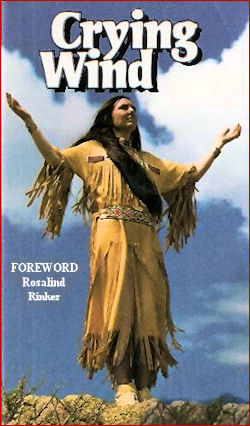
Crying Wind was the name of both the book and the author. Within a year of its release, Crying Wind became Moody Press's best-selling book ever. It was an extremely well-told story, and a real tear-jerker. To read it was to establish a deeply sympathetic personal connection with the author.

I loved the book. Everyone did.

Crying Wind herself spent a day in the Moody Press office shortly after I finished checking her page proofs. She was there mainly to meet with our sales and marketing staff, but she went to lunch with the editorial team. In her book she had portrayed herself as shy and emotionally tender—easily intimidated. Our editorial staff was a sizable group of very strong personalities and sticklers for grammatical precision, not necessarily an easy group to warm up to all at once. Crying Wind had expressed misgivings about the unfamiliar big-city features of Chicago. So we were all keen to put her at ease.

At the time, she lived near Tulsa, literally in the neighborhood I came from. Growing up in Oklahoma, I had several Native-American friends and relatives, so I knew that she and I had a few things in common we could talk about. I had looked forward to meeting her.

Right away, many things about her surprised me. One was that I never would have guessed she had experienced all she described in her book. Nothing about her features, her verbal skills, or her mannerisms suggested that she was Native American or that she had grown up in abject poverty. For someone as deprived of education and as utterly isolated from Main-Street America as her book claimed, she was also amazingly conversant with pop culture. She looked and talked like a Wheaton College alum, which is not at all what I expected from her own description of life among the Kickapoo.

Having read her book, I was not surprised that she was a compelling story-teller. But what did surprise me about that was how many of the stories she told during lunch that day had the ring of familiarity. I had heard slightly different versions of at least three of her tales. For instance, she regaled us with the dead-cat-in-a-shopping bag story. I'd heard that story (with some slight differences) about a year earlier, but in Crying Wind's version it happened to someone she knew. That didn't trouble me a great deal, because I figured if it happened in Tulsa, I might have simply heard a third- or fourth-hand version. If Crying Wind personally knew the woman with the cat-in-the-bag, hers must be the canonical version of the tale.

I don't think the expression "urban myth" had been coined yet in 1977, but if I were going to describe her repertoire of stories today, I'd say it seemed like she culled them all from the pages of Snopes.com.

At the time I merely thought it a mind-blowing quirk of cosmic destiny that Crying Wind had so much personal involvement in so many amazing stories I'd already heard. At the time, I was young, naive, and no doubt willingly over-gullible. I wanted to believe her, and the almost supernatural serendipity of her tales merely increased the mystique of this amazing person.

Crying Wind—the book—became a runaway best seller. In fact, in less than two years it became (by far) the best-selling book Moody Press had ever published. Crying Wind wrote a sequel and by 1979 she was working on a third book. On the strength of her stories she had developed a thriving public ministry, speaking to large women's groups and churches. She always dressed in an authentic-looking native-American costume.

But by early 1979 a number of people were questioning Crying Wind's claims, including people from her own family. Moody Press investigated and soon learned that her entire story was fabricated. Crying Wind had no Native American ancestors. Her real name was Linda Davison Stafford. She had grown up and gone to high school in Woodland Park, Colorado, where she earned awards in creative writing.

Furthermore, many of the major plot points in her story bore an uncanny resemblance to another author's phony life story. If I recall correctly, in a 1979 Christianity Today article about the fraud, they published her photo from a high-school yearbook. She was clearly a product of white middle-class American culture, not at all what she had claimed.



To Moody Press's credit, they were the first to expose the fraud, and they immediately dropped Mrs. Stafford's books from their line, even though both volumes were still (at the time) atop the Christian best-seller lists. Warren Wiersbe (my pastor in those days and a good friend to me) wryly told me he thought Moody Press should simply change the book's title to Shooting Bull and keep it in their line as a fiction book.

He was joking, of course, but a few years later, Harvest House did virtually that. They picked up the book without changing a thing (not even the cover art), called it a "biographical novel," and re-released it. Crying Wind herself continued speaking to women's groups in her Indian costume. Most of them had heard all about the scandal, of course, but they wanted to believe her story. They wanted it to be true so badly that many of them convinced themselves that Moody Press (and others who had merely told the truth) were the real villains in the whole ordeal.

Crying Wind is not so well known today, but she is still speaking to evangelical groups under the pretense that her books tell "her life story as she remembers it."

Several Native American groups even list her books as valuable resources. The fraud she perpetrated, though definitively exposed and debunked more than thirty-one years ago, still lives on.

She's not alone. Over the past 40 years, the evangelical movement has given birth to dozens of flash-in-the-pan phonies, frauds, and bunko artists. John Todd, Mike Warnke, Alberto Rivera, Bob Larson, and Ted Haggard are a few names that come to mind. Todd and Rivera are both dead, but Jack Chick continues to publish their fraudulent claims as true. All the others, though now out of the mainstream, are still engaged in some form of public "ministry" today—still profiting off reputations woven with webs of lies.

This is relevant, of course, to the case of Ergun Caner, erstwhile Dean of Liberty Baptist Theological Seminary. For most of the past decade, Caner has been making demonstrably false claims exaggerating his childhood involvement in Islamic fundamentalism, his early indoctrination in the politics of Jihad, and his post-conversion "debates" with Islamic clerics.

Liberty University investigated his claims, acknowledged that he had made "factual statements that are self-contradictory," demoted him from the presidency of their seminary, and issued a statement announcing that Caner has "apologized for the discrepancies and misstatements." But they kept him on their faculty, and the Liberty party-line seems to be that the investigation actually "exonerated" Caner.

Those who questioned Caner's honesty in the first place are clamoring for more precise answers to some very specific questions. Caner himself is saying nothing, and no less than Norman Geisler has issued a series of statements more or less in defense of Caner—basically suggesting that the whole controversy in the first place was a Muslim-Calvinist conspiracy to discredit Caner.

When I read Dr. Geisler's articles on the Caner scandal, it brought to mind a meeting I had with Dr. Geisler during the big Council on Biblical Inerrancy convention in San Diego in 1982. I was still working for Moody Press at the time, and Dr. Geisler was one of our authors. I needed to meet with him to discuss the cover design for Moody's re-release of A General Introduction to the Bible. That question was settled fairly quickly, and then we had a long discussion over dinner about the state of evangelicalism. The Crying Wind scandal came up in our conversation that evening, and Dr. Geisler expressed his dismay over the pious gullibility of evangelicals.

He was exactly right about that.

For the very same reason he is wrong about the Caner situation today.

However, the pathetic track record of evangelicals' consistent failure in dealing with frauds and bunko artists in our midst leads me to be pessimistic about any real resolution in the Caner scandal. The Liberty investigation most definitely did not "exonerate" Caner, but he remains on the Liberty faculty. Caner himself is stonewalling while a handful of his most outspoken supporters are doing their best to demonize his critics. If Liberty continues officially to offer sanctuary to Caner, he will eventually be able to weather the controversy without ever actually admitting any specific wrongdoing. Evangelicals—who have no stomach for protracted controversies and a 40-year habit of offering unconditional restoration to fallen leaders whether they truly repent or not—will soon turn against Caner's critics.

Of course, by this approach Caner, Liberty, and the little cadre of Arminian bloggers who are determined no-matter-what to defend Caner have already lost all credibility with those who love truth. That loss will most likely be permanent. Sadly, it is another major loss for American-style Evangelicalism, which has already made itself a laughingstock for all the wrong reasons.


Phil's signature