Showing posts with label mea culpas. Show all posts

28 January 2011

One last word on Today's hoopla

by Frank Turk

This was written by me today in the comments of the R. Scott Clark letter:


Tim has contacted me and has given me his opinion about this statement. He was deeply offended, and for that I apologize.

No other comment is necessary.


17 June 2010

Acts 29 — correcting my misstatement

by Dan Phillips

In the meta to this post, I made the fairly offhanded comment (at 8:08 AM, June 15, 2010) that there was an Acts 29 church near us, which featured the pastor's wife sharing the pulpit on occasion to give a feminine perspective.

Yesterday when I woke up I found an email from someone identifying himself as being part of Acts 29 leadership, asking me for the name of the church. He said that such pulpit-sharing as I described would not be acceptable.

So as quickly as I could, I went to double-check my memory. I wrote the pastor of the church, and went back to the web site (on my iPhone; oddly, my work blocks the site). What I found:

My statement was incorrect. The church and the pastor are both unaffiliated with Acts 29.


I apologize for the misstatement. It was unintentional, simply a matter of a faulty memory.

Here's how (I think) it happened. I corresponded briefly with the pastor of the church, to try to make sense of his wife sharing the pulpit, since their statement of faith seemed pretty complementarian. In his cordial response, he mentioned that those connected with the Acts 29 network influenced him, and he named Mark Driscoll. The web site had (what I thought was) an Acts 29 "feel." Since I decided not to visit the church, I didn't research further — and it went incorrectly into my memory as an Acts 29 church.


In yet another prompt and cordial response to my email, the pastor says he's considered joining, uses their materials, admires what they do — but they're not affiliated.

I immediately apologized and retracted, within that post's meta. Until today, I left the comment up, so as not to give the impression of sweeping it under the rug. However, I decided that it was a greater concern, coming as it did in a long meta, that someone would read the misstatement and not the later correction — and be left with the false impression my comment created.

Again, I apologize, and hope this completely sets that record straight.

Dan Phillips's signature

23 March 2009

More On the Pornification of the Pulpit

by Phil Johnson


he message I gave at the Shepherds' conference three weeks ago on the pornification of evangelical pulpits continues to generate e-mail and questions. (The message was on Titus 2:7-8 and was titled "Sound Doctrine; Sound Words.") I don't particularly want a drawn-out discussion of that message to dominate our blog. So I answered three or four of the best questions about it HERE two weeks ago and hoped we could move on to other topics.

But a new wave of questions followed that post. In fact, the volume of feedback I am getting seems to be increasing. Positive replies still outnumber negative ones by a very large margin, but the negative ones are getting more and more aggressive. I commented two weeks ago that only a few people had challenged my position and most of them were gracious. I can't honestly characterize the negative e-mails in this second wave as "gracious."

But it seems those who disagree with my position are the most eager to keep me talking about it. My detractors are nothing if not persistent, so today I'm going to answer some of the best questions from that second wave of e-mails:

Are your ears so tender that you are truly injured by the sound of coarse words?


I wish I could say I'm so thoroughly "innocent in what is evil" (Romans 16:19) that I'm traumatized when I hear vile words, dirty jokes, or the casual patois of the porn industry. Sadly, before I became a Christian I was a master at telling smutty jokes. I come from a line of Oklahoma cattlemen. I think my great grandfathers and their sons were blissfully unaware that polite society considered any words or topics off limits. I first learned how to cuss fluently in grade school while fishing with my grandfather. Then I spent my summers from high school through college working on roofing crews, where profanity flows more freely than hot asphalt.

So my problem is not that I am naïve when it comes to filthiness, foolish talk, and crude joking. On the contrary, I have had far too much exposure to such things to be fooled by the claim that they can be harnessed and employed as tools for contextualizing the gospel.

Incidentally, my concern about such things is not that they are injurious, but that they are spiritually defiling. Words that inflict pain on those who hear may or may not be sinful. Talk that defiles the hearers is always wrong.

I have heard you use expressions like "damnable heresy" and "pompous ass." How is that different from the strong language you condemn?


1. I don't condemn "strong language" per se. On the contrary, I like robust, vivid language. What I deplore is profane, filthy, lewd, or irreverent talk.

2. Words such as damned and damnable are inappropriate when employed as casual curses, but such words are fitting and proper when we're speaking of literal damnation.
3. Can I justify calling someone a "pompous ass"? In most instances, probably not. But that's not because it's a profane expression. It is not. In that context (as well as all 90 times the word ass appears in the KJV), the term is a reference to a braying donkey.
    Nevertheless, it would be fairly easy to make the case that an expression like that cannot be applied to a fellow believer without violating Romans 12:10 (and probably the spirit of Matthew 5:22). Even using such a label to describe an egotistic unbeliever might violate Colossians 4:6—especially if it's used in an offhand or jeering way.
    Have I been guilty of that? To my shame, yes. A too-sharp tongue is one of my besetting sins. I made a comment about that two weeks ago, near the end of that 400-comment thread: "I'm certainly not proud of every parody I have ever invented or every wisecrack I have made. The sudden rise of profaneness in the pulpit over the past 3 years is one of the things that has driven me to rethink how freely we ought to indulge in hard-edged humor."

In your message at the shepherds conference you used the word defecating. Why is that any better than a shorter, more common word that means exactly the same thing?


Every culture has words that are considered taboo, or in biblical terms, "filthy." It's not merely their meaning that has caused them to be deemed inappropriate. I could give you a dozen or more synonyms for ordure that occupy varying levels of social acceptability, ranging from baby-talk expressions that are not really banned by our culture (but I wouldn't normally use them in the context of Bible teaching)—to words like guano, bear scat, manure, or feces. These would include several more or less clinical terms for specific kinds of excreta.

Contemporary culture is not really as vague as some like to pretend when it comes to the question of which words are "filthy" (like the words that decorate so many hard-core rap songs) and which words are merely vivid and repulsive (like the word diarrhea.)

Scripture expressly says the former is to be avoided; Scripture itself employs the latter, but only judiciously.

Who determines which words are "filthy" and which ones are merely clinical? Is there a list of forbidden words you can send me?


Culture determines this. It's quite true that the standard may be different from culture to culture and generation to generation. But both history and literature prove that it's not nearly as fluid or as nebulous as postmodern language-theorists suggest.

I listened to your anti-Driscoll message and read everything you wrote on your blog about it. You still haven't cited a single sermon where Mark Driscoll used cuss words.


1. If you had read everything on my blog about it, you would know that I have never once accused Mark Driscoll of using "cuss words." Furthermore, I have made that point multiple times—every time someone demands examples of Driscoll's "cussing."

2. If you had given my message a fair hearing, you could surely find a more fitting way of describing it. How about "your message on Titus 2:7-8?"


ne intriguing fact stands out in all the criticisms of that message: not a single critic has challenged my interpretation of Titus 2:7-8; Ephesians 4:29; 5:3-4; or the third commandment (Exodus 20:7). My detractors' disagreements fall into two categories: 1) some complain that I don't understand the importance of contextualization; and 2) some complain that I've exaggerated the problem.

If I could ask just one question of them, it would be this: What, precisely, do you think Ephesians 5:4 forbids?


Phil's signature


27 June 2008

Buncha Stuff

by Phil Johnson

Friday Afternoon Bonus:

Great post at Piper's blog today. He nails it. Don't miss it.

    I've had about fifteen mostly-trivial things floating in my brain that I want to blog about but no time to write much, so I'm going to deal with as many items as possible from my "To Blog About" list today in one post, if you'll bear with me.

I've been traveling more than usual this summer. I was supposed to be on sabbatical, and before those plans got rearranged, I had accepted several invitations I simply couldn't back out of, thinking I would be free to travel because I wouldn't be juggling deadlines and whatnot. But the publishers who govern my deadlines refused to let me take any extended time off this summer, and now I have to meet the deadlines plus fulfill most of those other commitments I made. (The sabbatical will have to wait till next year. Or the next.)

That, plus a spate of odd and unusual computer problems (mostly network issues, surely related somehow to the activities of demons), have kept me from putting much serious time into the blog lately. Sorry.

Anyway, last week I was at Cornerstone Seminary in Vallejo, CA, teaching a week-long summerim session on the life and ministry of Spurgeon, with special emphasis on his preaching and the controversies he provoked. While preparing for those sessions, I read all at once through all the past weekly doses of Spurgeon, and it gave me a whole new appreciation for Spurgeon's courage and steadfastness. I recommend the exercise.

A couple of weeks ago, I spoke at a church in the Atlanta area. My reputation for eating odd delicacies has got around, and when I travel, people frequently offer me challenging, barely-edible tidbits to see how far I will go with it. In Atlanta a dear woman (Marie, if I recall her name correctly), gave me a package of squid jerky (yes, I'm serious) plus a bag of freeze-dried anchovies. Great salad toppers. Thanks.

Also, during one of my recent trips I had the inestimable pleasure of meeting (for the first time in person) our long-time friend and honorary PyroManiac Todd "Freakishly Tall" Friel. In the picture there, we're both standing on a level floor. He really is tall. He's the same in person as you hear on the radio, and irrepressibly funny. I wish we'd had a few more days to talk, but one of us would probably have got the other one in trouble somehow. If you've never heard Todd on Way of the Master Radio, you're missing the best daily live show on Christian radio. Get the podcast. Also, if your cable company carries Familynet, check out Todd's daily television program, Wretched. That's the name of the show, not an evaluation of it.

Speaking of evaluations, my next item for today is a brief book review. I got my copy of The Last Men's Book You'll Ever Need from David Moore, the book's author, who kindly sent me an autographed copy with a courageous invitation to review the book candidly.

I would have loved to give the book my unqualified endorsement. Indeed, there is much positive to say about it, and Justin Taylor has covered most of that ground. In addition to what Justin wrote, I would add that I appreciate Dave Moore's resistance to the therapeutic approach to human relationships that dominates so much of evangelical discourse nowadays. Moore points out that everyone is "wounded" and we don't really deserve merit badges or undue sympathy for our personal hurts when we ourselves are guilty of waging war against righteousness. Also, while we're carefully nursing our personal wounds, "we need to remember that we inflict our fair share of them" (p. 118). That's wise advice, especially in our culture where so many men (and women) "focus on the hurt they've received [and] tend to discount or diminish the hurt they inflict on others" (p. 114)—not to mention the sins against Almighty God we're guilty of. Moore calls us back to a more biblical (and manly) view of our own sin.

Moore makes a number of helpful, insightful, and thought-provoking points like that. The book definitely has its fair share of high points.


As much as I'd like to stop with that, however, the manly candor Dave Moore rightly solicits compels me to say that I think the book also has too many shortcomings to fulfill the promise of its own title (which title, David Moore assures me, is supposed to be tongue in cheek). If I were looking for just one standalone book to recommend to your men's fellowship for group study, I'm sorry to say this would not be it.

Let me keep my remarks about the book's shortcomings as brief as possible by simply saying that in one way or another, all my criticisms are related to the fact that Moore brings up some very serious topics without handling them very seriously. Several of the topics that are especially crucial for men in these post-modern times warrant much more thoughtful and sober-minded analysis than Moore gives them.

In a section on the struggle with sexual lust, for example, Moore leaves the impression that prudery and sexual addiction are equally serious dangers. He describes them as "both deadly extremes" (p. 104). Now, I have counseled a lot of men who are struggling in areas related to sex, the thought life, single-mindedness, and relationships, and I can't honestly say that I have ever met one man who fell into trouble spiritually because he succumbed to the deadly danger of prudery. Virtually every man I know who is seeking to live a godly life in the Internet age actually wishes he could recover some of his pre-adolescent innocence. Prudery of the right sort is actually a virtue (Romans 16:19).

At that point in the book, where many men would be most eager for Moore to give truly practical help, he has surprisingly little to say. And he quotes without attribution from "one very wise writer" (I Googled and discovered he was quoting Doug Jones), with some intriguing lines about how porn divorces beauty from goodness and therefore turns true beauty on its head, peddling a concept of beauty that is really ugly in the extreme (pp. 106-7). But despite Moore's confident assertion, I don't think that brief thought from Doug Jones is going to "change" many struggling readers' lives.

Moore clearly knows the lives of sinners are changed only when the Holy Spirit applies the Word of God to hearts, and I wish he had followed the ramifications of that truth when dealing with (of all things) men's battle against lust. He could have—and should have—handled such topic a lot more seriously.

I won't belabor the point further, but this book would be much better if it were twice as long and ten times more serious. For my money, Justin Taylor's edition of John Owen's Overcoming Sin and Temptation is a better, richer summary of what the Bible says about "Guy Stuff." Not as funny, perhaps, but much better for men who are seeking help with the problems of being men.

Still, there's help to be gleaned and good thoughts to be found in David Moore's book, and for some men (if taken with a dose of biblical discernment) this might be a good starting point if they are seeking to understand their manhood in a spiritual and biblical light. But by no means is it the last book on manhood any man will need. (In all seriousness, as someone who has been involved in Christian publishing for more than 30 years, if I had been on the titling committee during the concept phase of this book, I would have lobbied hard for a different title, no matter how much marketing appeal this title might have.)

Oops. Dave Moore e-mailed me to correct one detail in my review. I said he quoted Doug Jones without attribution. Not true. The book uses those new-fangled end-notes where there is no documentation or note-number in the actual text itself, but if you go to the end of that chapter there is indeed a full footnote. It isn't signified anywhere in the actual text, but the documentation definitely is there. Sorry about that. Incidentally, Dave Moore took my critique like a man and sent me a kind note of thanks, which exemplifies the manly courage he wrote about. For the record, he also tells me that his publisher had imposed on him a strict word-limit, which prohibited from the get-go his aiming for an Owenesque style. Perhaps he can do a sequel or two that will fill in the some of the gaps. I'd definitely read it.

Thanks again to David Moore for his kindness and courage in submitting his book to PyroManiacs for review. To other authors out there: feel free to send any of us your books, but we can't promise to review any particular books, and we especially refuse to try to coordinate our reviews with any publisher's promotional timeline. Generally, we review books we either really like or truly, absolutely hate—and we leave the tepid reviews to Justin Taylor and Tim Challies. Book reviews are relatively rare at our blog anyway, but don't let that discourage anyone from sending us free books.

Enough about book reviews. I've run out of time and space in what was supposed to be a short post.

One last thing: Whatever else you do today, don't neglect to read about the importance of being "missional," succinctly explained by the enigmatic Dissidens.
Have a great weekend, and remember to spend the Lord's Day with the Lord's people.
Phil's signature

19 November 2007

Wake-Up Calls, Apologies, and Wrong Turns

by Phil Johnson


    few weeks ago, I made a post about the failure of the Willow Creek strategy, in which I pointed out some of the ironies surrounding this videotaped admission from Bill Hybels.

Consider, for example, that various critics of the Willow-Creek model have been saying these things for two decades:
  1. Polling people to find out what they want and then giving it to them is an unbiblical approach to church growth (2 Timothy 4:2-4).
  2. The so-called seeker-sensitive strategy actually stints discipleship.
  3. It engenders worldliness and false conversions.
  4. In fact, it's filling the church with people who think they are Christians but have no basis for that confidence because they have little or no true understanding of basic gospel truth—and no appetite for studying God's Word on their own.
The critics have given numerous biblical reasons for those concerns. But the Willow Creek staff refused to hear any of it until data from an opinion poll proved the critics right—and then Hybels had the audacity in this video to pretend the data were telling him something he could never in his wildest imagination have anticipated.

That's the main irony I'm talking about.

Here's another one: Willow Creek's reflexive response was to do some more research by polling, and let that determine how they would respond to the collective failure of their many programs. The result is a slick new website, book, and yet another multi-phased program, which Willow Creek is now exporting to the same churches that followed the original—now failed—strategy. And, of course, it all starts with a shiny set of new tools to make it easy for those churches to conduct their own opinion polls.

Anyway, I recommend you listen to Todd Friel's first-hour broadcast on Way of the Master Radio from 1 November. He did a much more thorough job than I did analyzing the Hybels's mea culpa video, and Todd had some excellent exhortations for all of us, as always.

Now (in matters only tangentially related to that) last week, right here at PyroManiacs, Mark "Marko" Oestreicher, president of Youth Specialties, paid a visit to our meta to lodge a (very polite and fairly mild) complaint about my insinuation that his company had a major role in derailing youth ministry, starting some three decades ago or so. Many of you will recall that my chief complaint was about the fun 'n' games approach to youth "ministry," where activities just-for-fun replace biblical teaching as The Main Thing. I referred to this as "the 'Youth Specialties' approach to student ministry."

Marko demurred:

funny -- i was reading the post and agreeing with so much of it. then i got to the last bit and found it ironic that the this "fun and games" approach to youth ministry was being called the "youth specialties approach"! wow, i can only be left with one of two conclusions:

1. either there's a different youth specialties than the one i'm president of, the one that has publicly apologized for our role (decades ago) in promoting a program-approach to youth ministry, and regularly rails against this approach today.

2. or, your only contact with youth specialties was decades ago.

the commenter who flagged tony jones' book with the claim that it is gnostic and neo-hindu (ha, tell that to the early church fathers!) might have a less misplaced "accusation". but to say YS is about fun and games youth ministry is certainly not reflecting who we are, what we say, or what we publish these days.
(What is it with these Emergent guys and their shift keys, anyway? Do they think capital letters contribute to global warming, or what?)

You can read that comment-thread to see my reply to Marko. Just do a search on that page for his name.

But I've been looking for the apology Marko referred to. He might have been speaking of a famous article written by the late Mike Yaconelli: "The Failure of Youth Ministry" (which was later toned down with this apology). I don't think he was speaking of the infamous skit fiasco from earlier this year, in which both Marko and the Skit Guys admitted that one particular bit of fun 'n' games went too far.

Then I found this page of articles about youth ministry, mostly rants by Yaconelli. He had a few good things to say and a lot of really bad ideas. His discomfort with the direction of modern student ministry was evident in several articles. But I couldn't find the place where he specifically acknowledged and repented of the enormous role he and YS had played in bringing the problem about in the first place.

In fact, here's what disturbs me most about both Willow Creek's recent admission and Marko's tacit acknowledgement that YS did indeed have something to repent of: In neither case do we see any of the fruits of real repentance.
Instead of reemphasizing the centrality of Scripture in what we teach our young people, Youth Specialties took a hard turn toward the leftward extreme of the Emergent spectrum. They now publish Brian McLaren, Doug Pagitt, Chris Seay, Spencer Burke, and several other similarly unorthodox authors you probably haven't even heard of yet. And that has been in addition to (not instead of) the fun 'n' games manuals they originally built the company on. Oh, and don't forget their brand-new study guide and "devotional" based on the hit movie, Evan Almighty.

All Willow Creek's rhetoric about their so-called "Wake-up Call" likewise seems only to signal a deliberate, headlong Shift in a self-consciously postmodern direction. It is clearly not going to mean a turn toward a more biblical philosophy of ministry.

I do think Bill Hybels's admission that his strategy has failed needs to be taken at face value. I believe it signals the beginning of the end for the seeker-sensitive approach that has dominated the evangelical movement for more than twenty years. But I'm also convinced that what's coming next will be even worse.

In fact, if you miss nothing else in all the current popular re-imaginings of various ministry styles, please don't fail to notice the absence of any stress on biblical principles of ministry. Coming in the midst of all these confessions of seeker-sensitivity's heedless, reckless failure, that dark silence is noteworthy. It belies the pretense of candor in all these mea culpas. I think it is a harbinger of some truly evil things on the horizon.

Phil's signature


06 September 2007

Ack.

    promised a full retraction if it turned out that the website I linked to in the post that originally appeared here was a fraud. Today the person who sent me that link yesterday (from a hotmail account) sent me another cryptic e-mail which I can only interpret as an admission that the site is indeed a fraud. Here is all he says: "you're a calvinist anyway. you probably think that whats happening now with the church is predestined to. we need action."

Well, we don't need the kind of "action" that involves deliberate deception. In fact, we need truth before we need "action." As I said in a comment below, the cause of truth is not served by lies.

So I'm permanently withdrawing the satirical image that was based on the fraudulent site, and I apologize for not checking it out better before posting a link.

Thanks to David, who first noticed what I didn't.

Phil's signature

PS: I'm disappointed that no one has actually cast an official vote one way or the other for whichever version of the "Friend of Sinners" sidebar banner you prefer. Here's Frank's original and my charismaticized revision, which I think has the distinct advantage of including no violent weaponry:


Comment below if you have a preference about which if either should become the official version. Alternative suggestions for imagery are welcomed. Get creative. I'm thinking maybe something like this:


28 July 2007

Farrago

by Phil Johnson


ere's an odd collection of five mostly-unrelated ideas that are floating around in my head today. We don't have enough blogspace in a normal week for me to post about all five of these topics in discrete blogposts. Four of them are fairly trivial anyway. (The first item is the only one that's truly important.) So I'll just cover them all as briefly as possible in one weekend post:
  1. I saw a teaser this morning for an upcoming feature on Fox News about the shocking decline in the number of Christians in the Middle East over the past decade. Ten years ago, some 12 million Christians lived in various Middle Eastern countries. They constituted a small and beleaguered minority even then, but today they number fewer than two million. Statistics show, for example, that in Bethlehem (whose population was 85 percent Christian just a few years ago) only 20 percent of the community are now Christians. Half of Iraq's Christian community has either left the country or been killed since the start of the war there. Martyrdoms, such as last April's slayings of three employees of a Turkish Bible publisher, are becoming increasingly common in Muslim-dominated places but are getting little coverage in the American press.
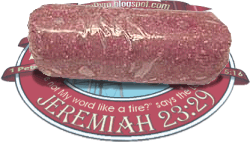
  2. As of this posting, even Fox's Web site has no articles featuring those data, so we'll watch Fox's Web space. But on the way to looking it up, I found this. Note to the criminal element: I've started carrying a frozen Costco meat chub in my briefcase.
  3. Have you seen the controversy about Bear Grylls? He's the dude on "Man vs. Wild" who has shown us how to survive in virtually every kind of hostile wilderness. He's a former member of the elite British SAS, adventurer, youngest Brit to conquer Everest, and an Eton alumnus.
         I've heard that Bear makes a profession of faith in Christ. Plus, he blogs.
         Now, everyone has always known that he has a camera crew with him in the wilderness, because (after all) that's how they make the program. But he solemnly assures us at the start of each episode that the camera crew cannot touch him, help him, or feed him—and they supposedly leave him alone in the wilderness at night.
         Turns out that might not be completely true.
         See: I have watched this guy literally get on his hands and knees and eat the back end out of a dead zebra, drink the moisture from elephant dung, bite the head off a live snake, and munch on maggots from a rotting animal corpse, so I'm duly impressed with his will to survive.
         But I'm hugely disappointed to learn that he has sometimes cheated. The scandal gives us a good lesson about the importance of integrity, and how even the smallest of white lies can undermine the cause of truth. If you want a sample of what I am talking about, Google Bear's name and take note of the amazing level of scorn he is receiving for having fudged.
         Postmodern society may profess to believe that everything is relative and what's "factual" depends completely on your point of view. But people still won't stand being fooled by someone who deliberately bends the truth. Something in all of us rightly resents that.
  4. I've read some books lately about the Lincoln assassination, and as I was reading about the conspiracy trial, I came across an eyewitness record of the proceedings by "General Lew Wallace." Something there struck me as familiar, and as I thought about it, it occurred to me where I had heard that name: Wasn't Lew Wallace the guy who wrote Ben Hur? So I looked it up to see if it was the same Lew Wallace. Sure enough. Turns out he was a kind of upscale Forrest Gump. He was a Union general in the War Between the States. He was a participant in the military tribunal that condemned the Lincoln conspirators. He was also a fine amateur artist, and he drew pictures of the defendants during the conspiracy trial. His drawings are on page 96 of James L. Swanson and Daniel L. Weinberg, Lincoln's Assassins: Their Trial and Execution, and they are excellent likenesses.
         Later, Wallace served as a secret agent; governor of New Mexico; and US Minister to the Ottoman Empire. During his stint as New Mexico's governor, he met personally with Billy the Kid. (Don't know if he sketched the outlaw's likeness, though.) His life is full of interesting details. If I was still doing the old "Monday Menagerie" posts, he'd make a brilliant subject.
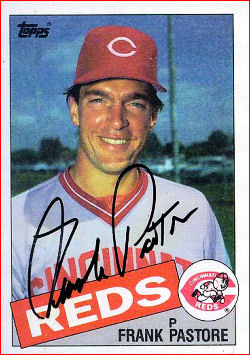
  5. Speaking of people with multiple claims to fame, I probably need to mention Frank Pastore. Several days ago, Pastore created a furor in the blogosphere (and beyond) with an article critical of "evangelical" postmodernism, which was infelicitously titled "Why Al Qaeda Supports the Emergent Church." The article itself (and the title in particular) is a classic example of the kind of critique that isn't really helpful to anyone. It's the sort of thing that gives angry post-evangelicals a big hammer with which to smash the toes of anyone and everyone who is critical of the Emerging Church movement. It also gives people who ought to listen to their best critics an excuse to blow them off. ("See? This is so typical of what the critics of Emergent are doing.) So let's be clear: It's an article that shouldn't have been written, much less posted online.
         That said (and while we're on the subject of post-evangelicals and their hammers), I listened to the iMonk's podcast where he addressed the Pastore article. Of course, iMonk's giddy eagerness to get in on the "dogpile" against Pastore came as no surprise whatsoever. Here's what did amaze me: iMonk didn't seem to have any clue about who Pastore is. After all, iMonk is well-known for being a Cincinnati Reds' fan. Frank Pastore was a Reds pitcher for several years. In fact, Pastore was an ace before Steve Sax hit a hard line drive right into his throwing elbow in 1984. After that, Pastore didn't have the hard stuff anymore, and he was sometimes accused of throwing a spitter.
         That's not all. Pastore also holds the world speed record for downing the famous 72-ounce steak at the Big Texan Restaurant in Amarillo. He inhaled the entire meal in nine and a half minutes. (I'm curious about what technique one would use to stuff down 5 pounds of steak in less than ten minutes. Even Bear Grylls hasn't shown us that yet. My guess: spend five minutes using a very sharp fillet knife to cut the steak into the thinnest, smallest strips possible, then 4.5 minutes eating without chewing.)
         Anyway, Pastore is now a talk-show host on a Los Angeles Christian radio station (KKLA). I don't get to listen, because the show intersects with the busiest part of my work day, but I have to say, Frank seems like a spunky and likable fellow, even if he did write an article I really didn't appreciate. Here's his testimony. And here is another version in audio.
Phil's signature

14 July 2007

Pompous Language, Pretentious Preachers, and Post-Evangelical Doctrine

Your weekly dose of Spurgeon
posted by Phil Johnson

The PyroManiacs devote some space each weekend to highlights from The Spurgeon Archive. This excerpt comes from the same sermon we excerpted last October 29, "Everywhere and Yet Forgotten," a sermon preached on July 29, 1860, at Exeter Hall, London.
    would we had another Job, to chastise the high-sounding language of [post]modern theologians.


There are starting up in our midst men, who if they are not heretics in doctrine, are aliens in speech. They are men described by the old preachers, who say, "Mark!" and there is nothing to mark, and who shout, "Observe!" and there is nothing to observe, except the want of everything that is worth observing.

We know ministers who cannot speak in the common language of mankind, but must needs adopt the jargon of Carlyle, who sets language on its head, and puts the last word first. These men must needs make the English language a slave to the German—the glorious grand old Saxon must buckle to their heresies and conceal the depths of their falsehoods.

I pray God the time may come when some man may unmask them, when all these wind-bags may be rent, and all these bladders may be pricked, when if teachers have anything to tell us they will deliver themselves so that all can understand. If they cannot use plain language let their tongues go to school till they have learned it.

C. H. Spurgeon


21 June 2007

I want you to want me

by Frank Turk


I was originally going to call this post "Cheap Trick", but this title strikes me as a little more clever. And it's because that's what underlies the cheap trick we are going to discuss today, so stick with me.

This is a reproduction of a $20:


For the federal agents reading, it's at a low enough resolution that nobody's going to make any passable copies of it, so call off the hounds. But it looks like a $20 thanks to my handy HP scanjet 3500c and photoshop, much like the pyro'd up $20 looks, well, like all the graphics around here look.

And everybody likes a $20 bill, right? I mean, nobody in his right mind, if he was walking down the street, and there was a $20 laying there, wouldn't stop and pick it up. And if you're a food service worker -- that is, part of the wait staff -- and you got a $20 for a tip, you'd be pretty jazzed up.

$20 is a decent piece of cash.

Now look at this:


It sort looks like a $20, doesn't it? I mean, you're expecting a cheap trick at this point, so right away you recognize that it's not really $20 but about 3/4th the right size and it has some design challenges on the short side. But if this was wedged under a plate at a restaurant, or maybe sticking out of a book at Barnes & Nobles, you'd think for a second that it was your lucky day. $20 just sitting there -- until you pulled it out.

See -- it went from being $20 to being a CHEAP TRICK is about 2.4 seconds, and maybe it's good for a laugh.

But what happens when somebody picks up that phony $20 and turns it over and finds this:


Or maybe they find a better presentation of the Gospel -- it has a decent tract on the back side of the phony front. What do you think the person receiving that piece of paper thinks of the Gospel then?

It seems to me that if the phony $20 was a disappointing prank when it was just a phony $20, it becomes something slightly more offensive when it turns out to be a ploy to get you to listen to some message.

You know: like sticking a picture of a sexy girl on a billboard to get you to read the name and address of your local casino or whatever.

Now, why bring it up? Am I afraid that there's about to be a rash of phony $20 tracts coming around the pike and you wary readers should be well-informed on what exactly they are doing?

Well, no.

What I am saying is this: if it is somewhat sophomoric and whatever the antithesis of "clever" is to trick people with phony money to read or hear the Gospel delivered, how much more of the same is it to trick people with a phony Jesus? It's one thing to want people to want to hear the Gospel -- and it's another thing entirely to make the Gospel into something it is not in order to get them to just pay attention.

Think about that. There's a book review which follows this logic, but TeamPyro is having a retreat next week and it's unlikely that the book review will happen before then. However, if I don't see you for a while, be with the Lord's people in the Lord's house on the Lord's day, and don't take any wooden nickels.


26 October 2006

Words

by Phil Johnson

on't think for a moment that I regard my comments about language, propriety, and grace as good advice for others but not for me.

As a matter of fact, I'm rather surprised that no one yet has flung the whole argument back in my face: "You may not preach like Driscoll, but do you think everything you post at your blog is edifying? You don't think some of your hard-edged humor and love of sarcasm is also less than edifying? What about all the people you offend?"

Some commenters have hinted at that, but no one has really clubbed me over the head with it yet. They've uncharacteristically let me off light.

So what's my answer to that charge?

"I lay my hand over my mouth" (Job 40:4). "I abhor myself, and repent in dust and ashes" (Job 42:6). My "tongue is a fire, a world of iniquity. The tongue is so set among our members that it defiles the whole body, and sets on fire the course of nature; and it is set on fire by hell" (James 3:6). "Woe is me, for I am undone! Because I am a man of unclean lips, And I dwell in the midst of a people of unclean lips" (Isaiah 6:5).

Scripture is full of admonitions about seasoning our words with grace: "Let your speech always be with grace, seasoned with salt, that you may know how you ought to answer each one" (Colossians 4:6). "Let no corrupt word proceed out of your mouth, but what is good for necessary edification, that it may impart grace to the hearers" (Ephesians 4:29).

"The words of a wise man's mouth are gracious, but the lips of a fool shall swallow him up; the words of his mouth begin with foolishness, and the end of his talk is raving madness. A fool also multiplies words" (Ecclesiastes 10:12-14).

"My mouth shall tell of Your righteousness And Your salvation all the day, For I do not know their limits. I will go in the strength of the Lord GOD; I will make mention of Your righteousness, of Yours only. O God, You have taught me from my youth; And to this day I declare Your wondrous works" (Psalm 71:15-17).

"Let your light so shine before men, that they may see your good works and glorify your Father in heaven" (Matthew 5:16).

And then there's this wonderful couplet from the Proverbs: "A wholesome tongue is a tree of life, but perverseness in it breaks the spirit. A fool despises his father's instruction, but he who receives correction is prudent" (Proverbs 15:4-5).

The point is simple: This is a huge issue, and a major part of what the Bible has to say about the sanctification we require. Scripture is full of admonitions to guard our language carefully.

Only a rank fool would try to defend filthy talk or see how close he could come to the limits of impropriety without actually crossing the line. We (and as Frank says, "We" includes "me") need to cultivate the exact opposite attitude toward this particular transgression.

That, I think, is the whole point of James 3:1-2.

By the way, I realize that passage is not merely a caution against a list of forbidden words. It has to do with how we speak to and about one another as well as what we speak about. It rebukes me with as much force as it rebukes the people whose comments I have to delete because they are rule-2 violations.

I confess that to my shame.

Phil's signature

21 October 2006

Bully Pulpit

by Phil Johnson

e've had a hard week here at PyroManiacs. Some of our critics have been talking amongst themselves and decided that we are common bullies. We're theological thugs who will stand for no dissent.
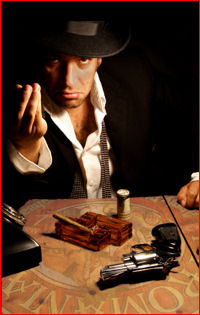
At first, we lodged a mild protest: Every post here has an open comment-thread. We permit anyone to say anything he (or she) likes, with just a few simple rules to circumscribe the discussion. We ask that commenters keep their comments within the bounds of good taste and biblical propriety. We insist that they avoid profanity. We request that they stay on topic (or thereabouts). We don't particularly like it when someone posts spam. And we expect all our commenters—friends and foes alike—to take responsibility for their views and assertions.
But our commenters post lots of dissenting opinions. We get more people trying to pick fights with us than just about any blog I regularly read, with the possible exception of the gentlemen at Triablogue, and occasionally (depending on what he is dealing with) Tom Ascol.

Frankly, most blogs that deal with as many controversial issues as we do simply refuse to permit comments (including some who are generally friendly to our perspectives, and others who despise pretty much everything we stand for). It's hard to argue against the claim that most hostile comments are unedifying. Yet because some of these comments are edifying and others give us opportunities to clarify our views or improve our logic, we have opted to allow all comments.

I enjoy the feedback. (It's the most valuable aspect of blogging, if you ask me.) And we rarely ban anyone from commenting here.

As a matter of fact, Frank Turk singlehandedly doubled the size of our Banned-Commenters List yesterday by interdicting two commenters at once. But (despite the expressions of contempt one fresh commenter instantly spat at the whole blog) that's hardly a typical day at PyroManiacs.

The timing was somewhat unfortunate. Even before Frank banned the two antagonists, another blog was already sponsoring a comment-thread about how terribly gauche and mean-spirited we are over here. That thread has now deteriorated into a discussion about who among the three regular PyroManiacs posters is the most contemptible. (I would have expected Frank to be the clear hands-down winner if creative sarcasm truly equals cruelty, but to my surprise, Dan and I seem to be running neck and neck for the lead. No one has even seriously argued that Frank is our worst bully—even though he is the only one among us who has actually banned anyone in the past six months, and he embargoed two at once.)

Anyway, I'd like to point out that apart from one unfortunate episode involving a frozen beef chub, none of us has ever stooped to threats of violence or aimed at being menacing. There is a legitimate place for righteous indignation, but even at our most curt, we don't ever deliberately use an angry tone instead of an argument.

So on what grounds do our critics call us "bullies"? Our chief sins, it seems, are these: We reserve the right to answer our critics with as much rhetorical force as they themselves employ. We have the bad taste to tell people who express disagreement with us that we still think they are wrong. Sometimes (especially when dealing with critics and gadflies who aren't being serious) we refuse to treat off-the-wall arguments seriously. In such instances, we might even state an opinion tersely or mix sarcasm with our disputation. We never (well, OK, rarely) change our theological opinions, a fact which is set forth as irrefutable proof that we lack humility. And we stubbornly refuse to submit our blog to postmodernism's rules of engagement.


We make no apology whatsoever for any of those things. If someone is upset with us for refusing to imbibe the spirit of postmodernism, we can direct you to some blogs you might like better, where the edges of truth are purposely made blurry and every kind of doctrinal mischief is politely taken on board as part of the "conversation."

On the other hand, we don't claim to be free of all guilt with regard to our words, our tone, or our attitudes. "We all stumble in many ways. If anyone does not stumble in what he says, he is a perfect man, able to bridle the whole body as well" (James 3:2).

I'm a man of unclean lips (descended from ancestors who all had the same fault) and I live in a community of people who revel in having unclean lips. I freely confess that I stumble often and fail to bridle my tongue as I should. Moreover, it does indeed grieve me when someone is insulted or offended by something I have written, even if the offense stems from a misunderstanding.

So for those times when I have been unkind, thoughtlessly posted an insult, or put a real offense in someone's way, I sincerely beg forgiveness of the aggrieved parties. There are probably more instances of that than I realize, but, frankly, most of the complaints we get about our "tone" on the blog aren't specific enough or objective enough to be very helpful.

If someone wants to confront me about a specific offense, please quote the actual instances of my unkind or ungodly words, and show me my sin with reference to a biblical principle of righteousness (not merely postmodern standards of politeness). I would be eager to right any such wrongs, and it would be my duty to make an expression of repentance that's as public as the offense.

(I have no doubt that the other Pyros would echo the same thing, too.)

However, if the point is merely that you would prefer a milder tone at PyroManiacs, let's just say we get that. We would prefer not to see truth and error get jumbled all together in the Christian blogosphere and the compromise winked at in the name of brotherly kindness. Both goals are good and valid, but they do sometimes conflict.

Also, we're serious about what we are doing here, even if we sometimes inject some fun and silliness.

For the record, however, the post that touched off this week's anti-Pyro blitzkrieg was written with nothing but goodwill and benign intent, and without so much as a hint of foul temper in my heart. If I had even written something that could reasonably be interpreted as unfriendly or spiteful, the recent outpouring of rage and fury from our critics might be understandable, and I would crawl on broken glass to beg forgiveness if that's what it took to win my brothers.

But that's not what happened in this instance. I disagreed with someone's interpretation of something I wrote. I expressed my disagreement in a way that some of my readers found humorous. The person I disagreed with was not amused. I'm sorry about that. I did not offend anyone purposely. I'm terribly disappointed that someone was offended. But I said nothing unkind; I do disagree; and I still think the critic's original complaint was pretty far-fetched. I gotta be honest with you.

I will, however, be very careful what I BlogSpot in the future, so as not to call attention to any disagreements I might have with those who are so easily offended.

Incidentally, it has heretofore been my policy to BlogSpot just about anyone who links here via an actual in-post link. (You can't usually earn a BlogSpotting link by putting this blog in your blogroll.) I rarely include more than a single-sentence remark about a critic's reference. The point is to link them, not refute them, and I do try to be brief and fair.

In the future, however, I'm going to avoid linking to those who just seem to be spoiling for a fight.

To be clear: we're not hoping for a fight. But neither will we back away from a necessary fight (Jude 3) when a vital point of truth is at stake.

Now, how about some BlogSpotting?

This will be very short this week, because Blogger has been down for a couple of hours and I don't have an infinite amount of time. But without further ado:

Phil's signature