Showing posts with label will of God. Show all posts

26 August 2014

Dear single Christian sister

by Dan Phillips

Dear single Christian sister,

Probably you, like most single Christians, dream of getting married. Your ideas of marital bliss are fed by the high regard the Bible holds for the institution, by your friends, and probably by your church culture. It's easy to feel like the "odd man (or woman) out" in a church built around the assumption that most or all of its members — or, at least, the ones who count — are married.

But I wanted to be a good brother to you and put some thoughts before you that any Christian who loves and cares for you would want you to consider. I'll be brief and pointed; my aim isn't to detain you, but to help you, and perhaps even to save you a great deal of heartache. So here are cautionary thoughts on marriage:

Firstthere are worse things than dying a virgin. That I even have to say this is a reflection of our culture, most of whom would hoot with derision at the suggestion. But as Christians, while we see marriage as a sacred and blessed institution, and a wonderful opportunity to serve and glorify God, we should know better (1 Cor. 10:31). Paul either never married, or was unmarried through his apostolic labors. Wouldn't you agree that he had a meaningful life? He saw singleness as having its own advantages for the service of God (1 Cor. 7:7-8, 32-35).

"But I want to get married!" you say? That's absolutely fine, and I say "go for it." But I also say "—don't go for it at all costs." Remember: there are worse things than being single.

Secondyou don't owe marriage to any man you're not married to. What seems obvious to you may not be obvious to all, so I stress this: perhaps you've been dating for a year, seven years, whatever; perhaps you've talked about this and that. Perhaps you know he's got his heart set on marrying you, and he's counting on it. Yet, if you haven't married him, you needn't marry him. Particularly if one of the next considerations persuades you that it'd be unwise.

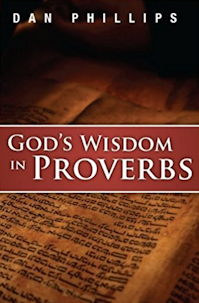
Thirdmaster everything the Bible says about marriage, particularly about the wife's obligations. Study Genesis 1—2, 1 Corinthians 7, Ephesians 5, 1 Peter 3, all the passages. I'd recommend to you my series on marriage, where I try to help single (and married) people to do just that. Also use chapter seven, "Skill in Godly Marriage," in my book on Proverbs.

"But I'm not even engaged yet," you say? Perfect! There is no more strategically-vital time to get this understood. Because once you are married to a man, you are morally obligated before God to perform and be everything the Bible calls you to do and be, to do so heartily as unto the Lord, and to do so as long as you are married. You are obligated to respect him from the heart (not just externally), to subordinate yourself to his leadership, and to back his plays unless doing so requires you to sin. You are obliged to do all this if he turns out to be a wise, godly, loving, caring saint; and you are equally obliged if he turns out to be a fickle, surly, selfish, childish, uncaring, hypocritical jerk.

"Yikes," you say. "You're scaring me." Terrific. I mean to. See #1, above.

This leads me to...

Fourthif he wasn't already showing a years-long pattern of Christian commitment and involvement in a local church you could gladly attend before you met him, you probably shouldn't marry him. I say "probably" because there will be exceptions — but be very slow to claim to have found one.

What I mean is: do they all know him at his church? Has he served, faithfully and a lot? (Best training for being a leader is being a follower.) Has he invested his greater energy and free time as a single to serve to further the ministry of the church and help the needy within it?

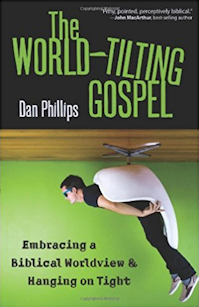
Does the pastor know him well? Would he vouch for this man? Is your fella a once-a-week-at-best-skimmer, barely known or unknown to most of the pillars and doers, or is he deeply committed and involved? Has he read his Bible through? Can he explain the Gospel well, from the Bible? Ask him to read TWTG, and tell you his thoughts — you'll be able to tell a lot by that (his view of the nature of God, of man, of Christ, of the Gospel, of the sovereignty of God, of sanctification; his worldview, etc.). Can he explain his own convictions and values and aspirations in Biblical terms — that is, does he show signs that he's gotten it from Scripture, or vetted it by Scripture, before he set his heart on it?

Can he demonstrate the ability to think things through, and make decisions, Biblically?

You see, this man is going to be making the decisions for your family. If he's wise and godly, you'll get truckloads of input — but the final call will be his. You will need not only to accept his final decision, but to dive in and do your best to make it work. Under God, your life will hang on his judgment. Can you trust him? With the rest of your life, and with your children's lives, can you trust him?

Now you see my point.

(If you and he attend different churches, be sure to let your pastor meet and get to know him, interrogate him, put him under the hot white lights. He's the man who has care for your soul, so he will be motivated to care for you and go the extra mile to be sure you're making as wise a decision as a person can make.)

Now, if we're talking about a man who is not a Christian at all, then he's not even a candidate, and you shouldn't be involved with him anywhere near this level, for his sake and yours.

But if he says he's a Christian but isn't much involved in a local church, then he doesn't much have the heart of Christ. Particularly if he's got "reasons" and excuses and rationales, he's not the man for you. He doesn't follow Christ. And you want obligate yourself to follow him?

"But he says he's a Christian!" one might sob. Yes, sister, if he's interested in you and knows you have this Jesus-thingie going on, I'm sure he does. I could train a parakeet to say he's a Christian. In fact, I've known parakeets who would make better Christians than some of the guys who've assured their girlfriends that they're Christians until they got what they wanted. It's just words. I could say I'm a MMA champion. Talk's cheap.

I just gave you ways to weigh that talk, and that's what you really need to do.

Remember, dating is the selling phase. All the best is put on display, to sink the deal. You should assume that marriage will not instantly make him a better man. If he is godly, it will; but you need to be convinced of that now. I can't tell you how many heart-wrenching stories I've heard about men who made this and that religious gesture, and then once the trout is in the creel, everything changes.

If you're a believer in Christ, you're a precious treasure to God, and your life is a stewardship. You need to make this decision slowly and carefully. If I may indulge my imagination in order to engage yours, your unborn kids are begging you to pick their dad v-e-r-y  c-a-r-e-f-u-l-l-y.

Too much is at stake to risk everything on a maybe-sorta lip-service until-the-deal-is-closed-and-the-deed-is-done sort of "Christian" male.

There are plenty of good godly men out there. Why haven't you seen them? They're probably going to smaller churches than your mega-church, because they prize Biblical preaching and look for opportunities to serve, and not simply be served. That's the sort of man you want to join yourself to in marriage.

Don't settle. Really, truly: don't. You'll be so sorry, and I'll be so sad.

PostScript: for the "But I know someone who [did a really stupid, un-Biblical, lamebrained thing] and it turned out just fine!" retort, see the "Real-Live Final Thought" at the end of this.

Dan Phillips's signature

10 December 2013

Is God the worst girlfriend, ever?

by Dan Phillips

Men, at our worst (and, some would say unkindly, at our best) can be rather cheeseheaded. We don't do it on purpose, usually; it's just the way we are. Women, at their worst, can be a pretty impatient about it.

And so you have the classic scene playing out something like this:
Poor Dullard: Wait — you're angry, aren't you?
Angry Shrew (icily): Oh? You're so perceptive. What gave me away?
PD: So... you are mad. Why? What did I do?
AS: (furious silence)
PD (growing desperate): What? I don't have any idea. I thought I was doing what you wanted. What did I do?
AS (deadly calm): Oh, I think you know.
PD (whites showing around eyes): I don't know! How could I know? I don't know! Just tell me.
AS: If you loved me, I wouldn't have to tell you.
Is God like that?

Oh, a reader might scoff, nobody thinks God is like that.

I would agree that nobody says he thinks that God is like that, but there is a whole school of thought that insinuates that God is exactly like that. Like that, indeed, and much, much worse.

This is the subjective-revelation school, the pinprick-individual-semi-revealed-will-of-God school. Most Charismatics hold this, and all Blackaby fans are bound to it. If you haven't, I'd urge to your read the multi-part takedown (starting here), where I laid out the approach and showed the disastrous pastoral implications that advocates never deal with.

On this school, you can (theoretically) be doing everything you know God wants you to do, out of deeply Biblical, Spirit-breathed faith and love — and walk right out of God's will. You can marry the wrong person, take the wrong job, turn the wrong direction, buy the wrong car, and be out of God's perfect will for your life for the rest of your life. In my Proverbs book I tell the tale of the woman who told her daughter that she'd married the wrong man — meaning she was out of God's best will, forever — and meaning that her daughter should never have been born!

She had, to my knowledge, violated no Scripture in marrying this man. He wasn't an unbeliever, he wasn't married to someone else. He was human. He was of the opposite sex. But she was convinced she hadn't read the signals right. She hadn't caught the arched eyebrow, the pursed lips, the slight tilt of the head, the tense posture, the icy tone. She hadn't divined the Divine properly. And now there was Hell to pay for it for the rest of her life, a Hell into which she now had pulled her daughter.

This is the popular image of God, as Worst. Girlfriend. Ever.

By contrast we have the God of the Bible, who spoke to the fathers in the prophets and, in the last of these days, spoke to us in one who was His Son (Heb. 1:1-2). This God has told us in so many words absolutely everything we need to know in order to be saved, and to be fully-equipped to serve Him (2 Tim. 3:15; see also this post, and this sermon).

If something is important to the real, living God, the God and Father of our Lord Jesus Christ — He has told us. We've got it in writing, and it binds and informs and guides us sufficiently (1 Cor. 14:37).

Beyond that, if He wants something done, He is more than capable of doing it without subjecting us to the bondage of abusive-girlfriend treatment, by His sovereign working of all things in accord with the counsel of His will (Eph. 1:11), by which even bad events serve His purpose (Gen. 50:20; Rom. 8:28).

Brothers and sisters chained to mysticism, find out what it really means to trust God, and to have a relationship with Him. It's freeing, and wonderful.

Dan Phillips's signature


04 September 2012

Untangling a (too) terse word about affirming sufficiency and meaning it

by Dan Phillips

First, please read this post about James MacDonald's five ways of hearing a word from God.

In that post, I asked this question:
What would be the premise for, and ramifications of, promoting only the way(s) in which Scripture directly and in so many words urges and directs all Christians without exception to seek and find what it itself directly calls, in so many words, a "word from God"?
The subsequent meta pretty well convinced me that I failed the clarity test. In seeking to be pithy, dense and impenetrable... well, I certainly achieved impenetrability. Proof: some of our very best, sharpest readers got lost in the density. So clearly, lack of clarity was mine. Obliging me to untangle my verbage. Which I now do.

Ahem.


Let's begin with something I've sought to communicate many times, with varying success. Here is Buzz Christian. Buzz feels he needs Data-group A.  Buzz  doesn't find Data-group A in Scripture.  Buzz  has two choices:
  1. Conclude that he doesn't need God to give him Data-group A directly, or it would be in Scripture.
  2. Find another way to obtain something he'll call Data-group A... and then deal with Scripture. Or not.
So, clearly many people want to hear things from God that aren't in Scripture. The issue of what things? doesn't really matter at this point. They look at Scripture, and it doesn't have everything they want. What to do, what to do?

Basically, you can do two things:
  1. You can conclude that you don't actually need a word from God relaying those things, or they'd be in Scripture.
  2. You can invent another way to obtain something you'll say are those things... and then deal with Scripture. Or don't deal.
James MacDonald knows people want there to be ways "God speaks," ways to "hear from God," ways to have "the Holy Spirit speak a word," ways to get, as he says explicitly and more than once, "a word from God" — apart from Scripture. And so MacDonald teaches four such ways, and assigns degrees of certainty to them... which is revealing in itself, but we don't even need to go there to arrive at my point.

What I was asking was, Suppose we were to confine our focus to explicit Scripture alone. Suppose we don't start with stories, anecdotes, tradition, or "just what everybody knows."

Suppose we were to say that we will promote only the way(s) in which Scripture directly and in so many words urges and directs all Christians without exception to seek and find what it itself directly calls, in so many words, a "word from God." Suppose we wouldn't try to principlize stories, or torture verses, or lead with anecdotes and try to bend Scriptures which at a twelfth degree of separation might sorta give a kinda hint that such a thing might be in some way something like valid.

Suppose, instead, we said:
"I will only call 'a word from God' what Scripture calls 'a word from God.'  I will only appeal to verses that directly tell all Christians that they can always and with 100% certainly find a word from God. I will only urge Christians to use those means to obtain words from God."
So, I say, supposing we were to say that — on what premises would such a position rest, and what would the ramifications be? Having failed to make my point the first time for most of you (and I'm sorry about that), I'll answer my own question.

The premise for such a statement would be the sufficiency of Scripture, robustly affirmed.

The ramifications for such a statement is that we would only urge Christians to look to Scripture to find words from God. We would only look to Scripture ourselves to find words from God. One hundred percent of our efforts, our devotion, and our attention, would be given to the study, understanding, preaching, teaching and practice of the written Word of God, which absolutely certainly claims to be fully sufficient for such purposes.

Further ramifications would be the instant end of the Charismatic movement (— which they clearly recognize, as witnessed by the unvarying pushback against all genuine affirmations of the sufficiency of Scripture). Also, we would see the utter transformation of the majority of pulpit ministries across the world. Revival would almost surely come in as well — though it's likelier to be a necessary cause than an effect.

Clear enough now?

Dan Phillips's signature


29 September 2011

How a GPS is like, and unlike, God

by Dan Phillips

Driving in Scotland was far too exciting, and not always in a good way.

As you may know, relative to American (and almost all other) driving, those good folks drive on the wrong side of the road. To deal with this, the driver sits on the wrong side of the car. And it just feels wrong.

It felt wrong to poor Jonathan, whose heart stopped a couple of times when my dear wife, sitting on the front left, would lean back and fold her arms. Since that was the side the driver sat on for all of Jonathan's twelve years of life, and since the car was in motion, his first thought was that Valerie would get us all killed. Then he recalled that it was all backwards, I was driving (on the right), and he started breathing again.

I ran up or close to the curb (on the left) many times, because Scottish roads are just a hair broader than a single lane is in an average California street. The cars hurtling past (on my right!) seemed like they were all right up in my lap, so I'd list left, brush a curb, Valerie would gasp or cry out, I'd lurch back... and hilarity would ensue.

Our constant companion was Clarence. This was the name we gave to our GPS. Clarence was illiterate and had a speech impediment, which was obnoxious because he was worse than Claire, his predecessor, from whom he was supposed to be an upgrade. He couldn't manage the simplest words, let alone the hopeless yet beautiful Gaelic names of some streets.

We growled at Clarence a great deal, but he cared about none of these things. The traffic-circles (or "roundabouts") were a constant challenge. It would not always be clear where Clarence wanted us to go. I think the single question my kids heard me ask most often came after each ambiguous turn: "Is Clarence happy?" I had to ask that, because my dear wife had to watch him since I did not dare take my eyes off the careening deadly nightmare of the traffic on the streets. Sometimes, before she could even be sure, we'd hear the dreaded, infuriating word:

"Recalculating."

That was the signal that I had taken a wrong turn. So we'd groan, or growl, or both; and wait for the inevitable "Drive 1.4 miles, then turn right."

Clarence was infuriating and frustrating, and the company will get a complaint from us about the speech module. But we were glad we had him. Though he'd vex us, he always got us where we were going... eventually. And Valerie (a brilliant strategist and planner) said several times that it was better than if she'd had to be paging through maps over and over, instead of enjoying (most of) the scenery (when she wasn't fearing for her life from the stone wall inches to her left).

God is like, and unlike that, I had occasion to reflect.

God is a little like Clarence, or vice-versa, in that Clarence usually gets his charges where they need to go, and usually tells them what they need to know, and his route will often seem a bit... complex, or even indirect. But that night when I was driving us back from a music festival, in the dark, at 1-2 in the morning, in the fog, Clarence wasn't confused or lost, and told me right where to go.

(He didn't help me deal with all the frogs that were hopping across the road, though. I had to work that part out myself.)

God is unlike Clarence in that He invariably knows where He is going, He invariably gets there, and He tells us everything we need to know, with crystal clarity (2 Timothy 3:15-17; I write as one who really-really believes in the really-really sufficiency of Scripture; leaky-canoneers, sadly, will be unable to say "amen" to this truth.)

Further, we tell Clarence where we want to go, and he has no choice but to show us how to get there, best as his programming enables. Clarence never says, "Bad idea, please reconsider." Nor does Clarence simply send us to another location because he knows it is better than our own idea.

God, by contrast, is the grand planner. He takes us where He wants us to go. Even our necessary and proper plans and decisions are taken up into His grand plan (Proverbs 16:1, 9). It cannot be otherwise (Proverbs 19:21; 20:24).

God never has to say "recalculating," because God has no Plan B. It is all Plan A (Psalm 115:3; Eph. 1:11). But God's Plan A is indeed very complex, involving many turns and traffic-circles. When Israel spent forty years in that vast, arid traffic-circle, it was still part of the grand plan (Deuteronomy 8:1-5).

We were glad to have Clarence helping us make our way through Scotland and England.

But we're glad there's no celestial Clarence steering the universe in the same way.

Dan Phillips's signature

20 September 2011

Visionary truths (Proverbs 29:18)

by Dan Phillips
From June, 2006; still timely, unfortunately.
It would be awfully hard to pick the most frequently-abused and misused text of Scripture. That in itself may make a fun (?) post someday.

But surely well up on the list would have to be: "Where there is no vision, the people perish: but he that keepeth the law, happy is he" (Proverbs 29:18 KJV). That poor, hapless soldier has been pressed into the service of ideologically foreign masters beyond anything that the laws of kindness should permit. How many church building funds, bus contests, motivational seminars and the like have been launched under the mistaken aegis of this verse?

It's a classic example of anachronism. We have this word today, "vision," that means "An ideal or a goal toward which one aspires." This verse has that word in it. Conclusion: this verse must be talking about how important it is to have goals.

Well, the conclusion is true, but the text in this case is a pretext. No one will find the underlying Hebrew term chazon used in this way. It just isn't. But you will find a consistent use of the term to indicate prophetic revelation, such as we have today in Scripture alone (cf. Isaiah 1:1; Daniel 8:1, 15; Hosea 12:11; Obadiah 1; Nahum 1:1, etc.).

And so I render the verse, "Without revelation a people runs wild; But the [people] keeping the Law, happy is it." Similarly the ESV, "Where there is no prophetic vision the people cast off restraint, but blessed is he who keeps the law." It isn't at all about an individual, nor a group, gathering together and forming goals. It isn't about praying and "feeling led." It isn't about dreams (in the non-revelatory sense), targets, programs -- in fact, it isn't about any human endeavor at all.

The verse is about our need communally as well as individually for the Word of God. Any half-decent newspaper -- and I admit "half-decent" is setting the bar too high, these days -- illustrates the precise and almost technical truth of the verse. The more we cast off the absolutes of God's word, the more our culture plummets towards lawless chaos.

I say that to say this: I was struck in my reading today by a genuine statement of "vision" in the above sense, of ambition. It is in the apostle's words: "...I make it my ambition to preach the gospel, not where Christ has already been named, lest I build on someone else's foundation..." (Romans 15:20). To this, I append a few observations.

First, I'm struck by the responsibly task-oriented nature of this ambition. Paul aims at what he can normally control, not what he cannot control. Paul does not say, "I make it my ambition to win ___ souls," nor "to plant ___ churches," nor "to have ___ regular attenders within ___ weeks," nor "to build ___ buildings." All these goals vary in terms of worthiness, but they all have this in common: Paul controls none of them. His only way to "control" would be to engage in tactics, methods, manipulation, and we already know that the apostle will have none of that (2 Corinthians 2:17).

All these are effects, and they are in God's hands (Proverbs 16:1, 9). Paul may plant, he may water, but only God can cause actual life to spring up (cf. 1 Corinthians 3:5-9).

So Paul focuses on his part, the part of faithfulness (cf. 1 Corinthians 4:2). Even what he is, and what he does, depends on the Lord, and the Lord always retains veto-power and the right to redirect providentially. But it is Paul's part to plan (Proverbs 16:1 again), and plan he does.

Then I'm struck by the specificity of the plan. It isn't the sort of specificity that some motivational speakers urge, and in some contexts greater specificity is a good and necessary aim. But Paul's plan is specific enough that it excludes some goals, while targeting others. He can know, at any point, whether or not he is accomplishing what he aims at doing.

If you aim at nothing, you'll hit it every time. This is an axiom I've hammered out on the anvil of far too much experience. My beloved wife is very goal-oriented, and she's superb at setting terrific goals. I remember a day she engineered at Disneyland with our (then) two children, and it was like the most precise ballet, starting at 8am and ending at 2am. What we packed into those hours makes for a breath-taking memory. Well over a decade later, I still marvel.

I am, to be charitable to myself by vast understatement, less so than she.

Paul does not aim at nothing. He aims at something. It's a big goal, it's a lofty goal, it's a Christ-centered and Christ-honoring goal. It's a loving goal. It's a measurable goal. It is specific, and yet it is wide-open. It is set in time, but it has an eye on eternity. It allows for readjusting specifics (Africa? Spain? Australia?), yet also rules out other alternatives (not Jerusalem, not Judea, not Samaria).

Now let me conclude with a little end-run around myself. Does Proverbs 29:18 have nothing to say about forming goals? No; just not what it is commonly taken to say.

The verse is not talking about how important it is to formulate goals. However, it does apply to the absolute necessity of subordinating our goals, plans, methods, tactics, and values to the revealed Word of God.

Paul knew what sort of thing he should be doing from Jesus' words recorded in Matthew 28:18-20, and from His own words to him by special revelation (Acts 22:21). The specific methods and means were not spelled out; they were to be filled in by the apostle.

So you're a wife, and want to set goals for your family. Are your goals ruled and overruled by Ephesians 5:22-24? You, husband, are your goals formulated under Ephesians 5:25ff.? Likewise pastors, employees, bosses; politicians, writers, friends, children. Have you lined up all your goals consciously and deliberately under all the revealed Word?

Set goals, set specific goals, set adjustable goals; and do it within the framework and values laid down in the inerrant, abiding, sufficient Word of God.

Dan Phillips's signature

15 September 2011

Non Sola Scriptura: the Blackaby view of God's will — 2

by Dan Phillips
Seemed timely in April of 2009; seems timely now.
[Conclusion of Tuesday's post]

Now to the most potentially disastrous aspect of this teaching, in pastoral terms: living it out.

Non-moral choices. In their eagerness to downplay the Scriptures' sufficiency, the Blackabys point out that God told many people to do things that were not reasonable nor morally necessary, such as where Abram or Isaac chose to live, or whether Peter or Andrew continued in their employment (p. 46). Remember this: God might lead us to do things that "make us uncomfortable" (p. 44), are not logical, and are "unorthodox" (p. 46; they do not mean doctrinally unorthodox), and may involve "surrender[ing] ... goals and comforts in order to become involved in God's activity" (p. 46).

The terrible threat. In what areas does God tell us what to do? Choice of school, career, church, ministry... even choice of mate. Oh? Does that mean that there is "only one right person"? Yep (p. 79). What if I miss that one right person? God may give us (second-best — or third? seventeenth? four hundred thirtieth?) "marriage and a fulfilled life," but "Failing to walk with God always carries a cost..." (p. 80, emphases added).

Whoa! Pause. Seriously, stop everything and think that one over.

Imagine you are a poor soul, married to a poor soul afflicted with the Blackaby view. Your spouse believes that he missed the "one [that was] best suited" for him (p. 79). He missed "the life partner He has chosen for you" (p. 79), "God's best" (ibid.), "that someone who would have been God's special gift to" him (p. 80). Every time he looks at you, he might be thinking, "second-best." Every time he says he loves you, he might be thinking, "but not like I'd have loved that special someone."

No lie. I am not making this up. I don't have to. I actually knew a girl, decades ago, who lived in fear of just this situation.

Her friend's mother "felt" she was "called" to be a missionary. Ah, but she met and married a man who wasn't so "called." And now this woman would spend the rest of her life knowing that she had missed God's calling, had missed God's will for her life! She had settled for second-best. She had married second-best.

Did you get that? That was the woman's attitude, and she communicated that to her daughter! About her father! (And wouldn't that mean that the daughter was second-best, too? Not "the child who should have been"?)

So the daughter knew, and now her friend knew! Word was really getting around, about this poor sap. Can you count the things Biblically wrong in this picture so far? Even beyond that the whole concept is the precise opposite of what Scripture says on the subject (1 Corinthians 7:39)?

So now her friend lived in fear that she might meet and love the wrong man — or, more to the point, any man other than the one right man — and spend the rest of her life knowing she was out of God's best will for her life.

See? "Train-wreck."


"Ludicrous"? So how far does this go? What does this "will" include? The Blackabys must get that question a lot, and it clearly stings them. Their reaction is as rhetorically strong as it is logically vacant.
One of the most ludicrous questions people ask is: "Should I seek God's will about everything? Must I pray and ask Him what brand of toothpaste I should buy and which breakfast cereal I should eat?" ...Clearly some mundane aspects of our lives are not life-and-death matters; nor will they influence eternity. They simply require wisdom in our decisions (p. 47)
But why is it "ludicrous"? And how is that "clear," given the argument they've been making? How do we know they "are not life-and-death matters" that will not influence eternity? After all, remember that the Blackabys belabored the point that God had specific directions for "mundane," non-moral matters such as where to live, where to eat dinner, where to sit to eat dinner, whether to stay in a given business. How do we know what God considers "mundane," given that the Blackabys demand that He direct every detail of our lives, just as Jesus did with the apostles?

No eternal consequences? How do we know there are not eternal consequences? The Blackabys ridicule the (broadly and deeply Biblical) "extreme view that everything we do, right down to the smallest detail of our lives, is prescribed by God" (p. 61). Their phrasing is characteristically sloppy here, but they seem to be denying the pan-Biblical truth of providence.

Well then, if God does not actually have a handle on "the smallest detail" of my life, and if He has all sorts of things He wants me, Dan Phillips, to figure out that He wants me to do — without the Bible, by struggling to hear and discern His voice and apply all the complex Blackaby-invented signs and tests — then how can I know where it stops?

Toothpaste and eternity. I'm absolutely serious. Think about it. The Blackabys scoff at toothpaste-selection. Well, how do I know?

If I pick this tube of toothpaste right in front of me, at eye-level, I will get to the check out line a few seconds earlier than if I bend down and reach back to pick the one near the floor, where the front packages are missing. Suppose that means that I will pick checkstand 12, whereas otherwise I would have picked checkstand 8. Suppose God wanted — in the Blackaby-God's weak, whispery, ambiguous way — for me to pick checkstand 8, because He was hoping I would then hear His next little mumbly nudge telling me to witness to that checker, because He had been preparing her heart to hear the Gospel from me.


But alas! I pick the closer toothpaste. I go to checkstand 12. I am now out of God's perfect will. Uh-oh. What happens when I am out of God's perfect, individual will? The Blackabys told me: "The consequences" can be "disastrous" (p. 48)! And so...
  • ...the checker doesn't hear the Gospel from me, and goes to Hell instead of Heaven.
  • ...I walk out into the parking lot 12 seconds early, am killed by a white van! Aigh! Bam! Dead!
  • I never write that commentary on Proverbs that would have changed hermeneutical history, or that book on Calvinistic Dispensationalism that would have brought all Biblical Christians together in the truth, or preach to tens of thousands of others God was preparing to hear the Gospel just from me!
  • ...and they all go to Hell, too!
And all this, every bit of this, is my fault — because I failed to discern and obey that whispery, mumbly, vague and ambiguous "voice of God" that the Blackabys have taught me is absolutely essential to Christian living.

Now maybe you chuckle, or maybe you're angry. But there are NO OBJECTIVE OR BIBLICAL CONTROLS in the Blackabys' construct to rule any of this out!

That's not a big deal?

Obey/disobey. This is not an exaggeration. The Blackabys constantly speak of divining this whispery, vaporous leading of God in terms of obedience and disobedience (pp. 45, 61, etc.) And well they should! If it is God's will, then I must obey, mustn't I? After all, God is speaking! Does it get more authoritative than that? Can anyone think of a time when God says, "Do A," when it is morally indifferent to obey or disobey? Disobeying God is the very definition of sin (James 4:17).

Yet I am not sure the Blackabys have even thought this through, even though they're famous for advocating this view. They insist that this will of God, this voice, that they want people to pursue may well not involve choices "between right and wrong" (pp. 42, 43). Huh? If God tells me to do A, doesn't that make it a choice between right and wrong? If He says, in that whispery, unsure murmur I'm to pant after, "Dan, do A," and I do B — haven't I done wrong? Even if God is "saying," "Dan, buy a white car," and I stubbornly insist on buying a car with a real color — am I not doing wrong? Am I not sinning?

And this brings us to a question I really would like to ask the Blackabys.
Supposing I was (somehow) born untainted by Adam's sin.
Supposing I never sinned in my entire life. And then...
Supposing God was "telling" me (Blackaby-style) to become a truck-driver, and I became a cook...
...would Jesus have had to die to keep me from going to Hell for being a cook instead of a truck-driver?
Or for picking the wrong seminary? Marrying the wrong person? Buying the wrong toothpaste? Going to the wrong showing of "Fireproof"?

Here is where I would find out how serious they were about their notions. If God directs me to do something, and I do not do that, then I have sinned, and I deserve Hell for it.

It's just not funny anymore, is it?

No telling who picks up a book. Perhaps most readers will assume the Blackabys' work will fall into the hands of basically stable, sober-minded people. They won't go nuts with the Blackabys' theories. In other words, they won't really take them seriously.

But why not? Suppose, instead, a less-stable, less well-taught, more obsessive person comes on their work. He shifts into overdrive at the thought of discerning this uncomfortable, inconveniencing, fantastic guidance from God. Now everything and anything is fraught with numinous overtones! Every "nudge" (their word) or circumstance or random word or even (all possible means of God's guidance, according to the Blackabys; cf. pp. 56-59) might be the voice of God, speaking to him! Miss it, and face terrible consequences!

So this poor wretch flees the job he's trained for, yanks his family across the country, moves them into a cardboard box to pick over scraps while he starts harassing strangers in Christ's name, because of a voice he thinks he's hearing... and where could it end? Do not dismiss this: remember, God might lead us to do things that "make us uncomfortable" (p. 44), are not logical, and are "unorthodox" (p. 46), and may involve "surrender[ing] ... goals and comforts" (p. 46).


If there's a one-for-one carry-on from the Bible, maybe this unstable soul will "feel moved" to have his family live on grasshoppers and honey, like John the Immerser. Or maybe he'll "feel led" to walk around naked, like Isaiah; or cook his food over dung, like Ezekiel. Or maybe he'll tell a ship's captain to throw him overboard, to end a storm, like Jonah.

There are no real, objective, Biblical controls against such behavior in this reckless article.

This is one of the most pastorally-irresponsible articles I've read, from orthodox Christian writers.

Conclusion: worse? Yes. In conclusion, I think this view of God's will is worse bondage than Pharisaism in this regard.

At least in Pharisaism, you knew where you stood. If you threw up a rock on the Sabbath and caught it with the same hand, you’d violated the Sabbath. It may be a silly rule, but it’s discrete, it's distinct, it's there.

With this view, you never know! You might have sinned merely by picking up the rock! Or maybe you picked up the wrong rock! Or maybe you picked it up with the wrong hand! You never know! Since the Blackabys stress that this "will" isn't necessarily about right and wrong, it could be about anything... and so everything becomes a matter of right and wrong!

There is no basis for knowing, no objective control, as long as it is not directly against Scripture.

Summary. After pro forma niceties about Scripture, the Blackabys assure Christians that what they really need for a dynamic, personal, God-pleasing relationship is not to be found there. They would send them on a lifelong rabbit chase for which Scripture can offer no guidance, because it envisions no such pursuit.

Among the products are irrational, unstable, irresponsible and/or chaotic lives. Unbelievers (and believers) who are wronged, hurt, or simply appalled at reckless behavior by the "I-just-felt-led" set will not glorify God for it. Just "play the God-card," and you're off the hook.

What glorifies God is not a bunch of people acting like fools in His name. I have this notion that God knows best what will really glorify Him. Hear Him:
See, I have taught you statutes and rules, as the LORD my God commanded me, that you should do them in the land that you are entering to take possession of it. 6 Keep them and do them, for that will be your wisdom and your understanding in the sight of the peoples, who, when they hear all these statutes, will say, ‘Surely this great nation is a wise and understanding people.’ 7 For what great nation is there that has a god so near to it as the LORD our God is to us, whenever we call upon him? 8 And what great nation is there, that has statutes and rules so righteous as all this law that I set before you today?
(Deuteronomy 4:5-8)
A better way. Thank God Scripture points us in no such direction! Thank God that Scripture is wholly sufficient for teaching, correcting and directing us, so that we may be fully equipped to serve God (2 Timothy 3:15-17)! God does talk to us. He talks to us through His living, truly-sufficient Word (Psalm 119:24; Proverbs 6:20-23; Hebrews 3:7-11; 4:12).

And thank God that He does in fact exhaustively control everything that comes to pass, so that His children can never put themselves out of the sphere of His love and blessing and good will (Psalm 115:3; Proverbs 16:1, 4, 9, 33; Romans 8:28-39; Ephesians 1:11).

PS — I did ask God to guide me in writing this review. If you agree with the Blackaby position... how do you know He didn't?


addendum after yesterday's post, a reader offered a word of testimony, which I've shared here.

Dan Phillips's signature

13 September 2011

Non Sola Scriptura: the Blackaby view of God's will — 1

by Dan Phillips
Seemed timely in April of 2009; seems timely now.
The book. I am currently reading How Then Should We Choose?, edited by Douglas S. Huffman (Kregel: 2009), with a view to reviewing it ultimately. This a pre-review of one part of it. (Translation: I can't hold this back.)

The book allows advocates of three distinct approaches to the will of God to set forth their views, after which each is critiqued by the others. I will focus on the first only, which is called the "Specific-Will" view. It is written by Henry and Richard Blackaby, who are father and son.

I only barely began reading Garry Friesen's response and, frankly, was sharply provoked by its tepid tone. If the Blackabys' view is un-Biblical (and it is), a lot of people — and the cause of Christ — will be harmed by it. I find it hard to be chatty and blasé about that.

My plan. In this first part, I will set forth the Blackabys' view, offering some critique as we go. In the second part, I plan to delve more thoroughly into the nightmarish practical implications of this position, offer more critique, and a conclusion.

Prefatory
First, many of you have been looking forward to Phil writing on the Blackaby view. This is obviously not that.

Second, what I am about to write is not about the Blackabys, but about the view they advocate in this book. It is not about anything else they've ever written or done, nor is it about them as Christians or men. I know next to nothing about them.

This post is just about this one chapter.

Clear enough?
Bottom line
This chapter is just about the single most appalling trainwreck I've read in recent memory, whether viewed exegetically, hermeneutically, theologically, or pastorally. The implications, if taken and followed out seriously by anyone (—God forbid!), are absolutely catastrophic.

I find it impossible to be bland about it. As you will see.


More fully
Continuation with a vengeance. Foundationally, the Blackabys argue that there is a one-for-one continuation between all Biblical narratives and our lives today; we should expect no change. "...[N]owhere in the Bible are readers cautioned that they should not expect their walk with God to be like that of believers in biblical times" (p. 35). " In fact, "the only way for us to have a relationship with Christ" is if He directs our everyday lives by telling us specifically what to do in a detailed way, exactly as He did with the apostles (pp. 45-46, emphasis added). Because today "the Holy Spirit is to function in us in the same way that Jesus led his disciples," which involves very specific instructions not provided in the Bible (p. 52, emphasis added).

You may ask, "So, wait — you mean, every aspect of what God did for Abraham, Moses, Isaiah... I should expect all that?" Yes.

So forget Hebrews 1:1-2, with its portrayal of a purposeful revelation that is unfolded in differing portions and differing manners, coming to climactic fulfillment in Jesus Christ. Forget intra-canonical indications of purposeful ebbs and flows in the revelatory activity of God (1 Corinthians 13:8-10 [see here]; Ephesians 2:20; Hebrews 2:1-4). Forget the Biblical pattern of miraculous event, divine interpretation, verbal rehearsal of that interpretation (i.e. Exodus 10:1-2; 13:8, 14-6; Deuteronomy 6:20-25; Psalm 145:4-7, etc.). Forget even the successive covenants (Jeremiah 31:31-40 [old covenant, new covenant, hel-lo-o?]; Romans 9:4; Hebrews 8, etc.). All is leveled and flattened to make way for their theory.

Though Yahweh repeatedly points His people back to the given Word, even during the unfolding of revelation, the Blackabys would have believers keep looking for new words. In their hands, redemptive history becomes a block of cheese, with no distinct parts or movements. Each bit of cheese is the same.

Bad? It gets worse.

Non sola Scriptura. The insufficiency of Scripture is a major pillar to the Blackaby position. About this they are emphatic — in all but the use of that phrase. They do say many nice things about the Bible, allowing (for instance) that it is "the primary way God communicates with His people" (p. 55). "Primary," but not nearly the sole way.

Language that the Bible reserves for binding, inerrant, verbal prophetic revelation is repeatedly applied indiscriminately to normal Christian living. There is constant mention of God "speaking clearly" to people today (p. 33), of "His voice" (p. 39), of His issuing "divine directives" we are obliged to obey (p. 40), of Him having "told" people today to do things, expecting their "obedience" (p. 45), of Him "speaking" to us and our "hearing" Him (p. 53), of our "struggle to hear God's voice" (p. 54), of the Holy Spirit "speaking" to us through prayer (p. 56), of his sending us "a message through other people" just as He did through the prophets (p. 58), specifically of Henry Blackaby being "God's mouthpiece to someone desperately seeking a divine word" (p. 59; cf. Exodus 4:14-16; 7:1, to see what a reckless expression this is) — and on and on.

Note well: every one of these is in reference to revelation that is not in the Bible, yet is crucial for us obeying, knowing, and having a relationship with God.

Whatever nice things the Blackabys say about the Bible, then, it is clearly not nearly sufficient for Christian living — no matter what passages such as 2 Timothy 3:15-17 say.

Bible in 2D. In order to get here, a fundamental, grave and pervasive hermeneutical error is essential to the Blackabys' position. There must be a great and violent flattening of revealed, redemptive history. Pivotal moments in the Bible are pounded down, mashed and flattened into illustrations of daily Christian living. Direct, binding, inerrant prophetic revelations are radically down-sized into illustrations of God nudging us today towards a particular spouse or church ministry or university course major. Prophets who speak for God are shriveled into everyday Christians listening for that still, small murmur that the Bible never calls us to seek.

So Moses — a prophet without parallel until the coming of Christ (Numbers 12:6-8; Deuteronomy 18:15; 34:10; Acts 3:22ff.) — becomes merely another illustration for how we should expect God to speak to us (pp. 46, 64).

Having made a chaotic and hermeneutically irresponsible mish-mash of Scripture and its claims for itself, the Blackabys bear down on individual Christians. And what their theory does is terrible to behold.

How to divine the Divine? Say you are convinced that you must hear God's voice, must receive this flow of extra-canonical revelation that the Blackabys say is essential for a relationship with God. How do you do it? How do you hear God's voice?

I won't attempt to reproduce the Byzantine, convoluted — with less legitimate Biblical support than a Gummi Bear has hair — series of tests and checks and methods they lay out. I'll just say this: they are very much like Charismatics "explaining" to Christians how to get the gift of tongues, or how to speak prophecy, or why prophecy may be fallible. Similar in what way? In that they have cast aside Scripture in all but the eggshells — sometimes not even attempting a Biblical grounding (cf. much of pp. 57-59) — and so they have to make up what goes inside the shells.

Was it a "struggle"? For instance, recall their phrase, the "struggle to hear God's voice" (p. 54). But if we are to expect our experience to line up exactly with that of Biblical characters, we must ask: what "struggle"? God's voice in the Bible was always absolutely loud, clear, unmistakable, binding, arresting, and quotable.

"What about Samuel?" someone might ask. "Didn't he fail to recognize God's voice at first?" But note: (A) the voice Samuel heard was so audible, loud, clear, and quotably verbal that the lad thought it was Eli calling to him; and (B) the text does specifically say that Samuel did not yet know Yahweh (1 Samuel 3:7). Not that Samuel was a believer who just hadn't yet read the Blackabys' book on picking out God's whispery, shadowy, well-nigh indecipherable voice.

Hence the parallel with tongues. If you had to have someone explain how to get them, and if they aren't supernaturally-acquired human languages, they weren't Bible tongues. And if the voice wasn't unmistakable, (usually) unsought, audible, quotable, and absolutely binding, it wasn't God's voice.

And so I ask: does Scripture ever use the Blackabys' expressions — God's voice, God speaking, God talking to someone — in a sense other than revelatory, verbal, quotable, and utterly binding to believers? Is there an instance of "God speaking" in a manner that is 45% inspired, 62% inerrant, or only 39% binding? Are the Blackabys sending us off in search of 100% inspired, inerrant, binding extra-Biblical revelation from God? If not, if they're sending us after lower-octane revelation, whence do they invent this category? Not from Scripture.

Prophet-schmophet? Next I ask: if we're to hear God's voice constantly, then how is the office of prophet distinct? Biblically, what marks a prophet is that he receives direct revelation, and speaks it inerrantly (cf. Exodus 4:15-16; 7:1-2; Deuteronomy 18:15-22). If every believer hears God's voice and words, and receives individual non-Biblical guidance, what distinguishes each from a prophet? Is it the inerrant speaking of the message? But why, if "the only way for us to have a relationship with Christ" is to be directed by Christ exactly as He did with the apostles (pp. 45-46), and if we are to assume a one-for-one correspondence between their experience and ours?

Do you suspect I am caricaturing their view? But it is the Blackabys themselves who again and again indiscriminately cite the experience of prophets, seers and apostles as the patterns for our experience (cf. pp. 39, 45, 46, 52, 53, 54, 58). Are they our pattern, or aren't they? If they are, there is no "struggle" to ferret out God's voice, nor need of confirmation to follow a labyrinthine, slapdash path.

I'm with Peter, who says that
we have something more sure [than the loftiest experience], the prophetic word, to which you will do well to pay attention as to a lamp shining in a dark place, until the day dawns and the morning star rises in your hearts, 20 knowing this first of all, that no prophecy of Scripture comes from someone's own interpretation. 21 For no prophecy was ever produced by the will of man, but men spoke from God as they were carried along by the Holy Spirit.
(2 Peter 1:19-21)
Amen, Peter. That is the voice of God, speaking to us. And it is enough.


Dan Phillips's signature

04 May 2010

Is this the central issue in Christian thought, life and ministry? — 1

by Dan Phillips

Introductory
Of course, the central issue is the Lordship of Christ. But there is an issue that I see coming in direct descent from that question: Is the Bible the one fully-sufficient source for all we need to know as Christians?


Note the careful wording. It doesn't deny that other resources can be helpful, be they creeds or commentaries or books or sermons. Nor does it assert that everything that can be known or that needs to be known on other subjects, is in the Bible. It simply asks whether the Bible is the one genuinely and truly sufficient source to teach us all we need to know, as Christians.

I want to think that all Christians would answer "Yes." Formally, surely Christians would answer "Yes." But I am coming to see that the rubber meets the road just at the point where practice parts from theory.

Charismatic leader Pat Robertson answered "No," for instance. On page 114 of his book The Plan (Nashville: Nelson, 1989), Robertson writes: “Probably 95 per cent of all the guidance we need as Christians is found in the clearly understood principles of the Holy Bible.” I have no doubt Robertson thought that he was exalting God's Word by according it such a large number: ninety-five per cent. Why, that's almost 100%!

Almost, but not quite. Math isn't my best subject, but I'm pretty sure that if you take away 95 from 100, you're left with 5. So five per cent of "all the guidance we need as Christians" is not "found in the clearly understood principles of the Holy Bible." Now, notice: Robertson says "clearly understood principles." So even legitimate extrapolation won't get us there. We simply must look someplace else for the guidance we "need as Christians."

Turning from what some might try to style extremist Charismaticism to doctrine accepted broadly within the good ol' Southern Baptist Convention, we have the Blackaby doctrine.

Once I attended an SB church where the pastor suddenly paused in his sermon, announced that the Holy Spirit had "told" him to stop preaching, and if he continued it would be in his own power — so he stopped. One wonders why the Spirit had not told him where to stop when he prepared his sermon. It leaves the impression that the Spirit changed His mind, which I'm confident this good brother would not affirm. Why would he do such a thing? On a hunch prompted by a thought from my dear wife, I asked him if he were an admirer of Blackaby's teaching.

"Oh yes," came the enthusiastic response. "We've taught that material here!"

A newcomer might well wonder, "What's the problem with the Blackabys?" I went into that at great length in a pair of posts titled "Non Sola Scriptura: the Blackaby view of God's will." The Blackabys sound very like Robertson when père et fils write that the Bible is "the primary way God communicates with His people" (How Then Should We Choose? [Grand Rapids: Kregel, 2009; 55). There it is again: "the primary way" — 95%? more? less? — but far from the only way.

Of course, the whole unique contribution of the Blackabys is devoted to filling that gap. As I argue in the posts to which I linked, it is a massive chasm. Most of what we do (viewed one way) is not directly touched on by Scripture. Should I read Pyromaniacs? Using which browser? Which version of that browser? On what brand computer? What size monitor? At what resolution? With which OS? Accepting which security patches? Using which antivirus software — or should I "trust God" to protect my pc? And on and on and on and on.

That being the case, the Blackabys helpfully tell us how to listen to that non-inscripturated never-promised voice of God, to fill in the immense, continental gaps their view finds in Scripture. Since the Bible is absolutely silent on the subject, they must be (and are) very creative. Clearly what they are selling has resonated broadly within evangelicalism.

But let us return to the broad landscape of Charismaticism. I critiqued the language and thinking in Francis Chan's note about his decision to leave the church he pastors.  The critique was very upsetting to a couple of Tim Challies' readers. Yet here is maybe the central issue of my critique: I am simply asking the question, "Are you really saying that you are experiencing the inerrant prophetic revelation we see in the Bible as your language implies, or are you saying something else? If something else, where is the Biblical authority for it?"

As to Chan himself, I do not pretend to know. Perhaps he is "saying something else." If so, he is one in a vast company. Many Christians today are "saying something else." Not only are many Christians "saying something else," but they are passionately and insistently "saying something else." Touch that sacred cow, and you might as well have caught a rock with the same hand on the Sabbath in Jesus' day.

You will note in all the discussion that, like a modern Charismatic trying to instruct someone in how to get tongues (against the complete silence of the NT), the absence of data doesn't even slow the view's advocates. They'll appeal to Biblical stories of direct, verbal, inerrant revelation as analogous to their feelings and hunches and leadings. But they're not analogous. Are they saying that they're experiencing the same thing, or not? I observe that they will appeal to the Biblical story, then back off from it when confronted — but still insistently cling to it as analogous.

We should require honesty and candor, though, if nothing else.

If they are claiming the exact same experience we see in Scripture, then they must be called to say so explicitly. They need to tell Christians: "I hear God speaking to me in inerrant, binding, prophetic words."

For instance, a fellow on FreeRepublic (I don't want to send traffic to his blog) regularly posts words written in the personna of Jesus Christ. Written words of Jesus. Inerrant? Universally-binding on the conscience? I don't know if he thinks so. He should say so.

If they are not claiming the exact same experience we see in Scripture, they need to tell Christians: "I have a model of spirituality whose core premises I cannot directly demonstrate from the Bible. I do not see the Bible as fully-sufficient for all we need to know as Christians."

Believe it or not, all that was introductory. I plan to develop what I mean and make my point more specifically, in the next post.

UPDATE:

Dan Phillips's signature

11 June 2009

Book giveaway contest: just get some Just Do Something!

by Dan Phillips

As I may have mentioned, I'm engaged in writing a book. I may further have mentioned that I need to free up some time to do so. One way I came up with was to do like Chicago, and make with the Greatest Hits here at Pyro, in the weeks to come.

"So," I think to myself, "why not use our readers' input — and make it fun at the same time?"

Hence: contest!

Through Moody Press' generosity, I have four copies of Kevin DeYoung's terrific new book Just Do Something (which I may have mentioned liking tremendously) to give away to four luc... er, blessed readers.

Here's the terms, rules, provisos, whereupons, and peradventures:

PREMISE: it won't be fair. I can't think of a way to make it fair. Oh, I'll try. But I'll fail. Everyone will hate me, except for four people. Just accept that. It'll be kind of a sovereign choice — which, for this blog, is fitting... except without the attendant flawless wisdom, knowledge, goodness and justice.

How (and what) to enter:
  1. Use this meta to recommend that I repost one particular post, and explain why. One recommendation per comment.
  2. The post may be from this blog or mine own, and should be at least six months old; preferably older.
  3. In honor of the book's thesis, explain your choice. Give your rationale. Make a persuasive case. Don't say God told you to pick it. (A thousand sets of fingers go slack, disappointed.)
  4. Enter as many times as you like. (But only one book per winner!)
  5. You may recommend a post that has already been recommended by someone else. Who knows? Your case could be more persuasive.
  6. Deadline is midnight tonight, Earth time, PT.
  7. Sometime tomorrow I will update this post with the names of the four winners — though I will probably take up more than four recommendations. The winners will need to email me with their real-live names and addresses.
  8. What I will be looking for is the most persuasive, contentful, and creative. Funny is good, but in no way required. Working in the title of a Chicago song (particularly not a top forty hit), ditto. I'll tell you the truth: I expect it to be really hard for me. We have terrific readers who are terrific writers... and who go a little nuts at the thought of books, let alone free books.
  9. No relatives.
  10. Nobody named "Frank" who is smarter and more articulate than I and/or who has ever bumped one of my posts or derailed one of my meta's. (Probably not a necessary proviso, as entrants would have to have read some of my posts.)
There you go. Have fun.

Just write something!

UPDATE: and now, the winners

First, thanks to everyone who made a legit entry. They were all good, and all helpful.

How I did it. My dear wife handed me a lifeline of a suggestion (thanks, Valerie!), which I modified and used. I picked one name outright for my own inscrutable reasons, then I picked fourteen of the best, wrote them on identical pieces of paper, prayed, and picked three at random (— "random" from my perspective, that is).

I may or may not use all of the suggestions of the winners; I'm leery about reposting a multi-part post, and if I try to edit it down to one I'm sort of defeating the purpose of reposting. But I guarantee I will consider ALL the suggestions and their rationales when I pick my posts.

This was really hard. Please don't make it harder by asking me anything beyond what I've shared.

These four folks need to email filops@yahoo.com with their snail-mail addresses:
Philness
Scott
Witness
Jude
Thanks to everyone!

Dan Phillips's signature