14 November 2008

Sufficient.

by Phil Johnson

Today, Lord willing, I will finish a project I have been working on for several months. (I can't wait to have the stress of it lifted from my shoulders.) This weekend will be extremely busy, and then Monday I am leaving for a week-long trip that will take me to Bradenton, Atlanta, and Durham. So I don't have a lot of time to write this morning. Hence this short bagatelle. If you want something meatier, be sure to listen to Dan's sermon (below).


ast year I did a lengthy series on the life of Elijah, including a study of his ministry to the widow of Zarephath.

While meditating on Luke 4:26 recently, I was thinking about that passage again, and it prompted an additional thought:

When Elijah arrived, that woman and her little boy were on the verge of starvation. She was gathering a few sticks for fuel for what she was convinced would be the last meal she and her son would have before they died. But God graciously provided for the needs of that widow, her son, and Elijah for many weeks after that—not by giving them an overflow of abundance, but by miraculously providing a new handful of flour and a small portion of oil each day, so that their supplies, while never in surplus, were always sufficient for their daily needs.

That is a perfect picture of how God normally dispenses His grace. He gives us sufficient grace without giving us a surplus of grace. "His compassions fail not. They are new every morning: great is [His] faithfulness" (Lamentations 3:22-23). "He giveth more grace" (James 4:6)—but He dispenses His grace in accord with our present needs—often in handfuls and small measures, and rarely in superabundant portions. But the grace He gives is always sufficient.

Furthermore, sometimes, when God does want to lavish grace upon us in superabundant measure, the prelude to that is a dark and difficult turn of providence. Suffering is the pathway to glory. Hardship is the container into which God pours His grace. The larger the vessel, the greater the measure of grace.

Phil's signature

What I preached the Sunday after the election

by Dan Phillips

The month Pyro was dark also happened to be the month leading up to the national election.

In part trying to "be there" for readers while Frank was very occupied and Pyro dormant, I upped posting at my blog to about 2X-3X a day. It was eclectic, as usual. A lot of it had to do with the election and was political analysis, news/essay links, discussion, attempted persuasion, bullyragging, etc. Some cheered, some booed; a head or two exploded with a satisfying pop!

As "partisan" as I'll get here is to say that I believed it to be an important election; and, I've gone to bed happier than I did the night of the 4th.

Meanwhile, my pastor had asked me to preach November 9. The Sunday immediately following the election.

God bless 'im, Reddit has never yet told me what and what not to preach, a trust that I take very seriously. He didn't this time, either.

So, given how passionate I'd been about the election that had just taken place, and given the discussion we just had here about politics — some readers might wonder: What would I preach? That would rather be where the rubber meets the road, mightn't it? A number of kinds of sermons would, I think, be arguably appropriate. Which kind would I preach?

The answer, for anyone thus curious, is: this kind.

Dan Phillips's signature

13 November 2008

The Christian's Priority and Presence: Things We Agree On

by Dan Phillips and Phil Johnson

couple of our readers lately have questioned whether we are really on the same page regarding political activism and the proper place of partisan punditry in Christian ministry. Since Dan has extensively written on elections and political/societal matters at his own blog, and Frank Turk writes a fair amount of social and cultural commentary at his blog, one or two of our commenters wondered if all the members of TeamPyro really do see eye to eye on these matters. Obviously, we each have different emphases and interests we like to write about. Phil likes Bach Cantatas and Dan likes Chicago. Dan collects commentaries and Frank collects comic books. Frank is an expert in marketing and Phil is an expert in editorial matters. Granted, we're an unlikely menagerie of co-authors. But on the issues that really count, we're all on the same page.

Even on the issues of civic activism and "engaging the culture" via the political process? Absolutely.

Let's see if this helps. Here are some things we all agree on from the get-go:


  1. Among other things, the Christian is the person who boasts only in the Cross; to whom the world has been crucified, and he to the world (Galatians 6:14).
  2. The sole unique possession that every Christian has, that all his neighbors most desperately need, is the Gospel (Romans 1:16).
  3. The Gospel is itself not actions nor outreaches nor programs; the Gospel is a message, communicated in words that express propositional truths (Romans 10:14-17).
  4. While what we do may at best adorn the Gospel, it must never supplant or eclipse the Gospel (cf. 1 Timothy 2:10; Titus 2:10).
  5. The message and aim of the gospel is redemption (Galatians 4:5; Titus 2:14) not merely reform.
  6. The gospel itself is the only instrument of redemption; it "is the power of God unto salvation" (Romans 1:16).
  7. Gospel and law are not the same, even though they agree at many key points (Luke 16:16; Galatians 3:1-19).
  8. "Works of the law"—and all other means of adorning the gospel—are non-redemptive (Romans 3:20, 28; Galatians 2:16); they are even damning for those who place their trust in them (Romans 10:1-3; Philippians 3:3); and therefore such things must never be made a higher priority (or given a higher profile) in any Christian ministry than the gospel itself.
  9. Christians, individually and corporately, are ambassadors for Christ (2 Corinthians 5:20), and like all ambassadors, they must proclaim the message they are given—not a truncated message or a different message of their own choosing.
  10. The message Christians are given to proclaim to unbelievers is about justification by faith, not social reform through legal means; and it culminates in a plea for sinners to be reconciled to God through Christ (2 Corinthians 5:20-21).
  11. The primary, distinctive, defining task of the church is to enroll and train students of Christ by the emphatic ministry of the Word (Matthew 28:18-20; 2 Timothy 4:1-4).
  12. Works of mercy and material help must grow out of that ministry of the Word, must not supplant it, and should first target Christians within the local church body (cf. Acts 2:42-47; 6:2; Galatians 6:10).
  13. A full-orbed pulpit ministry will eventually touch on everything the Word touches on (Acts 20:27).
  14. Since the Word touches on every essential area of Christian living, aspects of pulpit ministry can and will touch on every area of a Christian's public life (2 Timothy 3:15-17).
  15. Individual Christians must pay taxes and respect the institutions of authority in his country (Romans 13:1-7).
  16. Individual American Christians should take seriously the accountability-factor for their citizenship in a constitutional republic (cf. Luke 12:48).
  17. Individual Christians are obligated to seek and find how to be good stewards of what God has entrusted them with, in all walks of life (cf. Psalm 24:1; 1 Corinthians 10:31).
  18. Some of those possible avenues for individual Christians include careers in politics and journalism, other forms of communication, working with pro-life causes and adoption agencies, and with other charitable organizations (cf. Proverbs 10:11; 11:11; 24:11-12; Jeremiah 29:1-9; Galatians 6:10).
  19. Avenues such as those listed in #18 are perfectly legitimate investments of a Christian's time and energy. However—
  20. Avenues such as those listed in #18 are no substitute for preaching the Gospel, since only the Gospel meets man's deepest needs, and thus most truly fulfills the commandment to love our neighbor as ourselves.
  21. If offered an association that requires him to put a basket on his relationship with Jesus Christ, or on the Gospel, an individual Christian should decline (Mark 8:38).

Dan Phillips's signature

Phil's signature

12 November 2008

The Fuller's Soap

by Frank Turk

So last week I tried to divert you from the fact that I owe you a conclusion to my series on daGifts by telling you that God loves you in spite of your attitude about the results of the last election -- and that goes for the ones who are elated as well as the ones who are deflated.

God loves you in spite of the election results.

But here's the thing -- if we stick to Malachi as a message to God's people about what He thinks about what they are doing and what they ought to be doing, He also says this:
"Behold, I send my messenger, and he will prepare the way before me. And the Lord whom you seek will suddenly come to his temple; and the messenger of the covenant in whom you delight, behold, he is coming, says the LORD of hosts. But who can endure the day of his coming, and who can stand when he appears? For he is like a refiner's fire and like fuller's soap. He will sit as a refiner and purifier of silver, and he will purify the sons of Levi and refine them like gold and silver, and they will bring offerings in righteousness to the LORD.
Now, we all get the "refiner's fire" thing, right? God is sending a "messenger", that is, the Messiah, the Anointed one, to purify Israel. Great -- purify is good.

But I think we have sung our Hillsong choruses so much regarding that phrase that maybe we don't get that God, though He loves Israel, is telling them that in order to receive His promise of a king who will redeem and save them, they need to be burned up like corrupt metal. They need to be purified the hard way.

So let's instead turn to the other phrase God uses there about what's about to happen to them: "He is like fuller's soap."

Now, what exactly is "fuller's soap"? We don't use such a thing today, so the phrase is rather arcane, and to understand what it means we have to go back to one of God's favorite topics: sheep.

When you shear a sheep, you get fleece -- raw wool. And as you can imagine, it smells and feels like a sheep does -- which, overall, is not how you want to look and smell (no offense to sheep). So to use the raw wool for anything, the fuller would handle the wool.

The fuller is the guy who takes the filthy, dirty wool and washes it so that it gets really white and clean. He uses boiling-hot water, and soap which is extremely caustic. So what he does to the wool is not pleasant for him very much, but it is in fact much worse for the wool. Often the wool would be beaten with rocks to really get the nasty smell, dirt, piece of farm debris, and non-wool stuff out of the fleece prior to spinning it into thread -- and then often it was done again to the thread when it was woven into fabric to make the cloth as tight and clean and presentable as possible.

So when God says that the Messiah is coming with "fuller's soap", He's not saying, "Jesus will make you wash your hands." he's saying, "you are disgusting and useless unless you are cleaned up by the Messiah."

So it's been a week since the election, and everyone has had their little catharsis regarding who won and who lost. Now it is time to break out the fuller's soap.

But listen to me: the fuller's soap is not for our nation. God didn't write Malachai to America. God wrote Malachi to Israel, and therefore we should see Him here speaking to the church. God is not bringing the fuller's soap to the U.S. Constitution: He's bringing it to you, and to your church. And the thing is that anything that's not pure wool is going to be scalded and bleached out, beaten out with rocks, and washed away.

What's going to be left if God brings you the fuller's soap?


11 November 2008

Biblical "contradictions" and our big God

by Dan Phillips

In 2 Timothy 4:16a , Paul writes, "At my first defense no one came to stand by me, but all deserted me."

In 2 Timothy 4:17a, Paul writes, But the Lord stood by me and strengthened me, so that through me the message might be fully proclaimed and all the Gentiles might hear it."

That is a contradiction in the Bible.

It's absolutely straightforward. Each verse makes an assertion, and those assertions (isolated from one another) clash. Verse 16 says that nobody stood with Paul; verse 17 says that the Lord stood with Paul. Which is it? Did nobody stand with Paul? Or did the Lord stand with Paul? If the Lord stood with Paul, how can you say that nobody stood with Paul? It's a contradiction.
ZED: Buford?
BUFORD: Yeah, Zed?
ZED: Did we just see that feller lose his mind, right out there on the Internets?
BUFORD: Shh! It's that Calvi-whatcha feller. He's a-goin' somewheres with this!
Now, if I went on and on like this, you all would think — I hope you all would think — that I was what we in IT call a 1D-10T.

You'd say, "Great googly moogly, man! Get a grip! When Paul was writing verse 16, you can't credit him with knowing where he'd be heading in verse 17, in the very next words? You can't credit him with categorically stating that nobody stood with him, knowing as he wrote it that he was about to make that one exception, that the Lord stood with him? And you don't think Paul credited his readers with being able to pay attention long enough to see the one thought developed by the very next statement?"

You'd be right. (Besides, though the ESV doesn't reflect it, Paul used two different verbs in Greek.) That answer would be sufficient and conclusive. Of course we'd read Paul (or any decent writer) with that kind of respect.

So here's my point: what we can credit of Paul on a small scale, we should credit of God on a large scale.
BUFORD: See? Toldja.
ZED: Shh! I still say he's fixin' t'crack, like an ice pond in th' spring.
Riddle me this: How smart is God? How big, if I may anthropomorphize thus, is His brain? How many thoughts can God hold at one time? How large is God's "big picture"?

I love the way the psalmist puts it in Psalm 147:5 — "Great is our Lord, and abundant in power; his understanding is beyond measure." The phrase "beyond measure" translates Hebrew words that more literally mean, "there is no numbering," meaning "beyond count." It calls us to envision God's understanding as if it could be counted in bits of information or insight. But the psalmist says, "Don't even try. You could never count up everything God knows!" In His mind, at one time, in one simple, instantaneous glance, God knows all. Actual or potential, all things are instantly and exhaustively present to the mind of God.

Berkhof says it with characteristic economy of words: “The knowledge of God may be defined as that perfection of God whereby He…knows Himself and all things possible and actual in one eternal and most simple act (Systematic Theology [Eerdmans: 1941], 66; emphases original).

This is why God's foreknowledge is absolute, why He can declare the end from the beginning (Isaiah 46:10). To this infinite-personal God, it is all one. To see the beginning of a thing is to see both its end, and everything involved in between those two points.

What does that have to do with "contradictions" in the Bible?

Remember my opening example. We credited Paul — finite mortal that he was — with knowing in verse A what he would say, seconds later, in verse B. Thus the "contradiction" between A and B is at most only formal, not real.

Now lift your eyes, and couple the doctrine of God's omniscience with the Biblical truth of plenary, verbal inspiration. What do you get? What does it mean?

It means that, when God inspired Moses to begin Scripture with the preposition be ("in"), He already knew that He would move John to close it with the adjective πάντων (pantōn, "all"). It means that, when He moved any given writer to choose any given word, He already knew all the other words that He would move every other writer to choose.

So while we can't credit the human authors with that kind of knowledge, we can credit God with that kind of knowledge. And while we mustn't interpret the writers as moved to say something that meant the opposite of what they were meaning to say as led by God, we must interpret what they wrote in light of everything else that God moved all the other writers to write.

So the meaning of all Scripture must be gleaned in conversation, if you will — with all Scripture.

Dan Phillips's signature

10 November 2008

Evangelical Politics: A Few More thoughts

by Phil Johnson

ne of our commenters raised some excellent questions, just about the time I thought last Thursday's combox had played out. Having spent some time thinking about his questions and writing answers, I thought it would be better to post my answers here on our front page, rather than leave them at the end of a long comment-thread no one is reading any more.

So here you are:


Are you saying that Christians should never seek these political remedies, or that they are currently spending more time than they should seeking these remedies?

I keep saying that my main point is about how the church corporately should be spending her time and resources, not about what an individual who is vocationally (or avocationally) involved in politics should do.

To be clear:
  • I object to pastors who use their pulpits to organize voters rather than teach the Bible and proclaim the gospel.
  • I object to evangelical organizations (including certain Christian broadcasters, evangelical radio stations, the National Association of Evangelicals, various 501c3's, and even some churches) who raise money for "ministry" and then all they ever talk about are political issues and headline news, while rarely (if ever) mentioning the gospel.
  • I object to the fact that when the average unbeliever today hears the word evangelical, he thinks of a voting bloc rather than anything spiritual.
  • I object to the fact that most evangelicals are overwhelmingly on the same page politically, but their movement is doctrinally so diverse that they can't even agree what the gospel is.
  • I object to the fact that the average evangelical could not give a coherent, biblically sound summary of the gospel or a theologically accurate explanation of justification by faith—but they are more worried about an Obama presidency than they are about the disintegration of their own testimony.
If we take George Barna's data at face value (and I don't recommend that, but even a nuanced interpretation of his statistics would probably bear this out), the typical "evangelical" hasn't got a clue what the biblical idea of redemption is about. He isn't really sure he needs to be "saved" from anything other than the wave of immorality and economic crises liberal policies have foisted upon us. He believes the work of God in this world is all about a handful of highly-publicized moral issues involving sins other people commit. And he is convinced the first and most important remedy for our culture's moral meltdown is government-imposed legislation.

If Christians ought not seek these remedies, who should?

"Leave the dead to bury their own dead. But as for you, go and proclaim the kingdom of God" (Luke 9:60).

Even individual Christians need to consider their priorities from a biblical perspective and make wise choices about the best use of time and resources. Which is ultimately the better long-term answer to sin—law, or gospel? Law certainly has a place, but it can never actually solve any of the social problems evangelicals are so agitated about nowadays. Even the individual Christian whose vocation is in politics or law enforcement needs to keep the gospel—not merely a message about morality or cultural reform—at the center of his testimony to unbelievers.

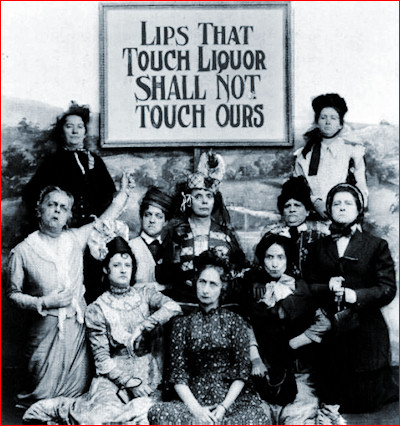
Our spiritual great-grandparents were even more exercised about the sin of drunkenness than Christians in this generation are about the slaughter of unborn children. They decided that a legal remedy—a constitutional amendment outlawing liquor—was the best solution. History has shown that they wasted their time and lots of resources, got sidetracked from their real message, and in the end accomplished exactly nothing.

As a Christian, I have a more important message to proclaim than "God hates fags," and I know a better, more long-term remedy for drunkenness and all its associated evils than Prohibition ever managed to be. The gospel is what Christian ministers ought to be known for, not for getting themselves arrested barricading clinic doors or screaming hateful slogans at their political opponents. Yes, I do realize most politically-oriented pastors and evangelical organizations do not go that far, but the evangelicals in the political arena who are most savvy about public relations tend to be the very ones who have perfected the art of compromise. It's really pretty hard to think of evangelical organizations or church leaders who are deeply involved in political causes and who are also known for being clear and uncompromising heralds of gospel truth. The two things simply don't work well together.

If seeking these remedies involved attempting to persuade people concerning the fundamental ideas at stake, rather than pushing people (voters, judges, legislators) to vote a certain way, would you approve of it more?

I'm always in favor of persuading people about what the Bible says. Abortion is murder. Homosexuality is gross sin. Drunkenness and extramarital sex are likewise wicked. We don't need to shy away from proclaiming the truth about the moral issues.

But if we're talking about doing ministry (as opposed to sheer political lobbying) then once we've established that homosexuality is an abomination, the rest of the message we are obliged to proclaim as ambassadors of Christ is the good news of how sinners can be redeemed from the guilt and bondage of those sins and be reconciled to God. If we focus our energies instead on secular legislative "remedies," we are simply not doing what Christ called us to do.

I don't think it's a complex issue at all.

And my guess is that if you look back in history and contemplate the question of prohibition vs. the sin of drunkenness (instead of gay partnerships and constitutional amendments defining what marriage is)—even if you only consider the pragmatic side of the issue—you'll probably see the point.

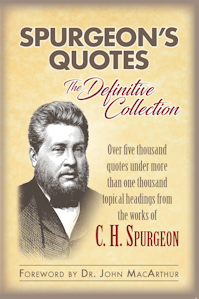
In short, there's a reason Spurgeon's preaching is still relevant and powerful today, but Billy Sunday looks like a bad parody.

Phil's signature


09 November 2008

A 19th-Century Preacher Confronts Postmodernism. Again.

Your weekly dose of Spurgeon
posted by Phil Johnson

The PyroManiacs devote some space each weekend to highlights from The Spurgeon Archive. The following excerpt is from the sermon "The Glorious Gospel of the Blessed God," preached Sunday morning, 30 June 1867, at Camden Road Chapel, London. In that sermon, Spurgeon carried on an imaginary dialogue with the "epistemological humility" of his day.


omeone demands, "How am I to know which is the gospel?"


You may know it by searching the Scriptures.

"But one sect says this, and another sect says the reverse."

What have you to do with the sects? Read the Book of God for yourself.

"But some men do read it and arrive at one opinion, and some maintain the opposite, and thus they contradict themselves, and yet are equally right."

Who told you that? That is impossible. Men cannot be equally right when they contradict each other. There is a truth and there is a falsehood; if yes be true, no is false. It may be true that good men have held different opinions, but are you responsible for what they may have held, or are you to gather that because they were good personally, therefore everything they believed was true? No, but this Book is plain enough; it is no nose of wax that everybody may shape to what form he likes. There is something taught here plainly and positively, and if a man will but give his mind to it, by God's grace he may find it out.

I do not believe that this Book is so dark and mysterious as some suppose, or, if it were, the Holy Spirit who wrote it still lives, and the Author always knows his own meaning: you have only to go to him in prayer, and he will tell you what it means. You will not become infallible, I trust you will not think yourself to be so, but you will learn doctrines which are infallibly true, and upon which you may put down your foot and say, "Now, I know this, and am not to be duped out of it."

It is a grand thing to have the truth burnt into you, as with a hot iron, so that there is no getting it out of you. The priest, when he took away the Testament from the boy, thought he had done the work; "But," said the boy, "sir, what will you do with the six-and twenty chapters which I learned by heart? You cannot take them away." Yet memory might fail, and, as the lad grew into an old man, he might forget the six-and-twenty chapters; but suppose they changed his heart and made him a new creature in Christ, there would be no getting that away, even though Satan himself should attempt the task.

Seek to carry out the sacred trust committed to you by believing it, and believing it all. Search the word to find out what the gospel is, and endeavor to receive it into your inmost heart, that it may be in your heart's core forever.

ext, as good stewards we must maintain the cause of truth against all comers.

"Never get into religious controversies," says one; that is to say, being interpreted, be a Christian soldier, but let your sword rust in its scabbard, and sneak into heaven like a coward.

Such advice I cannot endorse. If God has called you by the truth, maintain the truth, which has been the means of your salvation. We are not to be pugnacious, always contending for every crotchet of our own; but wherein we have learned the truth of the Holy Spirit, we are not tamely to see that standard torn down which our fathers upheld at peril of their blood.

This is an age in which truth must be maintained zealously, vehemently, continually. Playing fast and loose as many do, believing this to-day and that to-morrow, is the sure mark of children of wrath; but having received the truth, to hold fast the very form of it, as Paul bids Timothy to do, is one of the duties of heirs of heaven. Stand fast for truth, and may God give the victory to the faithful.

We must believe the gospel and maintain it, for it is committed to our trust.
C. H. Spurgeon


07 November 2008

James White

by Phil Johnson


ome of our Arminian brethren in the Southern Baptist Convention, led by the ever-colorful Jerry Vines of Jacksonville, have been holding a conference in Woodstock, Georgia, to discuss why they don't approve of Calvinism. Andrew Lindsey (who has far more patience than I) is live-blogging it and posting those notes as a guest-blogger over at Challies.

(How does one get a gig like that? Not going to a conference on Arminianism, but guest-blogging for Tim? Does Challies pay well? What kind of effect does that have on traffic at the guest-blogger's blog? One wonders about these things.)

Anyway, the following item showed up this morning in Andrew's notes from a session led by David Allen. Dr. Allen is Professor of Preaching, Director of the Southwestern Center for Expository Preaching, George W. Truett Chair of Ministry, and Dean of the School of Theology. He evidently has tried to pit me against one of my friends. According to Andrew Lindsey's notes:

Dr. Allen asserted that Dr. James White is a hyper-Calvinist according to Phil Johnson’s primer on hyper-Calvinism, as Dr. White says that God does not have any desire to save the non-elect.

Ack.

Here's a spelling-corrected and otherwise embellished version of a comment I left at Challies when I read that. (Sorry about my typos on your blog, Tim; I hit "publish" when I meant to hit "preview." I hate when that happens):

Let me go on record here: I know James White well, and he is not a hyper-Calvinist.

The webpage Dr. Allen cited from me says nothing whatsoever about what God "desires." What I have consistently said elsewhere [check out footnote 20 in that link] is this: Optative expressions like desire and wish are always problematic when it comes to describing God's demeanor toward the reprobate. God does all His pleasure, and to suggest that He helplessly wrings His hands over unfulfilled "desires" is quite inaccurate—indeed, it is one of the central fallacies of the Arminian concept of God. So I try to avoid such terminology most of the time.

I do, however, occasionally employ such terms in order to make a point—but only when I have an opportunity to explain the point: I do think there's crucial meaning in God's own pleas and expressions of willingness to be reconciled to any and all sinners (e.g., Ezekiel 33:11; 2 Corinthians 5:20). And I likewise think it is vital to see that all unbelief and sin is a rejection of God's will and purpose with regard to what we are responsible to do (Luke 7:30; 1 Thessalonians 4:3).

At the same time, I recognize and affirm the equally-valid point being made by those who steadfastly reject the language of "desire" or "will" when we are dealing with God's overtures of mercy to the reprobate. We should not load those expressions with Arminian freight. Some choose never to use optative expressions with regard to God, and they might argue that the use of such language in any context is illegitimate. Dr. White may be of that persuasion. I don't know. In all our many private conversations, I have never had an occasion to discuss it with him. However, I would not call someone a "hyper-Calvinist" merely for holding that opinion.

Moreover, although my notes on hyper-Calvinism are just notes and not an academic treatise, in the section of those notes where I dealt with the issue of God's will toward the reprobate, this was all carefully qualified. I expressly acknowledged that there is a strain of classic high-Calvinists who deny that God's expressions of goodwill toward the reprobate may properly be called "love," but who are not really hyper. I said, "They are a distinct minority, but they nonetheless have held this view. It's a hyper-Calvinistic tendency, but not all who hold the view are hyper-Calvinists in any other respect." I cited Arthur Pink as the best-known example of that view.

Let me add this: if the average Baptist preacher were one-tenth as committed to evangelism as James White, Arminians in the SBC might actually be in a position to carp about hyper-Calvinism's detrimental effect on soul-winning. As it is, those who say these kinds of things ought to sit with their hands over their mouths and learn some things from Mr. White.

As an addendum here, let me note that Mr. White is currently ministering in London, and for any Pyro-readers who would like to hear him speak there, I happen to have his bio and full itinerary. We highly recommend these events, if it is at all reasonable for you to get to any of them:

James White is the director of Alpha and Omega Ministries, a Christian apologetics organization based in Phoenix, Arizona. He is the author of more than twenty books, a professor, and an elder of the Phoenix Reformed Baptist Church. James has been married to Kelli for more than twenty-five years, and has two children, Joshua and Summer. He is an accomplished debater, having engaged in more than sixty moderated, public debates with leading proponents of Roman Catholicism, Islam, Jehovah's Witnesses, and Mormonism.

Trinity Road Chapel, Upper Tooting, London (Doug McMasters, Pastor) is hosting the following events:

Debate
James White vs. Sami Zaatari: "Jesus: Divine Son of God or Prophet of Allah?"
8 PM Thursday, 13 November 2008

Men's Breakfast
8 AM Saturday, 15 November 2008

Ministry Morning
An open session for all. James White will speak on the topic "Defending the Faith without Apology."
10 AM Saturday, 15 November 2008

Sunday Worship
James White preaching
11AM and 6:30PM Sunday, 16 November 2008

Trinity Road Chapel
205-207 Trinity Road
Upper Tooting, London SW17 7HW.

Contact admin@trinityroadchapel.org or visit http://www.trinityroadchapel.org/ for more details.

Other debates by James in London:

James White vs. Adnan Rashid: "Does Belief in the Trinity Necessitate Shirk?"
Tuesday, 11 November 2008
Westbourne Park Church
Porchester Rd, London, W2 5DX

James White vs. Shabir Ally: "Is Jesus prophesied in the OT?" and "Is Muhammad prophesied in the Bible?"
7:30pm Monday, 17 November 2008
Twynholm Baptist Church
Fulham Cross, 324-326 Lillie Road
Fulham, London, SW6 7PP.
Contact leigh@twynholm.org or visit www.twynholm.org for more details.

Phil's signature

PS: We're not going to use the meta of this post to debate the pros and cons of supra- and infralapsarian, the question of God's demeanor toward the reprobate, or the question of whose flavor of Calvinism is better. So save it. We'll do that another time, perhaps, but not today. I'm already busy.


Why you need to be in a church this Sunday

by Dan Phillips

Howdy! While Pyro was dark during October, I went a bit nuts over at my place, posting about sixty-six times. A couple of them, I mean to re-work and share with anyone here who may not have dropped by there. Here's the first, all re-worked, with extra coals added. Hey — this is Pyromaniacs!
"Everything old is new again," and the saying certainly holds true when it comes to heresy, false doctrine and plain old unbiblical nuttiness.

For instance, back in the anti-establishment 60s and 70s, Christianoid kids would verbally trash the "organized church." Didn't need to go to a building, they'd say; they were the church. The real Bible scholars among them (relatively speaking) might yank 1 Corinthians 6:19 out of context and waterboard it a bit, until it said what they wanted to hear.

But no, Trevor, you're not the church. You're part of the church. The word ἐκκλησία (ekklēsia) means "assembly," and no, you're really not an assembly. Doesn't matter how many chins you have, you still aren't an assembly.

What you are (you tell me) is a Christian. If you're a Christian, you claim Jesus as your Lord.

Where's your Lord today? He depicts Himself as walking among local assemblies (Revelation 1:12-13, 20), holding their pastors in His right hand (vv. 16, 20). What do you think the message is, there? Why is He not watching a lovely sunset, or fishing, or walking the dog, or riding a comet? Why among churches, among assemblies, cherishing their pastors?

Because that's where Jesus is. That's where His great heart is. Do you know better than He? Which one of you is "Lord," again?

That's the church, that local assembly of believers where pastors lead, the Word is preached, the ordinances are observed, and discipline is carried out. Christ loved it and gave Himself for it (Ephesians 5:25). He died for it.

But you won't walk into one of them, and stay there? Which one of you is "Lord," again?

Before He died, Jesus prayed for the church, all of it (John 17). Even (especially!) with what He was facing, the church was on His heart.

But you won't attach yourself to one, to join it and work in it and pray for it? Which one of you is "Lord," again?

Who is your pastor? Are you fool enough to say "Jesus is my pastor"? Nonsense. When He ascended, He gave pastors to the church (Ephesians 4:11). If He gave them, then He isn't them. Which one is your pastor, your toe-to-toe, eyeball-to-eyeball pastor?

Your "Lord" charged pastors with the care of souls. That means Jesus — your Lord, so you say — thinks your soul needs watching over (Hebrews 13:7, 17). Which individual flesh and bones living pastor is watching over your soul, in person, individually?

If "none," how is it that you decided you are smarter than Jesus? You know, Jesus. Your "Lord." Which one of you is "Lord," again?

Jesus, your Lord, also called you to know, show respect for, esteem highly in love, and submit to the leadership of your flesh-and-blood in-person pastor (1 Thessalonians 5:12-13; Hebrews 13:17). Which pastor is it that sees you come regularly to be discipled and led, and sees you loving and trusting God enough to yield him the love and submission to which God calls you?

If you bristle at the thought of embracing what Jesus calls you to — which one of you is "Lord," again?

And if you fall into unrepentant sin, which assembly will even know of it, let alone discipline you? Jesus says you need that, too (Matthew 18:13-20). I don't care what complex, high-sounding Dagwood sandwich of excuses you can slap together. If you say you don't need to be in a local assembly, you say you're smarter than Jesus, and are sufficient.

Fool!

And remember, that Jesus you say is your "Lord" said that the second most important thing in the world is to love your neighbor (Matthew 22:39). He moved Paul to tell you your fellow-church-member is your premier neighbor (Galatians 6:10). That's where you take all that rich doctrine (Ephesians 1—3), and live it out in community (Ephesians 4—6). That's where you do all those dozens of "one anothers."

And if you tell yourself that your spouse or children are all the "one anothers" you need, God already said "No." If you insist, you put your judgment over God's.

Meaning that, whatever your mouth professes, your choices say you find God's judgment deficient, and yours superior.

Meaning you're a fool and a de facto blasphemer — whether you intend to be or not.

And you thereby bring harm on your spouse and children, by preaching and living a lie to them.

That's for starters.

So, Jesus — your "Lord" — says you need to be in a local church. You say you don't?

Which one to believe? You? Or Jesus? You? Or Jesus? Hmm.

Here's the problem, I think. I've said a word thirteen times: Lord. The confession of Jesus as Lord is fundamental to Christian faith (Romans 10:9; 1 Corinthians 12:3; Philippians 2:11). In repentant faith, we bow the knee to Christ's Lordship.

I think the problem with a lot of these late-blooming hippies is, at root, authority. They don't like to have to sit still and listen while someone else talks. They don't like someone else being in charge. They don't like being encouraged to join, commit, join in, be with, commit themselves, be accountable, be answerable.

Our race was bitten with an anti-authority bug when great-grandma bought the "You shall be as gods" line, and great-granddad followed her lead. But conversion — real conversion — deals with that bug.

It all really comes back to Jesus, the Lord. You may not like the idea of being accountable to a man, or a group of men. You'd rather sit home, watching TV or listening to tapes. Whenever you want, wherever you want. No yucky people to be patient with; don't have to listen to all their whiny problems and needs. No need to adjust to different accents, different ways of thinking, different cultures. Just you, you, you.

But Jesus — the Lordcommands you to go to church, join in church, participate in church, and submit to the God-ordained human leadership of the church.

That's your issue. Is Jesus your Lord in reality, or in theory alone? When convenient, or no? Are your ego and control-issues the boundary of His Lordship?

See you in church.

PS: and I think I can speak confidently for Phil and Frank in saying — God forbid that someone use our blog as a substitute for obeying Jesus and involving himself in the fellowship of a local church of Christ.

Update: see this post and the meta further developed here.

Dan Phillips's signature

06 November 2008

A Familiar Can of Worms

Why not both/and? A short diatribe in thirteen fourteen points
by Phil Johnson

said everything I wanted to say about the election months ago, and I wasn't planning to say more.

Then Justin Taylor posted an interview with Scott Klusendorf, in which Klusendorf said this:

Voices within Christendom will assert that evangelicals have spent too much time on politics, with little to show for it. What's really needed, so the claim will go, is more time preaching the gospel. Well, I'm all for preaching the gospel, but why should anyone suppose that political efforts aimed at protecting human life detract from the biblical command to go make disciples? Why can't pro-life Christians do both? Simply put, the answer to a lack of evangelical fervor for the gospel is not to withdraw our political advocacy for the weak and vulnerable; it's to encourage Christians to do a better job presenting the gospel. . . . In short, the true solution to our current political defeat is to equip more pro-lifers to engage the culture, not shrink back in defeat. Quitting now is simply not an option.


In light of everything I have previously said about the wrongheadedness of seeking political remedies for every manifestation of human depravity, I hafta respond to that, right?


Perhaps the best way for me to answer is by summarizing (and embellishing) some things I said Wednesday in the combox over at Dan Phillips's very cool-looking blog:

  1. I like Scott Klusendorf. I admire his energy and the clarity with which he expresses himself. I also appreciate his tireless devotion to his cause.
  2. Nevertheless, on the question of strategy, I find myself disagreeing with him frequently.
  3. Specifically, I think he (like most evangelicals) is blinded by starry-eyed naïveté if he really believes the three-decades-long effort to harness the church's political clout has done nothing to damage our collective testimony as the church of Christ or mute the gospel in the message we have communicated to our culture.
  4. On the one hand, Klusendorf has frequently replied to questions and qualms about evangelical political activism vs. gospel-centered ministry by insisting that there's absolutely no reason we cannot do both/and instead of either/or.
  5. On the other hand, Klusendorf elsewhere argues that both/and is an unreasonable standard to hold evangelical activists and their organizations to, because the pro-life movement is a "cultural reform effort." He says such movements cannot afford to be too concerned with doctrine, because in order "to work, they must be broad and inclusive."
  6. He also argues that stopping abortion must be a priority over evangelism in organizations like Crisis Pregnancy Centers.
  7. Klusendorf's own website is not exactly a sterling example of the both/and approach.
  8. And in reply to JT's question "what should Christian leaders do right now to advance the pro-life cause?" Klusendorf makes four suggestions, not one of which entails a both/and strategy or points Christians to the power of the gospel as a cultural change agent.
  9. So with regard to Klusendorf's key question: "Why can't pro-life Christians do both [gospel preaching and political lobbying]?"—perhaps the better question is, Why are so many not doing both?
  10. Klusendorf more or less answers that question when he characterizes the political arm of the pro-life movement as purely a "cultural reform effort." I think he is tacitly acknowledging that if we inject the gospel into the political apparatus of the pro-life movement, we will undermine the ecumenicity that holds the movement together.
  11. I've been saying that for years. It's the main reason both/and is not the simple proposition Klusendorf sometimes insists it is.
  12. Notice how Klusendorf implies that to invest more energy and resources in gospel ministry is to "shrink back in defeat." A suggestion like that ought to jar our evangelical sensibilities. The fact that we take such comments in stride says a lot about evangelicals' lack of confidence in the power of the gospel. Preaching the gospel more boldly and earnestly than ever is hardly a form of "retreat." The popularity of such an opinion highlights how urgently evangelicals need to get back to being evangelical.
  13. In the wake of Tuesday's election, it would be utterly foolish for evangelicals not to ask some hard questions about our God-ordained priorities—re-examining all our strategies in light of Scripture, church history, and the speed with which we are losing ground while trying to "engage culture" via party politics. Honest answers are in order, too. For the record: Preemptively condemning those who will raise the questions is not what I mean by "honest."
  14. What will the evangelical activists do, for example, if they are relegated to third-party status by the secular humanists who control the agendas of both parties? That would surely change the equation, wouldn't it? Would it really be fruitful for Reformed and biblical Christians to invest resources in a quixotic third-party political quest? Or would the church finally devote more energy to serious, powerful gospel ministry?

I think you know how I would vote.

Phil's signature


05 November 2008

A Hard Act to Follow

by Frank Turk

Well, you've had the main course of Dan Phillips covered in Reformation, the dose of Spurgeon, the sweet confection of Phil Johnson naming names of our critics, and now you'll have to settle for the small fizzy Alka-Seltzer of, um, me.

urp.

And you're all still angry at me for not really finishing my series on daGifts, so it's not even really a satisfying fizzy drink -- I'm a bitter little bromo, and you have to need me to even like me. Dan and Phil (and of course, the great Spurgy) are a hard act to follow, but I have no shame.

So what can I say that you will even bother to read now? How about this:
"I have loved you," says YHVH.

But you say, "How have you loved us?"
If you read Malachi somewhat superficially, you might think it's a book in which Israel complains to God -- and in some respect, that's true. "How have you loved us?" they ask. "What weariness [the temple worship] is," they groan. "How have we despised your name, Lord," they wonder.

But in fact, this book is God's complaint against Israel. See: in this point in Israel's history, the nation of Israel has had a covenant with God that should have set them apart -- it should have made them a nation at which the other nations marvelled. But instead, starting with the generation after Joshua, and going on through Saul and almost all the kings in the line of David (yes, there were exceptions), they were a nation who wanted to be like all the other nations. They wanted a king who was the tallest one even though he was the kind of man to hide among the baggage. They wanted to serve gods like the other nations had, where they could have a religion and then do as they pleased rather than have a God who lives among them and makes them a blessing in all things -- from business to justice to family. They wanted justice against their enemies, but they didn't want to be a just people who treated those with nothing as brothers in the image of God.

So God starts His second-to-last message to them (John the Baptist is still to come) by saying to them, "I love you." Think about that: this disobedient people, this nation who has broken the covenant from Horeb, God starts a letter of condemnation by saying, "I love you."

Well, why?

I think the answer lies in Israel's response to God's "I love you." They say, "How have you loved us?"

The sense here is that they cannot remember God ever loving them. So God says to them, "listen: from the time of your father Jacob, I loved you instead of his brother Esau -- and to this day, the children of Esau are my enemies. You got Jerusalem back -- but Edom gets nothing back. My power is greater than just the boundaries of Israel."

That is: when the rest of the world has nothing to hope for, Israel still should have had something to hope for.

Well, so what? "Yes -- we get it," says the proper reader of this blog with his Hebrew Tanach open to this passage. "Israel has forgotten the covenant. They are an ungrateful people. They are about to be the people who reject the Messiah when they see Him, and He is going to clean house. How does this help me today, when I wonder what is going to happen to our nation?"

I think you better ask yourself, my dear Hebrew buff, what it meant to the Jews who were wondering exactly that about their nation. God says that the problem with their nation is that they need a dose of the refiner's fire, and a round with the fuller's soap -- starting with you who do not know what it means for God to love you

Now, before you don't get what I'm driving at, let me sum it up. The comparison here is not between America and Israel. America is not a chosen nation in spite of its blessing any more than Rome was a chosen nation for all its ancient blessings. Sorry 700 club -- sorry Jack Van Impe. The comparison ought to be between the church and Israel. In the latter case -- in Israel's case -- Israel was chosen by God to be a blessing to all nations, and they forgot everything that God did for them and wondered if God ever loved them.

Today, the church must say, "God loves us! He has loved us!" We must not be ungrateful for what He has done. We must rejoice for what He has done because today is when that matters. Today is when we live like God is keeping His promises. If we are worried about our nation, we should then live as if God loves us and not as if we can only think, "well, when has God loved us?"

I mean: how can we call the Gospel "good news" if we think that somehow the outcome of a human vote can leave us without hope? How good could it be if a mere ideology or ballot process renders it somehow weakened or can overcome it?

Today, God says to His church, "I love you." And now it is our place to be beloved and act like a beloved people. We should remember that God's love is a hard act to follow, and that it is where our hope actually lies.


04 November 2008

Election Day

by Dan Phillips

Today I'll be casting my vote for president (among other things). Many factors go into my decision, and these elections have consequences. It could be argued that today's election is unusually fraught with consequences.

But it casts my mind back to another election, a vastly different election. I'd like to offer a number of contrasts.

Today's American election takes place (normally) every four years on the first Tuesday after the first Monday of November.

The election I'm thinking of took place once only, before the foundation of a world (Ephesians 1:4).

Today's election involves votes cast by millions of people of wildly varying circumstances, characters, levels of intelligence, and worldviews.

The eternal election only had three participants: God the Father, God the Son, and God the Holy Spirit, each the quintessence of perfection in power, wisdom, holiness, and goodness (Ephesians 1:3-14).

Today's election requires that I take into account the career, character, accomplishments, stated convictions, and proposals of the candidates. My vote must be earned, in my estimation.

The eternal election actually is not only irrespective of (Romans 9:11), but contrary to the deserts of its objects. It is an election "that we should be holy and blameless before him" (Ephesians 1:4). If that is the objective (or outcome) of the choice, then what were we before that choice, if not altogether unholy, and blameworthy?

Today's election involves but a handful of candidates, and I can only choose one.

The eternal election considered every man, woman and child who would ever live; and from them, it selected not one, but a vast multitude that no man can number (Revelation 7:9).

Today's election offers me the opportunity to cast a vote that can be defeated by two contrary votes, or by fraud.

The eternal election was executed by the God who "does according to his will among the host of heaven and among the inhabitants of the earth; and none can stay his hand or say to him, 'What have you done?'” (Daniel 4:35).

Today's election results will go down in the history books, but may well ultimately be forgotten.

The eternal election has as its object "that in the coming ages he might show the immeasurable riches of his grace in kindness toward us in Christ Jesus" (Ephesians 2:7).

Today's election will result in the praise of the victor and his campaign (— and maybe a few remarks about the media, either way).

The eternal election results in the praise of God's glorious grace, with which He surrounded us in His beloved one (Ephesians 1:6).

Today's election could be reversed or invalidated by evil acts, catastrophes, disasters, or other utterly unforeseeable events.

The eternal election is as certain and sure as yesterday, and there is no power in any part of the universe that can reverse its results (Romans 8:29-39).

Today's election is centered in the kingdom of man.

The eternal election consists of the gift of a chosen people by the Father to the Son (John 17:6), given to Him that He might save them (Matthew 1:21), wash, cleanse, and wed them (Ephesians 5:25-27).

Hopefully, we'll know the results of today's election by tomorrow.

The results of the eternal election are known every time the Word of God comes home in power to someone's heart, and he welcomes that word in repentant faith (1 Thessalonians 1:4-5; 2:13).

How people vote today makes some difference, under God's hand (Daniel 4:32).

God's eternal election makes all the difference (Psalm 103:19; 115:3).

NOTE about the meta: in keeping with the Pyro focus, please refrain from partisan comments in the meta. Other blogs are going there, which (in my opinion) is just fine — but not here. Seriously, don't make me delete comments, please. I hope you all "get" that this post is not about politics.

Dan Phillips's signature

03 November 2008

Kids?

by Phil Johnson

oug Pagitt calls us "kids" and falsely claims we are proudly Platonists and Aristotelians. (This after claiming he can't remember ever calling anyone a Platonist.)

But:
  1. We're all older than Pagitt is.

  2. Not one of us gives a hang for Aristotelian or Platonic categories in theology.
  3. Contrary to what Pagitt claims, we have never applied those labels to ourselves.
  4. Nor can those terms be accurately applied to us.
  5. We're not particularly fond of Aquinas, his natural theology, or his Aristotelian syntheses, either.
But in the interview those comments were extracted from, Pagitt manages to sound like both a nihilist and a wag. He also makes it pretty clear that he is not particularly interested in what's semantically accurate or theologically correct, as opposed to what he "feels." So, it's no surprise that he so badly misrepresents us.

The above audio excerpts came from an interview conducted by Chris Rosebrough on his "Fighting for the Faith" podcast. (I hafta say, however, that Chris wasn't doing much fighting here. Perhaps because the interview was made on Pagitt's dime). The interview is nevertheless very eye-opening. Listen to the complete broadcast here.

Phil's signature