Preface. It's always popular in some circles to disdain blogging. Certain concerned souls seem ever to be coming up with dour reports on the state of blogging and grim predictions as to its future. It isn't hard to find writers fond of tut-tutting their alarm, and of delivering grave and deep expressions of angst and woe as to the evils and pitfalls of blogging.
 Ironically, they often do so in blogs. Have you noticed? At heart, I think, some folks' real concern with blogging is that commoners are doing it, and doing it so artlessly. Too many bloggers (they seem to think) use all ten fingers while typing — or, even if they use only two, do not raise their pinkies.
This comes from the Raised-Pinkie Blogging mentality (hereafter RPB).
This mentality places a high premium on being dubbed "thoughtful" and "balanced" and "deep" and "non-reactionary." Betimes, these honorifics are extended by apostates, heretics, and false (or dubious) teachers who, were they to speak so of us, would send us to our knees, asking God if we'd lost something literally crucial. Such isn't the response of the RPBer.
But, see — oops. By using those terms (the A-word, the H-word) I just disqualified myself as an RPBer. That is likely at least one reason why this blog is not popular in such coteries, why even our posts on otherwise-beloved themes seem to escape notice. It is très vulgar and déclassé and hoi-polloi to employ such labels.

Bare-knuckled blogging, both rhetorically and temperamentally, is the opposite of the RPB mindset. Perhaps we should call it "plain-speech blogging" ( cf. Proverbs 29:5; 1 Corinthians 1:17; 2 Corinthians 3:12; 4:2; 11:6; 1 Thessalonians 2:5). It is frank, open and pointed about damnable heresies, ruinous errors, and the apostates who promote them. It does not flatter perversions of the Gospel, nor the twisting of Scripture.
To some, this approach is repugnant. One can be an RPBer and be completely sound on the Gospel. But what concerns me would be the RPB practice of apparently courting the admiration of apostates and heretics, perhaps welcoming them and shielding them from criticism and rebuke and (let's just say it) confrontational evangelism.
I am certain that Phil and Frank each could pick posts of their own that they had believed would start broad discussions — yet didn't. I could as well. This one would be my most recent pick. It is classic non-RPB material. Without nasty name-calling or insinuations, by the use of Biblically-based questions, it was relentlessly-focused, confrontive, and hard-to-wiggle-around — just the sort of thing an RPBer would abominate, while insisting on the centrality of the Gospel and the need for plain speech.
Transition: this has not been a vent. Now we can see, at the same time, both precisely why blogging is crucial and valuable, and precisely why certain individuals constantly denounce blogging and compose its obituary: because blogging provides instant, unedited access to the entire online world.
The potential. Take my smaller, more eclectic blog. Since March of this year, I have had visitors from well over 160 countries, ranging from the US and Canada to China, Ethiopia, the United Arab Emirates, Iran, Kenya, Botswana, Sudan, and places I haven't even heard of. PyroManiacs' reach is still broader.
You think Paul wouldn't have dived into something like that — or, at the very least, assigned his apprentices to exploit the opportunity to get the Word out?

Statist and other totalitarians are working even now on ways to censor and control The Intrawebs, but at present the field is still wide-open. You and I can take the Gospel, which is God's power resulting in salvation for all who believe (Romans 1:16), and broadcast it to places Paul did not even know existed. With a few clickety-clacks. We can participate in the Word racing about and being glorified (2 Thessalonians 3:1). We can get a Gospel witness and a barrage of Bible-teaching where Christianity is either against the law, or severely restricted.
And nobody can stop us.
You think that isn't a golden opportunity?
The problem. Ah, but the RPBers and the others I've mentioned will point out that this makes room for abuse. Indeed and alas, so it does. Liberty occasions abuse. All open communication makes room for abuse. Wide-open means wide-open. Seasoned, savvy souls like Phil Johnson and rapier wits like Frank Turk are joined by heretics, idiots, fast-draw artists, GBAers, and countless other single-helix pre-limbic mutoids who ended up on the short end of the size-of-mouth/quality-of-brain ratio stick. Undeniably so.
The answer. So what is the answer? I think Thabiti Anyabwile responded exactly on-target when confronting a similar question during a panel discussion at T4G 2008. I wish I had his exact words and fear misquoting him, but his answer was to this effect: Thabiti believed in the openness of blogs, because they allow for self-correction. The "mainstream media" existed for decades in lofty isolation, uncorrected, unaccountable, peddling misinformation and lies mixed with truth. Blogging and alternative media opened the possibility of criticism — and blogging provides that same corrective to itself.
If I get something wrong, thousands of pairs of eyes see it, and thousands of pairs of hands (potentially) can launch into action to set the record straight.
"But they won't be seen by as many, and they aren't as inflammatory" one might object. Thus is the nature of the free market of information, and I see it as a good thing.

How did all that happen? God's providence, chiefly, using the means of my decades of study and dues-paying combining with X-degrees-Fahrenheit of passion and conviction, and letting loose. And here we are.
If thus with me, then potentially thus with anyone.

And so, while others sniff that blogging is a humbug, I take the words of Scrooge's nephew Fred and say, "God bless it."




 y desks (both at home and at the office) are piled high with books and other items I hoped to blog about this year and never got to. Not that I lacked opportunity; but I lacked motivation. After 5 years of blogging, I'm tired of writing on demand and (in case you haven't noticed) my posts for the past year or so have tended to reflect only whatever I'm most keenly interested in at the moment. I've been trying to stay away from themes and series that obligate me to write the next post on a specific topic in order to meet the daily deadlines.
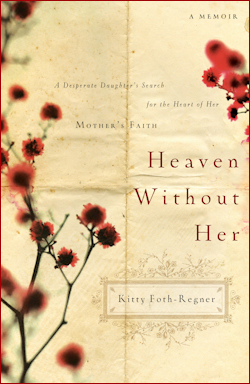 Heaven Without Her, by Kitty Foth-Regner. This is the very touching personal testimony of a secular feminist whose only interest in spiritual things tended toward New-Age mysticism—until the impending death of her mother brought her face to face with some difficult questions that have no satisfying answers outside biblical Christianity. I was greatly moved by this book, perhaps because I read it in the wake of my own mother's death in January. The book is a graphic illustration of how God providentially draws and redeems people—often people who (from a human perspective) might seem the most unlikely candidates for conversion. Kitty Foth-Regner's worldview at the start of her journey could hardly have been more radically at odds with the faith that finally brought her settled peace. But the sovereign hand of divine Providence (evident throughout her testimony) wisely and lovingly led her through some of life's bitterest trials and sorrows into the unimaginable riches of grace. It's a tender story, well told.
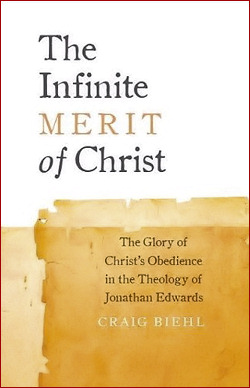 The Infinite Merit of Christ, Craig Biehl. I absolutely love this book. I like everything about it from the page design (with ample margins, a feature that has fallen out of fashion nowadays); to the flow of Biehl's (and Jonathan Edwards's) logic; to the conclusions Craig Biehl draws from his careful analysis of Jonathan Edwards's writings. The book is a study of the doctrine of justification (my favorite theological topic) from the writings of Jonathan Edwards (my favorite post-Puritan New England theologian) with specific emphasis on the significance of Christ's obedience (my favorite aspect of justification). Biehl provides a helpful rebuttal to several currently-popular points of view that have (for various reasons) downplayed the importance of imputed righteousness and rejected the significance of Christ's human obedience to Moses' law. This is a book to be reckoned with in all those debates. I got two copies, one for my shelf of Edwards studies and the other for the "justification" section of my "doctrine" stacks.
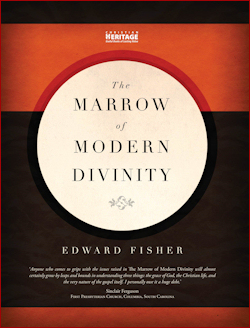 The Marrow of Modern Divinity, by Edward Fisher. This is the book that sparked the Marrow Controversy in eighteenth-century Scotland. That's one of my favorite episodes of theological controversy ever, and it continues to be one of the most important intramural debates among Calvinists. Thomas Boston and the Erskine brothers were on the angels' side in that debate, in my assessment. They and their allies are sometimes known as "The Marrow Men." Their opponents were high Calvinists of a severe and and anti-evangelistic sort. The high-Calvinist group held to a cluster of ideas that to this day surface and resurface in Internet forums and tend to breed hyper-Calvinism. I wish more of today's Calvinists had studied the Marrow controversy. I think a lot more gracious, tenderhearted, and evangelistic brand of Calvinism would be the result. (

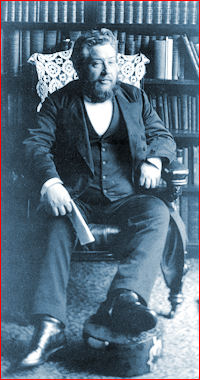
 h, how many there are that are never settled! The tree which should be transplanted every week would soon die. Nay, if it were moved, no matter how skilfully, once every year, no gardener would expect fruit from it. How many Christians there be that are transplanting themselves constantly, even as to their doctrinal sentiments?

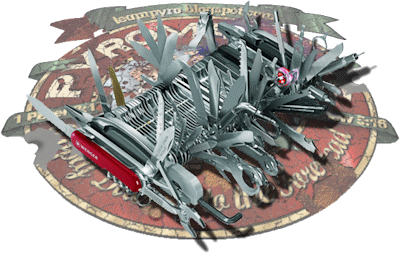


 "Y’all?!" as we say here in the south.



 know what you're thinking: we've already beaten the Manhattan Declaration to death, and we don't need another TeamPyro post on the issue.
 In fact, George implies that the main reason the ecumenical movement exists and is growing today is because the old doctrinal issues that divided Orthodox, Catholics, and Protestants simply aren't relevant in the culture war. Allowing doctrinal differences to keep us from putting up a completely united front in the culture war is "misguided," George says. How could our benighted spiritual ancestors have been so foolish as to disfellowship one another over differences about the gospel? Take, for example, "the differences between Catholics and Lutherans regarding justification." Were those really fundamental differences in the first place, or were the Reformers and the Council of Trent mostly just talking past one another? George offhandedly asserts that those things were mostly "misunderstandings" that have now been "clear[ed] away."
 Even the New York Times writer (David D. Kirkpatrick) seemed to sense that the biblical truths of original sin and human depravity posed a fairly fundamental challenge to Robert George's notion that society can be won to righteousness through human reason alone. He writes,
 The
 new god has been lately set up among men, the god of modern Christianity, the god of modern thought, a god made of honey or sugar or lead. He is all leniency, gentleness, mildness, and indifference in the matter of sin. Justice is not in him, and as for the punishment of sin, he knows it not.
 Leftover comments about this week's discussion

 've had a couple of private conversations and received a few off-line e-mails this week [September 5-9, 1995] regarding the Millet-MacArthur meetings. Also, one or two issues came up in the comments that I wanted to respond to but didn't have time.


 n 1997 Carl Mosser and Paul Owen were graduate students at Talbot School of Theology. In April of that year, they jointly presented a paper at the Far West regional meeting of the Evangelical Theological Society. The paper, titled
 Anyway, about a year after Mosser and Owen presented their ETS paper, they participated in an e-mail forum on apologetics where I occasionally posted. When the subject of Mormon soteriology came up, sure enough, the Millet-MacArthur meeting (see