Jeremy Taylor was a pastor who'd been born two years after the KJV. In our circles, he's the author of the oft-misquoted and seldom-sourced statement, God "threatens terrible things to us if we would not be happy." Actually, it's "He threatened horrible things to us if we would not be happy," and the source is this sermon.
Though that is the quotation that brought me to read the sermon, it isn't what I'm bringing to you. In the sermon, Taylor takes a clear-eyed, sober, terrifying read of judgment to come. He's at great pains to see to it that no man take lightly the stroke that is about to fall, at any moment, on God's enemies.
In imagining the miseries of Hell, he does a brilliant and fearful thing. He slows time down. Taylor brings us to seize on that moment — those seconds, that split-second — after someone has been caught in a sin, and before he has invented a pretext falsely to shield and comfort himself.
Hear how Taylor does this, and what use he makes of it:
We may guess at the severity of the Judge by the lesser strokes of that judgment which He is pleased to send upon sinners in this world, to make them afraid of the horrible pains of doomsday–I mean the torments of an unquiet conscience, the amazement and confusions of some sins and some persons. For I have sometimes seen persons surprised in a base action, and taken in the circumstances of crafty theft and secret injustices, before their excuse was ready. They have changed their color, their speech hath faltered, their tongue stammered, their eyes did wander and fix nowhere, till shame made them sink into their hollow eye-pits to retreat from the images and circumstances of discovery; their wits are lost, their reason useless, the whole order of their soul is decomposed, and they neither see, nor feel, nor think, as they used to do, but they are broken into disorder by a stroke of damnation and a lesser stripe of hell; but then if you come to observe a guilty and a base murderer, a condemned traitor, and see him harassed first by an evil conscience, and then pulled in pieces by the hangman’s hooks, or broken upon sorrows and the wheel, we may then guess (as well as we can in this life) what the pains of that day shall be to accurst souls. But those we shall consider afterward in their proper
scene; now only we are to estimate the severity of our Judge by the intolerableness of an evil conscience; if guilt will make a man despair–and despair will make a man mad, confounded, and dissolved in all the regions of his senses and more noble faculties, that he shall neither feel, nor hear, nor see anything but specters and illusions, devils and frightful dreams, and hear noises, and shriek fearfully, and look pale and distracted, like a hopeless man from the horrors and confusions of a lost battle, upon which all his hopes did stand–then the wicked must at the day of judgment expect strange things and fearful, and such which now no language can express, and then no patience can endure. Then only it can truly be said that he is inflexible and inexorable. No prayers then can move Him, no groans can cause Him to pity thee; therefore pity thyself in time, that when the Judge comes thou mayest be one of the sons of everlasting mercy, to whom pity belongs as part of thine inheritance, for all else shall without any remorse (except His own) be condemned by the horrible sentence.
You see? Taylor takes that sickening moment of fear and guilt, and freeze-frames it long before the invention of the freeze-frame. He says, "Imagine existing like that forever. Imagine that sense of guilt and shame, of panic and nakedness — forever."
For will that not be Hell? Not The Great Divorce's image of sophisticated reprobates lost in self-deception, but of a mass of humanity whose "secrets" have been exposed, stripped naked, and judged, whose every rationalization has been blown away like the faintest wisp of steam, who now find themselves before the Judge's pitiless eye and under His condemnation for an hour, then another, then another, in endless succession, never nearer the end than at the start.
Brilliant picture, and all the more so if it sent (and sends!) one sinner flying to Christ and the Gospel for grace and refuge while it may still be had.
Love reading C. S. Lewis. Always have. Doesn't mean I think he's always right.
For instance, take one of Lewis' most oft-quoted observations on Hell:
There are only two kinds of people in the end: those who say to God, "Thy will be done," and those to whom God says, in the end, "Thy will be done." All that are in Hell, choose it. Without that self-choice there could be no Hell. No soul that seriously and constantly desires joy will ever miss it. Those who seek find. Those who knock it is opened.
This is quoted and re-quoted all over the place. I just read it again, in Ortlund's little book that treats parts of Proverbs (48). Why do we like this Lewis quotation so much?
Well, I think we like it because its binary, and many of us like binary. In fact, I suppose I could say there are only 10 kinds of people in the world: those who like binary, and those who don't.
Sorry. Anyway.
That Bible is certainly binary on most things that matter: two wisdoms, two ways, two ends. This Lewis quotation is like that: "only two kinds of people." We like that. And we like that Lewis exalts the Lordship of God, makes clear that knowing God, belonging to God, necessarily involves an embrace of His will.
I daresay many people really, really like this snippet because it makes Hell seem less objectionable. It takes the heat (no pun intended) off us — and off God — and puts it all on the lost. "They're in Hell because they want to be," we say, echoing Lewis. Oh. Well then, that's not so bad, is it? We thought of Hell as a place God threw people, screaming and wailing and miserable. Terrified, not wanting to be there. But heck (again, no pun), if they want to be there anyway...
Yes, well, except that's just the thing. They don't want to be there. There is no evidence whatever that they want to be in Hell. This quotation, at least as commonly used, is mostly fudging, and mostly balderdash.
Nobody wants to be in Hell! Look at the actual folks who are sent there. Look at the folks in Matthew 7:22f. Are they thinking, "Oh, terrific, what a relief; we were afraid we'd have to go to Heaven and, you know, that would really suck"? Heavens (again, no pun), no! Every last one of them wanted to be in Heaven, expected to be in Heaven! Jesus' pronouncement was unexpected and unwelcome.
What of those in Matthew 25:41ff.? Again, not a one hears what he expects to hear. Every one expected to hear an "Attaboy! Come on in!" from the Lord. His pronouncement of doom is a shock.
What of the lost in Matthew 8:12; 13:42, 50; 22:13; 24:51; 25:30 and so forth? Do these sound like folks who are being sent where they want to go? Do they sound happy, satisfied? Weeping? Gnashing their teeth? Are those happy sounds?
The image of God actually saying, "Oh well, look; I'd just as soon you come be in My Heaven; but if this is what you really want, if you insist, here you go: you can go over there and be rid of Me" may work in the short run. We don't have to explain the justice of God sending people to Hell. He's hardly even doing it. They're doing it to themselves. "They're there because they want to be," we say, and we feel done.
Except, again, it just isn't Biblical.
First, God doesn't say "Thy will be done," to the thwarting of His will of decree. Ever. To anybody. Check Psalm 115:3, Proverbs 16:4, Daniel 4:35, and Ephesians 1:11, for starters. God says "My will be done."
Second, if God did say "Thy will be done," none would ever be saved. We hate God, we flee God, we want nothing to do with God or His law (Rom 3:11-12, 18; 8:7). We are saved because God sovereignly, supernaturally transforms our will (Ephesians 2:1-10). If He did not, all would be lost.
Third, God does this transforming work in the hearts of some men, not all (Matthew 22:14; 2 Thess. 3:2)
Fourth, Hell isn't where you go to get away from God. There is no getting away from God (Ps. 139). That in part is what makes Hell Hell: eternal existence under the unrelenting wrath and displeasure and judgment of God. However, it is the ultimate, ultimately-failed destination in the flight from God.
Fifth, and perhaps most importantly, what sinful men actually want is not to be allowed to go to Hell. What men actually want is for God to go to Hell. Men actually want to do their will (this much Lewis has right), and they want to get away with it. They want no interference and no negative consequences. God represents both. Leaving a binary situation of two choices:
We must repent and bow the knee to God; or
God must be eliminated.
And which one does your Bible tell us is the choice of fallen man, left to ourselves?
Lewis' thoughts could be used with adjustment, I suppose. If I were to reword him to make it more Biblical, it might go like this:
There are only two kinds of people in the end: those who say to God, "Thy will be done," and those to whom God says, in the end, "My will be done, despite your will." All that are in Hell, are there because they rebel against God. Without rebellion against God there would be no Hell. No soul that seriously and constantly desires joy will ever miss it. Those who seek find. Those who knock it is opened. Our problem is that none of us seeks those things, so long as we keep trying to be God instead of seeking Him. And none of us does seek Him — until God in sovereign grace transforms us.
What puzzles me is how many Reformed types who know their Bibles continue to use Lewis, without a bit of reworking.
ach age would fain have its own gospel, and the present is not behind hand in the desire to be its own prophet. Many are ready to help in this presumptuous design.
Certain divines attain to eminence by undermining the gospel they pretend to defend, and forging new theories upon the anvils of their own fancy. Men who would never have been known if they had acted honestly have gained a cheap notoriety by vending heresy, and yet wearing the garb and eating the bread of orthodoxy.
The most fashionable form of this evil just now is the production of novelties with regard to the future punishment of the wicked. False prophets prophesy smooth things, and talk of a larger hope which being interpreted is this, that men may live very much as they like; but some time or other, and somehow or other, character will cease to operate upon destiny, and the righteous and the wicked will stand on a par. This is the old doctrine of falsehood with which the sinner blesses himself in his heart, saying, "I shall have peace, though I walk in the imagination of mine heart."
The punishment of sin has been doubted from the very beginning. The chief of all subtle thinkers said in the garden of Eden, "Ye shall not surely die." By this larger hope, insinuated rather than boldly stated, the serpentine philosopher tempted the woman, and ruined our race. Pleased with his success, he continues to use the same artifice, asserting either that sin is trivial, or that penance can remove it, or that hell is temporary, or that the soul will be annihilated, or some other form of the same radical lie. His perpetual cry is, "You shall not surely suffer what God threatens; you may sin, and yet there is a hope larger than the revelation of Jesus Christ, wider than the Savior has proclaimed."
In this refuge there is no Christ, and no faith in him, and assuredly there is nothing in it that conduces to holiness. Mark its influence wherever it is received.
When any of our friends embrace the novel theology, do they become more devout, more earnest, more gracious, more holy, as the result of it? I think not. Are these the persons who make our prayer meetings a power? Are these the winners of souls? Are these the men who speak much of Jesus, and live in daily fellowship with him? Do we see them more careful to avoid conformity to the world?
Our witness is that the consequences are the reverse. Did you ever hear of a man who was converted from vice by hearing that sin would be lightly punished, and who, in proportion as he grew purer in life, grew more heterodox in his views? Such an instance would be a rarity, if indeed it ever existed; but when a man who holds orthodox doctrine backslides and declines, as a general rule he finds it convenient to adopt some novel hypothesis, in order that he may feel comfortable in his sin. IS it not so? So far as my observation goes, these modern notions go with looseness of life, with worldliness of heart, with decay of prayerfulness, and with backsliding from the living God, and as you lay this line and plummet to them it will soon be seen that they are refuges of lies.
At any rate, sirs, suppose your larger hope should turn out to be correct, in what respect will the orthodox be the losers? But suppose your larger hope should turn out to be a mere delusion, what will become of you who venture your all upon it? We are in any case upon the safe side of the hedge, and this is no small advantage when the weightiest interests are at stake. Suppose there shall be no hell, if I am a believer in Christ it matters not to me; but suppose there is and there is—then you who are unbelievers are in an evil plight.
If you do not catch this will-o'-the-wisp of a larger hope, as I believe you never will, then where are you? It behoves every man not only to make sure, but to make doubly sure. About the soul we want the utmost certainty. I would counsel you to dig deep, and see what you are resting on. I would have you make sure that you do not permit a falsehood to lie like a worm at the root of your hope.
Seek to know the reason for your building on Christ, and when you have ascertained that, then look for God's warrant for placing stone upon stone in the upbuilding, and without this do not rest. Nothing but divine authority ought to content you in the business of eternity.
The views and hypotheses of the learned Dr. Somebody are of no value to me, for I can theorize for myself if I have a mind to. I want fact and certainties, for I dread every refuge of lies.
Your weekly dose of Spurgeon
posted by Phil Johnson
The PyroManiacs devote some space each weekend to highlights from The Spurgeon Archive. The following excerpt is from "Lingerers Hastened," a sermon preached Sunday morning, 12 January 1868, at the Met Tab in London.
f you really long to save men's souls, you must tell them a great deal of disagreeable truth.
The preaching of the wrath of God has come to be sneered at nowadays, and even good people are half ashamed of it; a maudlin sentimentality about love and goodness has hushed, in a great measure, plain gospel expostulations and warnings.
But, my brethren, if we expect souls to be saved, we must declare unflinchingly with all affectionate fidelity, the terrors of the Lord.
"Well," said the Scotch lad when he listened to the minister who told his congregation that there was no hell, or at any rate only a temporary punishment, "Well," said he, "I need not come and hear this man any longer, for if it be as he says, it is all right, and religion is of no consequence, and if it be not as he says, then I must not hear him again, because he will deceive me."
"Therefore," says the apostle, "Knowing the terrors of the Lord we persuade men." Let not modern squeamishness prevent plain speaking concerning everlasting torment. Are we to be more gentle than the apostles? Shall we be wiser than the inspired preachers of the word? Until we feel our minds overshadowed with the dread thought of the sinner's doom we are not in a fit frame for preaching to the unconverted. We shall never persuade men if we are afraid to speak of the judgment and the condemnation of the unrighteous.
None was so infinitely gracious as our Lord Jesus Christ, yet no preacher ever uttered more faithful words of thunder than he did. It was he who spoke of the place "where their worm dieth not and their fire is not quenched." It was he who said, "These shall go away into everlasting punishment." It was he who spake the parable concerning that man in hell who longed for a drop of water to cool his tongue.
We mast be as plain as Christ was—as downright in honesty to the souls of men—or we may be called to account for our treachery at the last. If we flatter our fellows into fond dreams as to the littleness of future punishment, they will eternally detest us for so deluding them, and in the world of woe they will invoke perpetual curses upon us for having prophesied smooth things, and having withheld from them the awful truth.
When we have affectionately and plainly told the sinner that the wages of his sin will be death, and that woe will come upon him because of his unbelief, we must go farther, and must, in the name of our Lord Jesus, exhort the guilty one to escape from the deserved destruction. Observe, that these angels, though they understood that God had elected Lot to be saved, did not omit a single exhortation or leave the work to itself, as though it were to be done by predestination apart from instrumentality.
They said, "Arise, take thy wife and thy two daughters which are here, lest thou be consumed." How impressive is each admonition! What force and eagerness of love gleams in each entreaty! "Escape for thy life; look not behind thee; neither stay thou in all the plain; escape to the mountain, lest thou be consumed." Every word is quick and powerful, decisive and to the point.
Souls want much earnest expostulation and affectionate exhortation, to constrain them to escape from their own ruin. Were they wise, the bare information of their danger would be enough, and the prospect of a happy escape would be sufficient; but they, as they are utterly unwise, as you and I know, for we were once such as they are, they must he urged, persuaded, and entreated to look to the Crucified that they may be saved. We should never have come to Christ unless divine constraint had been laid upon us, neither will they; that constraint usually comes by instrumentality; let us seek to be such instruments. If it had not been for earnest voices that spoke to us, and earnest teachers that beckoned us to come to the cross, we had never come. Let us therefore repay the debt we owe to the church of God, and seek as much as lieth in us to do unto others as God in his mercy hath done unto us.
I beseech you, my brethren, be active to persuade men with all your powers of reasoning and argument, salting the whole with tears of affection. Do not let any doctrinal notions stand in the way of the freest persuading when you are dealing with the minds of men, for sound doctrine is perfectly reconcilable therewith.
I recollect great complaint being made against a sermon of mine, "Compel them to come in," in which I spake with much tenderness for souls. That sermon was said to be Arminian and unsound. Brethren, it is a small matter to be judged of men's judgment, for my Master set his seal on that message; I never preached a sermon by which so many souls were won to God, as our church meetings can testify; and all over the world, where the sermon has been scattered, sinners have been saved through its instrumentality, and, therefore, if it be vile to exhort sinners, I purpose to be viler still.
I am as firm a believer in the doctrines of grace as any man living, and a true Calvinist after the order of John Calvin himself; but if it be thought an evil thing to bid the sinner lay hold on eternal life, I will be yet more evil in this respect, and herein imitate may Lord and his apostles, who, though they taught that salvation is of grace, and grace alone, feared not to speak to men as rational beings and responsible agents, and bid them "strive to enter in at the strait gate," and "labor not for the meat which perisheth, but for that meat which endureth unto everlasting life."
Beloved friends, cling to the great truth of electing love and divine sovereignity, but let not this bind you in fetters when, in the power of the Holy Ghost, you become fishers of men.
'm not generally a fan of daily devotionals. The readings tend to be like bite-size shortbread biscuits—a verse or two of Scripture appended to a paragraph with a corny anecdote. My appetite runs more to things like rare steak, 9 ounces or more. So when I'm reading devotionally (devoting time to God, and listening to Him), my preference is to read straight Scripture, at least a chapter or two at a time, without prefabricated what-do-you-think-about this-style questions, thoughts-of-the-day, fortune-cookie quotes, cutsie human-interest stories, or any of the other standard daily-devotional gimmicks.
Don't get me wrong: I have nothing against commentaries and study tools, and I use them profusely when I'm studying a text I intend to write or preach on. But when I'm doing purely devotional reading, I prefer to devote all my time and attention to the text itself, so I can hear God's Word without interruption and meditate on it.
Nevertheless, I very much like We Shall See God, a new devotional book on heaven and the afterlife by Randy Alcorn, with copious quotes from C. H. Spurgeon. It is meaty, rich with insight, engrossing, and fresh (even though the Spurgeon excerpts are more than a century old).
As a matter of fact, for my money, it's an even better book about heaven than Alcorn's original bestselling book on the subject.
Alcorn has lightly edited the Spurgeon material to make it more easily readable, and he has done a superb job choosing and reformatting these excerpts. Gone are the three-page-long paragraphs you have to slog through in the sermon volumes. Spelling, punctuation, and some words have been Americanized. Paragraphs have been omitted here and there where it helps to make Spurgeon's point in a more focused way. The editing has been done with proper respect to the material, and without any attempt to alter the sense or substance of what Spurgeon originally said. (Alcorn explains the editing process in his introduction.)
You may very well want to use this book as a daily devotional, and it is plenty nutritious enough for that. Spurgeon's premillennialism comes through wonderfully where he discusses eschatology. Spurgeon's portrayal of heaven is superbly biblical and devoid of speculation. There are also chapters on the reality of God's wrath and the horrors of hell, so this is no syrupy book that might give artificial comfort or false hope to the lost.
I think it is a fine book expounding on what the Bible says about the afterlife, and even if you don't use it as a devotional guide, you will find it a good read. It's going in the doctrinal section of my library, not on that top, out-of-reach shelf where I store most of my devotional books.
Your weekly dose of Spurgeon posted by Phil Johnson
The PyroManiacs devote some space each weekend to highlights from The Spurgeon Archive. What follows is brief, but it's one of Spurgeon's most famous quotations. It comes from "The Wailing of Risca," a sermon preached Sunday Morning, 9 December 1860, at Exeter Hall, London.
h my brothers and sisters in Christ, if sinners will be damned, at least let them leap to hell over our bodies. And if they will perish, let them perish with our arms about their knees, imploring them to stay, and not madly to destroy themselves. If hell must be filled, at least let it be filled in the teeth of our exertions, and let not one go there unwarned and unprayed for.
A Prayer of Moses, the man of God. Lord, you have been our dwelling place in all generations. 2 Before the mountains were brought forth, or ever you had formed the earth and the world, from everlasting to everlasting you are God. 3 You return man to dust and say, "Return, O children of man!" 4 For a thousand years in your sight are but as yesterday when it is past, or as a watch in the night. 5 You sweep them away as with a flood; they are like a dream, like grass that is renewed in the morning: 6 in the morning it flourishes and is renewed; in the evening it fades and withers. 7 For we are brought to an end by your anger; by your wrath we are dismayed. 8 You have set our iniquities before you, our secret sins in the light of your presence. 9 For all our days pass away under your wrath; we bring our years to an end like a sigh. 10 The years of our life are seventy, or even by reason of strength eighty; yet their span is but toil and trouble; they are soon gone, and we fly away. 11 Who considers the power of your anger, and your wrath according to the fear of you? 12 So teach us to number our days that we may get a heart of wisdom. 13 Return, O LORD! How long? Have pity on your servants! 14 Satisfy us in the morning with your steadfast love, that we may rejoice and be glad all our days. 15 Make us glad for as many days as you have afflicted us, and for as many years as we have seen evil. 16 Let your work be shown to your servants, and your glorious power to their children. 17 Let the favor of the Lord our God be upon us, and establish the work of our hands upon us; yes, establish the work of our hands!
egarding the shortness and misery of this life, Moses wrote, "All our days pass away under your wrath; we bring our years to an end like a sigh. The years of our life are seventy, or even by reason of strength eighty; yet their span is but toil and trouble; they are soon gone, and we fly away" (Psalm 90:9-10).
This is a common theme in Scripture: our days are few and full of trouble (Job 14:1). In case you have wondered, it's not just you; we all experience misery and affliction. That's the nature of earthly life. The earth itself is cursed. Moses gives a nod to that fact in the phrase "all our days pass away under [God's] wrath." In the King James Version, the second half of that verse says, "We spend our years as a tale that is told." The Hebrew expression actually means, "We finish our years like a groan."
That's true, isn't it? Life ends with a groan. The end of life is like an extended sigh of pain. Life doesn't generally get more pleasant as we get older; in fact, it typically works the other way: life gets harder and more trouble-filled. At the end you die, and if you're "fortunate" to live long enough to die of old age, the end of your life will be like a drawn-out sigh. Meanwhile, this life is filled with moaning and affliction. All nature groans (Romans 8:22-23).
That reality leads Moses to reflect on the reality of divine wrath against sin. Moses, you recall, had sinned by losing his temper at Meribah in front of the whole nation. There was no water when Israel arrived at Meribah, and (as usual), complaints and rebellion were brewing among the people. So God gave Moses these detailed instructions: "Take the staff, and assemble the congregation, you and Aaron your brother, and tell the rock before their eyes to yield its water. So you shall bring water out of the rock for them and give drink to the congregation and their cattle" (Numbers 20:8).
Instead, with the nation gathered before him, Moses went into a rage: "Hear now, you rebels: shall we bring water for you out of this rock?" And Moses lifted up his hand and struck the rock with his staff twice" (vv. 10-11). As a result, Moses was forbidden to lead the nation into the promised land (v. 12). Aaron likewise was kept out of Canaan and died immediately after the incident at Meribah (vv. 23-29).
It seems an extremely harsh punishment for a seemingly minor (and completely understandable) transgression. In Psalm 90:11, Moses acknowledges this, but he implicitly affirms the justice of God: "Who understands the power of Your anger and Your fury, according to the fear that is due You?"
In other words, no matter how much we might fear God's wrath, His wrath against sin turns out to be more than equal to the worst thing we could ever imagine. That's why the biblical descriptions of hell are so awful. God's wrath is infinitely worse than anyone really fears.
But notice: that doesn't cause Moses to despair. He knows about—and has tasted—the goodness of God as well. And that's what launches him into the petition phase of his prayer. Verse 12: "So teach us to number our days, that we may apply our hearts unto wisdom." In other words, help us to keep both the brevity of this life and the realities of eternity in perspective, so that we can be truly wise people.
And then Moses pleads with God for compassion: "Return, O LORD! How long? Have pity on your servants! Satisfy us in the morning with your steadfast love, that we may rejoice and be glad all our days." (vv. 13-14).
Moses realizes that even though he can't erase the consequences of his sin, his life isn't hopeless. He's not dreading what's ahead or seeing the future with a grim outlook at all. He knows the mercies of God are inexhaustible, and God abundantly pardons. God can restore even the years that the locust has eaten. So Moses prays for a special outpouring of God's blessing. Verse 15: "Make us glad for as many days as you have afflicted us, and for as many years as we have seen evil."
In other words, Give us blessing at least equal to our trouble. "Let your work be shown to your servants, and your glorious power to their children. Let the favor of the Lord our God be upon us, and establish the work of our hands upon us; yes, establish the work of our hands!" (vv. 16-17).
God answered that prayer. The work of Moses' hands was certainly established. His life's work was by no means wasted. And he wasn't kept out of the Promised Land forever. Because at the transfiguration, when Christ revealed His glory, Moses and Elijah were there, talking with Him. Moses got blessing equal to his trouble—and infinitely more. After all, God was His dwelling place—and God is a better dwelling place than the land of Canaan.
That's the whole point of Psalm 90. We are dying creatures. Our earthly comforts are few and they are only temporary. This life is going to end shortly. And even if you die of old age, it's a long process of decline to get to that point. The very best you can hope for is that your life will end like a drawn-out groan.
But if God is your dwelling-place then you have an eternal habitation, because He Himself is eternal. Not only that, if God is your dwelling place, then He can bless you even in this sin-cursed world. He will even bless you more than the days you have been afflicted. Certainly, the blessings of heaven are infinitely greater than all the miseries of this life combined.
Romans 8:18: "For I reckon that the sufferings of this present time are not worthy to be compared with the glory which shall be revealed in us." There's a lot for the believer to look forward to, no matter how miserable life gets.
Back in 2008, you were working at Newsweek and your team of professionals decided to take on the question of marriage and whether or not it should be redefined. As I responded to you in full back then, I don’t have anything new to say on that subject, but I wanted to let you know I’m familiar with your work and your outlook on “Christian” things.
This month, TIME magazine has published its list of the 100 most-influential people in the world, and it’s an interesting compendium. From my desk, anyone who has heard of more than 30% of these people is probably a pretty avid world news buff. But as a list of people with substantial influence, that list can hardly be criticized for its inclusiveness or broad interest in how “influence” is demonstrated.
Rob Bell turns up on their list, and you’re the one who drafted his entry, crediting him for his contribution to Christian thought. Here’s what you said:
I particularly enjoyed the photo TIME included with your report as it included a subtle halo around Rob’s head, but I’ll bet you didn’t choose that photo. You did, however, choose to say something specific, and then adorn it with praise for Rob: a vexed church has wrestled with the question of hell for 2000 years.
I read that a few times in and out of context to make sure it's what you meant, and I'm convinced. So from my perspective, I only have one question for you: is it true?
What I am not going to do here is fall into the trap of arguing with you about it -- or arguing at you, since it's unlikely you'll respond to a Christian Lifestyle blog with fewer readers than Gismodo. But what I am going to do is think about that question for a moment in the hopes that others will join me in considering the matter.
How would we know the answer to that question? Is there a way to know whether or not the Christian faith (and specifically, the Christian church) has made any decisions about the doctrine of hell? If there's not, I think Rob Bell is actually a kind of snake-oil salesman -- because let's face it: he's portraying a doctrine of hell which he thinks other people ought to adopt. He's a partisan guy -- and we can see that in almost every interview he's done for his book so far. That is: he wants us to know that for certain the Greek word "Aeon" doesn't mean "forever and ever" (at least, not in reference to hell -- in reference to heaven he's convinced that the good stuff doesn't ever stop). He thinks that we do God a disservice by saying hell is punishment that lasts longer than the crime(s). He wants people to get a firm grip on the doctrine of hell -- and not fear it. We should embrace it as a commentary on what we do to ourselves.
What he doesn't want for them is a doctrine in which hell is an unquenchable verdict.
That's strange, isn't it -- if the story of salvation in the biblical discussion is, as you put it, contradictory, perhaps the problem is that Rob has put too fine a point on it. And if that's the case, I wonder why his influence is seen as so useful by yourself and by TIME.
So I ask you: is it true? If it is not in fact true, should you do anything about it?
Look: sometime around 60 AD, there was this fellow Paul -- he wrote a lot of books and letters in his day, so you may have heard of him. Anyway, around 60 AD he was rounded up by the religious leaders of his day, and by the Romans, and he was put on trial for what one account calls “serious charges,” but it was likely for sedition and upsetting the peace of the city of Jerusalem.
When Paul came up for trial, and he was asked to explain himself – to defend himself against the charges at-hand – he did a strange thing: he appealed to what actually happened to him. He said: “I am not insane, Most Excellent Festus. What I am saying is the sober truth. And King Agrippa knows about these things. I speak boldly, for I am sure these events are all familiar to him, for they were not done in a corner!”
For Paul, the question of who Jesus was, and what his purpose was on this Earth, was a question of truth -- of things not done in a corner which cause speculation or uncertainty but of things for which there are many witnesses.
But what is truth, Mr. Meacham? Is it something we need today, or is it something we have outgrown?
I ask that of you, and I leave it to you. I hope that there is something true, and that it finds you ready to receive it.
Your weekly dose of Spurgeon
posted by Phil Johnson
The PyroManiacs devote some space each weekend to highlights from The Spurgeon Archive. The following excerpt is from "Tender words of terrible apprehension!," a sermon preached at Exeter Hall on Sunday morning, 4 November 1860.
he wrath of God and the judgment of the day of the Lord cannot be a trifling matter. How emphatically are we told in Scripture, that it is "a fearful thing to fall into the hands of the living God." Upon such a subject we cannot afford to trifle.
Besides, the mystery of Calvary indicates to us that sin must deserve at God's hand a terrible penalty. Did Jesus suffer so bitterly to save men, and will not the unsaved endure bitterness indeed? Must the eternal and holy Son of God, upon whom sin was only an imputed thing—must he bleed and die, and offer up his life, with his soul exceedingly heavy even unto death—and is the world to come a thing about which men can afford to sport or idly dream?
Your weekly dose of Spurgeon posted by Phil Johnson
The PyroManiacs devote some space each weekend to highlights from The Spurgeon Archive. The following excerpt is from "God's Advocates Breaking Silence," a sermon preached Sunday morning, 17 March 1878, at the Metropolitan Tabernacle, London.
ne would think, to hear some preachers, that God was under obligation to man, or, at least, that he had no will of his own, but had left man's will to be supreme.
The truth is that if all the race had been condemned, God would have been infinitely just, and if he spares one and not another none can say unto him "What doest thou?"
His declaration is "I will have mercy on whom I will have mercy, and I will have compassion on whom I will have compassion."
I sympathize with man, but I have in my very soul an infinitely deeper sympathy with God. I am bound to love my neighbor as myself, but the still higher law calls on me to love the Lord my God with all my heart, and soul, and mind, and strength.
Speaking on behalf of man may be carried so far that you come at length to look upon sin as his misfortune rather than his fault, and to view the fact that sin is punished at all as a matter to be deplored. In some professed Christians their pity for the criminal has overcome their horror at the crime. Eternal punishment is denied, not because the scriptures are not plain enough on that point, but because man has become the god of man, and everything must be toned down to suit the tender feelings of an age which excuses sin but denounces its penalties, which has no condemnation for the offense, but spends its denunciations upon the Judge and his righteous sentence.
By all means have sympathies manward, but at the same time show some tenderness towards the dishonored law and the insulted Lord. Is justice a figment? Is there no necessity for divine anger? Is mercy itself become a debt due to mankind? See you nothing horrible in sin? Is there no guilt in rejecting Christ and trampling on his blood? Ay, and is there none in closing the eyes even to the feebler light which streams from the visible works of God, and reveals his power and Godhead?
Few, I say, look at the matter in this light, and yet it should be the main business of every believer "to speak on God's behalf." It becomes, therefore, all the more needful that those who have been led to side with God, and who feel their hearts drawn to adore and magnify and vindicate their glorious Lord, should count it a privilege still to be spared to speak on the behalf of God.
I would silence no voice that speaks for man so far as it speaks truthfully, but oh for more voices to speak for God and maintain his crown rights. It needs that we vindicate his law and the terrors of it, his gospel and the sovereignty of it, his nature and the completeness of it, his providence and the wisdom of it, his redemption and the efficacy of it, his eternal purpose and the accomplishment of it.
May this theme, though silent long, be sounded forth till its voice is heard in every street of Zion. Not the exaggeration of divine truth, but that truth itself, we desire to hear, and God grant we may live to hear it. May many a man of God be constrained to say, "I have yet to speak on God's behalf." Let others plead what cause they will, it is ours with the greatest of poets "To justify the ways of God to men."
First of all, I wanted to thank you for giving me something to do from my flight back from Europe last Friday as my choices were looking rather bleak. In-flight movies were lame (except for the re-run of the Dark Knight, which of course I cannot pass by), and thanks to your new publisher, I had the Kindle version of your new book to keep me occupied. I had 9 hours to go over your new book, and I wanted to send you a note about it.
Before I get to the single bite of meat and the one french fry I wanted to add to the total conversation about your new book and your take on what constitutes the Christian faith, there’s a video out there from your friend Doug Pagitt which I wanted to bring to your attention.
It's an interesting reproach, but it also gives an insight into the way Doug (and I think you personally) receives and responds to criticism. One of the things I took away from your book is that you have a pretty wide net when it comes to the Gospel. Now by that I mean not that you take in all manner of things and call it the Gospel (which, maybe that’s true, but that’s for another day), but rather that you want the Gospel to cover everything that man does. In fact I think it’s totally fair to say that you think the Gospel does cover everything that man does, one way or another. You sum it up nicely when you say this in the Kindle version:
Right? In your view the unlimited love of the Father is for everyone and will be manifest for everyone because it’s His love, and not ours. Now, I bring that up in the context of your friend Doug to say this: you and Doug have this horrible problem when it comes to the kind of Christianity you think you are trying to explore and expand: you can’t live it.
See: if this is the kind of God there is, and the kind of Gospel there is, then your outburst in the promo video about whether we can know who is and is not in Hell (that is, your incredulity at someone who said that someone else is in Hell) which casts indignation and aspersions on that person is a contradiction of the Gospel you preach. If indeed the person who never hears the Gospel preached and who never knows for certain that Jesus is both Lord and Christ has nothing to fear from the Gospel, then I suggest to you that the person who thinks Hell is the place where people who reject Christ wind up also has nothing to fear from the Gospel – and your attitude toward him should be the same as your attitude toward others you perceive as unbelievers. And likewise, when Doug Pagitt get all frothy in the mouth because John Piper says you have exited orthodoxy with your promo video and your new book, why can’t he find the tentless love of God which he says works out for Buddhists and Muslims and atheists -- but for Dr. Piper? Why does he have to transgress the circles they both travel in to make a point of saying Dr. Piper is a very bad man?
The fun part would be to speculate on that – but that’s not why I’m writing. I leave it to you to speculate why the truth claims of some make you livid when you demand that truth claims should make no one angry or scared but only hopeful. That speculation would be profitable for you, I am absolutely certain.
Now, that said: your book.
Others have made much of it, so I’ll be brief. The only chapter worth going back to for me as I think about what I’d say in response to you, or (if we’re lucky) to open a discussion with you, is the chapter titled “Hell”. In it, you make three significant claims:
The OT does not mention Hell at all
There are only a handful of mentions of Hell in the NT (you say there are 12+2 mentions of Hell), and those are probably metaphors or object lessons and not references to a final, eternal place where God’s judgment is carried out.
Our modern view of Hell is a superstitious one based on “devious” “pagan” notions meant to control people.
For #1, I can take it or leave it – that’s a pretty shallow reading of the OT if you ask me, but it’s not any more shallow than any other one-paragraph summary of any topic which may or may not be in the Hebrew Scripture. I think it’s close enough to being true, and common enough in all kinds of commentaries, to be your part of a longer hermeneutical discussion, and something a reasonable person can stipulate without an onset of theological madness.
For #3, it’s an unsupported statement – you toss it out there as if there is a legion of theological, anthropological, and historical work in this field which just makes this common knowledge. I think it’s not entirely kosher to do that, but it doesn’t make you a liar. Maybe you’re just writing devotional literature where the broad brush is just fine because you’re not trying to really convince anyone. Maybe you’re just trying to draw a dividing line between pre-modern worldviews from what you have today, which I guess is more enlightened than Shakespeare, Augustine, and Luther. Again – I can take it or leave it. I disagree, but it’s not worth the academic battle of attrition that would have to ensue to show you that this is a poorly-imagined statement.
What I want to get serious about is #2 – that Hell is only mentioned a few times, and probably not as a place, in contrast to the place where Abraham, Isaac and Jacob all dwell with God.
I think your assertion here tells us how you read the Bible. You say that the Bible only mentions Hell 14 times, but conspicuously-absent from your list are the passages where the end of those without faith and without Christ is discussed explicitly without saying, “and this, of course, is a place called ‘Hell’ which is a real place.”
For example, in Luke 6:46-49, Jesus himself says that those who come to him are like the man who builds his house on the Rock, which is therefore not washed away; there is another man who builds without a foundation, whose house falls immediately, and the ruin of his house is great. That has to be disturbing to you because it speaks to the fact that Jesus – in the great wisdom literature tradition – polarizes the issue of having faith in him. He is the one who makes out the proposition to be either/or, and that there are two groups of people in the ultimate tally. That theme comes up again and again in Jesus’ storytelling, but you don’t really go there to say that this is about how Jesus thinks about his Kingdom. And it's funny that in your view, all the Kingdom talk of Jesus doesn't set up the contrast between what is in the Kingdom and what is outside the Kingdom.
And that’s an important matter: what is the Kingdom like, right? Turns out, if you ask Jesus, in Luke 19:11-27, he tells us the parable of the 10 Minas. There are lots of conclusions to be drawn there, I think, but the first is that there are servants who the returning ruler will not receive – he will in fact punish them for being unfaithful. And I think you and I would identify those guys the same way: people who had the riches of Jesus who did not use them to bring great things back to Jesus. But the other is a stunning portrayal of what the Kingdom of God is like -- because after sorting out his own servants, the ruler then orders that all who opposed him from the far away country will be brought as a footstool under his feet. “Let them be slaughtered before me,” he says. That doesn’t sound very promising, does it? But "H-E-L-L" or "G-E-H-E-N-N-A" isn’t spelled out as a word there, so you have simply not included it. The same, I think, is true of Rev 20-21 where there is judgment and then some meet the same fate as Sin, Death and the Devil. The word “Hell” is missing, so these passages are missing from your system of references.
But even where Jesus does say “Hades”, in Luke 16, you don’t really tell the reader the right version of the story. The context of that story is the Pharisee’s love of money – not a socialist vision of the equality of man. And to that end, you dismiss or ignore that the man, there in agony in the afterlife, fears for his brothers and does not want them to suffer as he is suffering. You make it out to be a story of a man who wants others to serve him -- a point not at all in the context of the Pharisee's error!
So how can we receive that? In the very best case, maybe you just haven’t read all the NT, and therefore you may simply not know the NT. That’s forgivable – but you are writing a book here, and the least an author can do is to actually know what his source material says before he refers to it. I think, however that you have read the NT, and this simply shows how you are willing to treat it as a text – which is, without respect.
You know: if I read your book and made a case against it which says you don’t really even show the hope of the Gospel when in fact you have specifically spent a chapter on it, that’s simply disrespectful.
But maybe it’s more than that: maybe this speaks to us of how you’re willing to reason about the Christian faith and its message. See: the problem with the Scripture is that it is not written by us for our purposes. It’s written by God for His purposes, and in that it’s going to make all of us uncomfortable.
Let me admit to you that God’s Law makes me uncomfortable – both in the OT and the NT interpretations of it. I know that I am not the person who can keep even some of the Law. If the measuring stick is Jesus’ retelling of the law in the Sermon on the Mount, my score is zero. I have never done anything right – even when it looks pretty good on the outside. If it were up to me, we ought to find a way to read the Law as maybe good advice. Then we could aspire to it rather than be condemned by it.
But that’s me – maybe you don’t have a problem with the Law. But clearly: you have a problem with the Gospel. That is: you have a problem with the need for it. As I read you, all your real-world examples are about how Hell is what other people do to us. I should believe in hell because there are children maimed in war; I should believe in hell because there are rape victims; I should believe in hell because those who commit suicide have families. That is: the hell I should believe in is the one other people inflict on me. That’s how I know there is a hell: bad people make innocent people suffer.
But then when you retell the Rich Man and Lazarus this gets utterly inverted. See: if your reading of what Hell is holds up, the Rich Man put Lazarus in Hell. That’s the definition you build from real life: Hell is the bad things others do to us. But when Jesus tells the story, the one who did bad things winds up in Hell. To your credit, you don’t actually try to make Jesus’ version of Hell into the Hell you have already explained to the reader. But what you do make of Jesus’ version of Hell is not any better – because now you try to make this into a tale where Jesus tells us that those who do harm to others, and think selfishly, make their own hell. Really? Someone knows this for sure?
Here's how you set up the reader for your answer:
Let me say it frankly: this characterization is a slander to those who hold to the traditional, majority-held view of Hell. For example, the Southern Baptist Convention, for all its flaws, teaches a literal hell and is also one of the largest international providers of humanitarian relief – so much so that the Red Cross relies on them as first responders. But to see traditional religious people this way means that you have to give them credit for thinking in categories that are larger than the ones, frankly, you play at for those who read your books and listen to your sermons. They see traditional people as evil haters, and therefore you have to see them that way.
This goes back to my preface about you and your enthusiasm for God’s grace. It’s crazy that you can extend a hopeful view of the final destination of Gandhi – who, in spite of the movies, was not a ruler with very modern ideas of how to rule India – but you make out the kid with the “turn or burn” t-shirt to be some kind of thug? Why is it that all manner of people with real sociological -- and indeed: moral -- faults can get a pass from you, but that people who hold to an older and more-robust view of the Bible and the Gospel than you do have to get cast as intellectual hicks and people prone to uncivil behavior?
I’m at my normal 3-page limit, so I’ll close with this: one of the reasons Jesus was so hard on the Pharisees is that they had a tradition which they thought was greater than Moses – greater than the Temple, greater than what God actually wants from men, which you have framed in your own Sunday talks as the “greater matters” of “justice and mercy”, the greatest commandments to love God above all and your neighbor as yourself. To that end, they taught all kinds of things, and behaved in all kinds of ways which made them blind to Jesus and to dismiss Jesus and ultimately to hate Jesus – to the point of plotting to kill him.
And in your view of your message, you are keyed on the question of the greater things so that we do not miss them. But the greatest thing was not the Law: it was Jesus himself. It was his work on our behalf. When Peter knew Jesus was the Christ, Jesus started to tell him that he didn’t come to reclaim the throne of David: Jesus said that he had to suffer and die, and be raised on the third day.
For your own good, please think about this. What you are teaching now is, in the best case, a Christian-flavored secular Judaism. That is: you make Jesus a good rabbi and not a great savior. Repent of it, Rob: repent because there’s no shame in turning away from even decades of wrong teaching to turning over a new leaf and teaching that Jesus saves sinner from their own sins and from God’s displeasure if they repent and believe. That is actually the message of the NT, and it ought to be your message if you’re really concerned with the real people you meet every day.
Think about it, and thanks for your time. As always, I’m available at frank@iturk.com if have any questions.
The PyroManiacs devote some space each weekend to highlights from The Spurgeon Archive. The following excerpt is from "Heaven and Hell," a sermon on Matthew 8:11-12 delivered on Tuesday evening, 4 Sept 1855 atKing Edward's Road, Hackney.
The second part of my text is heart-breaking. I could preach with great delight to myself from the first part; but here is a dreary task to my soul, because there are gloomy words here. But, as I have told you, what is written in the Bible must be preached, whether it be gloomy or cheerful. There are some ministers who never mention anything about hell. I heard of a minister who once said to his congregation, "If you do not love the Lord Jesus Christ, you will be sent to that place which it is not polite to mention." He ought not to have been allowed to preach again, I am sure, if he could not use plain words. Now, if I saw that house on fire over there, do you think I would stand and say, "I believe the operation of combustion is proceeding yonder?" No; I would call out, "Fire! fire! and then everybody would know what I meant. So, if the Bible says, "The children of the kingdom shall be cast out into outer darkness," am I to stand here and mince the matter at all? God forbid! We must speak the truth as it is written. It is a terrible truth, for it says, "the children of the kingdom shall be cast out!" Now, who are those children? I will tell you. "The children of the kingdom" are those people who are noted for the externals of piety, but who have nothing of the internals of it. People whom you will see with their Bibles and Hymn Books marching off to chapel as religiously as possible, or going to church as devoutly and demurely as they can, looking as sombre and serious as parish beadles, and fancying that they are quite sure to be saved, though their hearts are not in the matter; nothing but their bodies. These are the persons who are "the children of the kingdom." They have no grace, no life, no Christ, and they shall be cast into outer darkness.
... First, notice, they are to be cast out. They are not said to go; but, when they come to heaven's gates, they are to be cast out. As soon as hypocrites arrive at the gates of heaven, Justice will say, "There he comes! there he comes! He spurned a father's prayers, and mocked a mother's tears. He has forced his way downward against all the advantages mercy has supplied. And now, there he comes. "Gabriel, take the man." The angel, binding you hand and foot, holds you one single moment over the mouth of the chasm. He bids you look down—down—down. There is no bottom; and you hear coming up from the abyss, sullen moans, and hollow groans, and screams of tortured ghosts. You quiver, your bones melt like wax, and your marrow quakes within you. Where is now thy might? and where thy boasting and bragging? Ye shriek and cry, ye beg for mercy; but the angel, with one tremendous grasp, seizes you fast, and then hurls you down, with the cry, "Away, away!" And down you go to the pit that is bottomless, and roll for ever downward—downward—downward—ne'er to find a resting-place for the soles of your feet. Ye shall be cast out.
And where are you to be cast to? Ye are to be cast "into outer darkness;" ye are to be put in the place where there will be no hope. For, by "light," in Scripture, we understand "hope;" and you are to be put "into outer darkness," where there is no light—no hope. Is there a man here who has no hope? I cannot suppose such a person. One of you, perhaps, says, "I am thirty pounds in debt, and shall be sold up by-and-by; but I have a hope that I may get a loan, and so escape my difficulty." Says another, "My business is ruined, but things may take a turn yet—I have a hope." Says another, "I am in great distress, but I hope that God will provide for me." Another says, "I am fifty pounds in debt; I am sorry for it; but I will set these strong hands to work, and do my best to get out of it." One of you thinks a friend is dying, but you have a hope that, perhaps, the fever may take a turn—that he may yet live. But, in hell, there is no hope. They have not even the hope of dying—the hope of being annihilated. They are for ever—for ever—for ever—lost! On every chain in hell, there is written "for ever." In the fires, there blaze out the words, "for ever." Up above their heads, they read "for ever." Their eyes are galled, and their hearts are pained with the thought that it is "for ever." Oh! if I could tell you to-night that hell would one day be burned out, and that those who were lost might be saved, there would be a jubilee in hell at the very thought of it. But it cannot be—it is "for ever" they are "cast into utter darkness."
But I want to get over this as quickly as I can; for who can bear to talk thus to his fellow-creatures? What is it that the lost are doing? They are "weeping and gnashing their teeth." Do you gnash you teeth now? You would not do it except you were in pain and agony. Well, in hell there is always gnashing of teeth. And do you know why? There is one gnashing his teeth at his companion, and mutters, "I was led into hell by you; you led me astray, you taught me to drink the first time." And the other gnashes his teeth and says, "What if I did? You made me worse than I should have been in after times." There is a child who looks at her mother, and says, "Mother, you trained me up to vice." And the mother gnashes her teeth again at the child, and says, "I have no pity for you, for you excelled me in it, and led me into deeper sin." Fathers gnash their teeth at their sons, and sons at their fathers. And, methinks, if there are any who will have to gnash their teeth more than others, it will be seducers, when they see those whom they have led from the paths of virtue, and hear them saying, "Ah! we are glad you are in hell with us, you deserve it, for you led us here." Have any of you, to-night, upon your consciences the fact that you have led others to the pit? O, may sovereign grace forgive you. "We have gone astray like lost sheep," said David. Now a lost sheep never goes astray alone, if it is one of a flock. I lately read of a sheep that leaped over the parapet of a bridge, and was followed by every one of the flock. So, if one man goes astray, he leads others with him. Some of you will have to account for others' sins when you get to hell, as well as your own. Oh, what "weeping and gnashing of teeth" there will be in that pit!
Now shut the black book. Who wants to say any more about it? I have warned you solemnly. I have told you of the wrath to come. The evening darkens, and the sun is setting. Ah! and the evenings darken with some of you. I can see gray-headed men here. Are your gray hairs a crown of glory, or a fool's cap to you? Are you on the very verge of heaven, or are you tottering on the brink of your grave, and sinking down to perdition?
've grouped two of our atheist friends' top ten taunts together, because they stem from the same faulty presupposition. Both of them impugn what Scripture says about the justice of God, and they implicitly hold up humanistic values as a superior standard:
Your face turns purple when you hear of the "atrocities" attributed to Allah, but you don't even flinch when hearing about how God/Jehovah slaughtered all the babies of Egypt in "Exodus" and ordered the elimination of entire ethnic groups in "Joshua" including women, children, and animals.
You believe that the entire population of this planet with the exception of those who share your beliefs—though excluding those in all rival sects—will spend eternity in an infinite hell of suffering. Yet, you consider your religion the most "tolerant" and "loving."
Of course God by definition has the power of life and death. All that He created belongs to Him and is His to deal with as He pleases. Evidence is everywhere to prove that He ordinarily deals graciously and benevolently with His creatures—that "his tender mercies are over all his works" (Psalm 145:9; cf. Matthew 5:45). According to Scripture, He is the source and the epitome of all righteousness, and the giver of every good and perfect gift (James 1:17). Goodness, justice, mercy, and kindness are defined by His character, and anyone who wants to hold Him to a different standard would need to give some valid justification for that standard—other than "well, it seems to me."
Scripture also says that "the wages of sin is death" (Romans 6:23); that all sentient persons without exception have sinned (Romans 3:9-23); and that our entire race is altogether fallen, wholly corrupted with sin, and therefore under the condemnation of God (Romans 5:12-19). Moreover, Scripture tells us God is to be feared, because He has the right either to show mercy or to kill—and "after he has killed, [He] has authority to cast into hell" (Luke 12:5).
It is by no means remarkable or hard to fathom that a righteous God, perfectly just and rightfully sovereign, would punish someone with the due penalty of sin—especially civilizations as thoroughly wicked and self-indulgent as Gomorrah, Egypt, or the Amalekites. After all, He condemned the whole race of angels who fell, casting them from heaven without hesitation and without remedy (2 Peter 2:4; Hebrews 2:16).
So the real mystery is not that God sometimes destroys sinners with death, but that He ordinarily shows such extreme mercy.
The destruction of infants and animals by human armies under God's orders poses a deeper moral dilemma, of course, but it is a flat-out lie to suggest that Christians "don't even flinch" when we read those biblical accounts, much less when we ponder what Jesus taught about hell. (For those wishing to investigate that whole question in more depth, a good starting point is this video by John Piper.)
But let's note first of all that incidents of divinely-ordered genocide are highly unusual and confined to one or two specific points in biblical history. It is both spiritually naive and intellectually irresponsible to compare Joshua's military campaigns with wanton, willful, routine, and random acts of terrorism or genocide done in the name of religion. It is especially fatuous to suggest that slaughter and violence in the name of YWHW is characteristic of His people through the ages. That is a convenient argument for the lazy critic, perhaps, but it's not a very good one.
Frankly, the past century of humanism, scientific rationalism, and secularist "justice" is—or ought to be—far more embarrassing to Atheism than anything an atheist might criticize biblical Christianity for. The atheist record is even worse than that of religion in general, for that matter. As bad as false religion can be, we need to remember that it wasn't Islamic terrorism, Hindu violence, or suicidal cults that slaughtered the most people in the 20th century. It certainly wasn't Christianity. It was the followers of Darwin and Nietzsche: Nazis, Communists, and other totalitarian rationalists and social engineers.
And while our atheist friends are pretending outrage over the slaughter of innocent babies, let's talk about the death-toll brought on by abortion—a favorite cause célèbre of the humanist crowd and an evil that would not be possible at all if atheism had not left its indelible stamp on western culture.
Atheism is what gave us the most violent century in human history, and the atheists now want to make this the point around which they rally to oppose the God of the Bible?
The real issue here goes back to the question of biblical authority. Should humanistic moral judgments be evaluated by the Scriptures, or vice versa?
Atheism is what gave us the most violent century in human history, and the atheists now want to make this the point around which they rally to oppose the God of the Bible?
And if you want to set an artificial, atheistic moral code above Scripture, what is your justification and rationale for doing so? From where does your moral authority arise?
Scripture says God is a righteous judge, and the Bible also gives us every reason to trust Him. The dismal record of human judgment gives me no reason to trust that.
God's final judgment, though severe, will be perfectly righteous, and in the end, every tongue will confess that. It's neither "unloving" nor "intolerant" to warn those who are in danger of that judgment—and even some of your best-known atheistic allies acknowledge that.
This barely scratches the surface of an admittedly difficult question, I know. We'll draw out some more substance in the combox, I'm sure. But it's a busy day and I need to get to work now. Talk amongst yourselves.
Your weekly dose of Spurgeon
posted by Phil Johnson
ThePyroManiacsdevote some space each weekend to highlights from The Spurgeon Archive. The following excerpt is from "The Royal Prerogative," a Sunday-morning sermon on Psalm 68:21 ("God shall wound the head of his enemies, and the hairy scalp of such an one as goeth on still in his trespasses"), preached 15 February 1880, at the Metropolitan Tabernacle, London. Spurgeon's message struck me as a fitting answer to the article Shane Claiborne wrote for Esquire last month.
new god has been lately set up among men, the god of modern Christianity, the god of modern thought, a god made of honey or sugar or lead. He is all leniency, gentleness, mildness, and indifference in the matter of sin. Justice is not in him, and as for the punishment of sin, he knows it not.
The Old Testament, as you are no doubt made aware by the wise men of this world, takes a very harsh view of God, and therefore modern wisdom sets it aside. Forsooth, one half the word of God is out of date, and turned to waste paper. Although our Lord Jesus did not come "to destroy the law or the prophets," but to fulfill them, yet the advanced thinkers of these enlightened times tell us that the idea of God in the Old Testament is a false one. We are to believe in a new god, who does not care whether we do right or wrong, for by his arrangement all will come to the same end in the long run. There may be a little twisting about for awhile for some who are rather incorrigible, but it will all come right at last. Live as you like, go and swear and drink, go and oppress the nations, and make bloody wars, and act as you will; by jingo you will be all right at last.
This is roughly the modern creed which poisons all our literature. But let me say, by Jehovah, this shall not be as men dream. Jehovah, the Judge of all the earth, must do right. The God of Abraham, and of Isaac, and of Jacob is the God of our Lord and Savior Jesus Christ: the God of the whole earth shall he be called. He hath not changed one whit in the stern integrity of his nature, and he will by no means spare the guilty.
Read, then, the last verse of our text, and believe that it is as true to-day as when it was first written, and that if Jesus himself were here, the meek and lowly one would say it in tones of tearful solemnity, but he would utter it none the less. "God shall wound the head of his enemies, and the hairy scalp of such an one as goeth on still in his trespasses."
It is clear from these words that God is not indifferent to human character. Our God knows his enemies, he does not mistake them for friends, nor treat them as such. He regards iniquity as a trespass, and therefore he has not broken down the bounds of law, nor the hedges of right: there are trespasses still, and God perceives them, and notes them down, and such as go on in their trespasses are trying his longsuffering and provoking his justice. God sleeps not, neither does he wink at human sin, but calls upon all men everywhere to repent.
And it is clear too that God has the power to smite those who rebel against him. Dream not of natural laws which will screen the wicked—"He shall wound the head of his enemies." They may lift up those heads as high as they please, but they cannot be beyond the reach of his hand. He will not merely bruise their heels, or wound them on the back with blows which may be healed, but at their heads he will aim fatal blows, and lay them in the dust. He can do it, and he will.
PREMISE: DO NOT comment at all if you think the "right way" to handle Christian disagreement is to make an appointment and chat over coffee first. The vortex of irony you will create by commenting will sap the hair-care products off your stylish bed-head, and we do not want to be responsible for that.
Remember that you are our guests. We will, at our discretion, delete comments that we find off-topic, derailing, un-civil, slanderous, trollish or troll-feeding, petulant, pestiferous, and/or otherwise obnoxious and non-constructive. If we warn you, stop it. After no more than three warnings, you will find yourself banned, and all your future comments will be immediately deleted.
See an error in the post? How clever of you! Email the author. If you comment a correction, expect the comment to disappear with the error.
If you are confused about how the specifics of these principles play out in practical terms, you'll find a longer list of rules HERE.









 ach age would fain have its own gospel, and the present is not behind hand in the desire to be its own prophet. Many are ready to help in this presumptuous design.

 f you really long to save men's souls, you must tell them a great deal of disagreeable truth.

 'm not generally a fan of daily devotionals. The readings tend to be like bite-size shortbread biscuits—a verse or two of Scripture appended to a paragraph with a corny anecdote. My appetite runs more to things like rare steak, 9 ounces or more. So when I'm reading devotionally (devoting time to God, and listening to Him), my preference is to read straight Scripture, at least a chapter or two at a time, without prefabricated what-do-you-think-about this-style questions, thoughts-of-the-day, fortune-cookie quotes, cutsie human-interest stories, or any of the other standard daily-devotional gimmicks.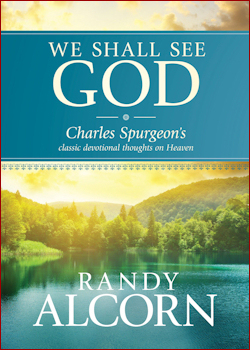


 h my brothers and sisters in Christ, if sinners will be damned, at least let them leap to hell over our bodies. And if they will perish, let them perish with our arms about their knees, imploring them to stay, and not madly to destroy themselves. If hell must be filled, at least let it be filled in the teeth of our exertions, and let not one go there unwarned and unprayed for.
 egarding the shortness and misery of this life, Moses wrote, "All our days pass away under your wrath; we bring our years to an end like a sigh. The years of our life are seventy, or even by reason of strength eighty; yet their span is but toil and trouble; they are soon gone, and we fly away" (Psalm 90:9-10).
 This is a common theme in Scripture: our days are few and full of trouble (Job 14:1). In case you have wondered, it's not just you; we all experience misery and affliction. That's the nature of earthly life. The earth itself is cursed. Moses gives a nod to that fact in the phrase "all our days pass away under [God's] wrath." In the King James Version, the second half of that verse says, "We spend our years as a tale that is told." The Hebrew expression actually means, "We finish our years like a groan."
 Instead, with the nation gathered before him, Moses went into a rage: "Hear now, you rebels: shall we bring water for you out of this rock?" And Moses lifted up his hand and struck the rock with his staff twice" (vv. 10-11). As a result, Moses was forbidden to lead the nation into the promised land (v. 12). Aaron likewise was kept out of Canaan and died immediately after the incident at Meribah (vv. 23-29).
 In other words, Give us blessing at least equal to our trouble. "Let your work be shown to your servants, and your glorious power to their children. Let the favor of the Lord our God be upon us, and establish the work of our hands upon us; yes, establish the work of our hands!" (vv. 16-17).
 That's the whole point of Psalm 90. We are dying creatures. Our earthly comforts are few and they are only temporary. This life is going to end shortly. And even if you die of old age, it's a long process of decline to get to that point. The very best you can hope for is that your life will end like a drawn-out groan.



 he wrath of God and the judgment of the day of the Lord cannot be a trifling matter. How emphatically are we told in Scripture, that it is "a fearful thing to fall into the hands of the living God." Upon such a subject we cannot afford to trifle.


 But I want to get over this as quickly as I can; for who can bear to talk thus to his fellow-creatures? What is it that the lost are doing? They are "weeping and gnashing their teeth." Do you gnash you teeth now? You would not do it except you were in pain and agony. Well, in hell there is always gnashing of teeth. And do you know why? There is one gnashing his teeth at his companion, and mutters, "I was led into hell by you; you led me astray, you taught me to drink the first time." And the other gnashes his teeth and says, "What if I did? You made me worse than I should have been in after times." There is a child who looks at her mother, and says, "Mother, you trained me up to vice." And the mother gnashes her teeth again at the child, and says, "I have no pity for you, for you excelled me in it, and led me into deeper sin." Fathers gnash their teeth at their sons, and sons at their fathers. And, methinks, if there are any who will have to gnash their teeth more than others, it will be seducers, when they see those whom they have led from the paths of virtue, and hear them saying, "Ah! we are glad you are in hell with us, you deserve it, for you led us here." Have any of you, to-night, upon your consciences the fact that you have led others to the pit? O, may sovereign grace forgive you. "We have gone astray like lost sheep," said David. Now a lost sheep never goes astray alone, if it is one of a flock. I lately read of a sheep that leaped over the parapet of a bridge, and was followed by every one of the flock. So, if one man goes astray, he leads others with him. Some of you will have to account for others' sins when you get to hell, as well as your own. Oh, what "weeping and gnashing of teeth" there will be in that pit!

 've grouped two of our atheist friends'
  The
The  new god has been lately set up among men, the god of modern Christianity, the god of modern thought, a god made of honey or sugar or lead. He is all leniency, gentleness, mildness, and indifference in the matter of sin. Justice is not in him, and as for the punishment of sin, he knows it not.