11 September 2014

Omniscience, Certainty, and "The Far Side of Neptune"

by Dan Phillips


From 2006 to 2012, PyroManiacs turned out almost-daily updates from the Post-Evangelical wasteland -- usually to the fear and loathing of more-polite and more-irenic bloggers and readers. The results lurk in the archives of this blog in spite of the hope of many that Google will "accidentally" swallow these words and pictures whole.

This feature enters the murky depths of the archives to fish out the classic hits from the golden age of internet drubbings.


The following excerpt was written by Dan back in June 2011. Dan made the case that only Christians have grounds to be (humbly) certain about anything.


As usual, the comments are closed.
To profess certainty, non-Christians must feign omniscience. This thought touches on what I might call the "Far Side of Neptune" argument. 

Just think of all the "scientific" theories in all of human history that have died horrible deaths in the light of new discoveries. The positions were always held with great confidence right up to the moment they had to be abandoned...and sometimes even afterwards. One new fact, or one new set of facts, provoked a paradigm-shift, however eventual and reluctant.

So, how many facts are there, in the universe, total? More than ten? More than a trillion? More than ten decazillion, cubed? Of course, we could never even guess the number — let alone their nature — of all facts.

That being the case, who can say with certitude that one fact, existing only ten miles under the surface of the far side of Neptune, and only within an eight-inch radius, would not change everything we think we know about... any given subject? One can scoff, he can dismiss, he can bluff... but he can't answer that question. He cannot honestly say that he knows for a certainty, one way or the other, that some fact not yet in evidence would not constitute a transformative, revolutionary revelation.

Yet nobody lives with such uncertainties. Nobody speaks exclusively in the subjective mood. We love the indicative, even more than we should.

So we announce that (say) evolution is an undeniable fact, that the world is X-zillion years old, that homosexuality is not a chosen behavior, that the unborn are not human, that this or that is right or wrong. We speak as if from a perspective of not only omniscience, but omnisapience; as if we both possessed and understood all facts... even though neither is true.

Yet someone has to keep pointing out the emperor's illusory garb: unless the speaker has an infinite grasp of both the identity and the meaning/significance of every last fact in the universe, he has no right to speak with certainty.

Yet the unbeliever regularly does so speak. He does not possess omniscience. He merely feigns it. His intent is to cow opposition (and quiet his own conscience [Rom. 1:18ff.]) by a show of bravado. As we have seen, the tactic often works in the short run.

A second idea lurks under the surface: "Thus Christians alone not only can be, but are obliged to be, humbly certain." The Christian, insofar as he actually practices the faith he professes, necessarily affirms the inerrancy of Scripture as the very word of God. In so doing, he claims to possess a revelation from the only one who actually does know and understand absolutely everything that exists, since He is the Creator of absolutely everything that exists.

Ironically, however, there are those who (A) claim to be Christian, but (B) choose to feign uncertainty on unpopular issues where the Bible is pretty clear.

These are not murky penumbras, but clear doctrines. Not that a devoted opponent cannot fabricate some murk; it is axiomatic that great distance from the Word necessarily creates greater murkiness (Isa. 8:20). Any clear statement can be smudged... including this one. But the professed believer who adopts a pose of tentativeness on such issues is in the precise-reverse position of the unbeliever who adopts the pose of certitude.

In sum: the person who denies God's revelation is obliged to speak uncertainly about everything; the person who affirms God's revelation is obliged to speak certainly about some things (Amos 3:8; Acts 4:19-20; 5:29; 1 Cor. 9:16).

10 September 2014

In The Name of Human Opportunity


My guess is that if you read this blog, you have never read any W.E.B. DuBois. In fact, I'll bet that if you read this blog, you cannot tell me who this fellow is. Since last week we cited the greatest aspirational speech ever in our nation on the topic of race, I thought it would be perfectly and sincerely vital to look back a little further into the history of Black people in this nation to the man who might be the one who has best explained the world they live in. If I have any concerns about reprinting this here today, it is only that it leap-frogs backwards in time to a place before the height of Black culture in America. But that time would never have existed without DuBois' writings and thoughts.

Before we go there, let me say this as the last breath of my hiatus goes away: anyone asking the fellows at TeamPyro for some insight about theology and racism who have not themselves read DuBois and Langston Hughes and Frederick Douglass and Ralph Ellison and Richard Wright and James Baldwin and so on (forgive me for listing none of the great voices of Black women) -- please don't lecture me about who I ought to have invited to dinner. Please don't expect me to take you seriously when what you think we ought to do is simply accept that we are ignorant and awful.  We didn't expect that the best we could do to take in the Black experience was to listen to rap music -- as if the White experience could be gleaned from country music.  Some white people have grown up among black people, and wanted to love them, and listened to them as they told us from their best voices what we ought to believe about who they are. We listened then, before most of the users of the internet knew there was a world bigger than their own neighborhood, and we decided early on that our expectations for any person would be the ones we had for ourselves -- namely, to expect the best, forgive honest mistakes and the faults of immaturity, and to do to any person what we would expect to be done to us.

The text below is from the first chapter of The Souls of Black Folk, copied and pasted from bartleby.com.  I have updated the paragraph breaks for internet readers.


fter the Egyptian and Indian, the Greek and Roman, the Teuton and Mongolian, the Negro is a sort of seventh son, born with a veil, and gifted with second-sight in this American world,—a world which yields him no true self-consciousness, but only lets him see himself through the revelation of the other world. It is a peculiar sensation, this double-consciousness, this sense of always looking at one’s self through the eyes of others, of measuring one’s soul by the tape of a world that looks on in amused contempt and pity. One ever feels his two-ness,—an American, a Negro; two souls, two thoughts, two unreconciled strivings; two warring ideals in one dark body, whose dogged strength alone keeps it from being torn asunder.

The history of the American Negro is the history of this strife,—this longing to attain self-conscious manhood, to merge his double self into a better and truer self. In this merging he wishes neither of the older selves to be lost. He would not Africanize America, for America has too much to teach the world and Africa. He would not bleach his Negro soul in a flood of white Americanism, for he knows that Negro blood has a message for the world. He simply wishes to make it possible for a man to be both a Negro and an American, without being cursed and spit upon by his fellows, without having the doors of Opportunity closed roughly in his face.

This, then, is the end of his striving: to be a co-worker in the kingdom of culture, to escape both death and isolation, to husband and use his best powers and his latent genius.

These powers of body and mind have in the past been strangely wasted, dispersed, or forgotten. The shadow of a mighty Negro past flits through the tale of Ethiopia the Shadowy and of Egypt the Sphinx. Throughout history, the powers of single black men flash here and there like falling stars, and die sometimes before the world has rightly gauged their brightness. Here in America, in the few days since Emancipation, the black man’s turning hither and thither in hesitant and doubtful striving has often made his very strength to lose effectiveness, to seem like absence of power, like weakness. And yet it is not weakness,—it is the contradiction of double aims.

The double-aimed struggle of the black artisan—on the one hand to escape white contempt for a nation of mere hewers of wood and drawers of water, and on the other hand to plough and nail and dig for a poverty-stricken horde—could only result in making him a poor craftsman, for he had but half a heart in either cause. By the poverty and ignorance of his people, the Negro minister or doctor was tempted toward quackery and demagogy; and by the criticism of the other world, toward ideals that made him ashamed of his lowly tasks. The would-be black savant was confronted by the paradox that the knowledge his people needed was a twice-told tale to his white neighbors, while the knowledge which would teach the white world was Greek to his own flesh and blood. The innate love of harmony and beauty that set the ruder souls of his people a-dancing and a-singing raised but confusion and doubt in the soul of the black artist; for the beauty revealed to him was the soul-beauty of a race which his larger audience despised, and he could not articulate the message of another people.

This waste of double aims, this seeking to satisfy two unreconciled ideals, has wrought sad havoc with the courage and faith and deeds of ten thousand thousand people,—has sent them often wooing false gods and invoking false means of salvation, and at times has even seemed about to make them ashamed of themselves.

Away back in the days of bondage they thought to see in one divine event the end of all doubt and disappointment; few men ever worshipped Freedom with half such unquestioning faith as did the American Negro for two centuries. To him, so far as he thought and dreamed, slavery was indeed the sum of all villainies, the cause of all sorrow, the root of all prejudice; Emancipation was the key to a promised land of sweeter beauty than ever stretched before the eyes of wearied Israelites.

In song and exhortation swelled one refrain -- Liberty; in his tears and curses the God he implored had Freedom in his right hand. At last it came,—suddenly, fearfully, like a dream. With one wild carnival of blood and passion came the message in his own plaintive cadences:
“Shout, O children!
Shout, you’re free!
For God has bought your liberty!”
Years have passed away since then,—ten, twenty, forty; forty years of national life, forty years of renewal and development, and yet the swarthy spectre sits in its accustomed seat at the Nation’s feast. In vain do we cry to this our vastest social problem:
“Take any shape but that,
and my firm nerves Shall never tremble!”
The Nation has not yet found peace from its sins; the freedman has not yet found in freedom his promised land. Whatever of good may have come in these years of change, the shadow of a deep disappointment rests upon the Negro people,—a disappointment all the more bitter because the unattained ideal was unbounded save by the simple ignorance of a lowly people.

...

The bright ideals of the past,—physical freedom, political power, the training of brains and the training of hands,—all these in turn have waxed and waned, until even the last grows dim and overcast. Are they all wrong,—all false? No, not that, but each alone was over-simple and incomplete,—the dreams of a credulous race-childhood, or the fond imaginings of the other world which does not know and does not want to know our power. To be really true, all these ideals must be melted and welded into one.

The training of the schools we need to-day more than ever,—the training of deft hands, quick eyes and ears, and above all the broader, deeper, higher culture of gifted minds and pure hearts. The power of the ballot we need in sheer self-defence,—else what shall save us from a second slavery? Freedom, too, the long-sought, we still seek,—the freedom of life and limb, the freedom to work and think, the freedom to love and aspire. Work, culture, liberty,—all these we need, not singly but together, not successively but together, each growing and aiding each, and all striving toward that vaster ideal that swims before the Negro people, the ideal of human brotherhood, gained through the unifying ideal of Race; the ideal of fostering and developing the traits and talents of the Negro, not in opposition to or contempt for other races, but rather in large conformity to the greater ideals of the American Republic, in order that some day on American soil two world-races may give each to each those characteristics both so sadly lack.

We the darker ones come even now not altogether empty-handed: there are to-day no truer exponents of the pure human spirit of the Declaration of Independence than the American Negroes; there is no true American music but the wild sweet melodies of the Negro slave; the American fairy tales and folk-lore are Indian and African; and, all in all, we black men seem the sole oasis of simple faith and reverence in a dusty desert of dollars and smartness.

Will America be poorer if she replace her brutal dyspeptic blundering with light-hearted but determined Negro humility? or her coarse and cruel wit with loving jovial good-humor? or her vulgar music with the soul of the Sorrow Songs?

Merely a concrete test of the underlying principles of the great republic is the Negro Problem, and the spiritual striving of the freedmen’s sons is the travail of souls whose burden is almost beyond the measure of their strength, but who bear it in the name of an historic race, in the name of this the land of their fathers’ fathers, and in the name of human opportunity.

09 September 2014

In praise of small churches — and yet...

by Dan Phillips

I stumbled on an article titled Four Unexpected Benefits of a Small Church, by a church-member named Jonathan Schindler. He develops four "unexpected benefits and opportunities" that are "specifically related" to the smallness of his church, which has shrunk from 150 to the 70-90 range. They are:
  1. Being in a small church has forced me to be in community.
  2. Being in a small church has forced me to serve.
  3. Being in a small church has forced me to reckon with diversity.
  4. Being in a small church has offered opportunities I might not otherwise have had.
Most know that I on principle oppose megachurches, though in recent years I've grown a little wobbly. To be specific: Valerie and I got to talk to people serving at Grace Community Church, and were exposed to the many, many ways they leverage their greater resources to serve, disciple, love, care, and reach out. We agreed: "If you're going to be a big church, this is the way to do it."

That perhaps is a topic for another day; now let's get back to the small church, as Schindler describes it, and get to my own points. I would say three things, to get us going:
  1. I basically agree with Schindler's enumeration, and could expand it myself. However...
  2. If you want to make your pastor's blood run cold, and you want to set him to wondering whether he should move on, tell him you're really happy that your church is staying small, and signal that you'll be just as happy if it never, ever grows.
  3. The content-to-stay-small attitude can be every bit as poisonous and God-dishonoring as the we-must-add-numbers-at-all-costs attitude.
Perhaps what I want to say can be best expressed as yet another list:
  1. If you think that verses like Matthew 28:18-20; Acts 6:7; 12:24; 13:49; 19:20; Colossians 1:6; 1 Thessalonians 1:2-5, 8-9; 2 Thessalonians 3:1; 2 Tim. 2:9 and others all describe goals and values and events for a distant and fading past, as relevant to us today as tongues and prophecies, feel good about staying small.
  2. If there aren't any unbelievers or mis-taught, untaught, immature believers living with ten miles of your church, feel good about staying small.
  3. If the Gospel isn't anything you think your neighbors need, and you think that's okay with God, feel good about staying small.
  4. If you feel like you have a note from God excusing you from finding ways to reach out with the Gospel, feel good about staying small.
  5. If you haven't learned the Gospel well enough to explain it to anyone else, and you don't want to learn the Gospel well enough to explain it to anyone else, and you think that's okay with God, feel good about staying small.
  6. If you just don't want to have to learn more names and think that's okay with God, feel good about staying small.
  7. If you just don't want to have to accommodate people with different tastes, temperaments, and preferences than you, and you think that's okay with God, feel good about staying small.
  8. If your pastor doesn't really preach anything anyone needs to hear, feel good about staying small.
  9. If it doesn't matter to you that your church dies when the current crop of 50-to-80-year-olds dies, feel good about staying small.
  10. If the sight of cults and false teachers growing like weeds while the truths you cherish lie unheard and unloved doesn't matter to you, and you think that's okay with God, feel good about staying small.
  11. If you just don't want to have to deal with different skin-colors, and cultures, and accents, and ways of dressing, and hair-cuts, and jewelry, and educational level, and you think that's okay with God, feel good about staying small.
  12. If you just don't want to have to deal with babies, and children, and teens, and singles, and people in their 20s and 30s who don't have it all together yet, and you think that's okay with God, feel good about staying small.
  13. If you've got your church crafted exactly to mirror all your wants and your preferences and your styles and your opinions, and you don't want to risk any of that being challenged, and you think that's okay with God, feel good about staying small.
I want to be as plain as I possibly can be:
  • Not one syllable of anything I just wrote should make any pastor or church member feel bad or inferior or self-reproachful about the bare fact of his church's relative smallness. It is perfectly possible for a church to be small precisely because it is being faithful to God (cf. 2 Tim. 4:1-4; cf. John 6:66).

  • The only people who should feel a sting from what I just wrote are those content with not growing, not striving, not reaching out, not evangelizing, not making disciples, not penetrating his community, and not being impelled by love for God and man to get out of his comfort-zone — including saints who believe in outreach in theory, and think other people really should be getting on with it.
  • do not think a church should grow to be as big as it possibly can.
  • Once a church gets beyond the point where shepherds can know sheep and where real fellowship is happening (Jn. 10:3, 11, 14; Galatians 6:2; 1 Thess. 5:11; Heb. 3:13; 10:24-25), they should plant other churches with their own apprenticed in-person on-site flesh-and-blood pastors. Then rinse, and repeat. Multiply Biblically-faithful, Christ-centered, Gospel-preaching, Bible-teaching churches.
  • If a church is surrounded by unbelievers, and yet never or seldom baptizes converts, never or seldom takes in and loves and disciples not-there-yet believers, never or seldom grows outside of a narrow age/culture range, then every leader and every member should cry to God day and night for the spread of the Gospel, and that church should leave no legitimate stone unturned in its seeking for effective ways to reach out with the Gospel.
I think this should be the attitude of every member and every leader: If our church does not grow at all, God grant that it be despite our best and unceasing efforts and most earnest and continual prayers — and not ever greeted with smug complacency.

Dan Phillips's signature

07 September 2014

Turning then walking

Your weekly dose of Spurgeon
The PyroManiacs devote some space each weekend to highlights from the lifetime of works from the Prince of Preachers, Charles Haddon Spurgeon.  The following excerpt is from The Metropolitan Tabernacle Pulpit, volume 22, sermon number 1,300, "Life's need and maintenance."
"Conversion is a turning into the right road; the next thing is to walk in it. The daily going on in that road is as essential as the first starting if you would reach the desired end." 

To strike the first blow is not all the battle; to him that overcometh the crown is promised. To start in the race is nothing, many have done that who have failed; but to hold out till you reach the winning post is the great point of the matter. Perseverance is as necessary to a man’s salvation as conversion.

Do remember this, you not only want grace to begin with, but grace with which to abide in Christ Jesus. Learn, also, that we should diligently use all those means whereby the Lord communicates fresh support to our life.

A man does not say, “Well, I was born on such and such a day, that is enough for me.” No, the good man needs his daily meals to maintain him in existence. Being alive, his next consideration is to keep alive, and therefore he does not neglect eating, nor any operation which is essential to life. So you, dear friends, must labour for the meat which endureth to life eternal, you must feed on the bread of heaven.

Study the Scriptures daily—I hope you do not neglect that. Be much in private prayer, your life cannot be healthy if the mercy seat be neglected. Do not forsake the assembling of yourselves together, as the manner of some is. Be eager to hear the word, and endeavour both to understand and practice it. Gather with God’s people in their more spiritual meetings, when they join in prayer and praise, for these are healthful means of sustaining the inner life.

If you neglect these you cannot expect that grace will be strong within you, you may even question if there be any life at all. Still, remember that even if a man should eat and drink that would not keep him alive without the power of God, and many die with whom there is no lack either of air or food.

You must, therefore, look beyond the outward means, to God himself to preserve your soul, and be it your daily prayer, “Oh Saviour, by whom I began to live, daily enable me to look to thee that I may draw continuous life from thy wounds, and live because thou livest.” Take these things home and practice them.

Keep, dear friends, also clear of everything which has a tendency to destroy life. A sane man does not willingly take poison: if he knew it he would not touch the cup in which it had been contained. We are careful to avoid any adulteration in our food which might be injurious to life and health: we have our chemists busily at work to analyse liquids, lest haply inadvertently we should imbibe death in the water which we drink.

Brethren, now let us be equally careful as to our souls. Keep your chemist at work analysing the things of this life. Let conscience and understanding fit up their laboratory and prove all things. Analyse the sermon of the eloquent preacher, lest you drink in novelties of doctrine and arrant falsehoods, because he happens to put them prettily before you.

Analyse each book you read, lest you should become tainted with error, while you are interested with the style and manner, smartness and elegance of your author. Analyse the company you keep; test and try everything, lest haply you should be committing spiritual suicide, or carelessly squandering life away.

Ask the Lord, the preserver of men, above all things, to keep you beneath the shadow of his wings, that you may not be afraid for the pestilence that walketh in darkness, nor for the destruction which wasteth at noonday, because his truth has become your shield and buckler, and you are safe.


05 September 2014

Some here, some there — September 5, 2014

by Dan Phillips

A smaller list to start; check back at day's end.
  • My distant friend Prof. David Murray agrees with Victoria Osteen and disagrees with Al Mohler. Well, sort of. You have to read it.
  • I'll say I had similar thoughts (— to Murray's, not to Osteen's); but according to my family's rule, I didn't say it out loud, so it doesn't count.
  • Or, for another perspective...
  • A movie called "The Identical" is out today, being heavily marketed to "faith-based" and "family-friendly" audiences. Worth seeing? Check my review.
  • A Tale of Two Mars Hills is really very good. It contains a lot that is worth quoting; better still, just read it.
  • I love it when Denny Burk writes like a Pyro. I love Denny Burk because he writes like a Pyro.
  • Last week we pointed to a post by someone named Stephen Altrogge. This week it's someone named Mark Altrogge...hmm, wonder if they know each other? Or maybe "Altrogge" is like "Smith" in, er, Sweden or Iceland or Norway or Uzbekistan or wherever. I digress. The title is words that could have been taken from my own lips and heart: Why does God let me stay so weak? It's a good and helpful read.
  • Oh, sweet. I see we made The Aquila Report. It's a daily browse of mine. I'd had the impression that we were invisible to them, though we share so many convictions and concerns. Nice to see otherwise!
  • Important Pyro Safety Tip: don't text and drive. Because if you do, you just might end up with... er...
  • Ouch.
  • On the subject of "Ouch"...
  • It's all fun and games until the cameraman gets KOed by a flying pop-bottle.
  • So in the church you pastor, some people say, "If you change the worship style, I'll leave"; while others say, "If you don't change the worship style, no one will come." So you have 47 services to serve each marketing group (as they've positioned themselves)? Turns out that's reportedly on the decline.
There, wasn't that fun? Okay, then:


Well, after you master this:


There you go. Have a blessed weekend!

Dan Phillips's signature

04 September 2014

"Permanent" criticism? "Constant" criticism? Not really...

by Frank Turk


From 2006 to 2012, PyroManiacs turned out almost-daily updates from the Post-Evangelical wasteland -- usually to the fear and loathing of more-polite and more-irenic bloggers and readers. The results lurk in the archives of this blog in spite of the hope of many that Google will "accidentally" swallow these words and pictures whole.

This feature enters the murky depths of the archives to fish out the classic hits from the golden age of internet drubbings.


The following excerpt was written by Frank back in February 2010. Frank argued against the twin complaints of internet criticism being "permanent" and "constant.""


As usual, the comments are closed.
I take exception to the idea that internet criticism is "permanent." Blogging, or erecting a web site, for the sake of some argument or issue doesn't make it "permanent" any more than getting your book published makes its contents "permanent."

What it does do is make it public, and the question then is, "Will anyone read it?"

If some guy sets up a blog and starts saying that Rick Warren has 3 wives and practices Shinto in his basement at an altar to his father's father, the first question is, "Did anyone really read that?" And the second question is, "Can that be proven at all?"

That guy with a blog may never delete his blog, but if no one ever reads it, the only one who will judge him for it is Christ -- which is, of course, certainly bad enough. The tree fell in the woods, and nobody else cared. So "permanent" is a bizarre category for what is different about criticism today.

I'd also like to add that the attribute of "constant" criticism is only borne by those who are doing something which somehow keeps drawing attention -- usually to their foibles or errors. For example, I am unaware of Mark Dever having to field "constant" criticism -- unless I should have read [insert your fav watchblogger here] lately or something.

Let me suggest that pastors who are "constantly" in the scopes of critics either have established themselves as opponents of a very active but vulnerable enemy, or they are doing something which deserves criticism. There may be a third choice, but I'll bet if you can find one, it's really the first choice.

For example, there was a time when Phil Johnson took a lot of guff from Fundamentalists. Phil had made some statements -- which he stands by -- criticizing the problems with their movement, and the defenders of Fundamentalism came out of the woodwork. The problem, however, was that Fundamentalism was both very active (in numbers, anyway) but also very vulnerable -- and the advocates for such a thing had to try to push Phil over because, well, if he's right the movement was dead, dying, or worse.

The other example I'd tender is Joel Osteen. Why does Joel take guff from people as diverse as Michael Horton and Steve Camp? It's because Joel is off the apple cart, out of the street, down the storm drain, and rolling down into the swamp outside town.

Criticism is not just hard to bear because it seems to come often. It is hard to bear either when it is the truth or resembles the truth enough to cause us to pause. False criticism is pretty easy to bear unless it costs us money or prison time -- the rest of the time (like when people call me "mean") it's good for a laugh just to see how far someone will take their imaginary world.

And here's the punch-line: how we behave when we are criticized tells us a lot about who we are as people.

03 September 2014

Insanely good deal on Frame's Systematic Theology

by Dan Phillips

I'm currently reading through and enjoying Frame's systematic theology.

The Kindle edition is currently on-sale at Westminster Books for $1.99. That's an insanely good price, and I had to share it with you.

As you were.

2 Kings 7:9... sorta...

Dan Phillips's signature

The High Plane of Dignity and Discipline


On August 28th, 1963, (note: the internet has several sources listing this as 1962, which is wrong.  My apologies for not double-checking) in front of the Lincoln Memorial, the singularly most-important speech on race in the history of this country was given by a man who would die for his convictions.   It was a speech of 881 words, and anyone can read it out loud in about seven and a half minutes.  Think about the kind of simple and power truth that must be to be that brief yet that historically-significant.  In that speech, the right context of history is set, and the right vision for the future is set for all people because of its theology.

Before I say anything about race at this blog (I'm still on hiatus), I think it would be good for anyone asking the writers at this blog what we think about "theology and race" to review those words and take them to heart.


I am happy to join with you today in what will go down in history as the greatest demonstration for freedom in the history of our nation.

Five score years ago a great American in whose symbolic shadow we stand today signed the Emancipation Proclamation. This momentous decree came as a great beckoning light of hope to millions of Negro slaves who had been seared in the flames of withering injustice. It came as a joyous daybreak to end the long night of their captivity.

But one hundred years later the Negro is still not free. One hundred years later the life of the Negro is still sadly crippled by the manacles of segregation and the chains of discrimination.

One hundred years later the Negro lives on a lonely island of poverty in the midst of a vast ocean of material prosperity.

One hundred years later the Negro is still languishing in the comers of American society and finds himself in exile in his own land.

We all have come to this hallowed spot to remind America of the fierce urgency of now. Now is the time to rise from the dark and desolate valley of segregation to the sunlit path of racial justice. Now is the time to change racial injustice to the solid rock of brotherhood. Now is the time to make justice ring out for all of God's children.

There will be neither rest nor tranquility in America until the Negro is granted citizenship rights.

We must forever conduct our struggle on the high plane of dignity and discipline. We must not allow our creative protest to degenerate into physical violence. Again and again we must rise to the majestic heights of meeting physical force with soul force.

And the marvelous new militarism which has engulfed the Negro community must not lead us to a distrust of all white people, for many of our white brothers have evidenced by their presence here today that they have come to realize that their destiny is part of our destiny.

So even though we face the difficulties of today and tomorrow I still have a dream. It is a dream deeply rooted in the American dream.

I have a dream that one day this nation will rise up and live out the true meaning of its creed: 'We hold these truths to be self-evident; that all men are created equal."

I have a dream that one day on the red hills of Georgia the sons of former slaves and the sons of former slave owners will be able to sit together at the table of brotherhood.

I have a dream that one day even the state of Mississippi, a state sweltering with the heat of injustice, sweltering with the heat of oppression, will be transformed into an oasis of freedom and justice.

I have a dream that little children will one day live in a nation where they will not be judged by the color of their skin but by the content of their character.

I have a dream today.

I have a dream that one day down in Alabama, with its vicious racists, with its Governor having his lips dripping with the words of interposition and nullification, one day right there in Alabama little black boys and black girls will be able to join hands with little white boys and white girls as sisters and brothers.

I have a dream today.

I have a dream that one day every valley shall be exalted, every hill and mountain shall be made low, the rough places plains, and the crooked places will be made straight, and before the Lord will be revealed, and all flesh shall see it together.

This is our hope. This is the faith that I go back to the mount with. With this faith we will be able to hew out of the mountain of despair a stone of hope. With this faith we will be able to transform the genuine discords of our nation into a beautiful symphony of brotherhood. With this faith we will be able to work together, pray together; to struggle together, to go to jail together, to stand up for freedom forever, knowing that we will be free one day.

And I say to you today my friends, let freedom ring. From the prodigious hilltops of New Hampshire, let freedom ring. From the mighty mountains of New York, let freedom ring. From the mighty Alleghenies of Pennsylvania!

Let freedom ring from the snow capped Rockies of Colorado!

Let freedom ring from the curvaceous slopes of California!

But not only there; let freedom ring from the Stone Mountain of Georgia!

Let freedom ring from Lookout Mountain in Tennessee!

Let freedom ring from every hill and molehill in Mississippi. From every mountainside, let freedom ring.

And when this happens, when we allow freedom to ring, when we let it ring from every village and hamlet, from every state and every city, we will be able to speed up that day when all of God's children, black men and white men, Jews and Gentiles, Protestants and Catholics, will be able to join hands and sing in the words of the old Negro spiritual, "Free at last! Free at last! Thank God almighty, we're free at last!"


02 September 2014

Truth worth dying for? Anyone? Bueller? Today, anyway?

by Dan Phillips

Privately and publicly, Phil Johnson and I have marveled at the spirit of some moderns regarding God's truth. We've wondered how Christianity could have survived, had it been animated by this spirit at its inception. We've wondered what the early martyrs would think of today's sofa-sitting latte-sippers.

One breed that apparently considers itself exempt from All That has long been the Academy, on which subject we've offered some thoughts previously. These are scholars; they're a breed apart from, well, from the folks who pay their salaries. That's because they've had the benefit of special training and special discipline, and thus are privy to special knowledge. They're specialists. They know facts and truths that mere garden-working pastors and ditch-digging churchgoers just can't understand.

It is important (to these folks) that we respect these folks, that we not malign or criticize them or make them feel or look bad. No matter what they say or write, we mustn't challenge their convictions or character. If they tell us that they fit in with a school's doctrinal position or confession, we must take their word for it. If they tell us that their books or lectures or articles are sound and orthodox, well then, they wouldn't lie or dissemble, would they? They're academics.

Their defenders and enablers surely communicate to all that not much is at stake, that it isn't anything to "get het up" about. They'll spill equal amounts of ink lauding the Christian characters of those who depart from anything the great unwashed would recognize as a commitment to inerrancy, and casting aspersions on less sanguine critics or opponents. Because it isn't as if we should expect someone to commit himself to a position as being binding on his conscience, as being something... oh, I don't know... worth dying for, or anything so drastic.

For instance, we recently read this:
Belief in the truthfulness of the Bible, then, like belief in the truthfulness of Christianity or materialism or anything else [!], is provisional—scholars hold to it (or not) on the basis of the evidence they've seen. Affirming the Bible is true, just like affirming the Christian creeds, is a statement of current conviction: “Based on what I know now, I believe that the Nicene Creed/the New Testament is correct, when properly understood.” It doesn't prevent individuals from researching carefully, nor from abandoning or adjusting their commitment if the evidence takes them that way; the changes of conviction, affiliation, and worship practices of many of the “aha” scholars, as well as those who have moved the other way, should be evidence enough. In some cases, no doubt, belief in inerrancy is associated with fearmongering, closed-mindedness, misrepresentation, and rudeness. But the same is true of evangelicalism, and Protestantism, and Christianity as a whole, let alone atheism, Islam, feminism, materialism, and virtually all beliefs held by human beings. I’ve seen a fair bit of it on Pete Enns’s own blog, and I imagine he’d say the same of mine.
Where did I see that? Patheos? BioLogos? Huffington Post? No; in the rarified air of TGC — which, I remind you, ostensibly stands not for The Great Clubhouse, but The Gospel Coalition; and which, I am sure, is funded and read and has its conferences swell with people who certainly are fiercely committed to the Gospel and the truths that underlie it.

This was a post at that site. And since one of the commenters dubbed this article "incredibly thoughtful and nuanced," well then, from one perspective, it must be considered a rousing success, a paradigm of carefulness and all that.

I made a comment in the meta; Phil shared this in Twitter:
Which provoked this wounded-sounding, bemused response from the author:
Now, ponder that, for a moment. Here's a scholar, who knows more than we all know. He professes Christian faith, at least "provisionally," according to what he knows right now. (Well, it's what he knew when he wrote the article; I suppose that may have changed since then.) Yet, speaking of his own fellow-believers ("Christians") in the third person, he professes bewilderment at Phil's eleven-word comment.

Remarkably enough, though, while unable to make sense of Phil's eleven words out there in print, he can read Phil's mood from the unknowable privacy of Phil's heart— and it's angry. Perhaps Phil is one of those scholarship-despising, progress-slowing fearmongerers lamented in the article? Phil certainly isn't being treated to the paeans of praise that the author heaped on those "thoughtful, insightful Christian brothers and sisters" and "good guys" in the Academy who find fault with the Bible.

So: It's all well and good to tell the unwashed that the fear of Yahweh is the beginning of knowledge and wisdom (Prov. 1:7; 9:10). For them, maybe it is. For academics, however, it is at best a provisional conclusion tentatively reached, perhaps, at the end of investigation. It is held as today's conviction, which may be overridden tomorrow, depending on what our real starting-point dictates tomorrow.
Seriously: where would we be, had Doctor Martin Luther said "Here I stand —provisionally. At the moment. I think. Today. But tomorrow... who knows?"

Regardless, I wasn't going to say anything further about it — knowing the waves of anger and offense and indignation that it will provoke from folks who already haven't much use for me, if the usual "ignore it and it will go away" method employed for our posts doesn't serve as well as it usually does for them.

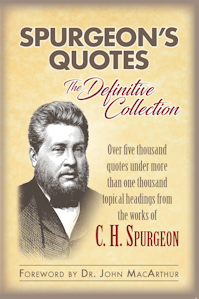
But then I came on this from Spurgeon. As so often, once Spurgeon says a thing, it can't be much improved on. So I'll give him the closing word, and he speaks for me:
I have often wondered whether, according to the notions of some people, there is any truth for which it would be worth while for a man to go to the stake. I should say not; for we are not sure of anything, according to the modern notion. Would it be worth while dying for a doctrine which may not be true next week? Fresh discoveries may show that we have been the victims of an antiquated opinion: had we not better wait and see what will turn up? It will be a pity to be burned too soon, or to lie in prison for a dogma which will, in a few years, be superseded. Brethren, we cannot endure this shifty theology. May God send us a race of men who have backbones! Men who believe something, and would die for what they believe. This Book deserves the sacrifice of our all for the maintenance of every line of it.
[C. H. Spurgeon, The Metropolitan Tabernacle Pulpit Sermons, vol. 35 (London: Passmore & Alabaster, 1889), 264.]
Aha, indeed.

And amen.

Dan Phillips's signature


31 August 2014

Barely (bearly) helpful!

Your weekly dose of Spurgeon
The PyroManiacs devote some space each weekend to highlights from the lifetime of works from the Prince of Preachers, Charles Haddon Spurgeon.  The following excerpt is from Speeches at Home and Abroad, pages 73-74, Pilgrim Publiications.
"There can be no difficulty in discovering some points in which your pastor excels; dwell upon these excellencies and not upon his failures."


I remember when I came first to London preaching to eighty or ninety in a large chapel, but my little congregation thought well of me, and induced others to come and fill the place. I always impute my early success to my warm-hearted people, for they were so earnest and enthusiastic in their loving appreciation of “the young man from the country,” that they were never tired of sounding his praises.

If you, any of you, are mourning over empty pews in your places of worship, I would urge you to praise up your minister. Talk of the spiritual benefit which you derive from his sermons, and thus
you will induce the people to come and listen to him, and at the same time you will do him good, for the full house will warm him up and make him a better preacher, and you yourself will enjoy him the more because you have thought and spoken kindly of him.

I have already said, those who are doing no good are the very ones who are creating mischief. Have you ever observed that exceedingly acute critics are usually wise enough to write no works of their own? Judges of other men’s works find the occupation of the judgment-seat so great a tax upon their energies that they attempt nothing on their own account.

Mr. Gough used to tell a story of a brave man and admirable critic in Russia, who on one occasion was visited by a bear. Now, there was a ladder which led up to the room on the roof, and the aforesaid hero climbed it nimbly, and for fear the bear should come after him he took up the ladder, and left his wife with Bruin below.

His wife, who must have been his “better half,” seized a broom, and began to belabour the beast right heartily, while her heroic lord and master looked on from above, and gave her his opinion as to her proceedings in some such terms as these: “Hit him harder, Betty.” “More over the nose, Betty.” “Try the other end of the broom, Betty,” and so on in the most judicious manner.

Surely his spouse might have said, “Good man, you had better come down and fight the bear yourself.” Those who are doing nothing are sure to be great in discovering flaws in the modes and manners of those who bear the burden and heat of the day. Surely they would be much more nobly occupied, and usefully occupied, if they would show us our faults by doing better themselves.


29 August 2014

Some here, some there — August 29, 2014

by Dan Phillips

As we prepare to bid adieu to August, and the temperatures here in Houston plummet to the upper 80s, one last look-around. Remember, updates through the day. Check in later.

Prepare for more change-ups than an early Chicago song.
  • Remember the first time you were exposed to Calvinism?
  • ...but then, much as you tried, you just couldn't get it out of your mind?
  • ...until finally:
  • Enough of humor, for the moment.
  • I said, enough!
  • In other subjects: Author Darrin Patrick tweeted that he would "love to hear thoughts on race & the gospel" from Phil, Frank and me. "Love to"? Well! How could I refuse? That being the case, I thought surely Darrin would be delighted to learn that I've written on this area a number of times, including in last Friday's post. Yet when I pointed Darrin to the 2012 post titled (hel-lo?) Racism, for some reason he seemed to lose interest. I still really, truly don't know what that was about.
  • A lot of armchair quarterbacking has been done on the Ferguson matter; Joshua Waulk, a brother-pastor who's a former police officer provides some helpful instruction and context.
  • Fred Butler says: "It is grieves me, almost to the point of despair, that generations of black Americans have been taught to believe by their leaders, as well as a political party, that their fellow white Americans are racists at heart and there is nothing they can do to better themselves in our society because of that racism." Amen, among much else that could be said. Fred links to a multi-racial lawman round-table discussion.
  • So once again: you don't fight fire with gasoline, you don't lose weight on an all-Oreo diet, and you don't cure racism with racism. The sufficient, effective, and only real cure is in the Gospel.
  • In other news...
  • You may have heard that Mark Driscoll is taking time off with pay while getting counsel of some unspecified kind, after which he'll get back to the work of the American people preaching. This is also being reported as "stepping down," though I wouldn't describe it that way. Doug Wilson weighs in, and manages to be at the same time characteristically incisive and insightful and (in my opinion) overly sanguine. Doug even manages very wrongly to extend cover for Driscoll's still-unrepented boast of receiving I-accuse-Grandpa-but-then-heh-heh-heh-I-could-be-wrong porn-sorta-visions. (Wilson avers to Ezekiel's vision of "abominations" which, by stark contrast, [A] was presented as a full-on prophetic vision without modern leaky-Canonism's wiggle-words, and [B] was defined explicitly in-context as visions of idolatry, not of X-rated porn enactments of the sexual sins of the citizenry.)
  • I did, by the way, share a meal with Doug before going public with this. It was months and months before, and completely unrelated; but oh well. And, more recently, I dropped him an email.
  • Seriously, that anyone can read Phil's thoughtful and relentnessly pastoral working-through of that appalling video, with the discussion that ensues in the meta, and say in effect "Well, that's kind of like Ezekiel, isn't it?" — yeah, just like Ezekiel. "Like" in the sense of opposite. In the sense that Howard Stern is like Charles Spurgeon... because they both talk. Less like, in fact.
  • After Driscoll's "apology," someone asked in Twitter what I thought of John Piper's tweet, which (again, to my surprise) Doug Wilson quoted approvingly. I replied:
  • good sermon will do you a lot of good, right? Not necessarily, says pastor Joseph Franks, and he's absolutely right. Some wonderful needed jabs here:
We are informed but incorrigible. Our heads and mouths are filled with God’s Word, but it does not affect our hearts and feet. We know what to do, but do it not. And in the end, our miserable existence is made more miserable. We heap sin upon sin and wonder what is wrong with our minister, our church, and our holy religion. On Sunday we walk into the church, and walk the aisle, but on Monday we forget to walk after the model of Christ.
  • Oh my gosh, everyone who has ever preached has to watch this ad for a book by David Murray. Absolutely hysterical. If my books had such videos... well, they'd be New York Times bestsellers and TGC would love me!
  • On his way to commending Michael Kruger's posts responding to Paul Peter Enns' latest attempts to make his stance not look like such a bad thing, Todd Pruitt notes that "unbelief is all the rage among some who identify themselves as Christians." I quote that because it lets my re-post one of my very favorite of Phil's Po-Motivators:
That's it for now! Have a little snack, and get on with your day.


Just be careful what you pick.


(How'd they know what price to set?)

Dan Phillips's signature

28 August 2014

"Marching Orders for a Backslidden Church: Man Up!"

by Phil Johnson


From 2006 to 2012, PyroManiacs turned out almost-daily updates from the Post-Evangelical wasteland -- usually to the fear and loathing of more-polite and more-irenic bloggers and readers. The results lurk in the archives of this blog in spite of the hope of many that Google will "accidentally" swallow these words and pictures whole.

This feature enters the murky depths of the archives to fish out the classic hits from the golden age of internet drubbings.


The following excerpt was written by Phil back in March 2010 as Part 3 of a series of four posts. The entire series was the transcript of a talk that Phil gave at the 2010 Shepherd's Conference. The subject was the four imperatives found in 1 Corinthians 6:13.


As usual, the comments are closed.
"Act like men" (1 Corinthians 6:13)


The expression literally means, "Be men," or "Be manly." Paul uses the Greek verb andrizomai in the middle voice. It's another one-word imperative, though it's hard to make it one word in English. It means "play the man."

It's a word that speaks of masculinity as opposed to femininity. He's not saying be grownups rather than children; he's saying, "Act like men, not like girls." And frankly, that was a fitting charge to give to the church at Corinth. As a reminder and a rebuke, it is also well-suited for a large segment of evangelicals today.

Remember, the context is militant. This is first of all a call to arms and a summons to battle. "Fight like men; defend the faith in a manly way." That is surely the cardinal idea here.

Now it's worth noting that this verse is written to the whole church—it's not addressed to men only—and much less does Paul single out only the elders and the church leaders. This apples to every Christian. But while this applies to everyone in the church, it is nevertheless the particular duty of the elders and pastor to model the spirit of virile, vigorous, vigilant faith—steadfast and courageous. And I love it that Paul has no scruples about connecting those ideas with manliness. "Act like men!" Masculinity. That is certainly one of the missing qualities of churches today.

In my judgment, the typical evangelical church of this generation has become weak and womanly. Churchgoers demand that preachers be soft and dainty—especially when they are dealing with hard-edged truths. If you don't sufficiently tone down every severe text or hard-to-receive doctrine in the Bible, the tone police will write you up for an infraction before you can get from the pulpit to the front door. All the rough edges of every truth must be carefully sanded smooth and painted in pastel tones. We've traded up to cushy seats instead of hard-bench pews and we expect our preachers to fashion their message accordingly. None of this sinners-in-the-hands-of-an-angry-God stuff.

Instead, today's evangelicals favor feminine themes: Let's talk about our emotional hurts, our personal relationships, our felt needs. We're hurting people. The church has begun to look weak, effeminate, frightened, sissified—like a society of fops and milksops instead of soldiers.

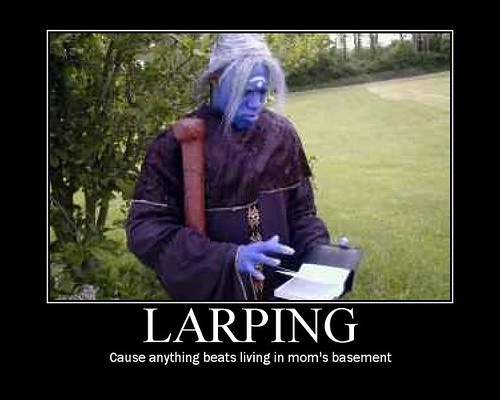
These trends have received a lot of attention in recent years, and more and more people are recognizing the problem. The church is not reaching and ministering to men—we're actually driving them away. But those who see the problem more often than not have really bad solutions. You know: have the Men's Bible studies over beer, cigars, and poker games. Get your men watching cage-fighting and encourage them to develop a taste for blood sport. Or go out in the woods, put on war paint, and perfect the art of the primal scream. Salt your vocabulary with a sailor's favorite expletives. Or (my favorite) Live Action Role Playing, or LARPing, where you dress up like a knight or a gladiator and assume that persona out in a vacant field somewhere with other people who are doing the same thing.

Paul has none of those things in mind when he tells the Corinthians to man up. He is telling them as simply and straightforwardly as possible to be bold, sober-minded, mature, and committed to their calling—like soldiers. Be valiant soldiers in the battle for truth.

In fact, notice the two imperatives on either side of this command to act like men. They explain the true gist of it: "Be steadfast." "Be strong." Those are character qualities. And sandwiched between them is this: "Act like men." The imperatives in that string of commands basically explain one another. Strength, steadfastness, courage, and even vigilance—these are all vital aspects of what Paul means when he says, "Act like men."

27 August 2014

Theology vs. Racism - a primer

by The Late Frank Turk

In 2008, Thabiti Anyabwile spoke for about 66 minutes on the theological problem of using "race" as away to see our differences, and someone ought to review those 66 minutes as soon as possible.  I'm embedding that talk here, unabridged, for your edification.  Also: so that person who ought to review it can find it easily.

We have an obligation to minimize us and maximize Christ.  It is to be displayed in the local church.


6 problems that are not immediately apparent to us when we trade in race:

1. The abuse of people and scripture in the name of "race". The category causes us to treat God's word and other people with the wrong assumptions.
2. It's a short walk from positing "race" to practicing racism.  It leans to into racism.  It assumes that I love people (only) like me.
3. It hinders meaningful engagement with others. It is inherently Ad-Hominem, against the man.  Ethnicity is permeable and subject to change; race is non-negotiable and an impasse.
4. It undermines the authority of Scripture. Race (as biology) denies that Scripture defines us and establishes our identity.
5. It causes us to resist the Holy Spirit.  It creates a barrier to sanctification and illumination.
6. It undermines the Gospel.  If we deny our common ground in Adam, how can we ever find our unity in Christ?

Our fundamental objective is not to build ethnic shrines.  Our project in Christ is to be living monuments to the living image of Christ.