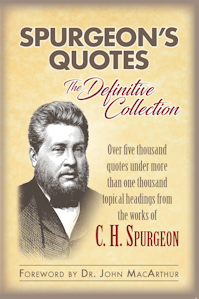
The PyroManiacs devote some space each weekend to highlights from the lifetime of works from the Prince of Preachers, Charles Haddon Spurgeon. The following excerpt is from The Treasury of David, Psalm 15, verse one, Hendrickson Publishers."Thou high and holy One, who shall be permitted to have fellowship with thee?"

The heavens are not pure in thy sight, and thou chargest thine angels with folly, who then of mortal mould shall dwell with thee, thou dread consuming fire? A sense of the glory of the Lord and of the holiness which becomes his house, his service, and his attendants, excites the humble mind to ask the solemn question before us.
Where angels bow with veiled faces, how shall man be able to worship at all? The unthinking many imagine it to be a very easy matter to approach the Most High, and when professedly engaged in his worship they have no questionings of heart as to their fitness for it; but truly humbled souls often shrink under a sense of utter unworthiness, and would not dare to approach the throne of the God of holiness if it were not for him, our Lord, our Advocate, who can abide in the heavenly temple, because his righteousness endureth for ever.
"Who shall abide in thy tabernacle?" Who shall be admitted to be one of the household of God, to sojourn under his roof and enjoy communion with himself? "Who shall dwell in thy holy hill?" Who shall be a citizen of Zion, and an inhabitant of the heavenly Jerusalem? The question is raised, because it is a question.
All men have not this privilege, nay, even among professors there are aliens from the commonwealth, who have no secret intercourse with God. On the grounds of law no mere man can dwell with God, for there is not one upon earth who answers to the just requirements mentioned in the succeeding verses.
The questions in the text are asked of the Lord, as if none but the Infinite Mind could answer them so as to satisfy the unquiet conscience. We must know from the Lord of the tabernacle what are the qualifications for his service, and when we have been taught of him, we shall clearly see that only our spotless Lord Jesus, and those who are conformed unto his image, can ever stand with acceptance before the Majesty on high.
Impertinent curiosity frequently desires to know who and how many shall be saved; if those who thus ask the question, "Who shall dwell in thy holy hill?" would make it a soul-searching enquiry in reference to themselves they would act much more wisely.
Members of the visible church, which is God's tabernacle of worship, and hill of eminence, should diligently see to it, that they have the preparation of heart which fits them to be inmates of the house of God. Without the wedding-dress of righteousness in Christ Jesus, we have no right to sit at the banquet of communion. Without uprightness of walk we are not fit for the imperfect church on earth, and certainly we must not hope to enter the perfect church above.
Impertinent curiosity frequently desires to know who and how many shall be saved; if those who thus ask the question, "Who shall dwell in thy holy hill?" would make it a soul-searching enquiry in reference to themselves they would act much more wisely.
Members of the visible church, which is God's tabernacle of worship, and hill of eminence, should diligently see to it, that they have the preparation of heart which fits them to be inmates of the house of God. Without the wedding-dress of righteousness in Christ Jesus, we have no right to sit at the banquet of communion. Without uprightness of walk we are not fit for the imperfect church on earth, and certainly we must not hope to enter the perfect church above.