06 April 2026

Music Appreciation

by Phil Johnson

This item is adapted and expanded from a post I made in June of 2005, the first week I began blogging.

ric Satie is one of Darlene's favorite composers. He called some of his work "furniture music"—music not to be listened to, but to be played as background. That's what most music has become these days, but it was a radical idea in Satie's day.

Now, don't tell Darlene this, but Satie was a supremely aberrant individual. Look up the French word for "eccentric." Instead of a definition, they could simply put Satie's picture there.

Satie was born in the French harbor town of Honfleur in 1866 and died in Paris in 1925 (just nine days before my dad was born). So we're coming up on the 100th anniversary of his death.

How weird was he?

You get a little glimpse from the titles he gave to some of his own compositions: "Chilled Pieces," "Vexations," "Drivelling Preludes (for a Dog)," "Dried up Embryos."

Satie was Frank Zappa at least 75 years before anyone ever heard of Frank Zappa.

He wrote humorous notations, drawings, and puns in the margins of many of his compositions, intended as private jokes between him and the performer. When he learned of instances where the jokes had been shared with the audience, he wrote, "To whom it may concern: I forbid anyone to read the text aloud during the performance. Ignorance of my instructions will bring my righteous indignation against the audacious culprit. No exceptions will be allowed."

Satie lived alone in a room in Arcueil, France for 27 years. No one but he ever entered that room. At his death, friends discovered an unbelievable hoard of personal memorabilia, including a large collection of umbrellas, drawings he had made, letters he had collected, and dozens of previously unpublished works. The manuscripts of his compositions were all stuffed in odd places—such as the pockets of his trademark grey velvet suits and behind the piano (which, as it turned out, was covered with junk and cobwebs, revealing that he never used it in composing).

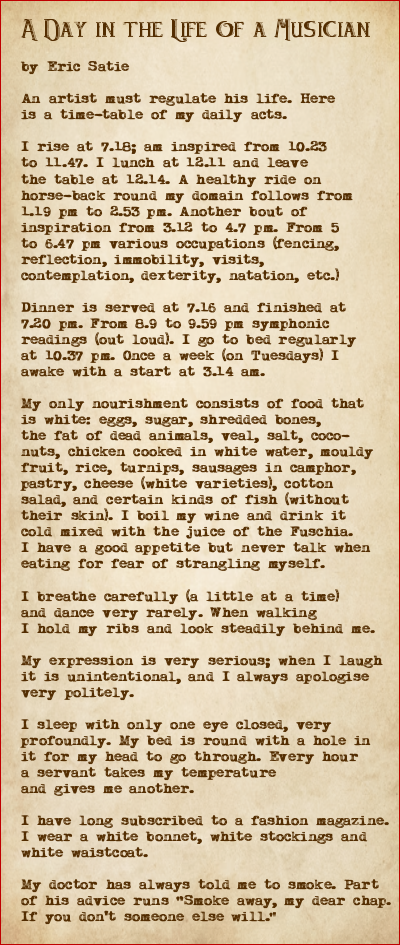
My favorite Satie item is his description of a typical day:

See if you can make any sense of this fragment from Satie's pen, found in an article titled "Ce Que Je Suis" ("What I am"), in the French Journal, Revue musicale S.I.M., (15 April 1912), p. 69. He coins the word pyrophony, which could be very useful. But I'm not sure what he is saying:

Everyone will tell you that I am not a musician.* [* See: O. Séré, French Musicians of today, page 138.] It's fair.

From the beginning of my career, I immediately ranked myself among the phonometrographers. My work is pure phonometrics. Whether we take the "Son of the Stars" or the "Pear-shaped pieces," "In Horse's clothing" or the "Sarabandes," we perceive that no musical idea presided over the creation of these works. It is scientific thought that dominates.

Besides, I have more fun measuring a sound than I have hearing it. With the phonometer in my hand, I work happily and surely.

What didn't I weigh or measure? Everything by Beethoven, everything by Verdi, etc. It's very curious.

The first time I used a phonoscope, I examined a medium-sized B flat. I have, I assure you, never seen anything more repulsive. I called my servant to let him see it.

At the phono-weigher an ordinary F-sharp, very common, reached 93 kilograms. It came from a very big tenor whose weight I took.

Do you know the cleaning of sounds? It's pretty dirty. The spinning is cleaner; knowing how to classify them is very meticulous and requires a good view. Here we are in phonotechnics.

As for the sound explosions, often so unpleasant, the cotton, fixed in the ears, attenuates them, for oneself, suitably. Here we are in the pyrophony.

To write my "Cold Pieces," I used a kaleidophone-recorder. It took seven minutes. I called my servant to let him hear them.

I think I can say that phonology is superior to music. It's more varied. The monetary return is greater. I owe him my fortune.

In any case, with the motodynamophone, a poorly trained phonometer can easily note more sounds than the most skilful musician will do, at the same time, with the same effort. It is thanks to this that I have written so much.

The future is therefore in philophony.

Erik Satie was a living example of the fact that even though sin has badly marred the image of God in man, the image is still there. We can see it clearly in the way fallen creatures, no matter how outré, are still capable of amazing creativity. I think our love for the beauty, humor, and artistry of creaturely creativity is also an expression of the imago Dei.

You'll be familiar with Satie's best-known work, "Gymnopédie No. 1." Enjoy:

Phil's signature


10 March 2026

Martyn Lloyd-Jones on John Knox

Posted by Phil Johnson (ht: Mike Riccardi).

Click HERE to listen to this sermon excerpt from D. Martyn LLoyd-Jones.

hat was the sort of preaching you had from the Protestant Reformers. What kind of preaching? Prophetic preaching, not priestly preaching. What we have today, you know, is what I would call "priestly preaching"—very nice, very quiet, very beautiful, very ornate. Sentences turned beautifully; prepared carefully.

That's not prophetic preaching. No, no! What is needed is authority!

Do you think that John Knox could make Mary Queen of Scots tremble with some polished little essay? These men didn't write their sermons with an eye to publication in books. They were preaching to the congregation in front of them. They were anxious and desirous to do something, to effect something, to change people. It was authoritative. What was it? It was proclamation. It was declaration.

Is it surprising that the church is that she is today? We don't believe in preaching any longer, do we? You used to have long sermons here in Scotland. I'm told you don't like them now, and woe be unto the preacher that goes on beyond 20 minutes.

I was reading coming up in the train yesterday about the first principal of Emmanuel College in Cambridge. He lived just at the end of the 16th century. His name was Chatterton. He was preaching on one occasion, and after he preached for two hours, he stopped, and he apologized to the people. He said, "Please, forgive me. I've got beyond myself. I mustn't go on like this."

And the congregation shouted out, "For God's sake, go on!"

You know, I'm beginning to think that I shan't have preached until something like that happens to me. Prophetic, authoritative, proclamation, declaration. A preaching that didn't respect persons, that wasn't anxious to play to the gallery, or to the intellectuals wherever they may sit. And certainly not our modern idea of having a friendly discussion. Have you noticed it? Less and less preaching on the wireless programs. Discussions! "Let the young people say what they think."

How interesting! Let's win them by letting them speak, and we'll have a friendly chat and discussion. We'll show them that, after all, we are nice, decent fellows, there's nothing nasty about us, and we'll gain their confidence. They mustn't think that we're unlike them. So of course, if you're on the television, you start by producing your pipe and lighting it. You show you're like the people—one of them.

Was John Knox like one of the people? Was John Knox, a matey? Friendly? Nice chap you can have a discussion with?

Thank God he wasn't. Scotland would not be what she has been for four centuries if John Knox were that kind of man.

And can you imagine John Knox going to have tips and training as to how he should conduct and comport himself before the television cameras? To be nice and polite and friendly and gentlemanly? Thank God prophets are made of sterner stuff.

And Amos. Or Jeremiah. Or John the Baptist in the wilderness—camel hair shirt. A strange fellow. "A lunatic," they said. "He's mad!" And they went and listened to him because he was a curiosity. And there, as they listened, they were convicted.

Such a man was John Knox, with the fire of God in his bones and in his belly. And he preached as they all preached—with fire, and power. Alarming sermons; convicting sermons; humbling sermons; converting sermons. And the face of Scotland was changed. And your greatest epoch in your long history came to pass. There, as I see it, were the great and outstanding characteristics of these men.

What was the secret of it all?

Well, it wasn't the men, as I've been trying to say, great as they were. It was God. God in his sovereignty, raising his men, and God knows what he's doing. Look at the gifts he gave John Knox as a natural men. Look at the mind he gave to Calvin. Look at the training he gave to Calvin as a lawyer to prepare him for his great work. Look at Martin Luther, that volcano of a man. God, preparing his men in the different nations and in the different countries.

And of course, before he even produced them, he'd been preparing the way for them. Let's never forget Wycliffe—John Wycliffe. John Hus. Let's never forget the Waldensians and all the martyrs of those terrible Middle Ages. God was preparing the way, and then he sent his men at the right moment. And the mighty events followed.

. . . . . . . .

The God of John Knox is still there, and still the same. And thank God, Jesus Christ is the same yesterday, today and forever.

Oh, that we might know the God of John Knox.

Full message: "Scottish Reformation"
A sermon from D. Martyn Lloyd-Jones


27 January 2026

"God has not called us to impurity but to sanctification" (1 Thessalonians 4:7)

Posted by Phil Johnson

I'm often surprised and not a little shocked by the tone and flavor of some of the discourse on social media among people who self-identify as gospel-believing Christians. I'm not talking only about the annoying busybodies, false accusers, trash-talkers, and all-purpose haters. I'm thinking also of the people who routinely sprinkle their comments with obscene or profane language ("cuss words," as the idiom used to be known). They tend to be fiercely resistant to any criticism or correction of the practice. They think the casual use of salty language shows how "genuine," and "relatable" they are, and this somehow enhances the believability of their testimony.

Wait. Did I say "tone"?

In the evangelical districts of social media nowadays, if you try to correct a popular heresy or challenge some point in the new moral or political consensus, you'll likely be scolded about the inappropriateness of your "tone," no matter how carefully you express your concerns. But professing Christians commonly violate Ephesians 5:4 and Colossians 4:6 in the language they use, and most of their fellow believers don't seem to see anything seriously wrong with that tone.

Unbelievers aren't genuinely impressed by the foul language, either.

The subject matter of public conversations in evangelical forums is likewise often troubling for similar reasons. Professing Christians show a disturbing familiarity with the dark side of popular culture, and they talk about it—uncritically—with ease and enthusiasm. Our spiritual ancestors called that worldliness—a term hardly used anymore.

Out of the same mouth proceedeth blessing and cursing—edification and debauchery. Suggest that these things ought not so to be (James 3:10), and you are certain to be labeled a legalist.

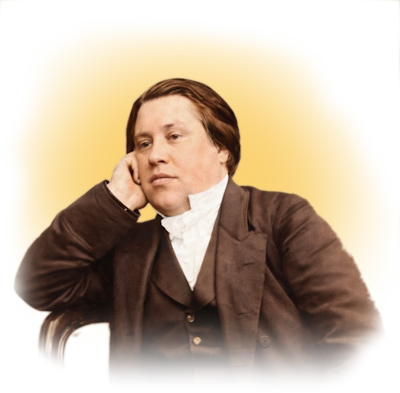
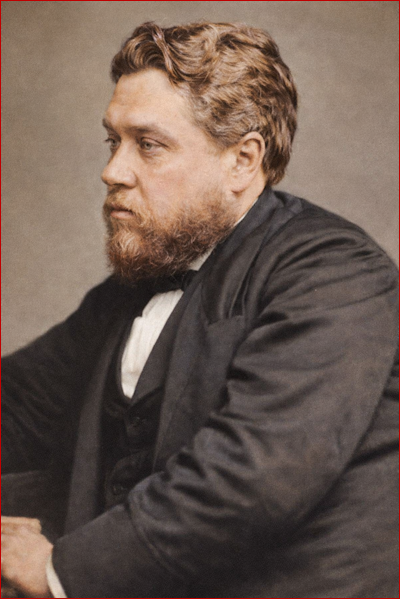
Spurgeon's words in the following excerpt are germane to this issue. Here's what he had to say:


he followers of the early Reformers were distinguished by the sanctity of their lives. When they were about to hunt out the Waldenses, the French king, who had some of them in his dominions, sent a priest to see what they were like, and he, honest man as he was, came back to the king, and said, "As far as I could find, they seem to be much better Christians than we are. I am afraid they are heretics, but really they are so chaste, so honest, so upright, and so truly pious, that, though I hate heresy—I hope your majesty does not suspect me on that account—yet I would that all Catholics were as good as they are."

Now, this was what made the gospel victorious in those days—the stern integrity of those who received it, and thus it will be still. It cannot be otherwise.

But if you become worldly, if you members of this church are just the same as other men who have no grace and make no pretensions, what is the good of your profession? You are liars before God unless you live above the common life of the rest of mankind.

Oh! to get back to the simplicity of Christian manners! I cannot go into particulars, and ordain that this you shall do and that you shall avoid, but you know very well what that simplicity is, and were it carried out there is a great deal that is now practised amongst professors that would have at once to be given up.

C. H. Spurgeon

Charles Haddon Spurgeon, "Good Earnests of Great Success," in The Metropolitan Tabernacle Pulpit (London: Passmore & Alabaster, 1868), 14: 173.


21 January 2026

What Spurgeon Says Here Is Also Relevant to "Christian Nationalism"

posted by Phil Johnson
When an enterprise begins in martyrdom, it is none the less likely to succeed; but when conquerors begin to preach the gospel to those they have conquered, it will not succeed; God will teach us that it is not by might.

All swords that have ever flashed from scabbards have not aided Christ a single grain. Mahommedans' religion might be sustained by scimitars, but Christians' religion must be sustained by love. The great crime of war can never promote the religion of peace. The battle, and the garment rolled in blood, are not a fitting prelude to "peace on earth; goodwill to men."

And I do firmly hold, that the slaughter of men, that bayonets, and swords, and guns, have never yet been, and never can be, promoters of the gospel. The gospel will proceed without them, but never through them. "Not by might." Now don't be befooled again, if you hear of the English conquering in China, don't go down on your knees and thank God for it, and say it's such a heavenly thing for the spread of the gospel—it just is not. Experience teaches you that; and if you look upon the map you will find I have stated only the truth, that where our arms have been victorious, the gospel has been hindered rather than not; so that where South Sea Islanders have bowed their knees and cast their idols to the bats, British Hindoos have kept their idols; and where Bechuanas and Bushmen have turned unto the Lord, British Kaffirs have not been converted; not perhaps because they were British, but because the very fact of the missionary being a Briton, put him above them, and weakened their influence.

Hush thy trump, O war; put away thy gaudy trappings and thy bloodstained drapery; if thou thinkest that the cannon with the cross upon it is really sanctified, and if thou imaginest that thy banner hath become holy, thou dreamest of a lie. God wanteth not thee to help his cause. "It is not by armies, nor by power, but by my Spirit, saith the Lord."

C. H. Spurgeon

Charles Haddon Spurgeon, "Independence of Christianity," in The New Park Street Pulpit (London: Passmore & Alabaster, 1857), 3:335.

19 January 2026

More from Spurgeon on Christian Nationalism and Other Pragmatic Church-Growth Strategies

Posted by Phil Johnson

Nobody wonders that Mahometanism spread. After the Arab prophet had for a little while himself personally borne the brunt of persecution, he gathered to his side certain brave spirits who were ready to fight for him at all odds. You marvel not that the sharp arguments of scimitars made many converts.

Any religion will win assent when the alternative is conversion or instant death. Give a man a strong right hand and a sharp sabre, and he is a fit missionary of Mahomet's doctrine.

Our Saviour gave to his soldiers neither spears nor swords, but said, "Put up again thy sword into his place: for all they that take the sword shall perish with the sword." He asked no aid from governments, he disowned the temporal arm altogether as his ally. Had our Saviour been a State-churchman, and not, as he was, the grandest of nonconformists, it would have been said that under the wings of the State his church was fostered into power. If Cæsar had said, "I will gather thy children together as a hen gathereth her chickens under her wings," it would not have been surprising if the brood of Christians had multiplied indefinitely.

But our Saviour sought no succour from potentates, and rested not upon an arm of flesh. The people would have made him a king, but he hid himself, for his kingdom was not of this world, therefore did not his servants fight.

Our Saviour as he used no force, so neither did he use any means which might enlist man's lower nature on his side. When I have heard of large congregations gathered together by the music of a fine choir, I have remembered that the same thing is done at the opera-house and the music-hall, and I have felt no joy. When we have heard of crowds enchanted by the sublime music of the pealing organ, I have seen in the fact rather a glorification of St. Cecilia than of Jesus Christ.

Our Lord trusted in no measure or degree to the charms of music for the establishing his throne. He has not given to his disciples the slightest intimation that they are to employ the attractions of the concert room to promote the kingdom of heaven. I find no rubric in Scripture commanding Paul to clothe himself in robes of blue, scarlet, or violet; neither do I find Peter commanded to wear a surplice, an alb, or a chasuble. The Holy Spirit has not cared even to hint at a surpliced choir, or at banners, processions, and processional hymns.

Now, if our Lord had arranged a religion of fine shows, and pompous ceremonies, and gorgeous architecture, and enchanting music, and bewitching incense, and the like, we could have comprehended its growth; but he is "a root out of a dry ground," for he owes nothing to any of these. Christianity has been infinitely hindered by the musical, the æsthetic, and the ceremonial devices of men, but it has never been advantaged by them, no, not a jot. The sensuous delights of sound and sight have always been enlisted on the side of error, but Christ has employed nobler and more spiritual agencies.

Things which fascinate the senses are left to be the chosen instruments of Antichrist, but the gospel, disdaining Saul's armour, goes forth in the natural simplicity of its own might, like David, with sling and stone. Our holy religion owes nothing whatever to any carnal means; so far as they are concerned, it is "a root out of a dry ground."

C. H. Spurgeon

Charles Haddon Spurgeon, "A Root out of a Dry Ground," in The Metropolitan Tabernacle Pulpit (London: Passmore & Alabaster, 1872), 18: 569-70.

17 January 2026

A Word of Explanation

by Phil Johnson

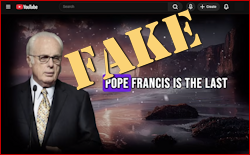
YouTube and social media are full of AI-produced videos using John MacArthur's voice and image, making him say things that perhaps sound like something you might think he believed, but expressing opinions he never held and making statements he never made. There are dozens of these fake videos floating around, and I am asked about them almost daily.

My standard reply: "No, those are fake. If you want to be certain you are hearing something John MacArthur actually said; or if you are looking for a video or audio recording of John's that you can trust to be genuine, you'll find it at gty.org." If it doesn't come from gty.org or GraceChurch.org, I can't vouch for its authenticity.

Furthermore, any AI-produced recording that purports to express the views of John MacArthur is certainly fake.

Most of these are simply sensationalized mammon-grabbing click bait. They may not be maliciously expressing teachings or opinions contrary to what John actually taught, but they are created mainly for the purpose of increasing traffic and thereby generating ad revenue for their creators. They are virtually all produced anonymously or pseudonymously, and it is no easy task to get the traffic cops at YouTube or other social-media sites to take them down.

Some of the AI-generated videos of John might be produced for satirical or comedic purposes, but like the ones that are sheer click bait, they confuse unwitting readers and generate misunderstanding—and sometimes they spawn apocryphal tales and urban legends about John and what he taught.

A few years ago, the management team at Grace to You made this policy: We will never use AI to simulate the voice or appearance of John MacArthur, nor will we ever (even in jest) put words in his mouth that he has not said. That policy was strongly affirmed by John himself.

The policy was prompted by the fact that someone (not one of our staff members, but someone with some influence) had proposed making an app for smart devices that would offer AI-generated counseling and prayers for users in John MacArthur's voice.

John was never a fan of Siri or Alexa, and he certainly did not want to lend his face, voice, or personality to an AI-generated cyber-pastor or digital rabbi. The idea of an artificial John MacArthur saying fake prayers for people with real needs absolutely appalled him—perhaps even more than it appalled the rest of us.

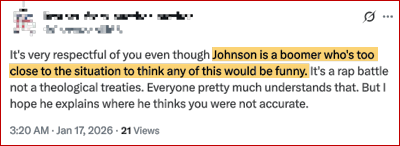
That's why I'm not in favor of using AI to concoct quasi-theological debates between dead celebrities, either in standard language, Ebonics, pidgin english, Cockney rhyming slang, rap patois, or whatever. It's not merely that I'm a humorless boomer (true as that might be). It's because doing something in John MacArthur's name that we know with absolute certainty he would disapprove is no way to honor him.

It's not really funny, either, especially to those of us who knew and loved him.

I hope you understand, and I hope this is helpful.

Phil's signature


15 January 2026

Christ's Kingdom Is Not of this World

by Charles Spurgeon
posted by Phil Johnson

The power and grace of God will be conspicuously seen in the subjugation of this world to Christ: every heart shall know that it was wrought by the power of God in answer to the prayer of Christ and his church. I believe, brethren, that the length of time spent in the accomplishment of the divine plan has much of it been occupied with getting rid of those many forms of human power which have intruded into the place of the Spirit.

If you and I had been about in our Lord’s day, and could have had everything managed to our hand, we should have converted Cæsar straight away by argument or by oratory; we should then have converted all his legions by every means within our reach; and, I warrant you, with Cæsar and his legions at our back we would have Christianised the world in no time: would we not? Yes, but that is not God’s way at all, nor the right and effectual way to set up a spiritual kingdom. Bribes and threats are alike unlawful, eloquence and carnal reasoning are out of court, the power of divine love is the one weapon for this campaign.

Long ago the prophet wrote, “Not by might, nor by power, but by my Spirit, saith the Lord.” The fact is that such conversions as could be brought about by physical force, or by mere mental energy, or by the prestige of rank and pomp, are not conversions at all. The kingdom of Christ is not a kingdom of this world, else would his servants fight; it rests on a spiritual basis, and is to be advanced by spiritual means. Yet Christ’s servants gradually slipped down into the notion that his kingdom was of this world, and could be upheld by human power.

A Roman emperor professed to be converted, using a deep policy to settle himself upon the throne; then Christianity became the State-patronized religion: it seemed that the world was Christianized, whereas, indeed, the church was heathenized. Hence sprang the monster of a State-church, a conjunction ill-assorted, and fraught with untold ills. This incongruous thing is half human, half divine: as a theory it fascinates, as a fact it betrays; it promises to advance the truth, and is itself a negation of it. Under its influences a system of religion was fashioned, which beyond all false religions, and beyond even Atheism itself, is the greatest hindrance to the true gospel of Jesus Christ. Under its influence dark ages lowered over the world; men were not permitted to think; a Bible could scarcely be found, and a preacher of the gospel, if found, was put to death.

That was the result of human power coming in with the sword in one hand and the gospel in the other, and developing its pride of ecclesiastical power into a triple crown, an Inquisition, and an infallible Pope. This parasite, this canker, this incubus of the church will be removed by the grace of God.
That was the result of human power coming in with the sword in one hand and the gospel in the other, and developing its pride of ecclesiastical power into a triple crown, an Inquisition, and an infallible Pope. This parasite, this canker, this incubus of the church will be removed by the grace of God, and by his providence in due season. The kings of the earth who have loved this unchaste system will grow weary of it and destroy it. Read Revelation 17:16, and see how terrible her end will be. The death of the system will come from those who gave it life: the powers of earth created the system, and they will in due time destroy it.

Frequently do we meet with the idea that the world is to be converted to Christ by the spread of civilization. Now, civilization always follows the gospel, and is in a great measure the product of it; but many people put the cart before the horse, and make civilization the first cause. According to their opinion trade is to regenerate the nations, the arts are to ennoble them, and education is to purify them. Peace Societies are formed, against which I have not a word to say, but much in their favour; still, I believe the only efficient peace society is the church of God, and the best peace teaching is the love of God in Christ Jesus. The grace of God is the great instrument for uplifting the world from the depths of its ruin, and covering it with happiness and holiness. Christ’s cross is the Pharos of this tempestuous sea, like the Eddystone lighthouse flinging its beams through the midnight of ignorance over the raging waters of human sin, preserving men from rock and shipwreck, piloting them into the port of peace.

Tell it out among the heathen that the Lord reigneth from the tree; and as ye tell it out believe that the power to make the peoples believe it is with God the Father, and the power to bow them before Christ is in God the Holy Ghost. Saving energy lies not in learning, nor in wit, nor in eloquence, nor in anything save in the right arm of God, who will be exalted among the heathen, for he hath sworn that surely all flesh shall see the salvation of God. The might of the Omnipotent One shall work out his purposes of grace, and as for us, we will use the simple processes of prayer and faith. “Ask of me, and I shall give thee.”

Oh, that we could keep in perpetual motion the machinery of prayer. Pray, pray, pray, and God will give, give, give, abundantly, and supernatnrally, above all that we ask, or even think. He must do all things in the conquering work of the Lord Jesus. We cannot convert a single child, nor bring to Christ the humblest peasant, nor lead to peace the most hopeful youth; all must be done by the Spirit of God alone, and if ever nations are to be born in a day, and crowds are to come humbly to Jesus’ feet, it is thine, Eternal Spirit, thine to do it. God must give the dominion, or the rebels will remain unsubdued.

C. H. Spurgeon

Charles H. Spurgeon, "Christ’s Universal Kingdom, and How It Cometh," in The Metropolitan Tabernacle Pulpit (London: Passmore & Alabaster, 1880), vol. 26, pp. 261–263.

12 January 2026

Spurgeon on Christian Nationalism

posted by Phil Johnson

hen Mahomed would spread his religion, he bade his disciples arm themselves, and then go and cry aloud in every street, and offer to men the alternative to become believers in the prophet, or to die. Mahomed's was a mighty voice, which spake with the edge of the scimitar. He delighted to quench the smoking flax, and break the bruised reed; but the religion of Jesus has advanced upon quite a different plan.

Other forces, more mighty, but not so visible, have been employed to promote the sway of Jesus. Never has he invoked the secular arm, he has left that to Antichrist, and the seed thereof. No demand has been made by him upon human governments to patronise or enforce Christianity. On the contrary, wherever governments have patronised Christianity at all, they have either killed it, or else the infinite mercy of God alone has preserved it from extinction.

Jesus would not have the unbeliever fined, or imprisoned, or cut off from the rights of citizenship; he would not allow any one of his disciples to lift a finger to harm the vilest blasphemer, or touch one hair of an atheist's head. He would have men won to himself by no sword but that of the Spirit, and bound to him by no bands but those of love. Never, never, in the church of God has a true conversion been wrought by the use of carnal means, the Lord will not so far approve of the power of the flesh.

You do not find the Lord calling in the pomp and prestige of worldly men to promote his kingdom, or see him arguing with philosophers that they might sanction his teaching. I know that Christian ministers do this, and I am sorry they do. I see them taking their places in the Hall of Science to debate with the men of boastful wisdom; they claim to have achieved great mental victories there, and I will not question their claim, but spiritual triumphs I fear they will never win in this way. They have answered one set of arguments, and another set have been invented the next day; the task is endless; to answer the allegations of infidelity is as fruitless as to reason with the waves of the sea, so far as soul-saving is concerned. This is not the way of quickening, converting, and sanctifying the souls of men.

Not as a book of science wilt thou triumph, O Bible, though thine every word is wisdom's self! Not as a great philosopher wilt thou conquer, O Man of Nazareth, though thou art indeed the possessor of all knowledge; but as the Saviour of men and the Son of God shall thy kingdom come!

The power which Christ uses for the spread of his kingdom is exercised in conversion, and is as different as possible from compulsion or clamour. Conversion is the mysterious work of the Spirit upon the soul. That great change could not be produced by the fear of imprisonment, the authority of law, the charms of bribery, the clamour of excitement, or the glitter of eloquence.

Men have pretended to conversion because they hoped that a religious profession would benefit their trade, or raise their social position, but from such conversions may God deliver us. Men have been startled into thoughtfulness by the excitement which arises out of Christian zeal; but any real spiritual benefit they may have received has come to them from another source, for the Lord is not in the wind, or the tempest, but in the still small voice. That which is wrought by noise will subside when quiet reigns, as the bubble dies with the wave which bore it. Hearts are won to Jesus by the silent conviction which irresistibly subdues the conscience to a sense of guilt, and by the love which is displayed in the Redeemer's becoming the great substitutionary sacrifice for us, that our sins might be removed.

In this way conversions are wrought, not by displays of human zeal, wisdom, or force. "Not by might nor by power, but by my Spirit, saith the Lord."

C. H. Spurgeon

Charles H. Spurgeon, "The Gentleness of Jesus." in The Metropolitan Tabernacle Pulpit (London: Passmore & Alabaster, 1873), vol. 19, pp. 702–703.

04 January 2026

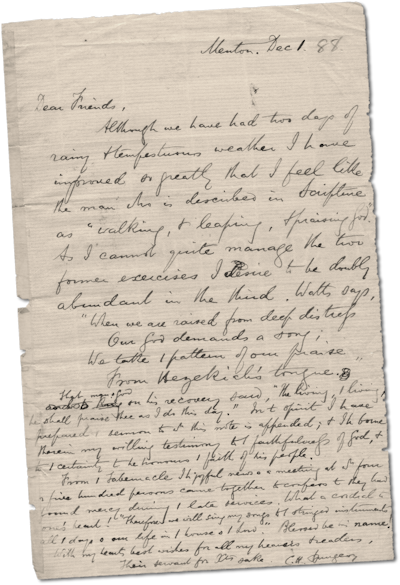
A letter from Mentone

Spurgeon penned this letter from Room 14 at the Hôtel Beau Rivage in Mentone, France to the congregation at the Metropolitan Tabernacle, London. He traveled to the south coast of France almost every year during the winter months to escape the harsh London weather. Gout and kidney failure made him physically weak and kept him in constant pain. Compounding Spurgeon's physical miseries was the stress of the Downgrade Controversy, which had boiled over even into North America. Spurgeon had resigned from the Baptist Union a year previously, but the controversy still swirled around him because the majority of British Baptists were unhappy with the stance he took against modernism. It had been a difficult year. He would not return to London until late February of 1889. By then he had less than three years to live. He would die on January 31, 1892, in the same hotel room from which he wrote this letter.

Menton, December 1, 88

Dear Friends,

Although we have had two days of rainy and tempestuous weather, I have improved so greatly that I feel like the man who is described in Scripture as "walking, and leaping, and praising God" [Acts 3:8]. As I cannot quite manage the two former exercises, I desire to be doubly abundant in the third. Watts says,

"When we are raised from deep distress,
Our God demands a song;
We take the pattern of our praise
From Hezekiah's tongue."

That man of God on his recovery said, "The living, the living, he shall praise thee as I do this day" [Isaiah 38:19]. In that spirit I have prepared a sermon to which this note is appended; and I have borne therein my willing testimony to the faithfulness of God and to the certainty that he honors the faith of his people.

From the Tabernacle I hear joyful news of a meeting at which four or five hundred persons came together to confess that they have found mercy during the late services. What a cordial to one's heart! "Therefore we will sing my songs to the stringed instruments all the days of our life in the house of the Lord" [Isaiah 38:20]. Blessed be His name!

With my heart's best wishes for all my hearers and readers,

Their servant for Christ's sake,

C. H. Spurgeon

C. H. Spurgeon


01 January 2026

John Cotton

posted by Phil Johnson

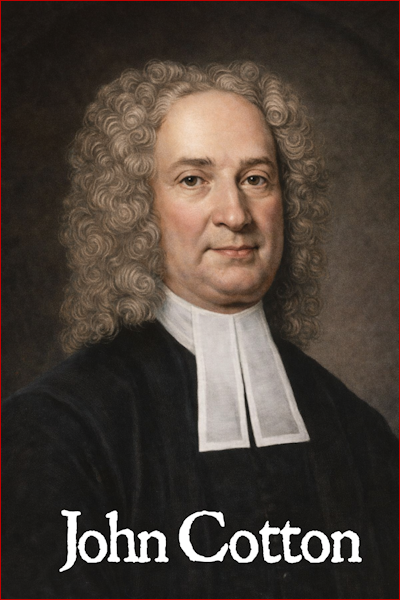
I wrote this piece as a foreword to Nate Pickowicz's edition of John Cotton: Patriarch of New England. It's an excellent, breif biography of America's first, and arguably greatest, Puritan.
     For an affordable introduction to Cotton's works, I recommend Cotton's The Way of Life, published by the Northampton Press, edited by Don Kistler.
     But if you want to dig deep, you absolutely must have this five-volume set: The Works of John Cotton, published by Soli Deo Gloria, and edited by Stephen Yuille.

Among the luminaries of the early Puritan era, none shines brighter than John Cotton. He possessed a remarkable array of spiritual gifts and academic accomplishments. He was a brilliant scholar, a master of the biblical languages, a skilled and perceptive theologian, a proficient writer, a powerful preacher, a tenderhearted pastor, a wise and sympathetic counselor, and an effective evangelist. He had lengthy ministries both in England and in colonial Massachusetts. On both sides of the Atlantic he managed to gain profound and lasting respect from friends and adversaries alike. His character and personality shaped the unique flavor of American Puritanism more than any other single influence. The very best qualities we see among the Puritans of early Massachusetts— their humble piety, their emphasis on sin and repentance, their strong work ethic, their sense of duty to God and community, and their love for Christ and Scripture—all are part of John Cotton's legacy.

During the first decade of the seventeenth century, John Cotton was a lecturer and catechist at Emmanuel College, Cambridge University (a Puritan training institution for pastors). Though he was highly esteemed for his eloquence and erudition, Cotton himself was not yet genuinely converted. A sermon by Richard Sibbes in 1609 truly awakened his heart to believe, and the transformation was immediate and obvious to all. The trademark eloquence of Cotton's lectures gave way to a simple but passionate style of gospel-focused preaching designed not to impress fellow scholars, but rather to awaken the consciences of his hearers. The need for sound conversion is one of the central themes that reverberates through all of Cotton's subsequent sermons and writings.

His fondness for gospel truth was both winsome and infectious. Wherever he preached, people were convicted and converted. A thoroughgoing Calvinist, he powerfully refutes the opinion of those who insist that the doctrine of election is an impediment to evangelism. He was a zealous and effective winner of souls. Just a few months after Cotton's ordination to the ministry in colonial Massachusetts, the First Church of Boston saw a wave of remarkable conversions that can only be termed revival. Governor Winthrop wrote,

It pleased the Lord to give special testimony of his presence in the church of Boston, after Mr. Cotton was called to office there. More were converted and added to that church, than to all the other churches in the bay. . . . Divers profane and notorious evil persons came and confessed their sins, and were comfortably received into the bosom of the church.

It is of course extraordinary that a renowned theologian, scholar, and long-tenured pastor of John Cotton's stature and age (he was nearly 50) would leave everything he knew in order to help establish a colony in the brutal frontier of the New World. How John Cotton came to Massachusetts is one of the central threads in the story of his remarkable life. You can't read any biographical account of John Cotton without noticing the amazing way Providence sovereignly directed this amazing spiritual leader into a role he might never have chosen for himself—and thus magnified his influence and his legacy through circumstances that would have seemed more likely to sideline him or bury his name in obscurity.

Cotton's legacy lives on. His life is instructive even today.

There are, for example, profound lessons about separatism and schism woven into John Cotton's experience. We learn from his struggle with the Church of England that cautious, biblical separatism (2 Corinthians 6:14-18; Revelation 18:4) is sometimes necessary. On the other hand, Cotton himself correctly believed that the schismatic mentality of those who think every disagreement and every error deserves a harsh anathema is destructive to the health and testimony of the church. Faithful believers need to foster both wise biblical discernment and a unifying love for the true Bride of Christ.

This is vividly illustrated not only in John Cotton's failed struggle to remain in and influence the Church of England, but also in his well-documented conflicts with Roger Williams. Williams was a strict separatist who refused communion with the Puritan churches of Massachusetts because they declined to condemn the Church of England as a synagogue of Satan. His views about the church, her purity, her unity, and her role in society set Williams bitterly at odds with John Cotton.

Both John Cotton and Roger Williams had valid points to make. For example, Williams alleged that the churches and the government of early Massachusetts afforded hardly more freedom of conscience than the Puritans themselves had been given under Archbishop Laud in England. The complaint was not far-fetched. The churches of New England had no problem letting the secular magistrates inflict punishments on people who were excommunicated over matters of conscience. Virtually all evangelicals today would have more sympathy with Williams's view on that point than with Cotton's.

But Williams was unquestionably too censorious, too sharp in his criticism, too prone to exaggerate others' flaws, too ready to impute ill motives to his adversaries, and too quick to break fellowship with men who gave every evidence of genuine faith in Christ and his Word.

Both men's shortsighted prejudices made their disagreement far more bitter than it needed to be.

One conviction that John Cotton is especially remembered for is his defense of Congregationalism. More than fifteen years before sailing for the New World, he had embraced Congregationalism, a system of church polity where each individual church, rather than the presbytery, is responsible for its own affairs. (New England Congregationalism is another key feature of Cotton's legacy.) In 1644, at the height of his conflict with Roger Williams, Cotton published The Keyes of the Kingdom of Heaven, an explanation and defense of Congregationalism. The manuscript was sent by ship to England, where it was published. John Owen, the most eminent of Puritan scholars, obtained a copy in order to write a critique, but upon reading the book, he was converted to John Cotton's point of view. Owen wrote,

In the pursuit and management of [Mr. Cotton's] work, quite beside, and contrary to my expectation, at a time wherein I could expect nothing on that account but ruin in this world, without the knowledge, or advice of, or conference with any one person of that judgment, I was prevailed upon to receive those principles to which I had thought to have set myself in opposition.

He then wryly added, "Indeed this way of impartially examining all things by the word . . . laying aside all prejudiced respects to persons or present traditions, is a course that I would admonish all to beware of who would avoid the danger of being made [Congregationalists]."2

It's a shame John Cotton and Roger Williams didn't take Owen's dispassionate approach to examining one another's views. The two were so different that it's unlikely that either would have fully embraced the other's position, but they certainly could have learned from one another.

That seems an important lesson for Christians living in the polemically charged atmosphere of the Internet age. It's one more thing we need to learn from the life and experience of John Cotton.

The only other significant misstep worth pointing out in the career of John Cotton is his early support for Anne Hutchinson and her followers. In the end, Cotton saw that although she claimed to be echoing his teaching, she had actually taken aspects of his teaching on grace to an unbiblical, antinomian extreme. He wisely distanced himself from the error and took the opportunity to clarify his views through careful teaching on the issues that were under debate.

The deep respect Cotton's contemporaries had for him was well deserved, and he also deserves much credit for the moral and biblical foundations that held colonial Massachusetts together from the time of the colony's founding well into the next century. I would argue that the Great Awakening of Jonathan Edwards' era represented a return to New England's spiritual roots—a harvest that sprang from seeds planted by John Cotton and watered by the next two generations of New England Puritans (including Cotton's son-in-law and grandson, Increase Mather and Cotton Mather).

One cannot make sense of early New England history apart from the Puritan influence that shaped that culture—and John Cotton is the key figure in understanding the doctrine, piety, and spirit of New England Puritanism. My hope is that this book will be an introduction for many readers into the rich spiritual history of early New England. May that in turn stir renewed interest in the great biblical truths that shaped the very embryo of American life and values—and (even more foundationally) the lives of the godly men and women who helped found this great nation.


Phil's signature


30 December 2025

More News on the Panhandling Imposter

An update on the case of that fake "Reverend" Hobo
Posted by Phil Johnson

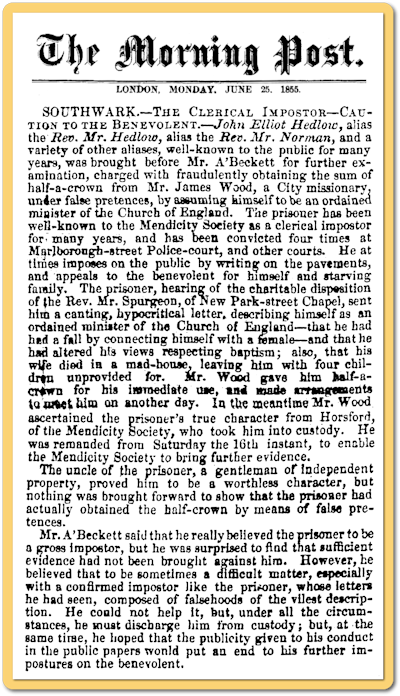
He got off:

SOUTHWARK.—THE CLERICAL IMPOSTOR—CAUTION TO THE BENEVOLENT.—John Elliot Hedlow, alias the Rev. Mr. Hedlow, alias the Rev. Mr. Norman, and a variety of other aliases, well-known to the public for many years, was brought before Mr. Á Beckett for further examination, charged with fraudulently obtaining the sum of half-a-crown from Mr. James Wood, a City missionary, under false pretences, by assuming himself to be an ordained minister of the Church of England. The prisoner has been well-known to the Mendicity Society as a clerical impostor for many years, and has been convicted four times at Marlborough-street Police-court, and other courts. He at times imposes on the public by writing on the pavements, and appeals to the benevolent for himself and starving family. The prisoner, hearing of the charitable disposition of the Rev. Mr. Spurgeon, of New Park-street Chapel, sent him a canting, hypocritical letter, describing himself as an ordained minister of the Church of England—that he had had a fall by connecting himself with a female—and that he had altered his views respecting baptism; also, that his wife died in a mad-house, leaving him with four children unprovided for. Mr. Wood gave him half-a-crown for his immediate use, and made arrangements to meet him on another day. In the meantime Mr. Wood ascertained the prisoner's true character from Horsford, of the Mendicity Society, who took him into custody. He was remanded from Saturday the 16th instant, to enable the Mendicity Society to bring further evidence.

The uncle of the prisoner, a gentleman of independent property, proved him to be a worthless character, but nothing was brought forward to show that the prisoner had actually obtained the half-crown by means of false pretences.

Mr. Á Beckett said that he really believed the prisoner to be a gross impostor, but he was surprised to find that sufficient evidence had not been brought against him. However, he believed that to be sometimes a difficult matter, especially with a confirmed impostor like the prisoner, whose letters he had seen, composed of falsehoods of the vilest description. He could not help it, but, under all the circumstances, he must discharge him from custody; but, at the same time, he hoped that the publicity given to his conduct in the public papers would put an end to his further impostures on the benevolent.

Phil's signature


27 December 2025

Not a Very Convincing Con, If You Ask Me

A tale from the 25 June 1855 London Police Blotter

Posted by Phil Johnson

In June of 1855, Charles Spurgeon was just 20 years old. He had accepted the pastorate of the New Park Street Chapel just 14 months earlier, and his fame was already beginning to spread internationally.
For someone so young, he had gained an unusual amount of pastoral skill and wisdom from observing his father and grandfather (both pastors). He had also pastored a medium-sized congregation for a few years at Waterbeach before coming to London. But all his prior pastoral experiences were in small towns and rural settings. Spurgeon was still a bit callow when it came to discerning the schemes of Victorian con-artists who infested the squalid districts of London. He had a warm, generous heart and a passion to help London's teeming masses of needy and destitute people. He was well known for being always generous and charitable—but he was perhaps too gullible at times.

The following incident was reported in all the London newspapers.

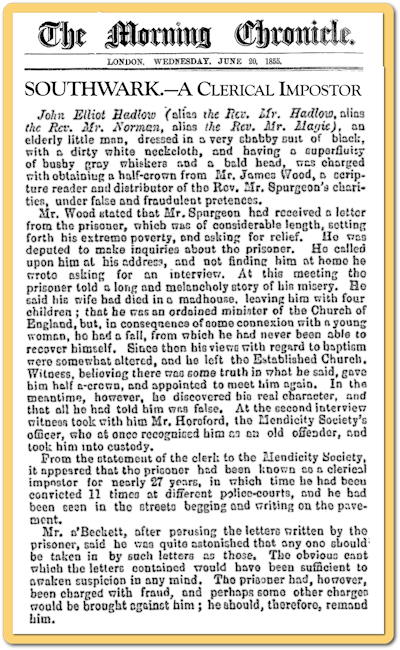
SOUTHWARK.—A Clerical Impostor

JOHN ELLIOT HADLOW (alias the Rev. Mr. Hadlow, alias the Rev. Mr. Norman, alias the Rev. Mr. Hague), an elderly little man, dressed in a very shabby suit of black, with a dirty white neckcloth, and having a superfluity of bushy grey whiskers and a bald head, was charged with obtaining a half-crown* from Mr. James Wood, a scripture reader and distributor of the Rev. Mr. Spurgeon's charities, under false and fraudulent pretences.

Mr. Wood stated that Mr. Spurgeon had received a letter from the prisoner, which was of considerable length, setting forth his extreme poverty, and asking for relief. [Mr. Wood] was deputed to make inquiries about the prisoner. He called upon him at his address, and not finding him at home he wrote asking for an interview. At this meeting the prisoner told a long and melancholy story of his misery. He said his wife had died in a madhouse, leaving him with four children; that he was an ordained minister of the Church of England, but, in consequence of some connexion with a young woman, he had a fall, from which he had never been able to recover himself. Since then his views with regard to baptism were somewhat altered, and he left the Established Church. Witness, believing there was some truth in what he said, gave him half a-crown, and appointed to meet him again. In the meantime, however, he discovered his real character, and that all he had told him was false. At the second interview witness took with him Mr. Hereford, the Mendicity Society's officer, who at once recognised him as an old offender, and took him into custody.

From the statement of the clerk to the Mendicity Society, it appeared that the prisoner had been known as a clerical impostor for nearly 27 years, in which time he had been convicted 11 times at different police-courts, and he had been seen in the streets begging and writing on the pavement.

Mr. á Beckett, after perusing the letters written by the prisoner, said he was quite astonished that any one should be taken in by such letters as these. The obvious cant which the letters contained would have been sufficient to awaken suspicion in any mind. The prisoner had, however, been charged with fraud, and perhaps some other charges would be brought against him; he should, therefore, remand him.

* The purchasing power of a half crown would equal between $50 and $100 in 2025 dollars. It was a substantial sum to hand to a vagrant dressed in shabby religious garb.

Phil's signature


26 December 2025

Critic to Spurgeon: "You are a prodigious quack."

Posted by Phil Johnson

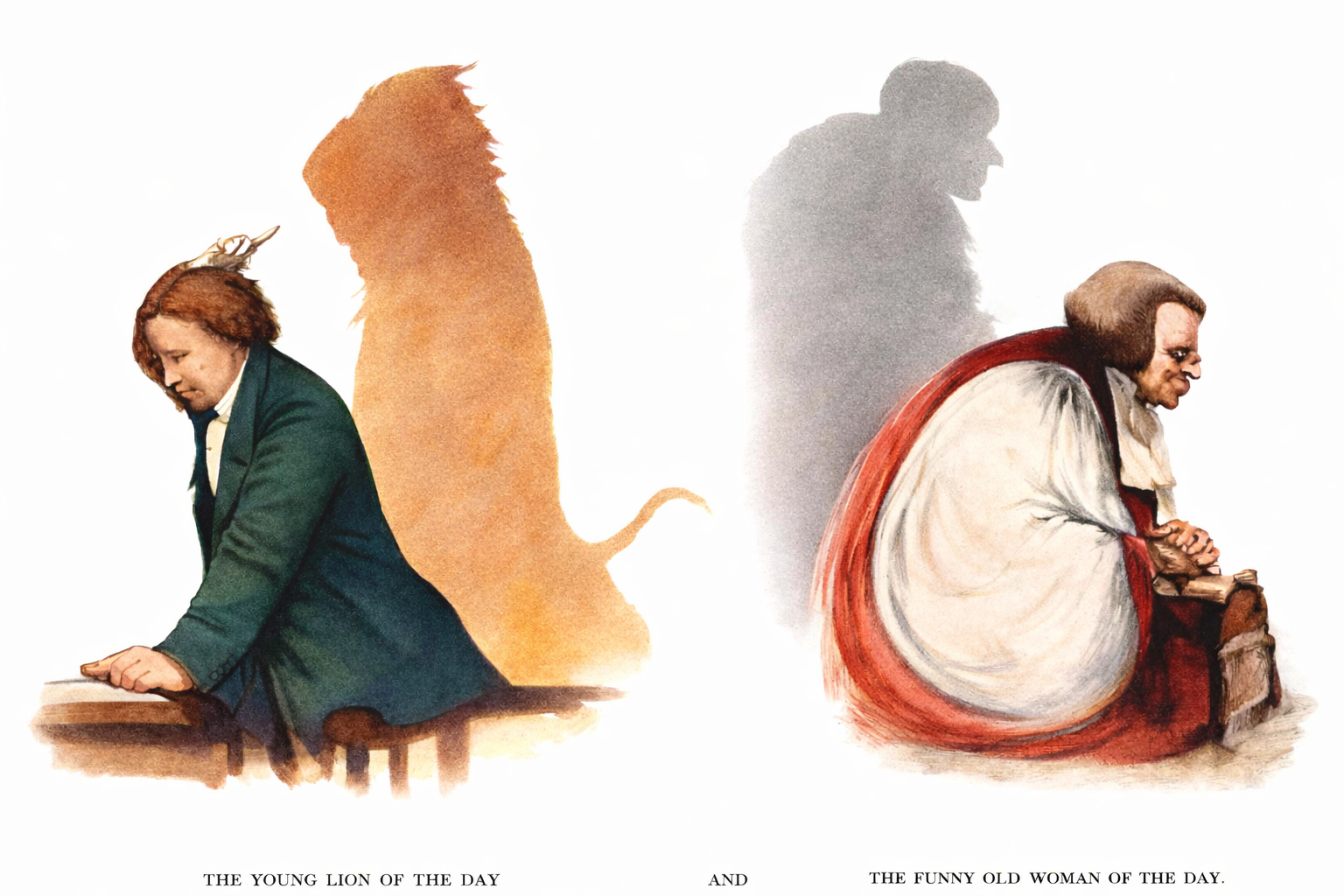
Young Lion; Old Woman
CLICK HERE FOR FULL-SIZE IMAGE

Charles Spurgeon had critics who absolutely loathed him, and they spoke über-harshly to him—and about him—with such relentless ill-will that their words make most of the snark in today's social-media forums sound almost genial by comparison.
     Here is one such example, from an anonymous correspondent who evidently labored for hours to inject as much venom as possible into an open letter. This was published in London's Sunday Times—and carried in newspapers worldwide. This copy is from Melbourne, Australia.
     The year was 1861. Construction on Spurgeon's Metropolitan Tabernacle was finally complete and the congregation had moved into their new home with its famous 5,600-seat auditorium. (Standing room pushed the capacity to 6,000, and it was packed full from the very first service.) Spurgeon had been pastoring in London only seven years, and he was barely twenty-seven years old. His style of preaching was deemed too colloquial and too passionate compared to the stodgy vestment-wearing clergy who dominated the Church of England. When the following letter was published, Spurgeon had not yet preached his famous sermon against the doctrine of baptismal regeneration. That sermon would further—and permanently—elevate the ire of the Anglican establishment. But as this letter shows, there was already an undercurrent of contempt and condescension against Spurgeon from Englanders who equated religiosity with true religion.
     In short, Spurgeon's critics preferred the pomposity and pretentiousness of high-church formalism—and they tended to be rather ill-tempered about it. Spurgeon was regularly drawing capacity crowds of 9,000 or more to the Surrey Gardens Music Hall. Hundreds of converts were leaving the Church of England and attending worship services in non-conformist chapels. One suspects that underlying all this vitriol from Spurgeon's critics was a bitter strain of jealously that someone so youthful could preach with such power and see that kind of success.

THE BORDER WATCH, FRIDAY, SEPTEMBER 20, 1861

A DOSE FOR SPURGEON

A late writer in the "Sunday Times," under the signature of "Warder," addresses the Rev. Charles Spurgeon in the following terms, the style and power of which remind us of the classical Philippics of Junius:—


You are, I am told, to preach in your new monster Tabernacle this very evening. The huge place is built and paid for. I congratulate you. The achievement, considering your youth and your ignorance, is certainly astonishing. Some people predicted that you would fail in this gigantic undertaking: you have disappointed them. Some people predict that you will not be able to fill your chapel now that it is erected: I beg you will not listen to their croakings. Depend upon it: they badly over-estimate the intelligence, wisdom, and common sense of the generation! For years and years to come you may assure yourself there will be fools vast enough in London to make you a congregation vast as your vanity and mighty as your tongue.

For your chapel itself, it is ugly enough in all conscience! Big, to be sure, it is; but more unclassical it could hardly be. It has cost an enormous sum of money; but, then, deformity is always as expensive as beauty in this world. It will suit your worshippers admirably; and I suppose the devotions paid to you will be the chief carried on within its walls. There is nothing akin to religious taste in its aspect; it is a big, ugly staring vulgar profane place; and as such it will harmonize only, and too happily, with the kind of services over which you usually preside. Sir, your chapel is worthy of your genius and your fame.

I frequently meet with people who profess to be amazed at your popularity. Why should they? You work hard. You have an unlimited supply of tongue always at command. You never puzzle the brains of your hearers. Your sermons are well spiced. You are flippant, familiar, and, in a certain fashion, jocose. You are intolerant, dogmatic, and common-place. You revel in judgments. You are precise in all the details of perdition. You have scaled the heights of Heaven. You have fathomed the depths of Hell. You talk with Satan as a man talks with his friend. You talk with the Almighty as no man talks with his friend. You are the munificent patron of the Redeemer. You are the merry playmate of the Holy Ghost.

You are a wholesale and retail dealer in that famous and much sought after article—damnation. Your pulpit is a big brimstone warehouse.

You are one of the Clowns of the church, addressing immortal souls in a "here we are" sort of style. You never pause for a word, because words, in your estimation, are not sacred, and are very cheap. You have no care about religious properties. You own immeasurable quantities of brass. You are a prodigious quack. As you boast of having been told by a gentleman in the street, "you are a great humbug."

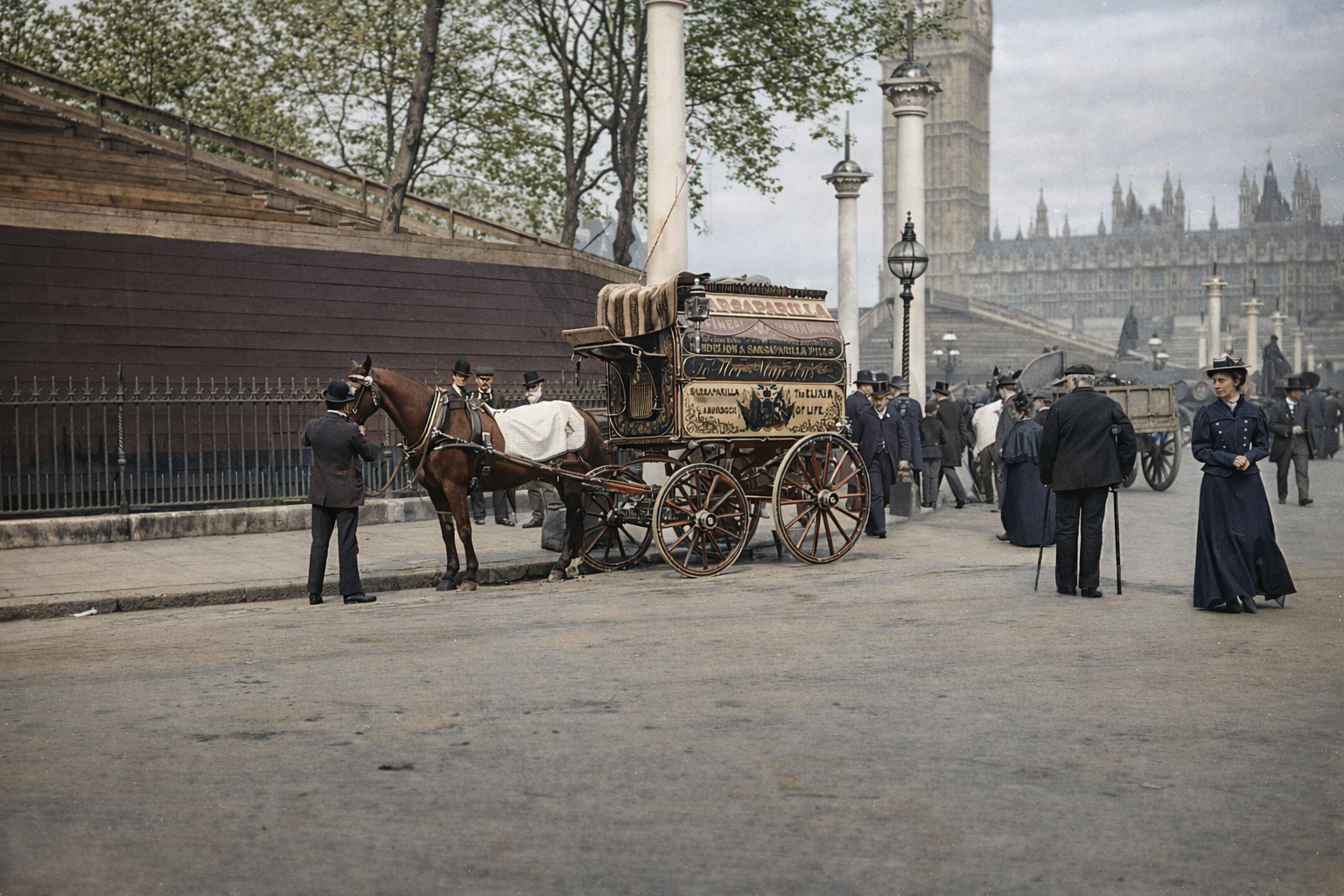
Now, these are all elements of popularity. Your gospel is a nostrum which you unlimitedly puff, and it has accordingly an unlimited sale. I see about the street every day, an ugly carriage, blazing with paint, brass and gold, in shape like a teapot; in decoration like a bawd; in character like a child's plaything. On it is the inscription "The Elixir of Life." I dare say you know it. It is a small-headed, big-bellied cannister on a truck.

I can well imagine the elevated complacency with which you gaze upon that carriage. For that carriage you are an impersonation. Your doctrines, you maintain, are the elixir of life. You drive about the street, a self-advertising medium. Children, women, and foolish men stop, stare at you as you go by, give a chuckle, as though they had beheld something very funny and pass on. But the elixir pays. The advertisement, however impudent, is not thrown away. Thousands go and buy the miserable compounds that you proclaim to be medicine of the soul, they give a good price for the article. To be sure it does not cure them of their moral infirmities; but you make the profit; and why should not all mankind be satisfied?

Illustrations cadger! I almost adore you. The facility with which you convert brass into tin is something to be admired in this age of money-hunting. You bring Omnipotence itself into your shop, and set it up behind the counter as chief salesman.

You beg and pray in the same holy name—the same unholy spirit. You sell your blessings as the priests of another sect used to sell their indulgences. You are the cheap-jack of the religious world; and you drive a roaring trade.

"So many Divine grains for so much! A dose of damnation and a pun for so much. Here you have a poke in the ribs of Ineffable for so much. What shall be the next article gentlemen? I will dance a heavenly hornpipe for so much! Jigs of grace are going at so much! The irresistible burlesque of redemption is now offered—who bids? The devices of the devil denounced for so much! Babylon exposed in a screech of bigotry for the smallest possible consideration! The doctrine of Salvation discounted at so much percent! Dishonored bills of conscience bought in to any amount! A case against any man's soul granted on the lowest possible terms! Sacred sneers by the dozen! Jibes of spiritual joy by the gross! Pay up stiff and prompt and I will pray for you! Whoso giveth unto Spurgeon lendeth unto the Lord: whoso giveth not unto Spurgeon shall be given over to the wicked one. Gentlemen, the chapel is paid for, and now it belongs to my friend Jesus."

Such, sir, is your boast one night. The next, you blow up your guests because the collection is a small one. Your congratulations are in God's name: so are your censures. You are like an Irish beggar in this respect. Give; and no benediction can be too gracious: deny; and no denunciation can be too withering! If you receive a donation, the promises of Heaven fall from your lips. If you do not, you find the threats of Hades just as easy!

To my mind, sir, your assumption of personal identity with the Great Jehovah is the most offensive feature in your entire character. With the zealots of your sect this vice is frequently too apparent, though I believe it is often most unconsciously indulged. In you it assumes most horrible proportions.

It is not the complacency of assured faith; but the swagger of egotism without culture—of audacity without conscience. Were it not for this, you would be a harmless amusement for ignorant people; as it is, I fear your influence must tend powerfully to bring religion into the contempt of all thoughtless minds.

The gospel is not a vulgar joke. Christianity is not a burlesque extravaganza. Faith is not a farce. Hell and heaven are not the words to be made the stock-in-trade of a vulgar punster. Salvation is not a quack remedy. Apostleship is not a merry-Adrewism. The sanctuary is not a play-house. But your prayers are profane gossip with God. Your comments on Scripture are the paltry gag of a low comedian. Your preaching is the religious nonsense of an improvisator. Your earnestness is impudence.

Your success is a national scandal.


CLICK HERE FOR FULL-SIZE IMAGE


PS: I found and colorized this photograph of a Victorian-era coach in Central London like the one described in the above diatribe. Turns out "The Elixir of Life" is sarsparilla.

The Elixir of Life
CLICK HERE FOR FULL-SIZE IMAGE
Phil's signature

23 December 2025

"The Other People's Preacher"

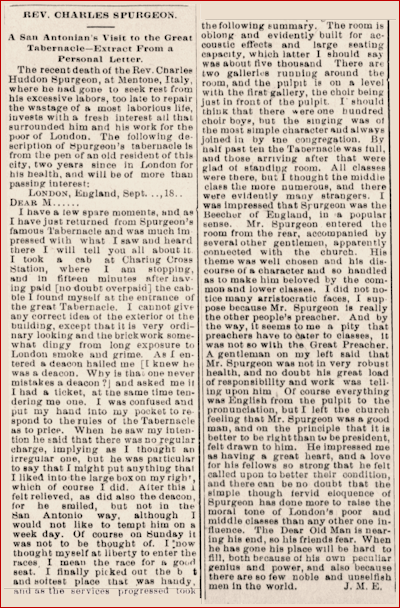
The following article is from The San Antonio Daily Light, 3 February 1892. It was published three days after Spurgeon went to heaven.

REV. CHARLES SPURGEON.

A San Antonian's Visit to the Great
Tabernacle—Extract From a
Personal Letter.

The recent death of the Rev. Charles Haddon Spurgeon, at Mentone, Italy, where he had gone to seek rest from his excessive labors, too late to repair the wastage of a most laborious life, invests with a fresh interest all that surrounds him and his work for the poor of London. The following description of Spurgeon's tabernacle is from the pen of an old resident of this city, two years since in London for his health, and will be of more than passing interest:

LONDON, England, Sept. . ., 18.

DEAR M.......

I have a few spare moments, and as I have just returned from Spurgeon's famous Tabernacle and was much impressed with what I saw and heard there. I will tell you all about it.

I took a cab at Charing Cross Station, where I am stopping, and in fifteen minutes after having paid [no doubt overpaid] the cabbie I found myself at the entrance of the great Tabernacle. I cannot give any correct idea of the exterior of the building, except that it is very ordinary looking and the brickwork somewhat dingy from long exposure to London smoke and grime.

As I entered a deacon hailed me [I knew he was a deacon. Why is that one never mistakes a deacon?] and asked me if I had a ticket, at the same time tendering me one. I was confused and put my hand into my pocket to respond to the rules of the Tabernacle as to price. When he saw my intention he said that there was no regular charge, implying as I thought an irregular one, but he was particular to say that I might put anything that I liked into the large box on my right, which of course I did. After this I felt relieved, as did also the deacon, for he smiled, but not in the San Antonio way, although I would not like to tempt him on a week day. Of course on Sunday it was not to be thought of.

I now thought myself at liberty to enter the races. I mean the race for a good seat. I finally picked out the best, and softest place that was handy, and as the services progressed took the following summary.

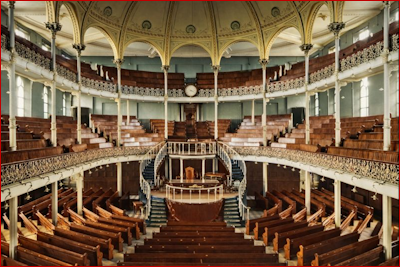
The room is oblong and evidently built for acoustic effects and large seating capacity, which latter I should say was about five thousand. There are two galleries running around the room, and the pulpit is on a level with the first gallery, the choir being just in front of the pulpit. I should think that there were one hundred choir boys, but the singing was of the most simple character and always joined in by the congregation.

By half past ten the Tabernacle was full, and those arriving after that were glad of standing room. All classes were there, but I thought the middle class the more numerous, and there were evidently many strangers. I was impressed that Spurgeon was the teacher of England in a popular sense. Mr. Spurgeon entered the room from the rear, accompanied by several other gentlemen, apparently connected with the church.

His theme was well chosen and his discourse of a character and so handled as to make him beloved by the common and lower classes. I did not notice many aristocratic faces, I suppose because Mr. Spurgeon is really the other people's preacher. And by the way, it seems to me a pity that preachers have to cater to classes. It was not so with the Great Preacher.

A gentleman on my left said that Mr. Spurgeon was not in very robust health, and no doubt his great load of responsibility and work was telling upon him. Of course everything was English from the pulpit to the pronunciation, but I left the church feeling that Mr. Spurgeon was a good man, and on the principle that it is better to be right than to be president, felt drawn to him. He impressed me as having a great heart, and a love for his fellows so strong that he felt called upon to better their condition, and there can be no doubt that the simple though fervid eloquence of Spurgeon has done more to raise the moral tone of London's poor and middle classes than any other one influence.

The Dear Old Man is nearing his end, so his friends fear. When he has gone his place will be hard to fill, both because of his own peculiar genius and power, and also because there are so few nobler and unselfish men in the world.

J. M. E.