
|

|

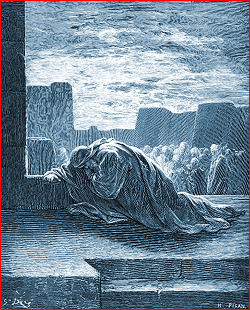 afresh as well Psalms 7:6 and 35:23 (Yahweh seems asleep?), 44:24; and even the prayers of the saints in glory, in Revelation 6:10, for starters. I concluded long ago that there is simply no point being disingenuous with God.
Bless the LORD, O my soul,I leave you with that, and with the wish that you all be with God's people in church this weekend, hearing His word, loving His people, and thanking Him for his literally innumerable mercies.
and all that is within me, bless his holy name!
2 Bless the LORD, O my soul,
and forget not all his benefits,
3 who forgives all your iniquity,
who heals all your diseases,
4 who redeems your life from the pit,
who crowns you with steadfast love and mercy,
5 who satisfies you with good
so that your youth is renewed like the eagle's.
(Psalm 103:1-5)

 Turk, confronted with phony baptism certificate, feigns incredulity
 Dan had no comments for the press.


 log-maintenance is a high-stress, labor-intensive duty. The PyroManiacs gangblog concept is exactly one year old today, and group-blogging hasn't really made blogging a breeze like I hoped it would.
 It does indeed save some time, because when your teammates write you don't have to, and that part has been great. It also helps tremendously to have blogpartners who are better writers than you are or more witty than you can be, and I'm very appreciative to the team for that.
|
 Mark is very fond of the word euthus, "immediately," "at once," "straightaway." The longer gospel of Matthew uses it in about five verses, John in three, and for all his rich vocabulary, Dr. Luke in but one. Our man Mark uses it in about forty verses. That's not including rarer synonyms such as exapina and exaiphnes.
"And He enters into Capernaum; and immediately on the Sabbath, after entering into the synagogue, He began teaching. And they were astonished at His teaching, for He was teaching them as one having authority, and not as the scribes" (vv. 20-21, my literal translation)Twice the verb, once the noun. The first occurrence of the verb ("began teaching") is an ingressive imperfect, meaning that Jesus entered into and continued the activity of teaching. It interests me that Mark uses this very form (edidasken) six times in his Gospel (1:21; 2:13; 4:2; 9:31; 10:1; 11:17), while the other three Evangelists use it only twice apiece.
 bit, Mark says (A) "again," (B) "as He usually did," (C) "He began teaching them" (another ingressive imperfect). Mark wants us to know that this is what Jesus was accustomed to do, it was His practice; He started up the teaching "as usual," as many English versions have it.
|
 discerned by the feelings a situation creates. A girl I knew decades ago decided against something important because thinking about it made her feel confused, and "God is not the author of confusion" (1 Corinthians 14:33, kidnapped at gunpoint from its context), so it could not be of God. QED.
45 Immediately he made his disciples get into the boat and go before him to the other side, to Bethsaida, while he dismissed the crowd. ...47 And when evening came, the boat was out on the sea, and he was alone on the land. 48 And he saw that they were making headway painfully, for the wind was against them. And about the fourth watch of the night he came to them, walking on the sea. He meant to pass by them, 49 but when they saw him walking on the sea they thought it was a ghost, and cried out, 50 for they all saw him and were terrified. But immediately he spoke to them and said, "Take heart; it is I. Do not be afraid."Note again verse 49—"they all saw him and were terrified."
 relationships. Perhaps the immediate effect of this (or these) is the grinding misery of despair, the daily, downhill erosion of hope—or at bare minimum, a temptation in that direction.
 His disfavor (Job). In fact, the precise reverse may be the case (1 Peter 2:20b).
 The great '50's movie The Thing from Another World ends with the words, "Keep watching the skies!"

The PyroManiacs devote space at the beginning of each week to highlights from The Spurgeon Archive.
The following excerpt is the opening section of "Love Thy Neighbour," a sermon on Matthew 19:19, preached Sunday, March 18, 1857, at the Music Hall, Royal Surrey Gardens.
 ur Savior very often preached upon the moral precepts of the law. Many of the sermons of Christ—and what sermons shall compare with them—have not what is now currently called "the gospel" in them at all.
 t's been a tougher-than-usual week here on the blog. We seem to have irritated a few people who aren't usually numbered among our critics. We really didn't need any more detractors, either.
|

 nyway, let's see if we can do the usual weekend BlogSpotting without picking at any of those scabs:
BlogSpotting
nyway, let's see if we can do the usual weekend BlogSpotting without picking at any of those scabs:
BlogSpotting

"In my assessment, the vital litmus test of whether someone is sound in the gospel or not is the question of whether he acknowledges Christ's righteousness as the sole and sufficient ground of justification rather than trying to fudge on the principle of sola fide or making something the sinner himself must do a part of the ground of final justification. . . . By that measure, which I believe is biblical, one's view of imputation and penal substitution would be vital; but one's view of the extent of the atonement would be less so."Note: I, on the other hand, read the Raja's post carefully enough to know that his remark about "some demented fat guy" was not a reference to me.


|

|
My reply:
 ou have seriously misunderstood sola Sriptura if you really imagine that it rules out human teachers or eliminates systematic theology. The Reformers (including Calvin) often cited the works of Augustine, Tertullian, Jerome, Cyprian, Ambrose, and others—ranging from the early church fathers through Aquinas. They didn't follow any of them slavishly, of course, but they certainly took them seriously. Not one of the major Reformers would have tolerated the claim that because the Church Fathers were mere men they were therefore irrelevant or incapable of shedding any helpful light on tough theological questions.
 Sola Scriptura means that Scripture alone is the final court of appeal in all matters of faith and practice. It is an affirmation that "the whole counsel of God, concerning all things necessary for his own glory, man's salvation, faith, and life, is either expressly set down in scripture, or by good and necessary consequence may be deduced from scripture" and that "nothing at any time is to be added [to the Bible], whether by new revelations of the Spirit, or traditions of men." It recognizes that there is ultimately no higher spiritual authority than God's Word, so "the infallible rule of interpretation of Scripture is the Scripture itself; and therefore, when there is a question about the true and full sense of any Scripture . . . it must be searched and known by other places that speak more clearly."
But none of that means we're obliged to discard the wisdom of godly men from ages past and require each man to try to discern truth from scratch by reading nothing but Scripture by himself.
As for Calvin, he certainly did "point people to the truth in God's Holy Word"—but one thing he did not do was steer people away from the important theologians of the past. In fact, Calvin's works are filled with references to the Church Fathers—Augustine in particular. Calvin knew it was important to demonstrate that he was proposing nothing wholly novel and that his theology was in the doctrinal lineage of the greatest theologians of the church. He regarded himself as Augustinian, in precisely the same way many today think of themselves as "Calvinists."
If Calvin wrote for this blog and someone responded to one of his posts by refusing to read what Augustine wrote, Calvin would probably write that person off as arrogant and unteachable.
 Incidentally, 1 John 2:20, 27 is the apostle John's response to an early outbreak of gnostic-flavored spiritual elitism. He was refuting some false teachers (he called them "antichrists") who insisted that real truth is a deep secret, different from the apostolic message, into which people must be initiated by some anointed swami. The Holy Spirit indwells and anoints each believer, and He is the One who truly enlightens and enables us to understand truth. But He also gifts certain people with a particular ability to teach others (Romans 12:6-7; Ephesians 4:11). So while John was condemning the notion of enlightened masters in the style of Freemasonry and gnosticism, he was not making a blanket condemnation of teachers. He himself was a teacher.
Bonus:
A follow-up message asks me if I am suggesting it's wrong for someone to abandon all books and human teachers and rely only on what he can glean from the Bible for himself. Answer: yes, I think that's wrong because it's arrogant and reflects a sinful kind of unteachability. This is my whole point: sola Scriptura doesn't rule out the valid role of teaching in the church.
Furthermore, it is simply not the case that any common, unskilled, unschooled individual, sitting down with his Bible and no other tools, can expect to come to a full and mature understanding of Scripture without any help from godly teachers who understand some things better than he will ever get it on his own. Here's Bernard Ramm's famous response to the arrogance reflected in such a perversion of sola Scriptura::

It is often asserted by devout people that they can know the Bible completely without helps. They preface their interpretations with a remark like this: "Dear friends, I have read no man's book. I have consulted no man-made commentaries. I have gone right to the Bible to see what it had to say for itself." This sounds very spiritual, and usually is seconded with amens from the audience.[from Bernard Ramm, Protestant Biblical Interpretation (Grand Rapids: Baker, 1970), pp. 17-18 (emphasis in original).]
But is this the pathway of wisdom? Does any man have either the right or the learning to by-pass all the godly learning of the church? We think not.
First, although the claim to by-pass mere human books and go right to the Bible itself sounds devout and spiritual it is a veiled egotism. It is a subtle affirmation that a man can adequately know the Bible apart from the untiring, godly, consecrated scholarship of men like [Athanasius,] Calvin, Bengel, Alford, Lange, Ellicott, or Moule. . . .
Secondly, such a claim is the old confusion of the inspiration of the Spirit with the illumination of the Spirit. The function of the Spirit is not to communicate new truth or to instruct in matters unknown, but to illuminate what is revealed in Scripture. Suppose we select a list of words from Isaiah and ask a man who claims he can by-pass the godly learning of Christian scholarship if he can out of his own soul or prayer give their meaning or significance: Tyre, Zidon, Chittim, Sihor, Moab, Mahershalalhashbas, Calno, Carchemish, Hamath, Aiath, Migron, Michmash, Geba, Anathoth, Laish, Nob, and Gallim. He will find the only light he can get on these words is from a commentary or a Bible dictionary.

 eople frequently point out to me that Spurgeon did not normally do expository preaching. Usually the point is made with the tone of a challenge, and with a clear subtext: How can you criticize the seeker-sensitive stye of topical and relational preaching? Your own historical hero wasn't an expositor, either. He was the Rick Warren of his day.
I AM not quite certain that my text will warrant all I shall say upon it this day if read and understood in its connection. But I have taken the words rather by accommodation than otherwise, and shall make use of them as a kind of heading to the discourse which I hope to be enabled to deliver.

I'm going to tag off of Phil’s excellent post, and basically develop one point he raised.
No, it was the title.
Chan should never have titled the video, “A Systematic and Full Presentation of Every Dimension of Gospel Truth.” What was he thinking? That was a huge mistake, a real mess-up. The whole controversy is all Chan's fault. It's because he chose such a bad title.
No, when he titled it thus, Chan created the expectation that he would set forth every salient Biblical truth of the Gospel, with precise citation of proof-texts, and orderly development. He was himself, by his own choice, committing himself to a balanced presentation of every gem in the Gospel’s crown, without overplaying or underplaying any facet.
This video wasn’t anything of the sort. It was the worst sort of false advertisement. No, this video was conversational in style. It was the sort of talk any… well, any commoner might have with his neighbor. It was what might happen when any garden-variety Christian simply took (or made) a conversational opening, and talked about Jesus.
Even though it did touch on a lot (God’s holiness, God’s law, man’s sin, God’s judgment, Christ’s death for sinners, salvation by faith alone through grace alone in Christ alone, the call of discipleship, etc.) — it was not what Chan said it would be. It was not systematic. It was not full, it was not formal, it did not present every dimension of Gospel truth.
No, he should have given it a totally different title. Something brief, something pointed; something no reasonable person could have misunderstood. The whole point of the talk wasn’t a lecture (or a sermon) of systematic theology. It’s as if Chan left that to be done by men who can do it better than he can.
No, this was clearly designed simply to catch a person where he was, sit him down, and get him thinking Gospelward, Christward. It wasn’t everything it could have been. It was a starter, an opener. The title should have reflected that. Then there wouldn’t have been any controversy.

It’s like Chan said at the very end of the video, “Stop, and think!”
Say… are you thinking what I’m thinking? What a great title that would have been! None of this foofaraw would have happened, if he’d simply titled the video…
“Just stop and think.”
But not all of our readers are in this state. In any given day, we may get 20-80 comments — but we have somewhere in the range of 1000-3000 visits. Clearly, most of the people who read this blog do not comment.
I imagine that a lot of these folks look at a D. A. Carson, a James White, an Os Guinness, a Ravi Zacharias, doing what they do, and they think, “Wow. I am so glad he is doing that — because I never could do that. He’s so smart, so sharp, so well-read, so on-his-toes, so articulate. I’d just collapse into burbling, blithering goo.”
But these same folks might have watched Pastor Chan’s easygoing, friendly, passionate but relatively low-key talk about Christ, and they might have thought, “Gee, I can’t do what those Big Guys do. But maybe, just maybe, I could do that.”
And then picture these same people reading the shredding, the scornful, blistering shellacking, that some commenters and bloggers have dealt out to Chan, and (to a lesser degree) to anyone who has even a moderately kind word for his video.
What impact would you estimate, honestly? Positive for the spread of the Gospel? Or negative?
I think only two answers are possible: the honest, and the in-denial.
These folks I'm thinking of would certainly never dare to speak in the hearing of Chan’s harsher critics. No way they’d want to share his fate.
But worse, to the extent that they take the criticism seriously, next time they have an opportunity, they’ll think, “Okay, this is just a conversation. I don’t really have time to lay the foundation of the Creator/creature distinction, the immutability and aseity of God, His ineffable holiness, man’s original creation in innocence and subsequent fall into sin, sovereign election, the plan of redemp… no. I’d just better say nothing, if I can't say everything, and say it perfectly.”
But I do defend it against his critics. Chan wanted his audience just to stop and think — and he gave them good reason to do so.
What’s more, he modeled one way of preaching Christ in an un-churchy setting.
I have had no argument with those who commented along these lines: “I liked this and this; I wish he hadn’t done this and this.”
But we all know it went way beyond that.
We say we want to equip everyone, we want everyone to be able to give an answer for the hope that is in him, to take the gospel into every walk of life. We do not want to be of the spirit of the Galatian errorists, who "want to shut you out, that you may make much of them" (4:17).
I just don’t see how the harshness, this hyper-criticality, forwards our shared, professed goals. It's less the spirit of Paul or Peter than of Nick Burns, Your Company's Computer Guy.

 et me start by saying I'm amazed at the amount of debate, the level of rancor, and the degree of polarization over a 15-minute film that appears to have been around for more than a year.
 But in my judgment (based mainly on what has been posted right here in the comments section of this blog), the way some of the various arguments are being set forth is an utterly fruitless approach to discussing differences between people who in fact do already agree on all the essential points of gospel truth.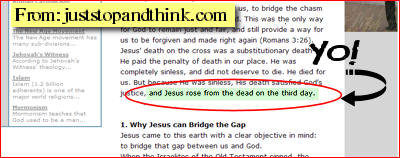
But setting the doctrinal issues aside for the moment, this post will just address some more immediate issues, which are relatively trivial and easy to answer. Let me give my opinions under three headings:
1. Regarding Francis Chan and TMS
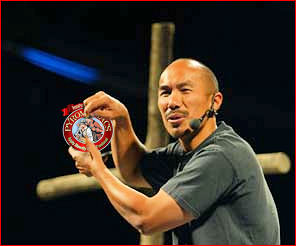 I don't know Francis Chan personally. Aside from having watched the video in question, I have had zero personal exposure to him or his preaching. In fact, the first time I saw the video, I didn't even realize whom I was watching. (Nothing on this page or in the video's opening sequence tells you anything about the person who is doing the talking.) I'd heard of Francis Chan, of course, because he pastors in Simi Valley, a short half hour from where I live and work. I have had a few friends involved with his ministry. For some reason, I envisioned him as an older man.
Pastor Chan has a fine reputation as a pastor and communicator. Everything I have ever heard about him from people who have worked with him and attended his church is completely positive. I know nothing about the nuances of his theological persuasion other than what I have gleaned from his website. His doctrinal stance seems to reflect substantial if not complete agreement with the doctrinal statement of the Master's Seminary. Although he is apparently not as rigorous in his Calvinism as I would be, that would be true of lots of men whom I nevertheless respect, including a few men who have been major influences in my life.
See: No matter what you may have heard about me from the dark side of the blogosphere, I have never anathematized anyone merely for being less Calvinistic than I am. In my assessment, the vital litmus test of whether someone is sound in the gospel or not is the question of whether he acknowledges Christ's righteousness as the sole and sufficient ground of justification rather than trying to fudge on the principle of sola fide or making something the sinner himself must do a part of the ground of final justification.
(Incidentally, by that measure, which I believe is biblical, one's view of imputation and penal substitution would be vital; but one's view of the extent of the atonement would be less so. That is precisely my perspective. More on that in a subsequent post, perhaps.)
Last week I was asked privately by an individual who is fairly new to the blog whether there is some kind of "political" pressure on me not to be critical of anyone who has earned a degree from The Master's Seminary. This guy wondered if I was trying to avoid jumping into the fray for that reason. My answer: Absolutely not. Anyone who reads the blog can see that I have never given TMS alums a free pass. If anything, some of my most forthright and vigorous polemical remarks have been aimed at some doctrinally freewheeling TMS graduates—especially a few who seem enthralled with certain currently-stylish flavors of epistemological skepticism.
 But notice the disclaimer at the bottom of my original blog. It applies here at the group blog, too. I bear sole responsibility for what I post here. Some of my opinions on peripheral issues may not necessarily reflect the views of my pastor, my employer, my wife, my children, or my friends. Only my beagle, Wrigley, always agrees with me.
I should note that neither John MacArthur, the elders of Grace Church, nor anyone on the faculty at TMS has ever raised a peep of protest about anything I have posted on my blog, though I am certain virtually all of them could find things they would disagree with if they read the blog exhaustively. But even when we disagree, we respect one another's positions, and we grant one another the privilege of speaking candidly.
We do, however, emphatically agree on what is essential to the gospel.
2. Regarding the Video
As I said, when I first watched Francis Chan's video, I did not even realize I was watching Francis Chan. My initial reaction in the first two minutes or so was, Here we go again. This is a Nooma knockoff, and it's going nowhere. So my initial expectations were less than nil.
But when Pastor Chan began talking about God as Creator, the Ten Commandments, sin, the justice of punishment for sin, how Christ's atonement vicariously paid the penalty of others' sin, the holiness and wrath of God—and several other aspects of the gospel that are often denied or deliberately sidestepped nowadays—my perspective changed, and I came away with a much higher opinion of the video. Its production values are (to my eye) superb. Pastor Chan's delivery is engaging. His passion is infectious. And he said some things that did make me "stop and think." That's pretty much what Frank Turk said in his response to the video, so when I read Frank's comments about it, I wasn't the least bit surprised or puzzled. That's why I'm on Frank's side here. I think I understand what he was saying and why—and I do agree with him.
I likewise agreed with Dan Phillips's post-mortem on the original flap the other day. That (plus the fact that I really am busy) is why I haven't posted anything about it until now. I thought my teammates had already said everything that really needed to be said.
That doesn't mean I liked everything about the video. In all candor, there were some things in it that made me cringe. Most of these were essentially the same faults James White highlighted last week on his Webcast. In fact, I would pretty much agree with the objective content of most of the criticisms that have been leveled at the film.
But I'm embarrassed by the shrill tone and dismissive attitudes of some of the critics in our meta. Specifically, I think those who insist that the film's defects amount to a fatal and deliberate compromise of the gospel are pretty far over the top. Histrionics without an actual argument don't ordinarily sway me.
Anyway, while I understand and agree with some of the main points that have been made by both admirers and critics of the video, at the end of the day, if Pastor Chan's video hadn't become a matter of heated controversy in the blogosphere (with several persistent people practically demanding that I declare my opinion) I personally would not have singled the video out either for special praise or special criticism.
If I'd been handed the script to Pastor Chan's video before he filmed it and asked to give editorial input, I would have offered several significant suggestions. But of course, that's what I do all the time. It's the nature of being an editor. Rarely do I see anything I don't feel compelled to tweak just a little—including my own blogposts after I've posted them. (Sorry, Challies.)
So I won't list everything I might have changed about the video, because this post is running long already. But here are a couple of typical examples: I absolutely agree with whoever said the expression "God is crazy about you" is stunningly inappropriate. I also don't like some of the language and imagery the film uses to describe God's well-meant proposals of mercy to sinners. I especially think it bungles and confuses the point of the church as Christ's bride (and the Father's role in choosing and presenting the bride to His Son) by making God the Father sound like a desperate suitor seeking sinners' love for His own sake.
On the other hand, I strongly disagree with those critics who claim it is inappropriate ever to portray God as pleading with sinners for their repentance and reconciliation. (And I hope to follow up on that point in a future post.)
My point here, however, is that none of my complaints about the video would have warranted a major blogpost or a public protest about the film. I seriously think it's a stretch to accuse Francis Chan of denying any essential Christian doctrine or deliberately twisting the gospel.
In fact, I have a much higher opinion of the way Pastor Chan is doing evangelism than I have of the way some of his critics are neglecting it. Chan and his congregation, by all accounts, are actually reaching out to their community. Some of his critics seem to be focusing their ministries more and more to an increasingly narrow and theologically inbred audience—preaching more and more to the choir and saying less and less to a lost and needy world.
Dan Phillips said something to me about all this that I think is absolutely spot on: The sad thing is that whereas a lot of people might be prone to look at the natural and easy way Pastor Chan speaks to unbelievers about Christ—and think, I could do that; the feeding frenzy of overweening critics is likely to make them think the opposite.
3. Regarding the Proper Proclamation of the Gospel
 I'm concerned about the increasing number of Calvinists in this generation who seem to bristle and balk whenever they hear someone speak of the love and compassion of God for all humanity. Some of them in effect seem to deny every aspect of God's love other than God's redemptive purpose for the elect alone. I think that's a serious mistake. (See yesterday's Spurgeon excerpt.)
Push that view too far, deny that God's indiscriminate pleas to sinners are well-meant, and you corrupt the gospel message just as badly as those who want to eliminate the wrath or righteousness of God from the message.
This, I think, is the most important question that has been raised in the flap over Francis Chan's video. I want to talk about it in some upcoming blogposts. In the meantime, let me give everyone a reading assignment that I think will be immensely helpful. Erroll Hulse wrote a wonderful book called The Great Invitation: Examining the Use of the Altar Call in Evangelism. In it, he discusses the question of whether it is ever appropriate to tell sinners indiscriminately that God loves them and wants them to repent and be reconciled to Him. It's a marvelously balanced approach to the whole question, from a Calvinist who is defending the doctrines of election, the sovereignty of God, and the inability of sinners to choose Christ unaided by God's grace. I commend it to you.
Audubon Press has the book for $12.99, which is a real bargain. Get it, read it, talk amongst yourselves, and we'll take up this issue in the days to come.
In the meantime, especially until everyone has taken time and given an honest and fair-minded reading of Hulse's book, please exercise some restraint in your comments in the meta here. I'm going to start automatically deleting comments that I think are pugnacious, unbalanced, unnecessarily accusatory, or otherwise out of line.
I realize some may not even agree with me about whether this issue is merely an intramural difference of opinion between brethren or a serious threat to the gospel. But I am the blog-boss here, so now that I have taken time to explain my position, you need to respect my conviction on this and bend over backward to be polite and gracious, or else your comments will be deleted.
Thanks.



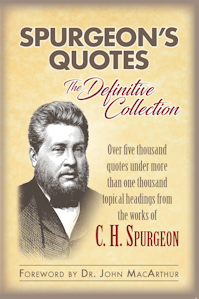
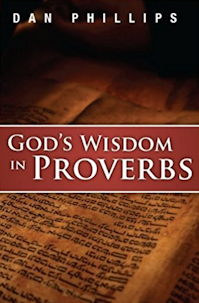
Amazon also has it. See details at Kress
Also available at Logos
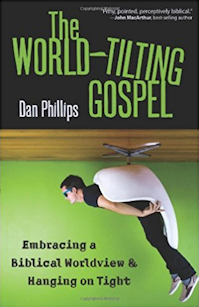
Available on Kindle and in Logos
View readers' favorite Kindle excerpts
|
Remember that you are our guests. We will, at our discretion, delete comments that we find off-topic, derailing, un-civil, slanderous, trollish or troll-feeding, petulant, pestiferous, and/or otherwise obnoxious and non-constructive. If we warn you, stop it. After no more than three warnings, you will find yourself banned, and all your future comments will be immediately deleted.
See an error in the post? How clever of you! Email the author. If you comment a correction, expect the comment to disappear with the error.
If you are confused about how the specifics of these principles play out in practical terms, you'll find a longer list of rules HERE.

 |
| The opinions expressed in this blog do not necessarily represent the views of all contributors. Each individual is responsible for the facts and opinions contained in his posts. Generally, we agree. But not always. |


 Isn't that principle what the Reformation was originally about? Sola Scriptura? Didn't even Calvin himself go to Scripture for the truth instead of reading other men? I believe that if Calvin himself wrote for this blog, he would point people to the truth in God's Holy word, not to a theology developed by some other man.